FALL 2021 SEMESTER OF ONLINE CLASSES
Horror fans can smell autumn on the wind: while there is horror to be found at all times of year, there is something special about this season, and not just because at its heart is the most wonderful time of the year (Halloween, in case you didn’t guess). As the weather gets a bit cooler, our senses are sharpened, our minds turn to those things hidden in the increasing dark corners and shadows, and the world reminds us that things that are born must one day die. (Of course the southern hemisphere experiences the opposite, and there are many mysteries there to uncover).
The Miskatonic Institute of Horror Studies is delighted to present its roster of classes for the fall semester, 2021. All three city branches – London, New York, and Los Angeles – will remain online for the semester, now on Tuesday nights, and we welcome students from around the world. We have twelve classes on a wide range of topics, delving into all corners of horror studies, from the sublime to the strange to the terrifying.
Miskatonic London begins with a journey through the work of master horror filmmaker Terence Fisher, with instructor, and longtime friend of Fisher’s, Tony Dalton. If you find dolls are scary and fascinating as we do, you’ll want to be at October’s class on Creepy Dolls with Joana Rita Ramalho. We take a trip through turn-of-the-20th-century London legend, as Clare Smith talks about Jack the Ripper on film. And we’ll look at manifestations of the occult in Marvel Comics, with Miriam Kent.
Miskatonic New York dives into the work of cult filmmaker Renee Harmon, with instructor Annie Choi taking us on a wild ride of her exploitation cinema. A timely talk with Leila Taylor looks at the terrifying world of home ownership and its manifestation in horror cinema. Andrea Janes takes us on a tour of the history of ghost tourism and the money to be made from scaring the public. And we delve into the thriller film and its themes of obsession and voyeurism, with instructor Justin LaLiberty.
Miskatonic Los Angeles learns the control buttons on horror video games and their impact with filmmakers and game writers Larry Fessenden and Graham Reznick. It then moves to the different but also amazing medium of radio and its history of horror production with Richard J. Hand. Art historian Ken Johnson looks at the visual artist in horror cinema, and Branch co-director Amy Voorhees Searles investigates the real-life horror of hypnotic regression and its impact on the genre.
The Institute will be offering a Global Pass for US$75, which offers a discount to attend all 12 Miskatonic classes in the Fall 2021 semester, as well as the City Branch Pass (£25 for London, US$30 each for New York and Los Angeles), and individual tickets to each class (£8 for London, US$10 each for New York and Los Angeles). Please note that all classes will take place in the time zone of their Branch affiliation; be sure you can attend before booking (and watch out for daylight saving time changes!), as all sales are final.
FALL 2021 CLASSES
MISKATONIC LONDON
Branch Director: Josh Saco

Miskatonic London offers monthly classes and a discounted full semester pass. For our Fall 2021 Online semester, admission to individual classes is £8 GBP, and a full semester pass including all four classes curated by Miskatonic London, is £25 GBP. Please note students from anywhere in the world can register.
Tuesday September 14th 7:00pm BST
TERENCE FISHER. MASTER OF GOTHIC CINEMA
Instructor: Tony Dalton
Terence Fisher: Master of Gothic Cinema is an analysis of the man and his films. During his directing career most of his pictures were largely dismissed as cheap, vulgar and sensational, including the early ones. Now, in the early twenty-first century, his work is considered a major influence not only on the history of Hammer Films, but on the whole genre of horror films, especially the mid to late twentieth century cycle. This class will not only be discussing the horror cycle and their background, but also some of his work as an editor and a number of the preceding directorial films that integral as a training ground for the Hammer Gothic cycle. Even in the 1950s he was an old-fashioned director but the art of film construction, through editing and all the genres he had worked on prior to 1957, were what made his Hammer horror cycle so timeless and still enjoyable today. Those films set the trend for other directors and producers at the time, including Roger Corman and his Poe cycle, and even today many directors of the genre refer to Terry as the founding father of the style.
Tuesday, October 12th 7:00pm BST
CREEPY DOLLS: FROM PRECIOUS PLAYTHINGS TO HARBINGERS OF DEATH
Instructor: Joana Rita Ramalho
In the gothic and horror imagination, inert things are often literally or seemingly vivified by being ascribed properties of the human. Human-like avatars of the creepy and the weird, objects such as dolls, puppets, dummies, automata, and waxworks facilitate key narrative, cultural, and socio-political discourses pertaining to identity and personhood. By stressing the permeable boundaries between self and other, uniqueness and anonymity, the living and the lifeless, these entities become haunting symbols of liminality and powerful harbingers of loss and death. Using an intermedial, intergeneric, and transdisciplinary approach, this illustrated lecture will focus on the figure of the doll and propose an investigation into the ways these humanoid bodies operate in gothic and horror cinema.
Tuesday November 9th 7:00 GMT
TOP HAT, CAPE, GLADSTONE BAG AND FOG; JACK THE RIPPER ON FILM
Instructor: Clare Smith
In 1888 a series of brutal murders shocked London. The killer was never caught but his name has become synonymous with murder and misogyny: Jack the Ripper. The murders were avidly reported in the press and captivated the public but alongside fear an entertainment industry developed. Residents of streets near the murder sites rented window space out and a waxwork show complete with red paint-stained models opened on Commercial Road. It is not then a surprise that film embraced Jack the Ripper as a character. Many theories have been put forward regarding the identity of the killer, from royalty to artists with ever more convoluted motives. This class will consider who the killer is on screen, not who the killer was in reality but who he, and in some films, she becomes on screen. How one unidentified serial killer can project fears and anxieties on screen that have carried over since the late nineteenth century.
Tuesday December 14th 7:00pm GMT
MARVEL COMICS AND THE OCCULT
Instructor: Miriam Kent
From 1940s horror comics to Vertigo characters such as John Constantine and Neil Gaiman’s Sandman, American comic books have a wide-ranging history with the occult. Superheroes, whose occupations traverse the fantastical and supernatural, have been receptive to occult influences for decades. However, Marvel superheroes are often sidelined in discussions of occult superheroes, with critics reaching more obviously to DC and independent publishers. Despite this, Marvel has a rich history of dark superheroes and villains, whose representations are often emblematic of cultural shifts. This session discusses the secret occult origins of Marvel superheroes as well as summarising how certain characters can be made sense of through an occult lens while considering their historical and cultural contexts.
MISKATONIC NEW YORK
Branch Co-Directors: Cristina Cacioppo & Joe Yanick
Miskatonic New York offers monthly classes and a discounted full semester pass. For our Fall 2021 Online semester, admission to individual classes is US$10, and a full semester pass including all four classes curated by Miskatonic New York, is US$30. Please note that students from anywhere in the world can register for these online classes.
September 21st 7:30pm EDT
ENTER THE TRAP: RENEE HARMON AND RESCUING LOST FILMS FROM A USED CAR
Instructor: Anne Choi
Throughout the 70s and 80s, Renee Harmon was quietly–and not so quietly–working both in front and behind the camera producing DIY exploitation films. She wrote and produced zombie nightmares (Frozen Scream) and action thrillers (Lady Street Fighter, Executioner Part II) at a time when women typically played empty plot devices on the big and small screens. This lecture will explore Renee Harmon’s immense career and her dogged, unconventional ways of getting her films made. We will dive into her work with director James Bryan (Don’t Go in the Woods) and focus on Jungle Trap, their final collaboration that was left unfinished in 1990. Lecturer Annie Choi will share how, through a series of wacky events involving a used car, the Bleeding Skull team had the honor of collaborating with Bryan to complete and unleash the film in front of new audiences today.
October 19th 7:30pm EDT
THE AMERICAN NIGHTMARE: HOMEOWNERSHIP AND THE HAUNTED HOUSE
Instructor: Leila Taylor
Homeownership is integral to the mythology of the so-called American Dream, and the right to property has been a thematic device in horror since The Castle of Otranto. With the promise of stability, autonomy, comfort, and a path towards upward mobility, the house is not merely a financial asset but a representation of our identity and our place in society. But what happens when malevolent forces shatter that illusion of power and safety and the dead won’t give up the deed? When does the private home become a haunted house? With films like The Amityville Horror, The Haunting in Connecticut, Dark Water, and His House, this talk will examine the role homeownership plays in horror both as aspirational bait and financial trap.
Tuesday November 16th 7:30pm EST
MONETIZING THE MORBID: A HISTORY OF GHOST TOURISM
Instructor: Andrea Janes
Since 18th century visitors to Tintern Abbey gawked at gothic ruins, and Thomas Cook referenced the supernatural writings of Sir Walter Scott in his 19th century marketing of Scottish tours, ghosts have been part of popular tourism. Modern ghost tours continue to exploit supernatural appeal in a mass market format, delivering moderate thrills three times a night to paying audiences in historic city centers throughout the world. This illustrated lecture draws a line from these proto-ghost tours to contemporary (and often problematic) ghost tours of present-day America, focusing on the ways people interact with these haunting and supposedly haunted spaces.
December 14th 7:30 EST
VISUAL PLEASURE AND GENRE CINEMA: VOYEURISM AND OBSESSION IN HORROR AND THRILLER FILMS
Instructor: Justin LaLiberty
In its earliest incarnation, moving images mixed the seemingly banal tasks of everyday life alongside brief attempts at narrative. Whether adopting tropes of voyeurism out of sexual perversity/pleasure – see keyhole stag films from the early years of the 20th century – or wrapping a tightly knit narrative around the human proclivity to merely watch other humans with interest (Rear Window), it’s clear that this theme found its way into cinema at large but was specifically ripe fodder for genre cinema thanks to its both carnal and insidious implications. This course will offer an overview of how voyeurism impacts narrative structures and defines characters (both hero and villain roles) and how technological advances, both on and off screen, allow these films to mirror the voyeurism inherent in our everyday lives – for better or worse.
MISKATONIC LOS ANGELES
Branch Co-Director: Amy Voorhees Searles & Graham Skipper

Miskatonic Los Angeles offers monthly classes and a discounted full semester pass. For our Fall 2021 Online semester, admission to individual classes is US$10, and a full semester pass including all four classes curated by Miskatonic Los Angeles, is US$30. Please note that students from anywhere in the world can register for these online classes.
September 28th 7:30pm PDT
CHOOSE YOUR OWN MISADVENTURE: THE LABYRINTH OF HORROR VIDEO GAME SCRIPTWRITING
Instructors: Larry Fessenden, Graham Reznick
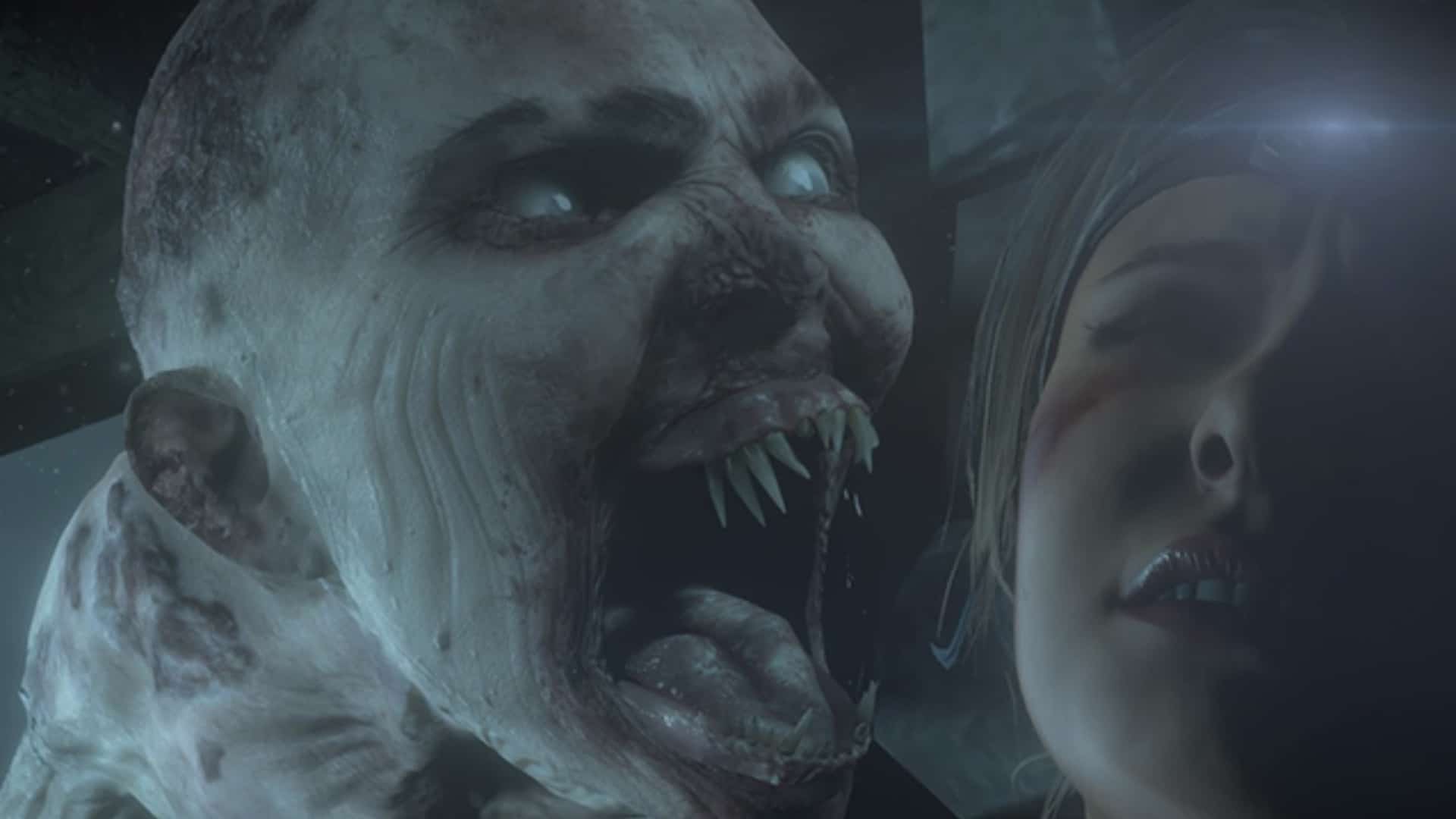
Horror has been a key component of video games since the medium’s inception. From Haunted House for the Atari 2600 to this year’s Resident Evil: Village, video game designers have tasked players with something wholly unique to the genre: live through the horror, or die trying. The artistry behind crafting compelling stories with stimulating and responsive game mechanics requires a singular perspective and skill set. Miskatonic is proud to welcome genre legends Larry Fessenden and Graham Reznick to discuss their role in the craft behind such hit horror video games as Until Dawn and The Dark Pictures Anthology: Man of Medan. This lecture will be an in-depth exploration of their approach to the maze-like structure of horror video game scripts, and how they make sure the audience never gets lost in the process. Horror has always pushed the boundaries of sensation, and Fessenden and Reznick know firsthand how powerful, and terrifying, this relatively new medium can be.
October 26th 7:30pm PDT
THINGS THAT GO BUMP IN THE NIGHT! THE HISTORY AND PRACTICE OF HORROR RADIO
Instructor: Richard J. Hand
Although overshadowed by the visual media, audio is one of the richest forms for horror. Audio can be intimate and immersive, placing us in limitless locales while exploiting the medium’s essential and literal darkness. After all, for all its visual tropes, Gothic and horror culture abounds with sounds: screams, whispers, heartbeats, howling winds, baying hounds, rattling chains and countless other things that go bump in the night. Moreover, as horror film, videogame and podcast sound director Graham Reznick puts it, effective sound design has the eerie ability to ‘unwrite and rewrite reality at any time’. This ability to turn things awry is core to the power of sonic horror, not least in the specific context of audio drama. For precisely one hundred years, radio drama has sustained a close relationship with horror and the Gothic. Using numerous auditory examples, Richard J. Hand will tell the fascinating history of horror radio, from its beginnings and legendary shows like The Witch’s Tale, Lights Out! and Quiet, Please right through to innovative work from the present day.
November 30th 7:30pm PST
THE SLEEP OF REASON: THE ARTIST IN HORROR MOVIES
Instructor: Ken Johnson
Art critic and artist Ken Johnson discusses a selection of horror movies in which the main character is an artist. From the perspective of an art critic, rather than a film critic, he will address questions such as, what is an artist in popular consciousness? What makes the artist and the sorts of things artists produce ripe for horror? A short answer would be that the artist’s cultivation of creative imagination, and susceptibility to irrational fantasy, makes him or her particularly attractive to demonic forces arising from the depths of the unconscious or invading from non-ordinary dimensions. As Goya’s famous print declaims, “The Sleep of Reason Breeds Monsters.” The lecture will address what these movies get right about art and artists, and what (as they more often do) they get risibly wrong—akin to what a scientist might have to say about science fiction.
December 28th 7:30pm PST
REGRESSION OBSESSION: BRIDEY MURPHY MANIA’S IMPACT ON HORROR CINEMA
Instructor: Amy Voorhees Searles
In 1952, hypnotic regression was employed on a Colorado housewife, and the results captured the imagination of a nation. The session began as usual, with an attempt to transport the subject to an earlier point in their lifetime, but when the hypnotist attempted to regress the subject beyond their own birth, all were amazed to hear a detailed description of the life of an Irishwoman born at the end of the 18th-century who called herself Bridey Murphy. The story was first chronicled in a series of newspaper articles and then in a bestselling book, which was almost immediately translated into a major motion picture. The cultural craze spawned novelty songs, comedic sketches, themed dances, and much more. It was only natural that the horror genre would respond by taking the story to many unnatural conclusions by asking questions such as, what would happen if someone were regressed to their primordial state? What would happen if someone’s consciousness were transported into a past life where they were being persecuted as a witch? Or being pursued by Dracula? In this lecture we will provide an overview of the Bridey Murphy case, its context, and its legacy. In particular we will focus on a collection of horror films influenced by the craze, and how they mutated and reverberated through the genre in ways that persist to this day.
For further information, images or interview requests, contact The Miskatonic Institute at miskatonicihs[at]gmail.com.