In his treatise on psychoanalysis, Jacques Lacan makes reference to das ding, a king of thing-presentation that is the thing in its dumb reality, the beyond of the signified. Similar to Emmanuel Kant’s theory of the thing-in-itself, das ding is the Other in absolute alterity, outside language and mainly characterized by the fact that, for Lacan, “it is impossible for us to imagine it”; in its dumb reality; it cannot be assimilated through identification. In her essay “Powers of Horror,” Julie Kristeva, “The abject has only one quality of the object—that of being opposed to I;” the abject is exclusion, in a place without meaning, and from that place it cries out in revolt and brutish suffering. This is the essence of horror: that which can be neither known nor named; without identification, we cannot seek to fight and free ourselves, and are destined to become that horror which we cannot know.
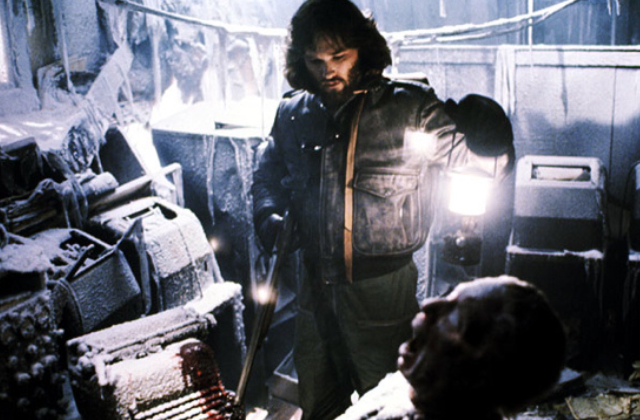
These concepts of alterity and abjection have frequently been used in horror texts. In John Carpenter’s 1982 horror-science fiction film The Thing, a group of men at an Antarctic research station, find themselves under attack by an alien. However, the alien’s true form is never known, as it instead attempts to assimilate itself inside the bodies of the living creatures it finds, thus remaining an unknown monster both outside human language and without its own language. This, perhaps, is the true face of horror:, in a place devoid of life and unreachable, where the monster is at once unnameable, unknowable, and yet frighteningly familiar. Is the alien, and by extension the men, an embodiment of das ding, the true nature of absolute alterity, and at the same time also the abject, lost in a place devoid of meaning, left to languish in exclusion from the human race?
Through the lens of The Thing, and other texts such as Planet of the Vampires and It, this class will examine the horror where alterity and abjection meet. If, as Kristeva writes, the cause of abjection is that which disturbs order and identity, then horror stems from that which cannot be identified, the alterity of the other.
Please note these are live events – they cannot be downloaded and watched later, so please be sure you are available at the time and timezone the classes are being offered in before registering.
Shelagh Rowan-Legg received her PhD from King’s College London in 2014, and her first book, The Spanish Fantastic: Contemporary Filmmaking in Horror, Fantasy, and Sci Fi was published in 2016. She is a Contributing Editor for ScreenAnarchy, a programmer for FrightFest, a script consultant, a filmmaker, and recently becomes the Executive Director of The Miskatonic Institute.