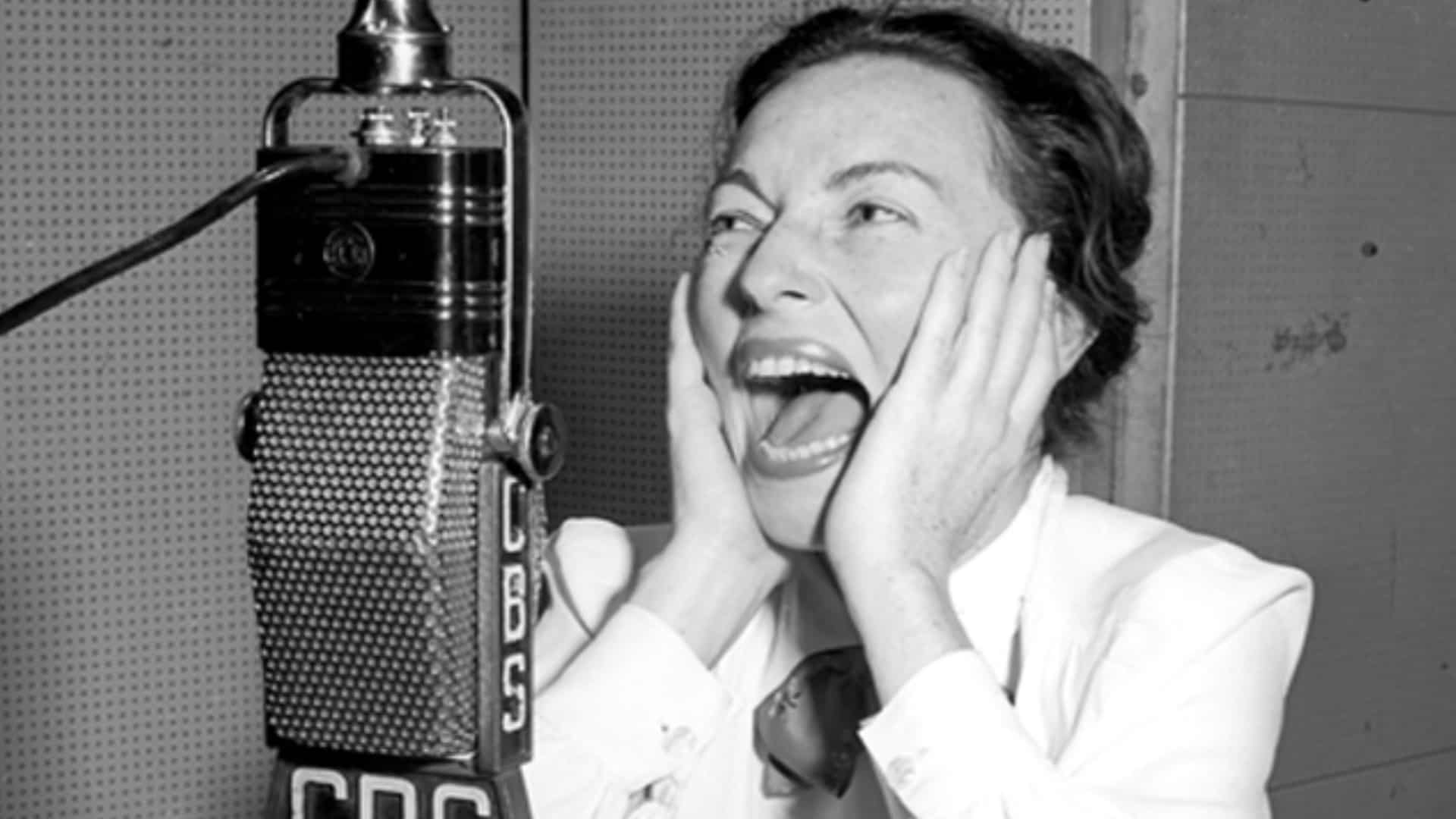
Although overshadowed by the visual media, audio is one of the richest forms for horror. Audio can be intimate and immersive, placing us in limitless locales while exploiting the medium’s essential and literal darkness. After all, for all its visual tropes, Gothic and horror culture abounds with sounds: screams, whispers, heartbeats, howling winds, baying hounds, rattling chains and countless other things that go bump in the night. Moreover, as horror film, videogame and podcast sound director Graham Reznick puts it, effective sound design has the eerie ability to ‘unwrite and rewrite reality at any time’. This ability to turn things awry is core to the power of sonic horror, not least in the specific context of audio drama.
For precisely one hundred years, radio drama has sustained a close relationship with horror and the Gothic. Using numerous auditory examples, Richard J. Hand will tell the fascinating history of horror radio, from its beginnings and legendary shows like The Witch’s Tale, Lights Out! and Quiet, Please right through to innovative work from the present day.
The all-live broadcasts of horror radio in the US and UK during the golden age of the 1930-50s abounded with incredible talent and personalities: vivid horror hosts such as The Old Hermit and The Man in Black ensured that millions of loyal listeners tuned in at the same time to experience the latest tales of terror that ranged from the hilarious to the genuinely audacious and disturbing. Indeed, live horror radio’s penchant for gore, cruelty and unhappy endings would lead to controversy and attacks from ‘moral crusaders’. Horror radio exploits its ‘invisibility’ to the fullest degree, presenting terrifying spectacles to our mind’s eye for, as Stephen King acknowledges, radio is a genuinely formidable horror form in its ability to create the ‘perfect monster’.
In our own time, digital technology and the rise of the podcast has led to an epoch for horror audio as rich and exciting as the considerable achievements of the golden age. From epic horror shows such as We’re Alive, the long-running zombie apocalypse saga; Julian Simpson’s ingenious updating of H. P. Lovecraft’s works for the BBC; to uncanny experiments in site-specific and binaural recording, it remains a terrific time to ‘listen in terror’.
As well as deconstructing the fundamental combination of scriptwriting, voice acting and sound effects in giving each individual listener the ‘darkest nightmares imaginable’, Richard will also reflect on his own practical experience as a radio writer/producer, in particular in the reconstruction of 1940s-style horror radio for live broadcast in the twenty-first century.
Please note these are live events – they cannot be downloaded and watched later, so please be sure you are available at the time and timezone the classes are being offered in before registering.
Richard J. Hand is Professor of Media Practice and Director of Drama at the University of East Anglia (UK). He is the author of numerous studies of popular horror culture including two books on horror radio drama and is the co-author (with Michael Wilson) of three books on Grand-Guignol horror theatre. He has written and directed numerous radio and stage plays, including commissioned works for the Science Fiction Theatre Festival; the Frankenstein Bicentenary in Edinburgh; Abertoir Horror Festival; and (with Geraint D’Arcy) a recreation of the Victorian stage illusion ‘Pepper’s Ghost’ in the original venue in London where the illusion was first presented in 1862. For several years, he produced the annual public Halloween performance for Cardiff city council in Wales. He is artistic advisor for Molotov Theatre Group and his media appearances include Heston Blumenthal’s Great British Food and the special edition DVD of Tim Burton’s Sweeney Todd. Richard is the lead scriptwriter for the US-based National Edgar Allan Poe Theatre on the Air, a podcast drama series which has won several awards including, most recently, two Gold Awards at the 2021 Hear Now Festival. In 2020, the entire repertoire of the series was acquired by the Library of Congress for preservation in recognition of ‘its cultural and historical importance’.