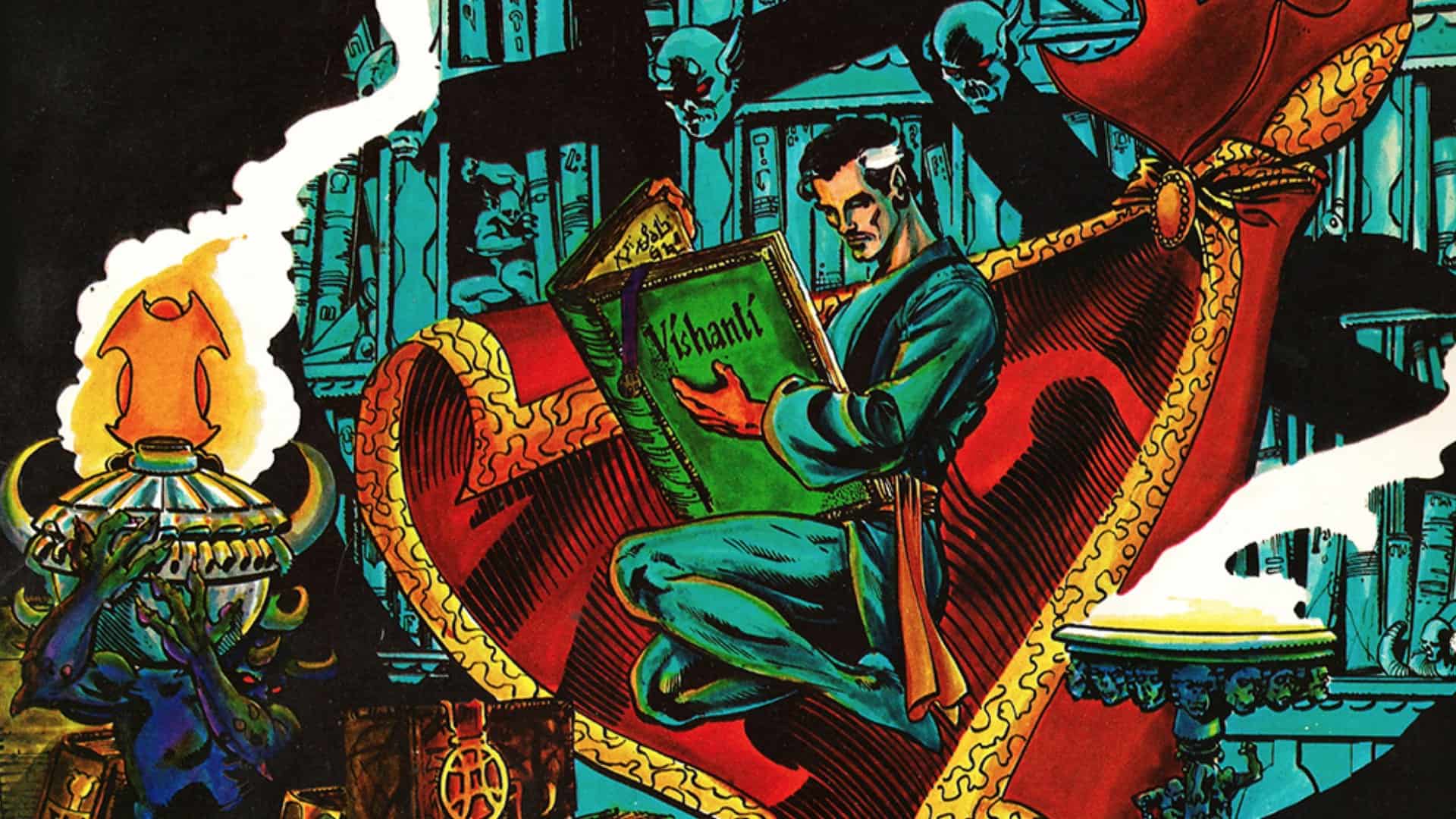
From 1940s horror comics to Vertigo characters such as John Constantine and Neil Gaiman’s Sandman, American comic books have a wide-ranging history with the occult. Superheroes, whose occupations traverse the fantastical and supernatural, have been receptive to occult influences for decades. However, Marvel superheroes are often sidelined in discussions of occult superheroes, with critics reaching more obviously to DC and independent publishers. Despite this, Marvel has a rich history of dark superheroes and villains, whose representations are often emblematic of cultural shifts.
This session discusses the secret occult origins of Marvel superheroes as well as summarising how certain characters can be made sense of through an occult lens while considering their historical and cultural contexts. Western culture’s interest in the occult peaks and troughs throughout history, often occurring at moments of societal distress, upheaval or existential crisis, or as an alternative to traditional models of religious belief. By the 1950s, horror comics—including those invoking occult themes—had caused a moral panic resulting in industry-wide censorship under the Comics Code and ending their stronghold. While superhero comics reinvigorated the industry, the supernatural never really left, with the more socially acceptable face of superheroes merely masking occult undercurrents.
Moreover, by the time the Code was relaxed in the 1970s, Marvel was publishing supernatural comics series including Tomb of Dracula, Werewolf by Night and Ghost Rider. While the launch of its Vertigo imprint opened up more avenues for DC’s explicitly occult stories, Marvel’s superheroes maintained their occupation of a realm placed somewhere between science fiction, fantasy and the occult through characters such as Doctor Strange, Daimon Hellstrom (the Son of Satan), Magik and the Scarlet Witch.
Using Doctor Strange, who debuted in 1963, as a touchstone, the discussion will position these characters within the cultural context in which they appeared to make sense of their specific configurations of occultism. Incorporating elements of Eastern mysticism filtered through Western Orientalism, Doctor Strange’s early adventures represented the countercultural fixation on psychedelia through Steve Ditko’s surreal hallucinogenic artwork. Later appearances expanded the character’s scope to darker, more supernatural realms, encountering vampires, the devilish Mephisto and more. The session thus concludes with a consideration of genre influences concerning Marvel’s wider historical forays into horror comics, placing the character at the locus of the fantastical and horrific.
These appearances mark an interesting merging of genres, navigating the boundaries between fantasy and horror while on a social level, the prospect of science fiction’s abstract networks of virtual embodiment became a reality through technological developments in digital media. Meanwhile, the representations of Doctor Strange’s holistic mysticism have been discussed as speaking to the individualist politics of neoliberal America. With Marvel’s forthcoming film Doctor Strange and the Multiverse of Madness allegedly set to be the studio’s first foray into horror, now is the perfect time to reflect on the changing definitions of the occult in superhero comics history.
Please note these are live events – they cannot be downloaded and watched later, so please be sure you are available at the time and timezone the classes are being offered in before registering.
Miriam Kent is Lecturer in Film Studies at the University of Essex. Her research focuses on adaptation and representation in films based on Marvel superhero comics. She has published widely on the cultural significance of superheroes. Her first book, Women in Marvel Films (2021, Edinburgh University Press), examines portrayals of women in Marvel film adaptations, linking these to wider issues to do with feminism and gender politics.