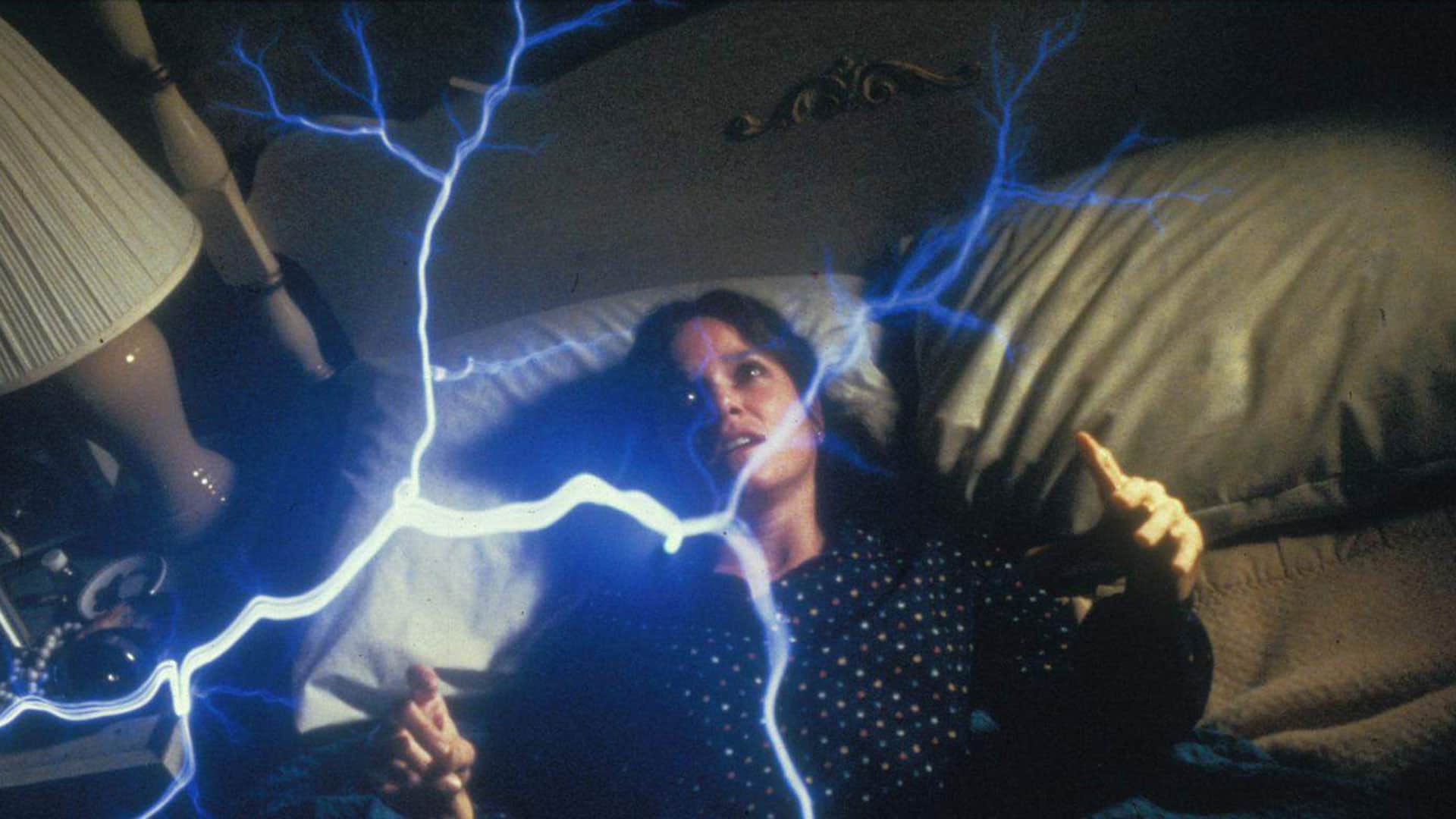
Most people know of Doris Bither not by name, but through the fictionalized account of her story in the harrowing supernatural thriller THE ENTITY (1982). It tells the tale of a single, working class mother who claimed to have endured relentless sexual assaults by a supernatural force—a claim that was investigated by parapsychologists from UCLA’s Neuropsychiatric Institute, which precipitated Bither’s deliberate disappearance. TV producer and novelist Frank De Felitta attended one night of the ten week investigation, and was inspired to pen a salacious pulp paperback about Bither’s alleged ordeal called The Entity (1978). De Felitta subsequently adapted his own erotic, exaggerated book for the screen production directed by Sydney J. Furie, whose compassionate version of the Bither story remains sadly relatable to anyone who has spoken up about their own victimization experience, and who has had to fight to be believed.
The Furie film leverages its claim of being “based on a true story” to frightful effect, but the question remains: Who was Doris Bither? To UCLA’s parapsychology team, her purported suffering offered a tantalizing validation of their profession. To the journalists at The Skeptical Inquirer, she was victimized only by the exploitative endeavors of pseudo-scientists. To some, Bither was a madwoman; to others, a con artist in her own right. For Furie and his star Barbara Hershey, she provided an allegory for more ordinary forms of misogynistic oppression…but this, too, is an instance of people using the Bither story to achieve their own ends. The elusive Doris Bither’s true identity may be lost to us, but this hasn’t stopped many different people from twisting her story to fit their own unique, often conflicting perspectives. In this talk, we will examine the many faces of Doris Bither as they appear in the original UCLA documentation of their investigation; the sober Skeptical Inquirer takedown; the licentious Frank De Felitta novel; and the controversial Furie film, which has been embraced by many modern feminist critics.
Claire Donner is the New York City branch Director of the Miskatonic Institute of Horror Studies. Despite her background in Art History, she has a special focus on the role of faith, superstition, and manufactured authenticity as a merchandising tool in horror media. Her favorite debate subjects include the so-called Amityville Horror, the Doris Bither case, and the life and theology of Anton LaVey. She enjoys pseudo-snuff films like Faces of Death, the symbiosis of gore and pornography, and cannibalism.