This class was originally scheduled for January 2024. Ticket buyers and passholders have been contacted via email.
Horror is frequently considered “inappropriate” and “offensive.” Very often that is exactly the point. But what and where is the real harm exactly? Given society’s unhelpful propensity to conflate inappropriate and offensive with harm, horror becomes the perfect scapegoat to map harm onto and deflect larger more complex social issues. However as this talk will illustrate, the fact of the matter is that after thousands of sensational headlines and decades of state-sponsored research, there is NO definite proof that horror or any other form of popular culture products such as video games harms. But why then does this myth persist? And why, if we can’t define “harmful” we continue to use the label as a means of censure and blame.
Horror occupies a rather unique position in society as a form of mainstream entertainment that is constantly under pressure to curb, suppress and censor that which initially made it so popular; its ability to disgust and horrify. An allegory for the “evil” that exists in mankind and not its embodiment, one of the key tropes of the genre is the representation of societal ills as a means of release, exploration and belonging. Yet time and time again the genre is found at the centre of controversy charged with the very corruption it seeks to represent. Blaming the mirror for what it reflects, the myth that the genre poses harm to children is as powerful now as it was when in 1796 the poet Samuel Taylor Coleridge decried Matthew Lewis’ Gothic Romance The Monk “a Mormo for children, a poison for youth, and a provocative for the debauchee.”
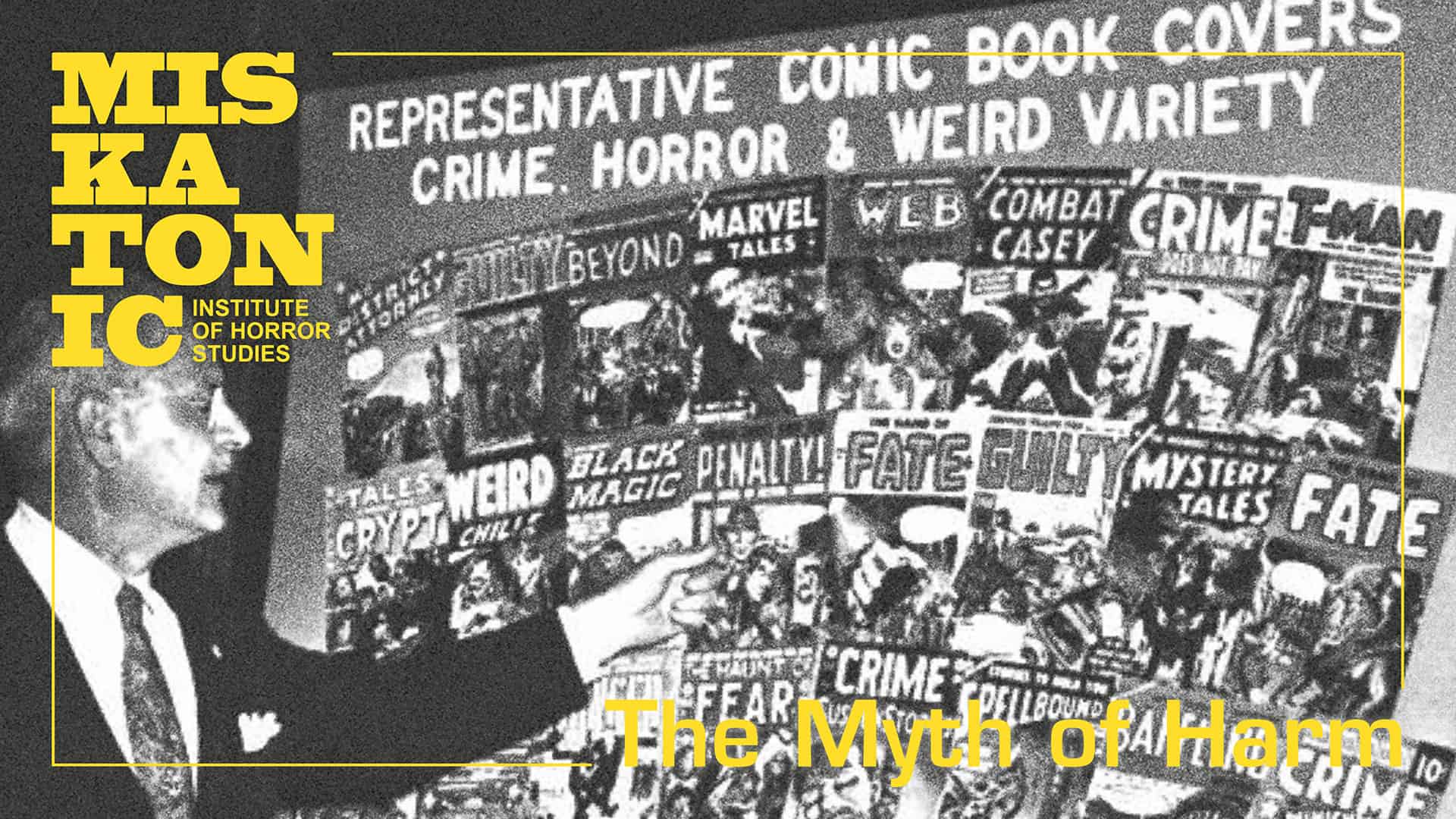
Introducing a cultural paradigm, known as the Myth of Harm, this talk will interrogate the meaning of harm by focusing on major controversies beginning with the 1930s Golden Age of Horror Cinema and moving on to the Horror Comic Hearings of the 1950s, the Video Nasty era of the 1980s, 1990s video game controversies and on into the more contemporary Cyber-Gothic horror. Drawing upon cases such as the James Bulger murder and the Slenderman stabbing, the Myth of Harm explores how horror has been repeatedly cast as a harmful influence upon children at the expense of scrutinising other, more complex, social issues. Furthermore, it seeks to expose how fears concerning negative media effects are often part of a larger narrative pertaining to the regulation of children’s pastimes, moral entrepreneurship, political scapegoating, media sensationalism and genuine fears obfuscated by a centuries-old myth about the horror genre and its ability to harm.
Having gained her PhD from Trinity College, Sarah Cleary is a horror consultant, lecturer and author of The Myth of Harm which explores society’s long and often uncomfortable relationship between children, horror and media effects. She is also a Development Executive for Wild Atlantic Pictures specialising in genre features and the producer of Deadly Doses Podcast, a podcast dedicated to horror. When not talking, writing or dreaming about horror she is producing The Rocky Horror Picture Show which has ran at Dublin’s Sugar Club for the best part of 20 years.