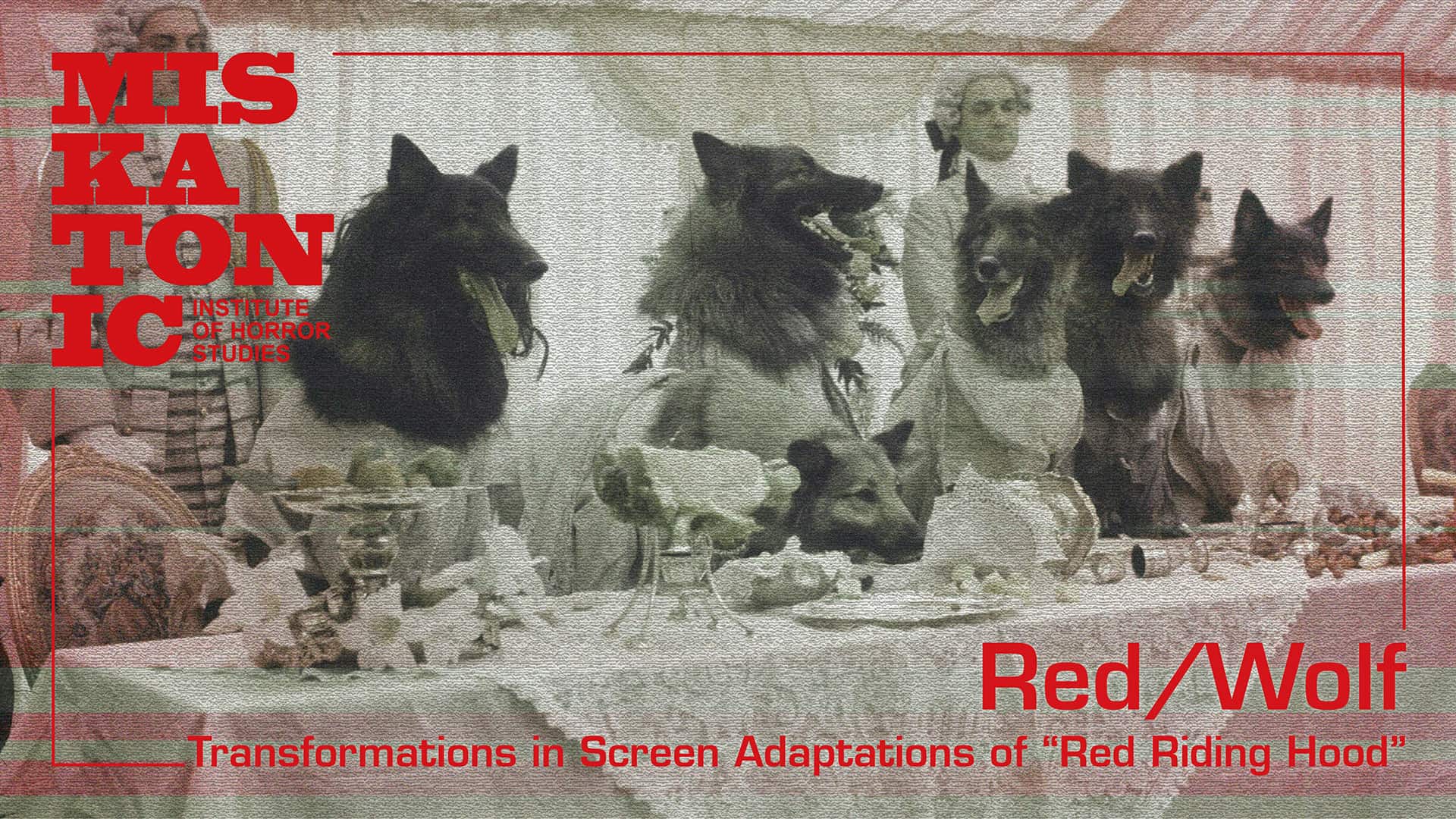
In the late 20th century, fairy tales reemerged in popular culture, often reimagined as gothic fables for adults. These contemporary adaptations examine the false binaries within these tales, while exposing the themes of sexual abuse and recovery encoded therein. “Little Red Riding Hood” provided particularly fertile ground for such explorations, with films such as FREEWAY (1996) and RED RIDING HOOD (2011) following the perils and possibilities for a coming-of-age woman. Rather than passive victims, these protagonists are active, resisting both victimhood and inherited burdens. However, an equally important issue in “Red” adaptations is that monstrosity, like victimization, can be resisted. The figure of the Wolf is not clearly defined in the original tale: Is he an allegory for a predatory Gentleman? Is he a Werewolf? Or is he merely an animal, hungry for a meal? The Wolf may begin as the threatening Other, but his potential for violence can be overcome—or harnessed. This lecture will interrogate a set of deliberately gothic film and television adaptations of “Red Riding Hood” with a particular interest in their messages of recovery and agency.
Elizabeth Abele is an Associate Professor of Literature at the Gulf University for Science and Technology in Kuwait. Her essays on the intersections of American culture with gender and race have appeared in American Studies, Journal of Transnational American Studies and College Literature, and in edited anthologies on work of Kurt Vonnegut, Ridley Scott, Anne Proulx and M. Night Shyamalan. She is the author of Home Front Hero: The Rise of a New Hollywood Archetype, 1988-1999 (2014) and co-editor of Screening Images of American Masculinity in the Age of Postfeminism (2015). Her most recent publications have traced the gothic in contemporary film with ¨Guillermo del Toro’s Political Fairy Tales¨ (REDEN) and ¨Visions of Red Riding Hood: Transformative Bodies in Contemporary Films” (Humanities).