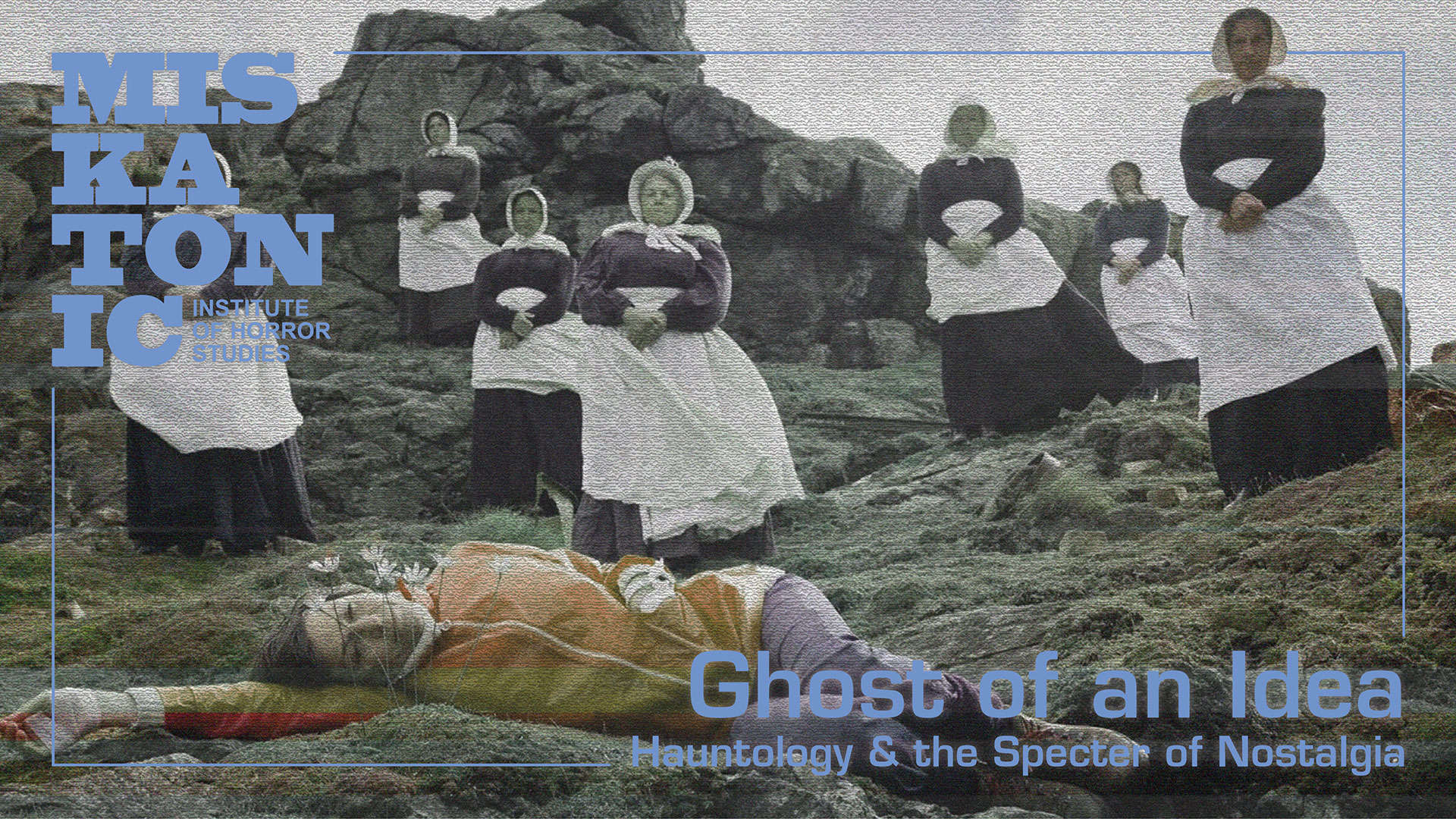
Is the past revitalizing or killing 21st century horror culture? This lecture is an introduction to the critical lens of hauntology, a philosophical approach that uses the metaphors of ghosts and hauntings to interrogate nostalgia, which has seeped into many aspects of 21st century horror. Subgeneric modes like folk horror and the urban wyrd are significant artistic responses to changing political, social, technological, and economic conditions—and they become increasingly valuable as we move into a future in which human memory and our access to the past are being radically transformed. To explore why idealized pasts and unfulfilled promises of the future feature so heavily in 20th and 12st century genre production, we will examine the writing of H.P. Lovecraft, Alan Moore, Nigel Kneale, and Rod Serling; in films such THE SHINING, DON’T LOOK NOW, and THE LAST WAVE; in television programs such as Sapphire and Steel, and Dark Shadows; and in music from Boards of Canada, Broadcast, The Caretaker, and the Ghost Box Records label. This talk offers a critical analysis of horror culture’s quest to acknowledge, understand, restore, and lay to rest the ghosts of the past and the present, and those that will inevitably haunt the future.
William Burns is a Professor of English at Suffolk County Community College. On the day he was born, crucial scenes for both THE EXORCIST and THE WICKER MAN were being filmed, forever marking him as a member of the Haunted Generation. The strange, the eerie, the unsettling, and the obscure have bedevilled him ever since. In search of lost futures, he has stumbled upon forgotten ghosts and shadowy remembrances. His newest book Ghost of an Idea: Hauntology, Folk Horror, and the Spectre of Nostalgia (published by Headpress Books) is the culmination of the journey started in his previous book The Thrill of Repulsion: Excursions into Horror Culture.