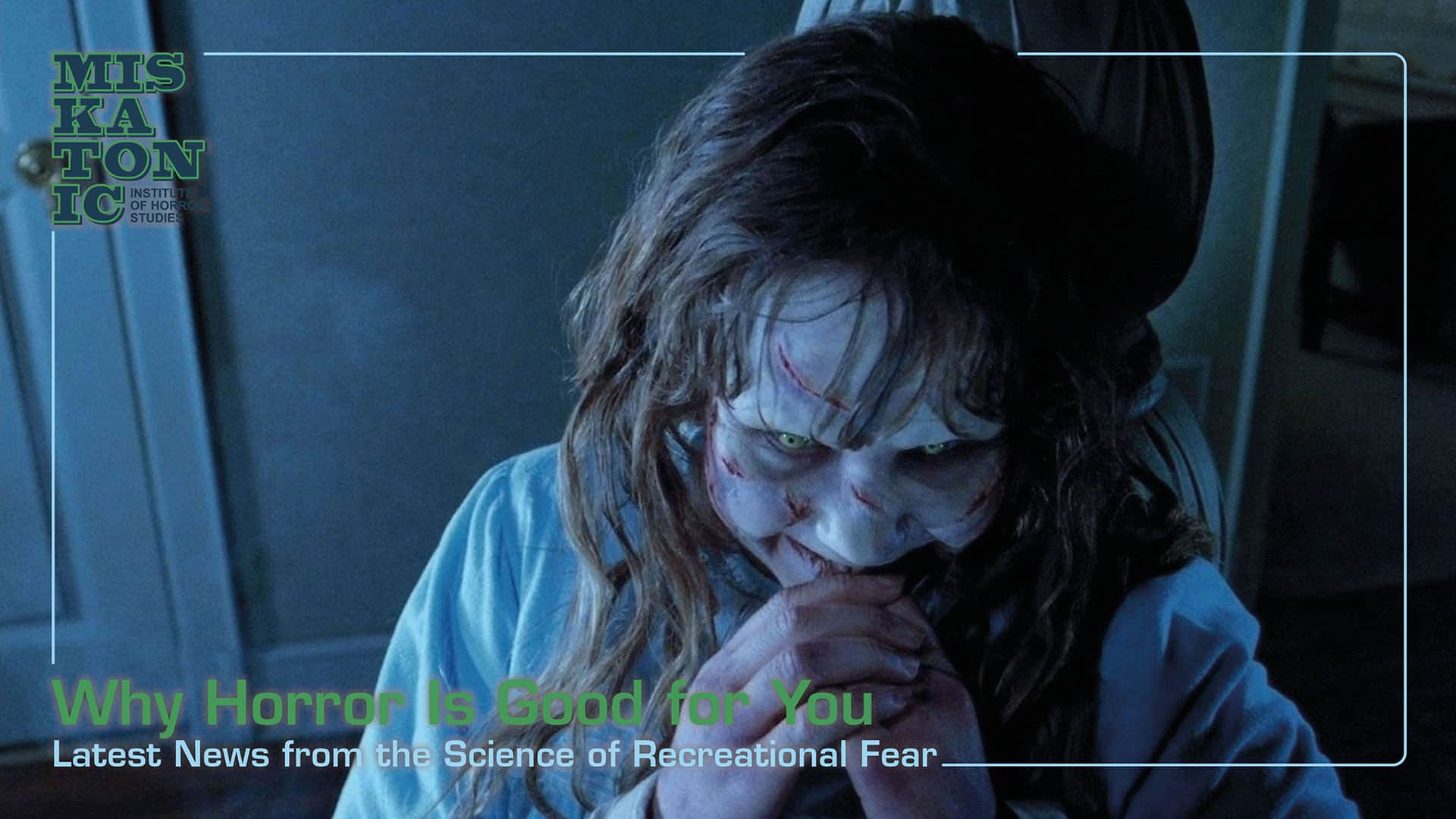
Horror movies are more popular than ever before, even as the world seems to become increasingly scary and unpredictable. Why would we turn to dark fiction when the world shows its teeth? And why are we drawn to terrifying tales of demons, ghosts, and psycho killers in the first place? What are the effects of immersing ourselves in frightening story-worlds? Aren’t we told that such fiction morally corrosive, psychologically harmful, and aesthetically bankrupt?
In this class, Mathias Clasen, co-director of the Recreational Fear Lab at Aarhus University and author of A Very Nervous Person’s Guide to Horror Movies (2021), takes us on a journey to the psychological machine room of horror. We will investigate the mental mechanisms that evolved to protect our species from harm, and come to understand how fictional depictions of threat scenarios—horror, in a word—exploits such mechanisms and may allow us to train our ability to cope with stress, fear, and anxiety. Emerging evidence is suggesting that we can use horror to build psychological resilience and preparedness and perhaps counteract anxiety. In other words, the science of recreational fear is proving Stephen King right when he said that “we make up horrors to help us cope with the real ones.” Moreover, horror seems to have the ability to bond us and may contribute to fine-tuning our moral compass in a prosocial direction. Contrary to what many critics believe, horror thus seems to come with a range of significant positive effects, and even children may benefit from age-appropriate scary stories. The positive effects of horror even seem to go beyond the social and psychological levels; brand-new research from the Recreational Fear Lab suggests that horror and other forms of “recreational fear” may have a beneficial effect on the immune system. But there’s still much to learn about the effects of horror.
Mathias Clasen, PhD, is associate professor in literature and media and co-director of the Recreational Fear Lab at Aarhus University. He is an expert on the psychology of horror and has published widely on the genre, including the books Why Horror Seduces (Oxford University Press, 2017) and A Very Nervous Person’s Guide to Horror Movies (Oxford University Press, 2021).