Location update: Please note that this class takes place at Off Broadway
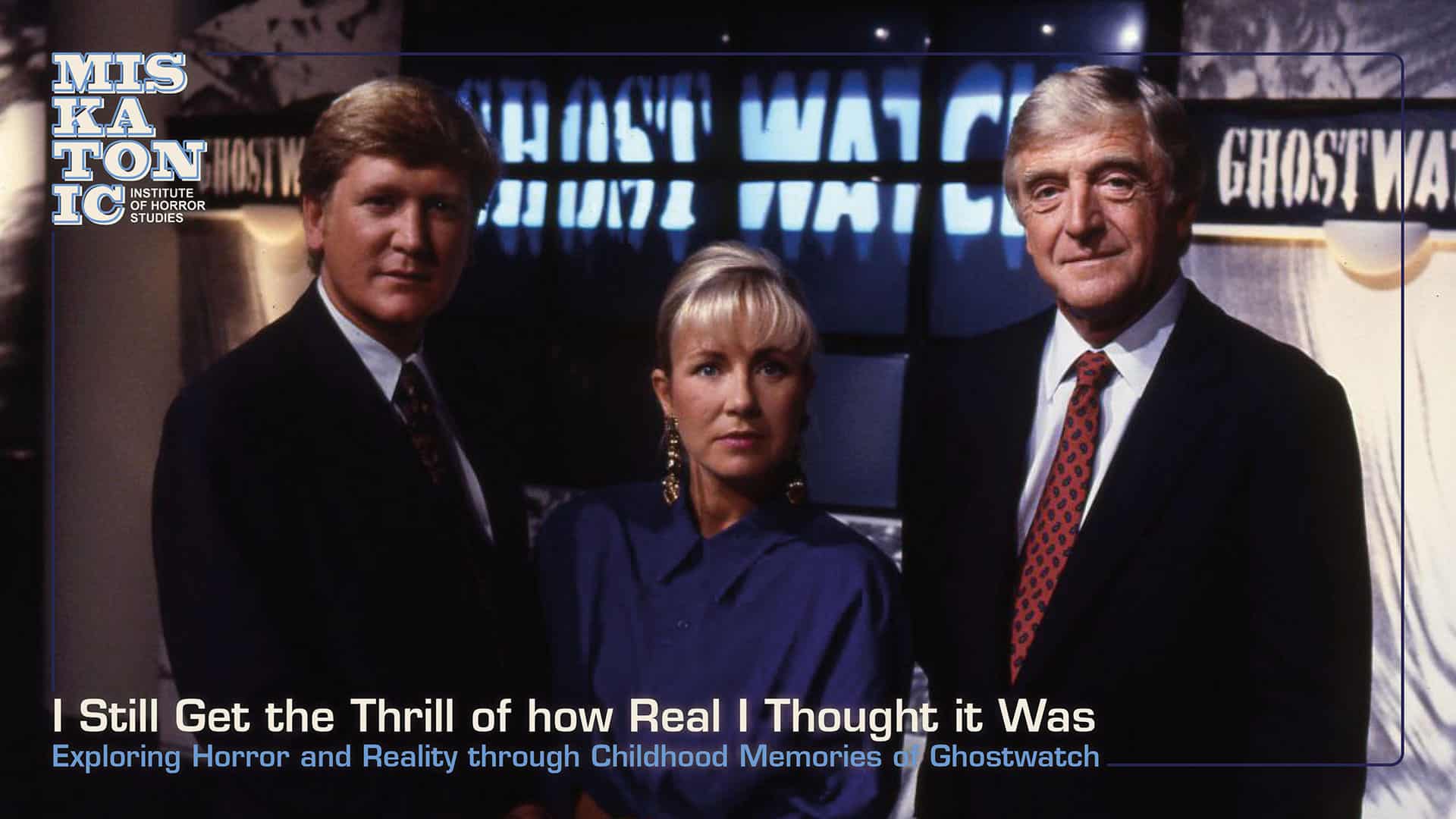
As Catherine Lester has noted, ‘the meeting of “horror” and “children”’ has often being considered to be ‘an inherent contradiction’, incompatible with ‘the cultural constructions of childhood in Western modernity as a distinct stage of life defined by innocence, naivete and vulnerability’ (2022: 2). On Halloween 1992, BBC One broadcast a one‐off ghost story, Ghostwatch, and it ‘was viewed by a sizeable child audience’ (Leeder, 2013: 178). During and after the broadcast, it caused significant controversy, and, despite being advertised as a drama, many people watching thought the broadcast to be factual and live. To date, it has never been repeated by the BBC or any UK‐based television channel. However, fan and media interest has grown exponentially since the early 2000s, including through a succession of DVD and Blu-ray releases and documentaries, from Ghostwatch: Behind the Curtains (2021) to the recent 30th anniversary documentary Do You Believe in Ghosts? (2022), and fan events and activities on social media such as the National Séance.
Key to Ghostwatch’s retrospective appreciation is substantial recognition of its influence on the subsequent development of found footage horror, in particular through its innovative play with conceptions of factuality and liveness. Drawing on the analysis of the detailed memories of 500 Remembering Ghostwatch project participants, this talk will consider how memories of childhood encounters with Ghostwatch on first broadcast allow participants to revisit the ways in which this pioneering work of horror challenged their childhood conceptions of the boundaries between reality and fantasy. Through this, the talk will consider the value and importance of exploring horror spectatorship through audience memories and viewing histories, as well as the aspects of Ghostwatch that were seen to inform these remembered responses and forms of cognitive dissonance, such as the ‘screen surrogate’ roles played by the television presenters Michael Parkinson and Sarah Greene.
Kate Egan is Assistant Professor in Film and Media at Northumbria University. She is the author of Trash or Treasure? Censorship and the Changing Meanings of the Video Nasties (2007), Cultographies: The Evil Dead (2011), and (with Martin Barker, Tom Philips and Sarah Ralph) Alien Audiences (2016), as well as co-editor of Cult Film Stardom (2013), And Now for Something Completely Different (2020) and Researching Historical Screen Audiences (2022). She is also co-editor (with Shellie McMurdo and Laura Mee) of the Hidden Horror Histories book series (LUP), co-investigator (alongside Cat Lester) of the AHRC Youth and Horror Network, and is currently working on Remembering Ghostwatch: Horror, Childhood, Technology and the Home and (with James Rendell) Researching Horror Fans and Audiences in the Twenty-First Century.