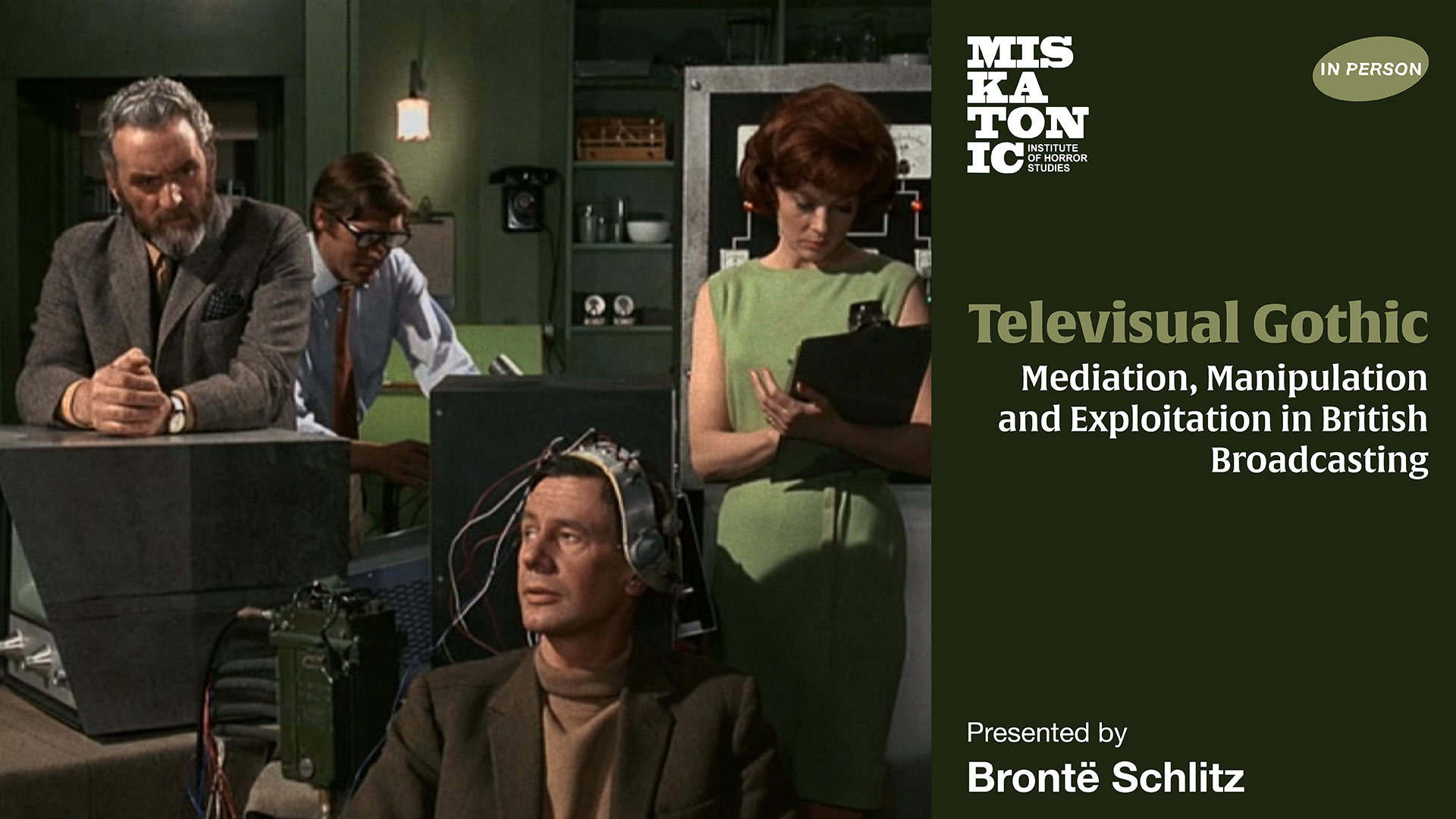
Between the 1950s and 1970s, Nigel Kneale, one of the BBC’s first two staff writers, foresaw a horrifying future for British television. Through a series of Gothic dramas, he envisioned a substitution of televisual mediation for reality; the invention of reality television to both drive ratings, and, following privatisation, income, and to serve the ideological interests of capitalism by reinforcing social stratification, with fatal consequences; and the prioritisation of technological innovation over art and human life.
Kneale’s predictions have now come to fruition. There have been forty recorded suicides linked to participation in reality shows. Figures like Jimmy Savile continue to haunt our perceptions of broadcasting years after their deaths. Working-class people, despite watching more television than any other socioeconomic demographic, are also most likely to distrust and feel misrepresented by public service broadcasters. During COVID-19 lockdowns, television viewership increased to unprecedented levels, genuinely offering a substitute for reality while social contact was prohibited.
But since Kneale’s conjectures began to materialise, British public service broadcasters have also aired numerous dramas that instead position the Gothic as a radical force through which to challenge the potential horrors of British television.
This lecture surveys seventy years of such self-reflexive texts, which I classify under the term Televisual Gothic, and explores their reinstatement of the Gothic’s subversive potential to expose and criticise modes of television production that serve capitalist ends to the detriment of creatives and audiences alike. It begins with discussion of four programmes by Kneale – The Quatermass Experiment (1953), Quatermass and the Pit (1958-9), The Year of the Sex Olympics (1968) and The Stone Tape (1972) – before moving on to the Televisual Gothic’s neoliberal revival via Doctor Who episodes ‘Vengeance on Varos’ (1985) and ‘The Long Game’/‘Bad Wolf’ (2005), as well as the infamous Ghostwatch (1992). Finally, it considers the Televisual Gothic’s transformations in the age of reality television and social media via Red Rose (2022) and Inside No. 9 episodes ‘Séance Time’ (2015), ‘Dead Line’ (2018) and ‘Boo to a Goose’ (2024).
We will examine how the Televisual Gothic facilitates predictions and articulations of, and critical responses to, broadcasters’ work to distort perceptions of reality, atomise audiences, exploit participants, and manufacture shock to drive ratings in the interests of generating profit and fortifying capitalist constructions of class. By heeding their warnings, these screenwriters suggest, we might finally combat the capacity for genuine horror inherent in our most domestic medium.
Brontë Schiltz is a writer, journalist and PhD candidate researching the Televisual Gothic at Manchester Metropolitan University’s Manchester Centre for Gothic Studies. Her academic work has appeared in journals including SFRA Review, The Sibyl, Fantastika Journal, Aeternum Journal, SIC Journal, Revenant Journal and Horrified Magazine, as well as edited collections including Vision, Contestation and Deception: Interrogating Gender and the Supernatural in Victorian Shorter Fiction (2021), Penny Dreadfuls and the Gothic: Investigations of Pernicious Tales of Terror (2023), The Gothique: Myriad Manifestations – A Study of the Various Forms of the Gothic (2023) and Nigel Kneale and Horror (2025). She has appeared on podcasts including Victorian Legacies, The Ghost Story Book Club, The Death Studies Podcast, BERGCAST, There’s Not Always A Twist, The Folklore Studies Podcast and Scarred For Life. She previously worked as social media manager for horror film festival Grimmfest, co-organised Manchester Metropolitan University’s 2024 International Gothic Summer School, and has given talks with Romancing the Gothic, the National Science and Media Museum, the UK Ghost Story Festival and The Evolution of Horror. She provided commentary for Hammer’s 2025 Blu-ray rerelease of Quatermass 2 (1957) and appeared in documentary The Legend of Nigel Kneale: The Creeping Unknown, featured on Quatermass 2 as well as the 2025 rerelease of The Quatermass Xperiment (1955). Her creative work has been published in Hungry Ghost Magazine, Olney Magazine and Lotus-Eater Magazine, as well as Comma Press collections The Book of Manchester (2024) and The Monster, Capital (2025). She is the members coordinator of the International Gothic Association and the deputy editor of Hive Journal.