By the mid-1980s, heavy metal was no longer a subcultural curiosity, it was a commercial juggernaut. In the United States alone, hard rock and metal were estimated to account for as much as 40 percent of all recorded music sales by 1989. Yet this extraordinary success coincided with an equally intense backlash. As metal grew louder, darker, and more visible, it became a lightning rod within the era’s so-called “culture wars,” attracting the suspicion of religious groups, parent-teacher associations, and moral reformers who feared what their children might be hearing, watching, or becoming.
No organisation embodied this backlash more prominently than the Parents Music Resource Center (PMRC), a grassroots campaign led by the wives of several U.S. congressmen. Framing their intervention as a defence of America’s youth against “porn rock,” the PMRC launched a highly visible media crusade that portrayed heavy metal as a corrupting force—one that allegedly encouraged violence, suicide, Satanism, and occult practices. These anxieties were echoed by institutions more directly involved in youth governance, including probation services and mental health professionals, reinforcing the idea that metal fandom itself was a social problem in need of regulation.
The consequences of this moral panic were tangible. Fans were routinely made to feel deviant, while artists and scenes were recast as threats to public morality. In sociological terms, metal culture became a classic “folk devil”: a convenient scapegoat onto which wider fears about youth, sexuality, and cultural change could be projected.
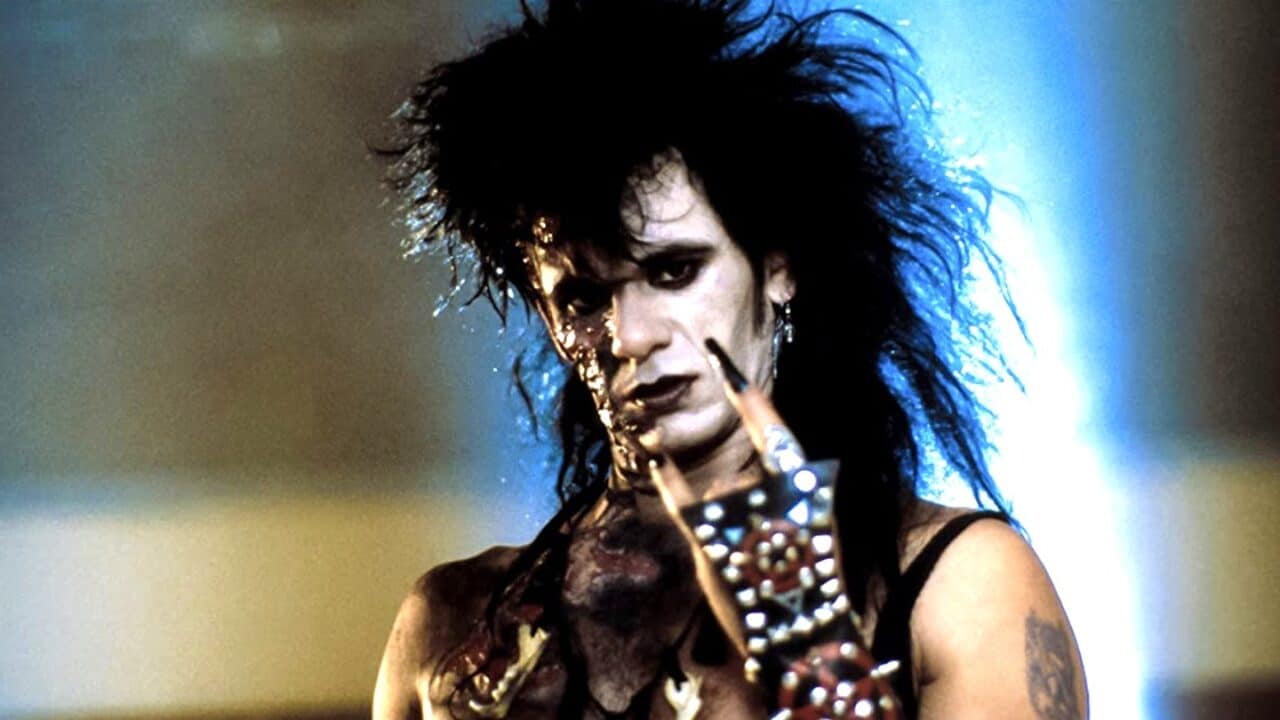
In his lecture for the Miskatonic Institute of Horror Studies, Nedim Hassan explores this febrile cultural moment through an unexpected lens. He argues that a short-lived cycle of 1980s horror films – including Trick or Treat (1986), Rock ’N’ Roll Nightmare (1987), The Gate (1987), and Black Roses (1988) – provided a rare space in which these moral panics could be exaggerated, interrogated, and even resisted. Exploiting metal’s popularity and its demonisation, these films offered scapegoated youth audiences an opportunity to reflect critically on the fears being projected onto them; and to enjoy the spectacle along the way.
Dr Nedim Hassan is a Senior lecturer in Media and Cultural Studies at Liverpool John Moores University’s School of Humanities and Social Science. He is the author of Metal on Merseyside: Music Scenes, Community and Locality (Palgrave Macmillan, 2021), which is the first book-length study of the Liverpool city region’s hard rock and metal scenes. In addition to his ongoing ethnographic and historical research into metal music scenes in Merseyside, Nedim has also published work that examines the representation of metal music culture on film, with a particular emphasis on heavy metal horror films of the 1980s. Since January 2025 Nedim has been the Chief Editor for Metal Music Studies journal, which is published by Intellect. Metal Music Studies is the main intellectual hub for the International Society for Metal Music Studies (ISMMS).