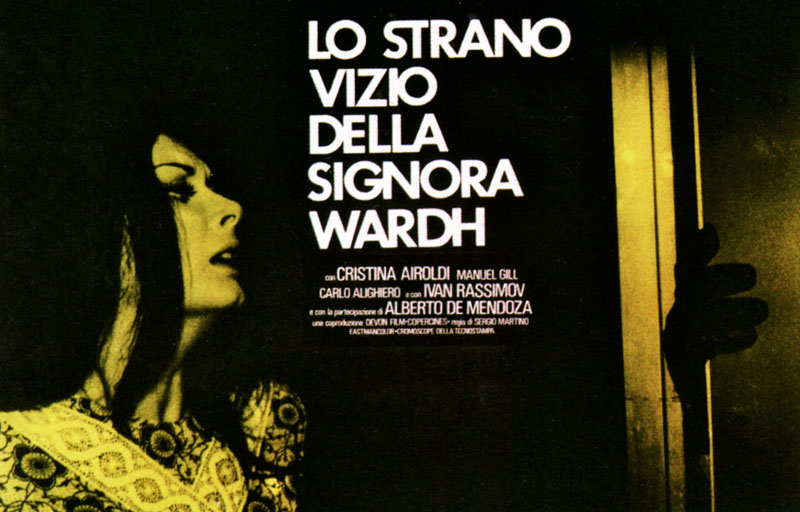
Tuesdays, February 15, 22 + March 1, 6-9pm
‘Giallo’ (pronounced “jahlo”), literally translated from Italian, means “yellow”. The term came to prominence in the late 1920s when Italy’s Mondadori publishing house started issuing murder mystery novels with yellow covers, originally by British and American writers such as Agatha Christie, Raymond Chandler, Ellery Queen and Ed McBain. Once the giallo made the transition from the printed page to the screen in the mid 1960s, beginning with Mario Bava’s The Girl Who Knew Too Much (AKA The Evil Eye) in 1963, an important distinction began to emerge, notably that extended murder setpieces became the artistic centre of the films, often accompanied by bizarre investigatory practices, melodramatic acting and overpowering musical scores.
This course looks at the peak period of the Italian giallo film (1963 – 1982) and discusses the historical development of the genre as well as its predominant themes and motifs, placing it contextually within the changing landscape of Italian and European popular cinema. Issues covered include misogyny, paranoia, xenophobia, the sexual revolution, alcoholism and self-medication, and the giallo’s fantasy microcosm of leisure and independent wealth. Key giallo figures whose work will be discussed include Mario Bava, Dario Argento, Sergio Martino, Luciano Ercoli, Umberto Lenzi, Lucio Fulci, Massimo Dallamano, Ernesto Gastaldi and others. The course will also look at the giallo’s influence on contemporary cinema (most notably the films of Bruno Forzani and Helene Cattet), pop culture, and the curious legacy of J&B Whiskey.
Pre-requisite: Misogyny in the Movies, with instructor: Candis Steenbergen
Kier-La Janisse is a film writer, producer, former programmer, and founder of horror school The Miskatonic Institute of Horror Studies. She is the author of A Violent Professional: The Films of Luciano Rossi (2007) and House of Psychotic Women: An Autobiographical Topography of Female Neurosis in Horror and Exploitation Films (2012/2022) and contributed to Recovering 1940s Horror: Traces of a Lost Decade (2014) The Canadian Horror Film: Terror of the Soul (2015), We Are the Martians: The Legacy of Nigel Kneale (2017) and Refocus: The Films of Roberta Findlay (2023). She co-edited (with Paul Corupe) and published (via her imprint Spectacular Optical) the anthology books Kid Power! (2014), Satanic Panic: Pop-Cultural Paranoia in the 1980s (2015), Lost Girls: The Phantasmagorical Cinema of Jean Rollin (2017) and Yuletide Terror: Christmas Horror on Film and Television (2017). She edited the book Warped & Faded: Weird Wednesday and the Birth of the American Genre Film Archive (2021) and her first film as director/producer, Woodlands Dark and Days Bewitched: A History of Folk Horror was released by Severin Films in 2021.