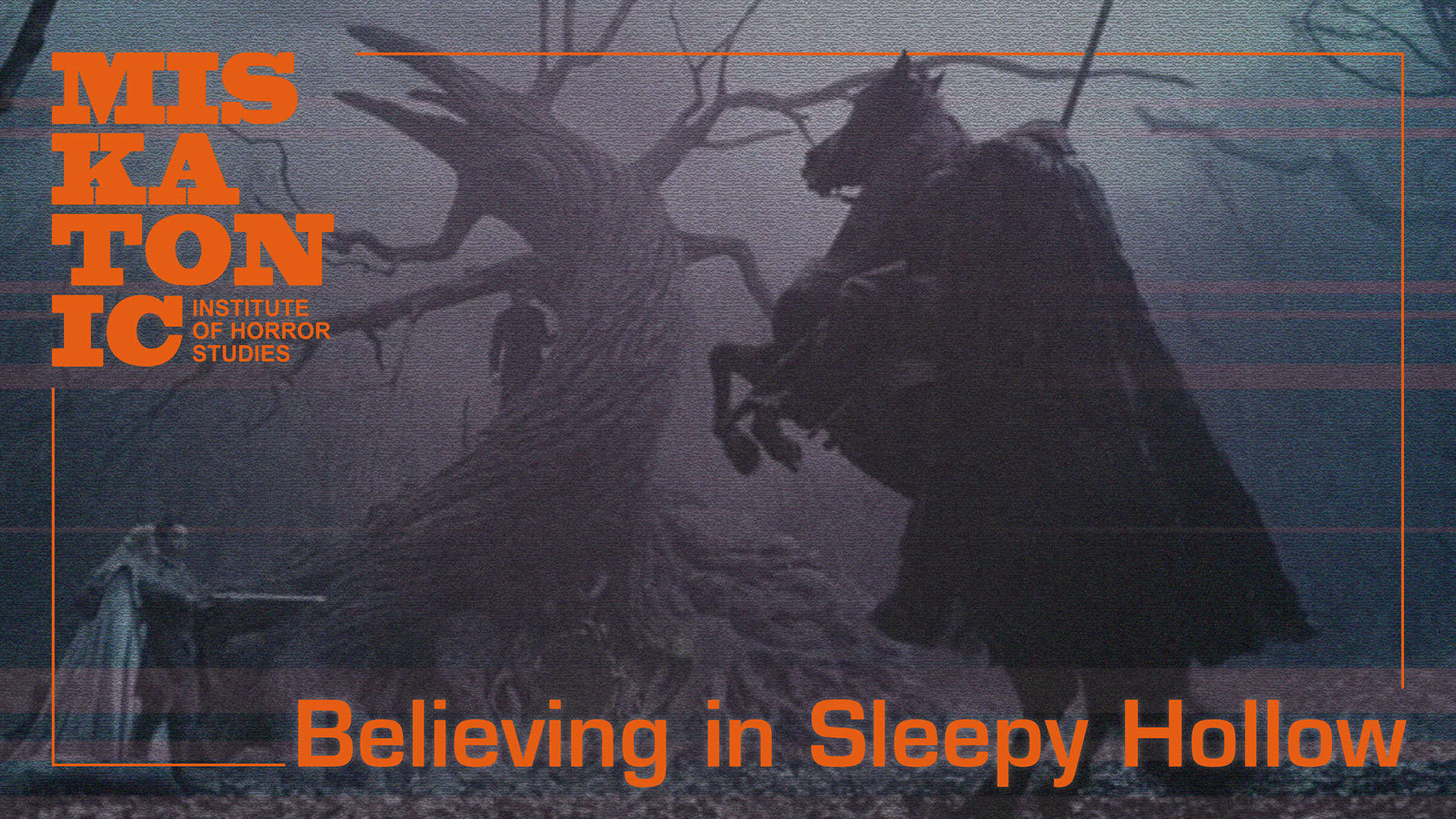
Washington Irving’s short story “The Legend of Sleepy Hollow” is a classic of American horror literature. Since its publication in 1820, the tale of Ichabod Crane and the Headless Horseman has been adapted multiple times for both the big and small screens, variously highlighting the author’s original themes of greed, chivalry, and folk belief. In 1999, Tim Burton took a different tack, building upon Irving’s foundation an allegory for the spiritual debate that still pervades American culture. The director’s first full-blooded horror film re-frames Crane as a skeptical police investigator sent to a Sleepy Hollow gripped by superstitious fears and religious paranoia. As the twin dogmas of rationalism and Christianity pitch their battle, the chaotic power of witchcraft undermines them both. Thus Burton’s adaptation offers a thoughtful and frightening reflection on the ideological character of America itself—a country that still struggles with an inner conflict between spiritual faith and scientific enlightenment. From this perspective, the folkloric tale of Sleepy Hollow may be as relevant now as it was at its birth, almost 200 years hence.
Steve A. Wiggins holds a doctorate in ancient mythology from Edinburgh University and spent several years as a professor before becoming an editor. He is the author of Holy Horror: The Bible and Fear in Movies (2018), Nightmares with the Bible: The Good Book and Cinematic Demons (2020), and The Wicker Man, Devil’s Advocates series (2023).