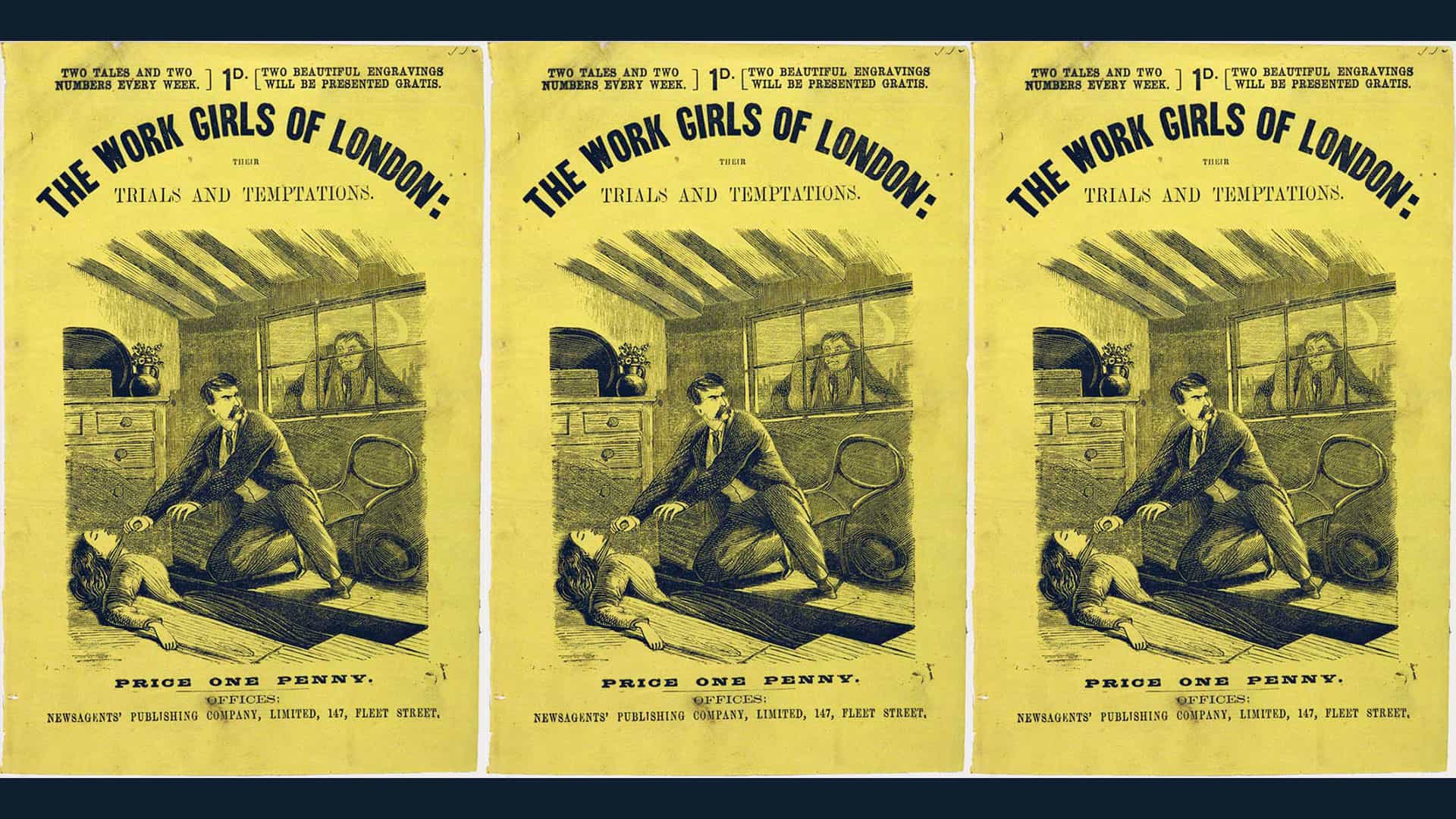
From their inception in the 1840s until their decline in the 1860s, the penny dreadful was a source of derision from both moralist and literary critics. While many advocated for the banning of such texts on account of their salacious and often violent content, literary critics further condemned the texts as inferior plagiarisms of more well-known Gothic novels which could not be considered ‘serious’ literature. Distributed in weekly penny-parts aimed at the working classes, these serials were hugely popular in the Victorian period with texts such as George W M Reynolds’s The Mysteries of London (1844-46) even outselling Dickens. Due to their reputation as the bastardised offspring of Gothic literature, however, the penny dreadfuls have long been regarded as less worthy of critical study than more canonical Gothic fiction. There has, however, been a resurgence of interest in some of these texts particularly the aforementioned The Mysteries of London and James Malcolm Rymer’s The String of Pearls (1846-47) featuring the demon-barber of Fleet Street, Sweeney Todd, which has been subject to numerous adaptations over the years. It is due to this renewed interest – aided by archival work excavating many of these forgotten texts by the contributions of collectors such as Barry Ono – that we are able to access these texts and gain a deeper understanding of these controversial Gothic serials.
This workshop will aim to explore these texts as radical in terms of their political content and demonstrate how these texts show the malleable form of the Gothic mode as they adapt the genre harkening back to older forms and acknowledging their own role within Gothic discourses. The session will look at a breadth of material including more popular, well-known penny serials such as The String of Pearls as well as lesser-known texts such as Herbert Thornley’s Life in London (1846), and Thomas Frost’s The Mysteries of Old Father Thames (1848). These texts offered their readership the sensational and gripping tales of terror featuring subterranean dwellings, murder and cannibalism. However, despite what has been previously suggested, the use of these shocking narratives had a social purpose: to enter into discourse regarding the treatment of the working classes under capitalism and as a result of industrialised labour. Through these Gothic tales, by bringing these topical discussions to the fore, readers were able to exorcise these anxieties through fiction. These three texts have been chosen for their exploration of poverty and exploitative labour is represented through subterranean dwellings.
Please note this is a live broadcast event – the class cannot be watched later, so please be sure you are available at the date and time the class is being offered in before registering. All sales are final, and we will not give refunds for any reason other than class cancellation. Classes curated by Miskatonic London are either in Greenwich Mean Time or British Summer Time depending on the time of year.
Sophie Raine is a PhD student at Lancaster University studying penny dreadfuls and urban spaces. Sophie has previously published on both Victorian sex work in the VPFJ and on subterranean spaces in the Palgrave Handbook of Steam Age Gothic. She is currently co-editing the collection Penny Dreadfuls and the Gothic due to be published in 2022. In addition to this, Sophie is the Peer Review Editor for the Victorian Network.