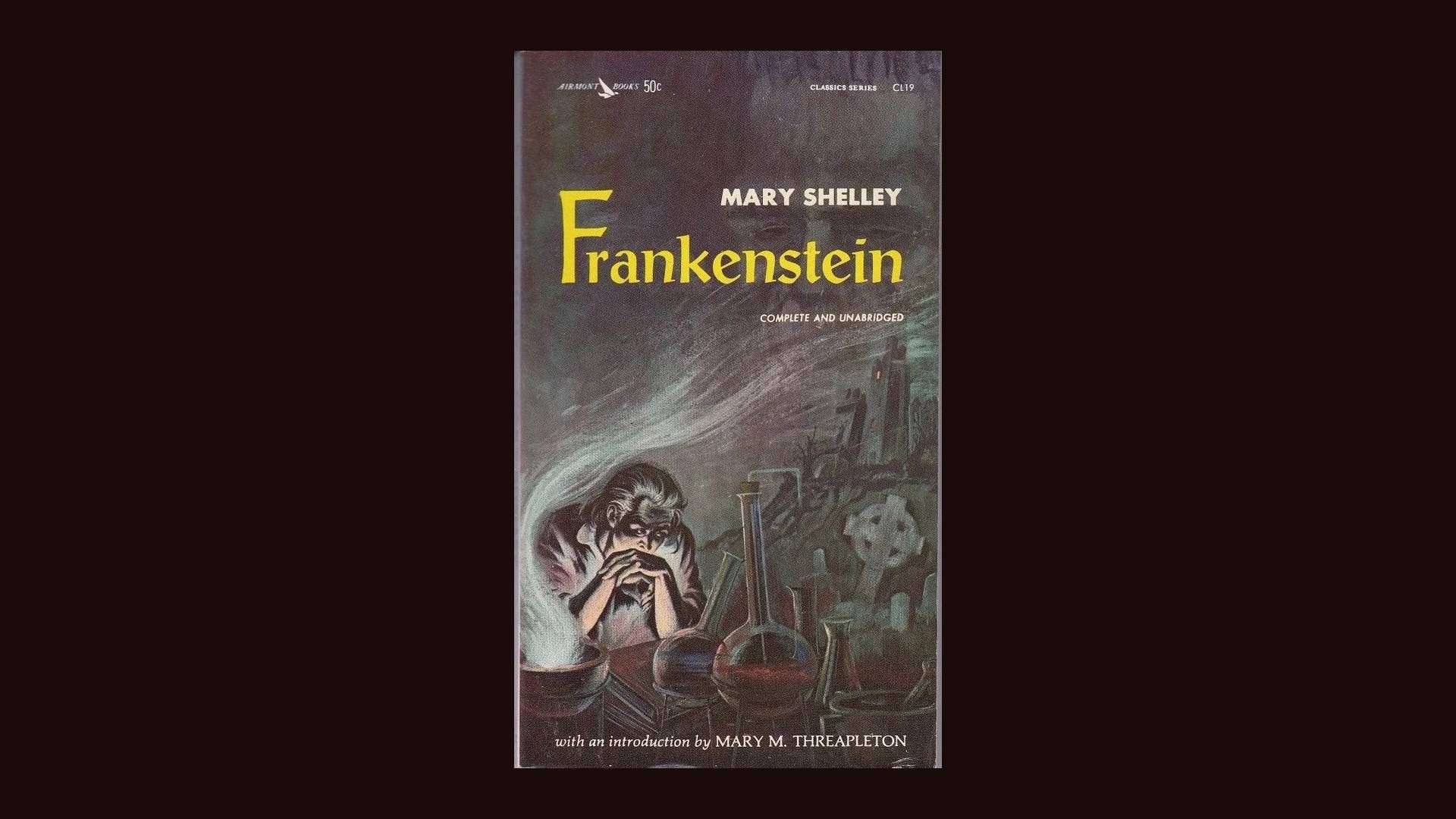
Are humans only born, or can they be made? Must your origins determine your future? Are you fated to be who you are, or can you choose? What lessons does Mary Shelley’s Frankenstein have to teach us about Black Lives Matter and the role of science and technology in shaping our concept of who counts as human? What can we learn through Shelley’s novel about extending human rights–including the right to reproduce–to synthetic, artificial life forms?
Though it was first published more than two centuries ago, Shelley’s groundbreaking narrative is as relevant and provocative today as it was in 1818. Its blend of science fiction, horror, and gothic drama provides a phantasmagorical laboratory in which progressive generations of scholars, writers, and artists continue to test what it means to be human. The novel’s questions about what constitutes human nature, and who can lay claim to human rights, are compellingly applicable to our contemporary political turmoil around how anatomy, appearance, and origin determine one’s identity–or if they even should. Perhaps Frankenstein can help us attend to historic societal wounds that remain open, as we approach futuristic concerns such as medical procedures that facilitate self-affirmation, the progress of artificial intelligence, and the advent of cloning.
This talk will explore Frankenstein’s implications for modern autonomy and identity issues by analyzing the original text with an eye toward science’s impact on racial, sexual, and gender-based discrimination. Topics will range from incest to artificial life, and slavery to the singularity.
The reach of Shelley’s influence and Frankenstein’s fertility for interpretation will be illustrated through a selection of film adaptations, including the first FRANKENSTEIN film by Thomas Edison, James Whale’s iconic films FRANKENSTEIN and BRIDE OF FRANKENSTEIN, Andy Warhol’s FLESH FOR FRANKENSTEIN, BRIDE OF RE-ANIMATOR, FRANKENHOOKER, and the recent MARY SHELLEY. These films will be discussed in relation to the 1818 and 1831 editions of Frankenstein and scholarship about the novel’s production history and influences (Alan Bewell, “An Issue of Monstrous Desire: Frankenstein and Obstetrics”), intersections with race (Allan Lloyd Smith, “‘This Thing of Darkness’: Racial Discourse in Mary Shelley’s Frankenstein”), and relevance for American culture and queer issues (Elizabeth Young, “Here Comes the Bride: Wedding Gender and Race in Bride of Frankenstein“).
Please be advised that this class is not included in the Global Spring 2022 Pass or the New York Spring 2022 Pass.
Please check with your local health authority on the current requirements for masks and vaccination for attending live events.
Wendy C. Nielsen (www.wendynielsen.com) is Associate Professor of English at Montclair State University in New
Jersey, where she teaches European Romanticism, Science Fiction, Enlightenment literature, and other courses about comparative literature. She is interested in solving why certain popular figures recur in British, German, and French literature, as seen in her book Women Warriors in Romantic Drama (University of Delaware Press, 2012) and the forthcoming monograph, Motherless Creations: Fictions of Artificial Life, 1650-1890 (Routledge, 2022). She regularly publishes scholarly essays in academic journals on world literature, Romantic-era automata, theater, the French Revolution, Jean-Jacques Rousseau, Olympe de Gouges, Johann Wolfgang von Goethe, Elizabeth Inchbald, Charlotte Corday, and Boadicea.