Please note this class has two options to participate: Live and virtual via simulcast.
Wuchereria causes your scrotum to swell like a grapefruit, Leishmania can eat your nose, and people infected with Pulex speak willingly of self-amputation. It should be no surprise that we evolved both fear and disgust as a way to avoid being infected by parasites.
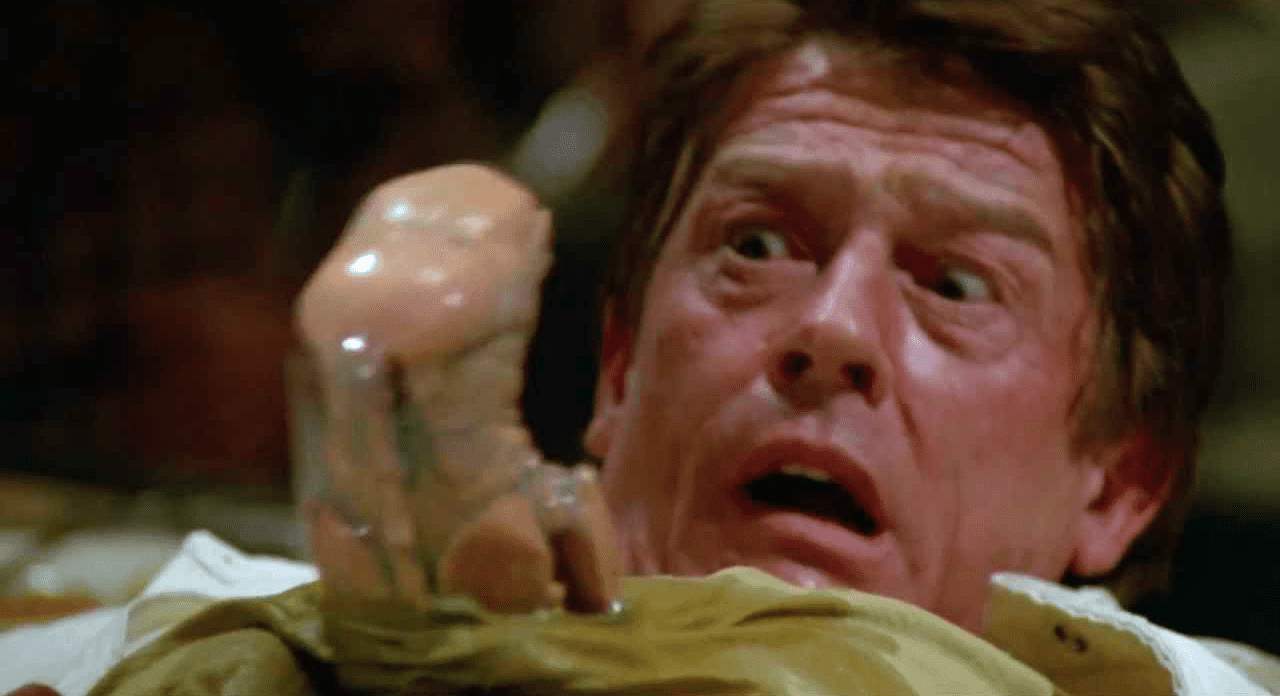
Parasites are why we think poop stinks and why we find a symmetrical face beautiful. Parasites were with us before we evolved as a species, and have since left their mark on our history and many of our cultural practices, and traditions. They also make great villains. Fear of the rabies virus likely led to notable legends about the creatures and monsters that inspired Shelley and Stoker. Invasion of the Body Snatchers, Shivers, and Alien use parasites to create genuine horror. Such films have, at their core, four common elements.
The first, is the horrifying premise that dangers hide unnoticed in our friends, loved ones, or pets. Thus, your boss is their Trojan horse. Your child is their sheep’s clothing. And sometimes your wife is just your wife. The second is the extent that being infected changes “you” to “us”. Namely, some parasites have the capacity to hijack their hosts and take them for unwise, and sometimes tragic trips. Many of us, in fact, host a parasite that wants us dead, and messes with our personality to increase those odds. The third theme is that parasites are outsiders. Usually they are presented as some kind of one-off alien creature we did not see coming. Finally, parasites often have shallow motives, and they come across as pointless, violent monsters.
As such, films about parasites have barely scratched the surface of their ingenuity. In fact, their evolutionary acrobatics are often admirable and unmatched in complexity. Their motives are pure, and often gentle in comparison to carnivores and herbivores. And parasites are not alien, or even oddities. Rather, parasitism is the most popular lifestyle on the planet. We are a parasitic planet, so to speak. Rich functioning ecosystems support rich and diverse parasite communities. Organic food depends on parasites to control insect pests. And some parasites are among the most endangered species on earth, leading to calls for their protection.
In this lecture, Kevin Lafferty will consider how parasites are far more fascinating than how they are represented by the entertainment industry. Then, we’ll go out for sushi.
—
If participating in the live/physical event, please check with your local health authority on the current requirements for masks and vaccination for attending live events.
If participating via live simulcast event – the class cannot be watched later, so please be sure you are available at the date and time the class is being offered in before registering.
Classes curated by Miskatonic Los Angeles are in Pacific Time.
Kevin Lafferty grew up in Pasadena. Despite this setback, he moved to Santa Barbara to study marine biology in 1981, where he remains. To his mother’s embarrassment, he is not a real doctor. Rather, as a parasitologist (not to be confused with a parapsychologist) he studies the role of parasites in natural ecosystems. He is a senior scientist at the USGS, and adjunct professor at UC Santa Barbara, where he influences well-adjusted young minds to find beauty in things like the black fingers of death or raccoon latrines. His academic achievements include receiving the Ward Medal for Parasitology, authoring over 200 scientific publications, and being one of the 10 most cited parasitologists. None of this helps him get a window table or invitations to dinner parties.