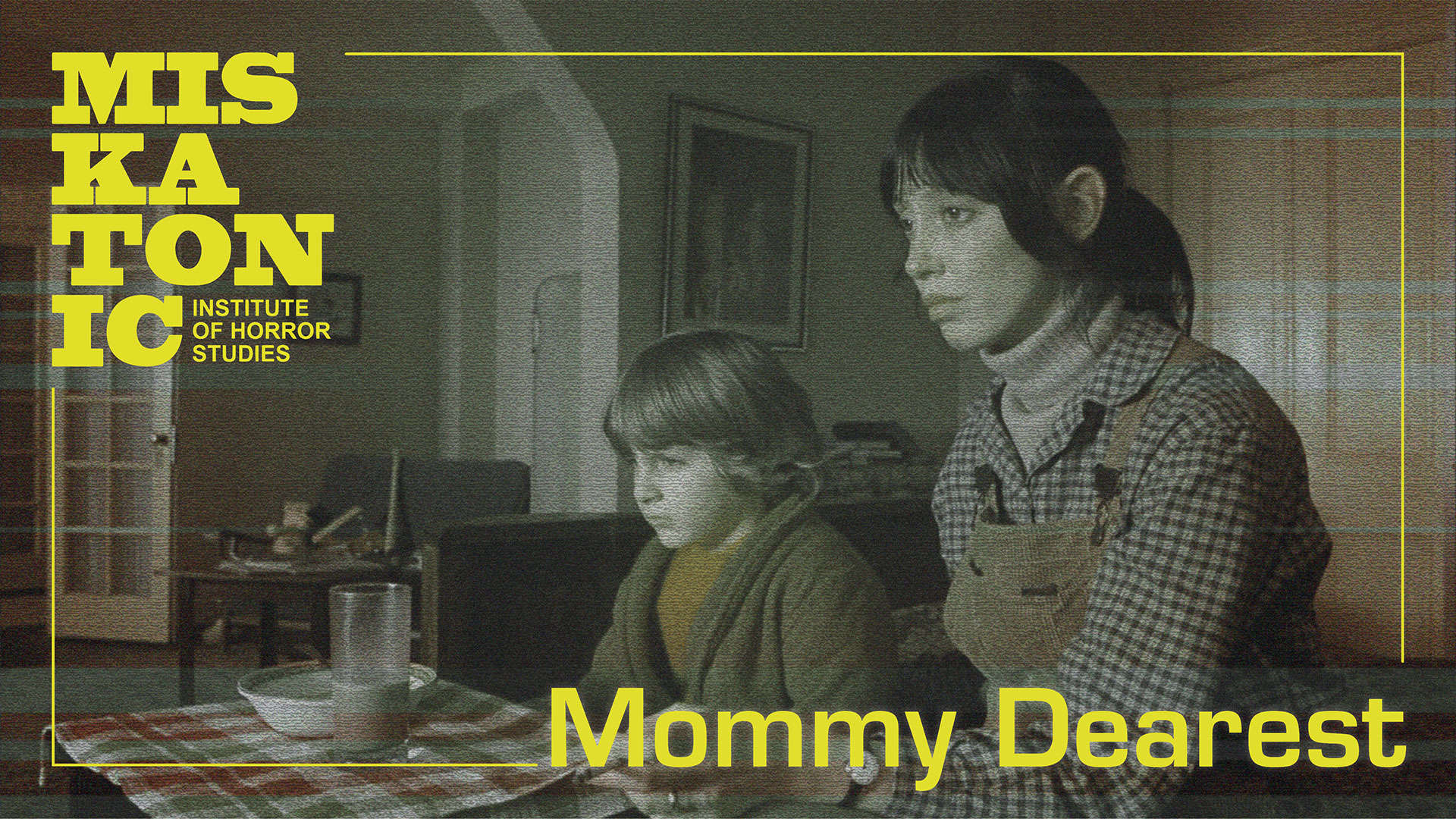
With the dissolution of the Hayes Code in 1968, genre cinema enjoyed a newfound freedom to explore the unique horrors of motherhood. As women underwent bodily changes, there was continuous societal pressure to maintain feminine ideals: A woman must be sexually attractive—and attractive often means youthful. A mother, however, is definitionally mature, and maturity lies outside the bounds of conventional female beauty standards. This catch-22 plays out in films such as ROSEMARY’S BABY(1968), THE EXORCIST (1973), THE SHINING (1980), and even MOMMIE DEAREST (1981), in which the real-life horrors of child abuse, addiction, and ageism take the place of supernatural horrors. In these films, the costume designer becomes a kind of hybrid psychologist-detective, working from a character’s inner life, as well as her cultural context. How does clothing inform us about the protagonist’s state of mind, her stage of life, and the role society wants her to play? And how does the horror genre especially reflect on the challenges of aging, motherhood, and shifting sexual values? Please join costume designer and fashion historian Jolene Marie Richardson for this discussion of fashion as a form of hypertext that conveys essential information about the sociological content of a film.
Jolene Marie Richardson is a New York-based costume designer, fashion historian, and writer. Her designs can be found in various film, stage, and television productions including The Last Drive-In With Joe Bob Briggs. She lecturers at the Cinema Arts Centre in Huntington, NY, and her research is published on her blog Hanging By A Thread, and in the pages of Fangoria.