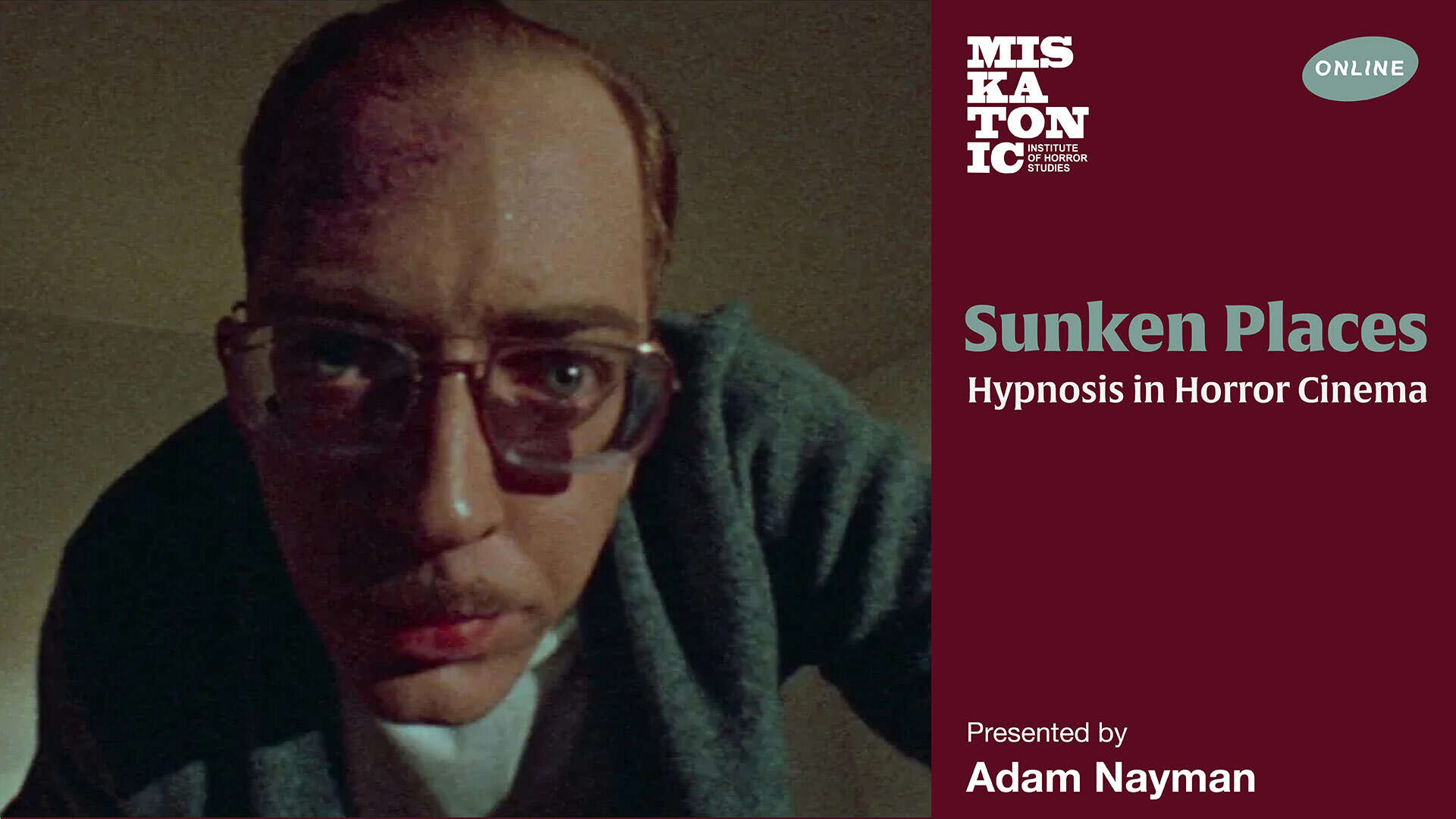
Since cinema’s earliest days, a disturbing archetype has stalked the silver screen. From the 1920 debut of THE CABINET OF DR. CALIGARI to the 2017 arrival of Jordan Peele’s groundbreaking GET OUT, horror cinema has harbored hordes of sinister, mind-controlling mesmerists. These Svengali-like manipulators are undeniably compelling villains, but they also illuminate something essential – and unsettling – about the very nature of film spectatorship itself.
Devious hypnotists appear in disturbing films as diverse as Fritz Lang’s 1933 masterpiece THE TESTAMENT OF DR. MABUSE, to Bigas Luna’s 1987 nightmare vision ANGUISH, demonstrating the medium’s enduring fascination with malicious mentalists. But more than a source of cheap thrills, their preternatural powers reflect the control the filmmakers themselves wield over the inner experiences of vulnerable viewers. At times the function of mesmerism has been more than allegorical, with directors Bernard Rose (CANDYMAN) and Werner Herzog (HEART OF GLASS) employing real hypnotic techniques on the sets of their films.
In this lecture, film critic and author Adam Nayman will examine a variety of films to historicize hypnosis in horror movies. His survey will illuminate the role of hypnosis as both a provocative plot point, and a metatextual symbol of filmmakers’ power over their audiences. In addition to the aforementioned works, Nayman will address Brian De Palma’s SISTERS, Kiyoshi Kurosawa’s CURE, Tilman Singer’s LUZ, and Lars von Trier’s EUROPA.
Adam Nayman is a film critic, lecturer and author based in Toronto. He writes on film for The Ringer, Sight and Sound and The New Republic, and has contributed articles to The New Yorker, The New York Times and The Walrus. He teaches Cinema Studies at the University of Toronto and lectures for a variety of institutions online and in Toronto, including Ryerson and the Bloor Hot Docs Cinema. He is the author of five books, including It Doesn’t Suck: Showgirls, The Coen Brothers: This Book Really Ties the Films Together and Paul Thomas Anderson: Masterworks.