MIS
KA
TON
IC
Institute of
Horror Studies
Archive
Archive
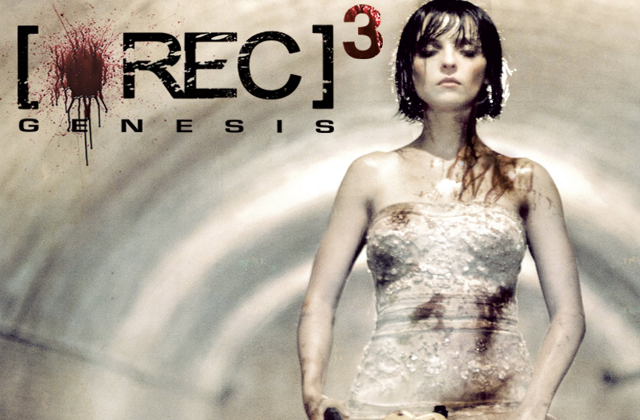
SPANISH HORROR TOWARDS THE 21ST CENTURY: FROM THE DIGITAL TO THE FRANCHISE (NYC Online)
Vicente Rodríguez Ortega
18 February 2021
SPANISH HORROR TOWARDS THE 21ST CENTURY: FROM THE DIGITAL TO THE FRANCHISE (NYC Online)
In the 1980s and early 1990s Horror Cinema had mostly disappeared from the Spanish film industry due to a variety of factors, most remarkably the marginalization of genres through the introduction of a series of legislative changes that favored auteur films. This situation radically changed in the mid 1990s with the arrival of a younger generation of filmmakers that attempted to make it new, often looking inwards (the very history of Spanish cinema) and outwards (international forms of cultural engagement) in order to appeal to the younger generations of film spectators. In this regard, two films, Tesis (Alejandro Amenábar, 1996) and The Day of the Beast (Álex de la Iglesia, 1995) are key landmarks, deploying horror categories and tropes within a dynamic of generic hybridization. In this respect, Tesis also is particularly pioneering in as much as it utilized the “imperfect aesthetics” of digital video. Thus, the film explicitly connects with the wider Spanish mediascape of the 1990s and the rise of reality TV and its characteristic visual “noise” as a key strategy to engage spectators.
In the late 20th century and early 21st century, new directors such as Jaume Balagueró, Juan Carlos Fresnadillo, Paco Plaza, J.A. Bayona or Amenábar himself radically changed the contours of Spanish horror through a fundamental strategy: the internationalization of the national film output from an aesthetic and industrial viewpoint to appeal to both the domestic and foreign markets. In this context, this session will continue through a detailed analyzes of the four installments of the [Rec] franchise (Jaume Balagueró & Paco Plaza), a series of films that extensively uses the imperfect aesthetics of video, and, simultaneously epitomizes the configuration of Horror as the main exportable asset for the national film industry. While discussing the specificities of the above-mentioned films, this session will connect Spanish horror with other international films that deploy the imperfect aesthetic of video as a key stylistic feature, such as The Blair Witch Project, Paranormal Activity and Cloverfield.
To sum up, the session will analyze the main industrial dynamics at the core of contemporary Spanish cinema and also scrutinize a variety of aesthetic strategies in order to pin down one of its dominant trends—the mix of filmic and videographic imagery—exploring also how they relate to transnational modes of address and spectatorial engagement. We will seek to answer the following question: taking horror as a case study, in what ways and how can we speak about Spanish national cinema or should we find an alternative template or conceptualization to define the studied body of works?
Please note these are live events – they cannot be downloaded and watched later, so please be sure you are available at the time and timezone the classes are being offered in before registering.
Vicente Rodríguez Ortega
18 February 2021
Read more
18 February 2021
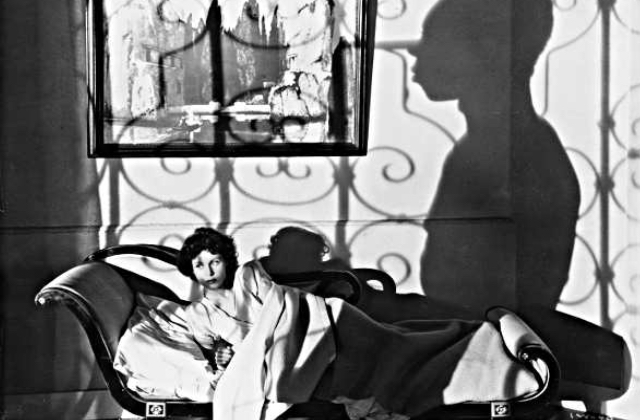
AMERICAN VOODOO: FICTIONALIZING HAITI TO MEDITATE ON US POLICY (London Online)
Maisha Wester
9 February 2021
AMERICAN VOODOO: FICTIONALIZING HAITI TO MEDITATE ON US POLICY (London Online)
There’s one little country that America can’t seem to stop obsessing over. Ever since the slaves rebelled in St. Domingue to end slavery and colonization in the territory now known as Haiti, America has consistently represented the location as the space of nightmares, even stressing a secretive, ritualistic ceremony as the start of the revolution. Thus American representations of Haitian culture reduce them to an island of aberrant sorcerers creating monsters to destroy the West. Even Disney joined the lineup, dropping quips about Haiti’s parasitical nature in films such as The Sorcerer’s Apprentice (2010); likewise, President Trump could not resist alluding to it in his discussions of foreign policy, listing it as one of a number of ‘shithole countries.’
Yet a closer look at these representations and America’s concurrent sociopolitical behaviors reveals that such depictions actually say more about the US and its anxieties and missteps than it ever does about Haiti. Time and again, in various films and texts, Haiti disappears behind a mask of American making as the creators abject problematic political maneuvers and ideals onto the island. After all, as Seabrook notes in Magic Island (1929), Haiti may produce zombies, but it’s Americans they labor for.
This course therefore examines a series of horror films and select texts to consider how these fictions erase Haiti to reveal the monster of American politics. Given the philosophical discord created by the American Occupation of Haiti in light of America’s democratic ideals, we will especially consider the films which arise in the era after the Occupation, in addition to considering how these texts repeat discourses apparent from the late 18th and early nineteenth century and predict representations in later films.
Recommended texts and films:
White Zombie (1932)
The Emperor Jones (1933)
I Walked with a Zombie (1943)
The Serpent and the Rainbow (1985)
‘The Mulatto’ (Victor Sejour)
‘….Dead Men Working in Canefields’ (William Seabrook)
‘Benito Cereno’ (Herman Melville)
Maisha Wester
9 February 2021
Read more
9 February 2021
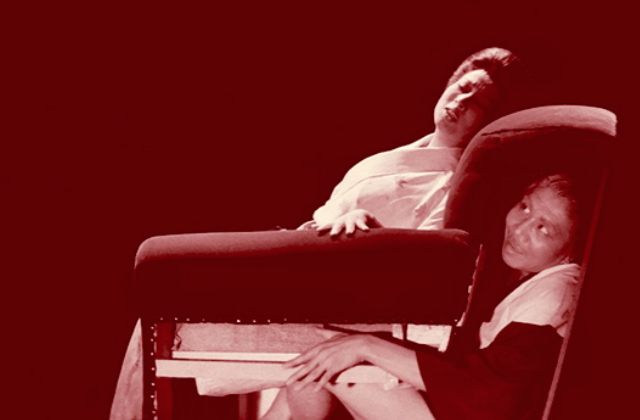
SEEING AND FEELING JAPANESE HORROR: SCOPOPHILIA AND CLAUSTROPHILIA IN EDOGAWA RAMPO (LA Online)
Seth Jacobowitz
28 January 2021
SEEING AND FEELING JAPANESE HORROR: SCOPOPHILIA AND CLAUSTROPHILIA IN EDOGAWA RAMPO (LA Online)
Edogawa Rampo (1894 – 1965) burst onto the literary scene in 1920s Japan with a rapid succession of short stories and novels that not only inaugurated a new genre of homegrown Asian detective fiction, but also helped to articulate the cultural logic of “erotic, grotesque, nonsense” (ero-guro-nansensu) in the interwar period. At a time when new forms of mass media, mass culture, and the avant-garde were ascendant, Rampo earned instant notoriety for his startling explorations of Japanese modernity: the lure of secret codes, fetishes, and illicit or prohibited desires; a fascination with cinema and visual spectacles; the psychology of leisure, boredom, and thrill-seeking; and a seemingly inexhaustible wanderlust for the labyrinthine back alleys and boulevards of the imperial metropolis Tokyo.
This presentation will discuss scopophilia and claustrophilia as two predominant horror themes in Rampo’s fiction writing and their adaptation in the Japanese film and art worlds. Jacobowitz argues that he used these drives for visual pleasure and a love of coffin-like, enclosed spaces to achieve something closer to what his contemporaries, the Surrealists, regarded as a bridge between reality and imagination toward a more pure expression of the unconscious mind. We will explore his “Stalker in the Attic” (1926) and the film The Watcher in the Attic (1976) directed by Noboru Tanaka, the omnibus film Rampo Noir (2005), and Suehiro Maruo’s graphic novel The Strange Tale of Panorama Island (2010), among other works.
Please note these are live events – they cannot be downloaded and watched later, so please be sure you are available at the time and timezone the classes are being offered in before registering.
Seth Jacobowitz
28 January 2021
Read more
28 January 2021
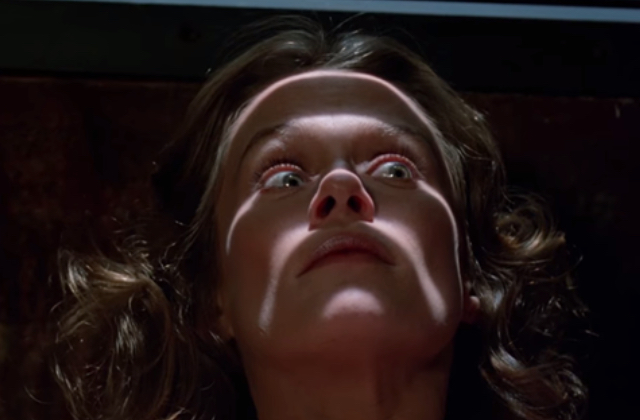
HORROR COMES HOME: WOMEN AND THE MADE FOR TELEVISION MOVIE (NYC Online)
Amanda Reyes
21 January 2021
HORROR COMES HOME: WOMEN AND THE MADE FOR TELEVISION MOVIE (NYC Online)
The birth of the made for television movie just happened to coincide with the second wave feminist movement that was erupting along the streets of the United States. Television, which has always been interested in the female demographic, represented this movement in different ways, and the telefilm became a prime space for interrogating issues that were important to women. The genre telefilms of the golden age of the seventies and well beyond also challenged common stereotypes that have afflicted female characters for years. However, the action didn’t always happen on screen. Several women worked behind the scenes and had their hand in the production of some of the most memorable television genre films. Horror Comes Home: Women and the Made for Television Movie is a retrospective on the oft-maligned made for TV genre movie, exploring how these films spoke to its female audience in a way no other medium has.
Please note these are live events – they cannot be downloaded and watched later, so please be sure you are available at the time and timezone the classes are being offered in before registering.
Amanda Reyes
21 January 2021
Read more
21 January 2021
THE WORLD IS FULL OF TERRIBLE PEOPLE: SHIRLEY JACKSON AND FEMALE VIOLENCE (London Online)
Bernice M. Murphy
12 January 2021
THE WORLD IS FULL OF TERRIBLE PEOPLE: SHIRLEY JACKSON AND FEMALE VIOLENCE (London Online)
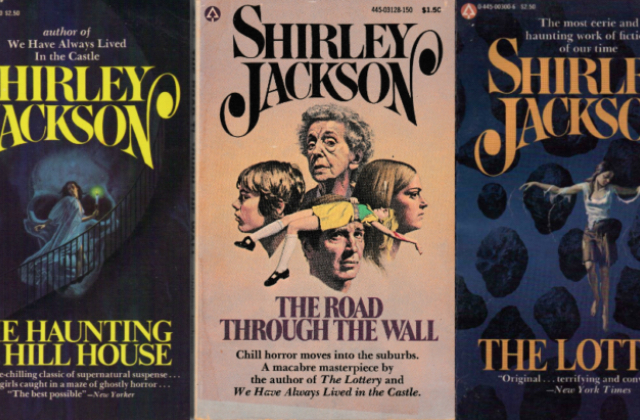
Shirley Jackson (1916-1965) remains best known for her supernatural horror novel The Haunting of Hill House (1959). After several decades of critical and commercial neglect, her work now has a higher public profile than ever. Her back catalogue has been re-published by Penguin, Ruth Franklin’s award-winning 2016 biography inspired numerous reviews and articles, and Jackson’s estate has released two well-received collections of her previously unpublished work since the late 1990s, with a volume of her selected letters forthcoming. A film adaptation of her 1962 novel We Have Always Lived in the Castle was released last year, and Mike Flanagan’s 2018 Netflix series The Haunting of Hill House brought a whole new generation of fans to her work.
In the first half of seminar, I will be talking about who Jackson was and the reasons why her work remains so important for horror fans and creators. The impressive scope of her literary interests will be an important theme. As well as creating the most famous haunted house of the twentieth-century, Jackson also played a foundational role in establishing the ‘Suburban Gothic’ sub-genre (in her debut novel, The Road Through the Wall, 1948), wrote what is still the single-most notorious American folk horror tale (‘The Lottery’, 1948), and penned a bleakly funny apocalyptic satire (The Sundial, 1956). What’s more, she was also one of the most high-profile working mothers of her era, thanks to the many non-fiction stories about her busy family life published in contemporary women’s magazines.
In the second half of the talk, I will focus on one particularly timely (and influential) aspect of Jackson’s interest in domesticity and female interiority: her recurrent depiction of deeply troubled young women. I’ll argue that precocious mass-murderer Merricat Blackwood, the narrator of We Have Always Lived in the Castle, is the precursor to the many young women in the contemporary horror cinema canon who find the boundaries between reality and fantasy dangerously malleable. Within American horror cinema, teenage girls are often only permitted to openly express rage when their actions are related to some kind of external supernatural force (as in The Exorcist, Carrie, Teeth, Ginger Snaps and Jennifer’s Body). We Have Always Lived in the Castle is therefore particularly interesting in that it explicitly relates its heroine’s disturbing behaviour to the deeply dysfunctional workings of the nuclear family. I will then discuss several recent horror films focusing on homicidal young women whose behaviour and motivations owe much to the Jackson blueprint. These films will include Excision (2012), The Bleeding House (2011), Black Swan (2010), Stoker (2013), The Eyes of My Mother (2016), and Thoroughbreds (2018).
Please note these are live events – they cannot be downloaded and watched later, so please be sure you are available at the time and timezone the classes are being offered in before registering.
Bernice M. Murphy
12 January 2021
Read more
12 January 2021
Enchanting Technology: Making, Hacking, and the Occult Imagination (LA online)
Peter Bebergal
21 December 2020
Enchanting Technology: Making, Hacking, and the Occult Imagination (LA online)
This just-added special Solstice class is included in your LA Pass or your Global Pass! Note it takes place in Pacific time.
Since this class falls on the Winter Solstice, the class will be preceded by a brief talk about the Winter Solstice from Dr. Greg Salyer, President of the Philosophical Research Society, who are our usual Los Angeles venue and our partners in presenting this special class.
Magic and technology share a deeply intimate relationship to the human experience as they are both methods that use tools to gain control over nature and ourselves. The magician and the inventor both attempt to break open conventional ways of working with the forces that shape our lives. Magic is, indeed, a kind of spiritual hacking: They are opening the machine of the universe to understand how it works and bend it towards a new purpose. And when magicians and artists use technology to explore the occult imagination they reveal new ways of enchanting our lives.
Based on the research from Peter Bebergal’s Strange Frequencies, this multi-media presentation will take participants through the history of how human beings have attempted to interact with the otherworldly using technology. John Dee’s shew stones, spirit photography, and ghost radios, are all examples of our capacity to reengineer our spiritual lives. These, and other kind of occult practices require experimentation, breaking boundaries, and using devices in ways they might not be originally intended for. This desire to restore some inner agency to our own lives is also apparent recent popularity of DIY and maker culture. We are seeking enchantment and wonder in new ways and are coming to see it means pushing up against spiritual and material restrictions.
Peter will stage the fantastic with film clips, photographs, and sound recordings. Topics include: The legend of the golem; automata and the uncanny valley; magic lanterns and natural magic; spirit photography; electronic voice phenomena; and the dreamachine.
The course will propose that belief in the supernatural is not required to be enchanted. Technology provides means through which we can activate that part our imagination. Hacking is a state of mind.
Please note these classes are live events and cannot be downloaded for later viewing.
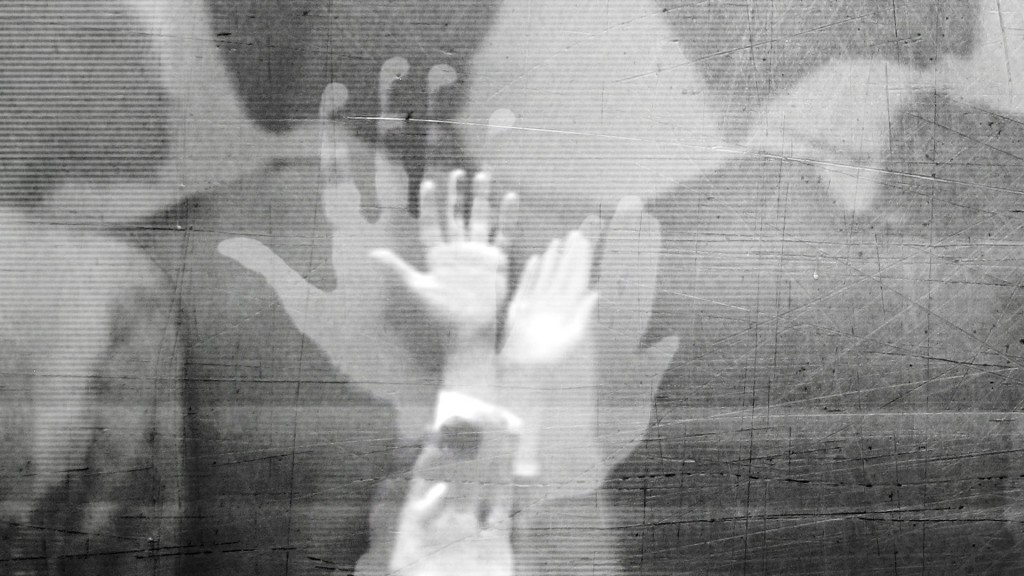
Image from: Peter Strickland’s radio adaptation of Nigel Kneale’s The Stone Tape
ORIGINAL EVENT TRAILER (From 2019 class):
Peter Bebergal
21 December 2020
Read more
21 December 2020
TALKIN' TO DRACULA AND HIS CREW: THE GOTH SUBCULTURE'S ETERNAL AFFAIR WITH HORROR (NYC online)
Andi Harriman
17 December 2020
TALKIN' TO DRACULA AND HIS CREW: THE GOTH SUBCULTURE'S ETERNAL AFFAIR WITH HORROR (NYC online)
Thou dost feel that I shudder. — My teeth chatter while I speak, yet is is not with the chilliness of the night — of the night without end.
– Edgar Allan Poe, The Premature Burial
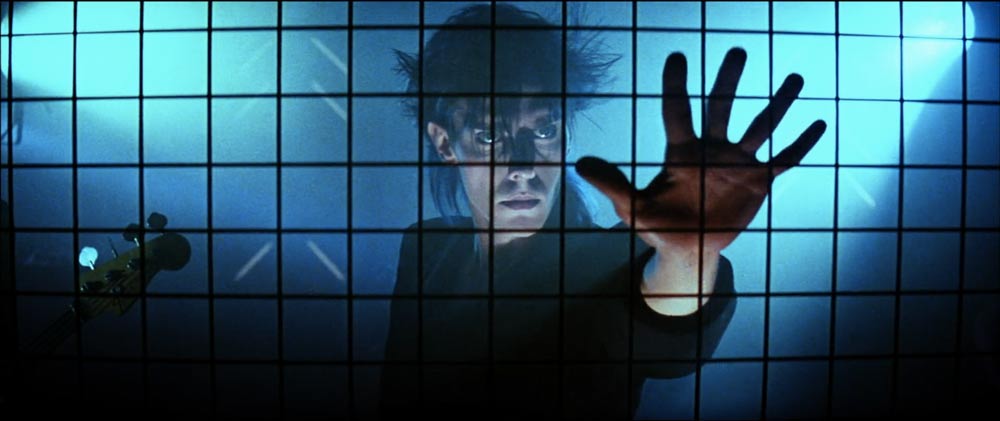
In 1983, Tony Scott’s The Hunger introduced one of the most important moments of goth history. Cast as a vampire, David Bowie and his co-star Catherine Deneuve stalk the nightclub looking for prey. With fog so thick it casts a strange haze on the pit of writhing dancers, Bauhaus’ “Bela Lugosi’s Dead” begins its nine-minute long requiem with a foreboding, echoing bassline and a screeching guitar. Frontman Peter Murphy appears in frame behind a cage – his face sunken in, the light perfectly angled towards his high set cheekbones. The strobe light clicks, counting the seconds until Bowie’s character locks in on his victim. Here, goth’s past and future converge – forever and ever.
This lecture will discuss the inextricable link between horror and the goth subculture through music, visuals, fashion, and spaces – with an emphasis on the 1980s. It will focus on the allure of the unknown and its pleasurable horrors, as well as their underlying meanings. While the foundation of goth gathers inspiration from early horror films (Dracula, The Cabinet of Dr. Caligari), it also influenced later iterations of the horror genre through visuals and soundtrack selections (The Crow, Queen of the Damned). Additionally, we will discuss how the aesthetics of the horror genre leaked into the interior of the club: not only did the music set the tone, but the decor of its walls created the overall atmosphere, which at times included meat bags (Planet X, Liverpool) and an elevated coffin surrounded by candelabras (The Magic Circle, Zürich). Topics covered will also include Freud’s das unheimliche (the uncanny) within album art – such as X-Mal Deutschland’s cover for their 1982 single for “Incubus Succubus” – as well as Danielle Dax’s performance in The Company of Wolves, and Propaganda Magazine’s video trilogy. Plus, musical and visual samples from beloved artists including The Cure and Siouxsie and the Banshees as well as the ghastly theatrics of bands such as Specimen, Neva, Parálisis Permanente, and the Virgin Prunes.
Please note these are live events – they cannot be downloaded and watched later, so please be sure you are available at the time and timezone the classes are being offered in before registering.
Andi Harriman
17 December 2020
Read more
17 December 2020
BLOOD IN THE STREETS: FILM CYCLES, SERIAL KILLERS AND THE GIALLO (London online)
Austin Fisher
10 December 2020
BLOOD IN THE STREETS: FILM CYCLES, SERIAL KILLERS AND THE GIALLO (London online)
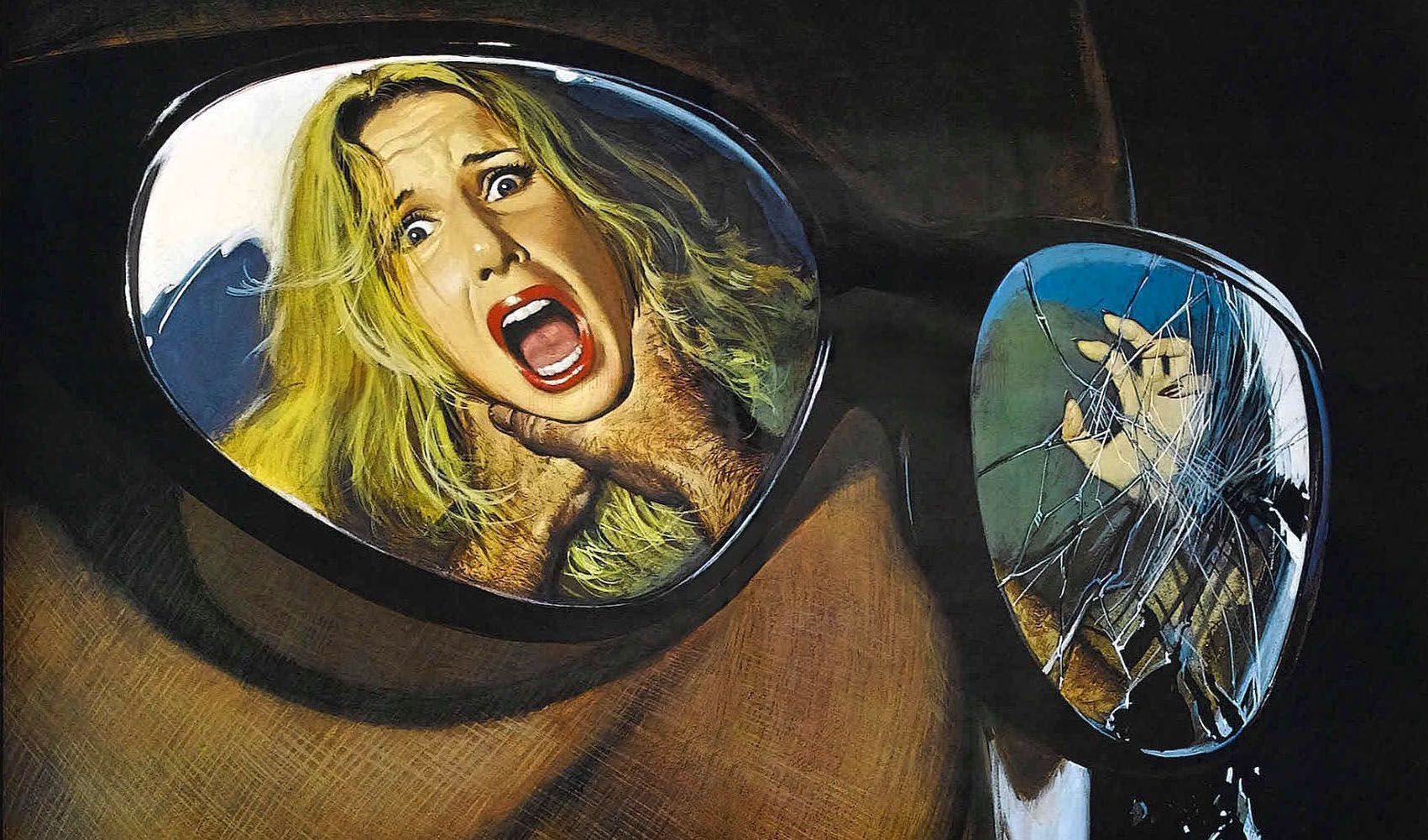
The vast collection of rapidly-produced murder mystery films that emerged in 1970s Italy has become known in exploitation cinema histories as the giallo. This all-encompassing categorisation has however subsumed several smaller, loosely-connected film cycles, each of which was embedded in its immediate cultural, economic and political contexts in different ways. This talk will investigate how a collection of these cycles capitalised on preoccupations with the recent past in 1970s Italy, and an attendant sense of disquiet towards modernity and the pace of socio-cultural change. This will in turn reveal various strategies that were being deployed to exploit the local film market, in a perpetual attempt to capitalise on topicality and the perceived tastes of the popular audience.
The key cycles to be considered include a small collection of films that make explicit reference to memories of the Second World War weighing heavily upon the present (In the Folds of the Flesh, Naked Girl Killed in the Park, Watch Me When I Kill, Hotel Fear), commentaries on the increasingly globalised lifestyles of affluent post-war modernity (a much larger category, including such films as Blood and Black Lace, A Quiet Place to Kill, Blade of the Ripper and What Have You Done to Solange?) and ‘rural’ gialli that gaze inwardly at Italy’s atavistic underbelly, to deploy a well-established set of discourses surrounding the nation’s past and the onset of modernity (Bay of Blood, Don’t Torture a Duckling, Torso, The House of the Laughing Windows, Bloodstained Shadow).
Ultimately, the talk will consider these films as prime examples of the serial repetition that characterised Italy’s popular film industry in the 1960s and 1970s. Numerous opportunistic (and usually short-lived) bursts of activity – known locally as filoni – emerged around the profitable film genres du jour. By looking at several of these cycles side-by-side (and placing them in the broader context of numerous filoni focusing on violent crime that emerged at the same time), this talk will examine how this sector of the film industry engaged both with contemporary events and the whims of the market: firstly, by creating speculations in an attempt to predict where the next cycle might lie, informed by previous patterns; and secondly, to exploit the short-lived favourable market conditions of already profitable cycles. My interest is therefore not with uncovering ‘hidden’ preoccupations in the films. Rather, it is with investigating how the industrial conditions of filone filmmaking demanded production decisions that relied on the assumption that such preoccupations were present in a target audience.
Please note these are live events – they cannot be downloaded and watched later, so please be sure you are available at the time and timezone the classes are being offered in before registering.
Austin Fisher
10 December 2020
Read more
10 December 2020

Wasteland: The Great War and the Origins of Modern Horror (LA online)
W. Scott Poole
3 December 2020
Wasteland: The Great War and the Origins of Modern Horror (LA online)
“It was a corpse factory,” left wing political theorist Rosa Luxemburg said about the Great War, what we generally call today World War I. The corpse factory also brought the dead to life in ways that still cause us to shiver. The Great War is the mother of horror.
We will, for example, meet an infantry officer fighting in the Carpathians (Dracula country), named Bela Lugosi. We will discuss not only how his experience of exile following the failed Hungarian revolution affected his long-running identification with Dracula (one that began before 1931).
We also will meet some lesser known grandparents of horror like French director Abel Gance whose 1919 film J’Accuse arguably represents the first zombie film. In his climatic scene, armies rise from the dead and move en masse against a world that betrayed them. But Tom Savini and Greg Nicotero did not fashion these images of the undead. Gance used veterans, scarred, bandaged and mutilated, as his extras…most of which would return from the film set to their very real deaths at Verdun.
Can we say the Great War created the horror film? In many respects yes. The idea of the terrifying supernatural, of course, has its roots in the earliest human civilizations and probably back to the first ceremonial burials. But we will learn how modern horror received a special impetus from what happened to the human body, what could be done to the human body, by the terrifying tech introduced in the Great War.
Film clips from Nosferatu and The Cabinet of Dr. Caligari, along with lesser known works like The Unholy Three and Warning Shadows, will be discussed as the new form of horror. We’ll see, in fact, that the Great War even changed our language for talking about these films as. By the 1930s, the idea of the “horror film” enters several languages and replaces the “weird mystery” description of films dealing with the supernatural.
Finally, we’ll see the growth of what we’ll call horror culture and how the Great War shaped it. We’ll learn about Lovecraft and Machen’s fascination with the war and how surrealism and horror joined common cause.
The Great War transformed the modern world. The Great War also filled that world with nightmares, some old as time but made new in the ghastly aftermath of the conflict. Join us in exploring the wasteland.
Please note these are live events – they cannot be downloaded and watched later, so please be sure you are available at the time and timezone the classes are being offered in before registering.
W. Scott Poole
3 December 2020
Read more
3 December 2020
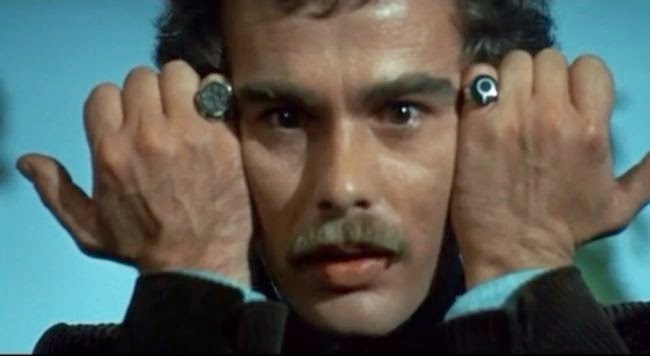
THE BAD TRIP: PSYCHEDELIC HORROR CINEMA, 1967-1972 (NYC online)
James Riley
19 November 2020
THE BAD TRIP: PSYCHEDELIC HORROR CINEMA, 1967-1972 (NYC online)
In March 1966 Life magazine published ‘The Exploding Threat of the Mind Drug that Got Out of Control’, an article that covered the growing popularity of LSD use in America. Staff writer Gerald Moore was largely even-handed in his account, reporting that LSD could provide the user with ‘beatific serenity and shimmering insight’. However, he struck a darker, more cautionary tone when he described the case of an unnamed ‘teen-age girl’ who attended a Hollywood ‘acid party’. According to Moore, she took LSD and then suffered a bad trip: ‘a sudden vision of horror or death which often grips LSD users when they take it without proper mental preparation.’
Within psychedelic culture the threat of the bad trip hovers like an ominous presence. Psychedelic or ‘Mind-clearing’ drugs may promise wisdom, visionary insight or a fabulous holiday for the brain, but they can also release the horrors of the id, tear the veil of sanity and pull you into the void.
As psychedelic culture took root into the public imagination, film-makers of the mid to late 1960s, drew heavily on its visual language. From the art-house to the drive in; Conrad Rooks’ Chappaqua (1966) to Ed Mann’s Hallucination Generation (1966), cinema variously made use of and attempted to imitate the sensory intensity of the stereotypical acid trip: polychromatic colours, spatial-temporal distortion and strange, surreal encounters. However, as this class will explore by way of an illustrated talk, it was the horror cinema of the period that made the most productive and imaginative use of psychedelic imagery. Films like Michael Reeves’ The Sorcerers (1967), Vernon Sewell’s Curse of the Crimson Altar (1968) and Daniel Haller’s The Dunwich Horror (1970) vividly rendered ‘sudden vision (s) of horror or death’ in scenes that carried a distinctly acid-tinged ambience. These cinematic bad trips are gateways to inner space and terrifying psychic landscapes. Along with other examples by directors including José Mojica Marins, Ray Danton and ‘J.X. Williams’, they signify a preoccupation with a horror of the mind, not of the body.
With reference to writers including Aldous Huxley and Timothy Leary this class will chart the emergence of psychedelia across the Sixties and will examine the incorporation of its visual language in horror cinema during the period 1966-1972. Rather than seeing the films in question as acts of exploitation, the talk will frame them as radical works of acid horror, a from which in the case of The Dunwich Horror is used to conjure the cosmic vertigo integral to H. P. Lovecraft’s writing. Further, the talk will also read back from the films to the wider drug culture to uncover a sense of horror underpinning the psychedelic experience as a whole.
Please note these are live events – they cannot be downloaded and watched later, so please be sure you are available at the time and timezone the classes are being offered in before registering.
James Riley
19 November 2020
Read more
19 November 2020