MIS
KA
TON
IC
Institute of
Horror Studies
Archive
Archive
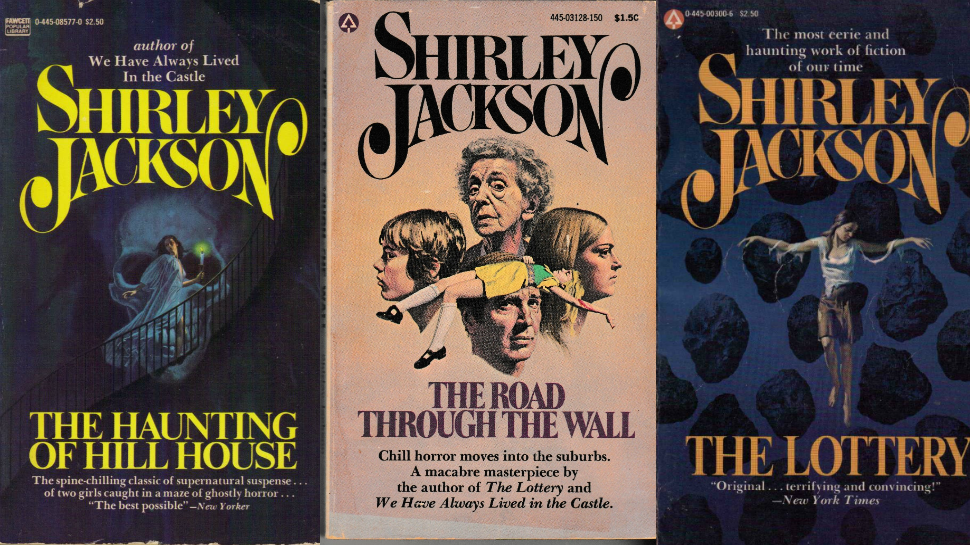
POSTPONED: THE WORLD IS FULL OF TERRIBLE PEOPLE: SHIRLEY JACKSON AND FEMALE VIOLENCE (London)
Bernice M. Murphy
9 April 2020
POSTPONED: THE WORLD IS FULL OF TERRIBLE PEOPLE: SHIRLEY JACKSON AND FEMALE VIOLENCE (London)
Please note this class is postponed due to concerns about COVID-19. Refunds have been issued, and yuo will be notified when we have a new date set for the class. We apologize for any inconvenience.
Shirley Jackson (1916-1965) remains best known for her supernatural horror novel The Haunting of Hill House (1959. After several decades of critical and commercial neglect, her work now has a higher public profile than ever. Her back catalogue has been re-published by Penguin, Ruth Franklin’s award-winning 2016 biography inspired numerous reviews and articles, and Jackson’s estate has released two well-received collections of her previously unpublished work since the late 1990s, with a volume of her selected letters forthcoming. A film adaptation of her 1962 novel We Have Always Lived in the Castle was released last year, and Mike Flanagan’s 2018 Netflix series The Haunting of Hill House brought a whole new generation of fans to her work.
In the first half of seminar, I will be talking about who Jackson was and the reasons why her work remains so important for horror fans and creators. The impressive scope of her literary interests will be an important theme. As well as creating the most famous haunted house of the twentieth-century, Jackson also played a foundational role in establishing the ‘Suburban Gothic’ sub-genre (in her debut novel, The Road Through the Wall, 1948), wrote what is still the single-most notorious American folk horror tale (‘The Lottery’, 1948), and penned a bleakly funny apocalyptic satire (The Sundial, 1956). What’s more, she was also one of the most high-profile working mothers of her era, thanks to the many non-fiction stories about her busy family life published in contemporary women’s magazines.
In the second half of the talk, I will focus on one particularly timely (and influential) aspect of Jackson’s interest in domesticity and female interiority: her recurrent depiction of deeply troubled young women. I’ll argue that precocious mass-murderer Merricat Blackwood, the narrator of We Have Always Lived in the Castle, is the precursor to the many young women in the contemporary horror cinema canon who find the boundaries between reality and fantasy dangerously malleable. Within American horror cinema, teenage girls are often only permitted to openly express rage when their actions are related to some kind of external supernatural force (as in The Exorcist, Carrie, Teeth, Ginger Snaps and Jennifer’s Body). We Have Always Lived in the Castle is therefore particularly interesting in that it explicitly relates its heroine’s disturbing behaviour to the deeply dysfunctional workings of the nuclear family. I will then discuss several recent horror films focusing on homicidal young women whose behaviour and motivations owe much to the Jackson blueprint. These films will include Excision (2012), The Bleeding House (2011), Black Swan (2010), Stoker (2013), The Eyes of My Mother (2016), and Thoroughbreds (2018).
Bernice M. Murphy
9 April 2020
Read more
9 April 2020
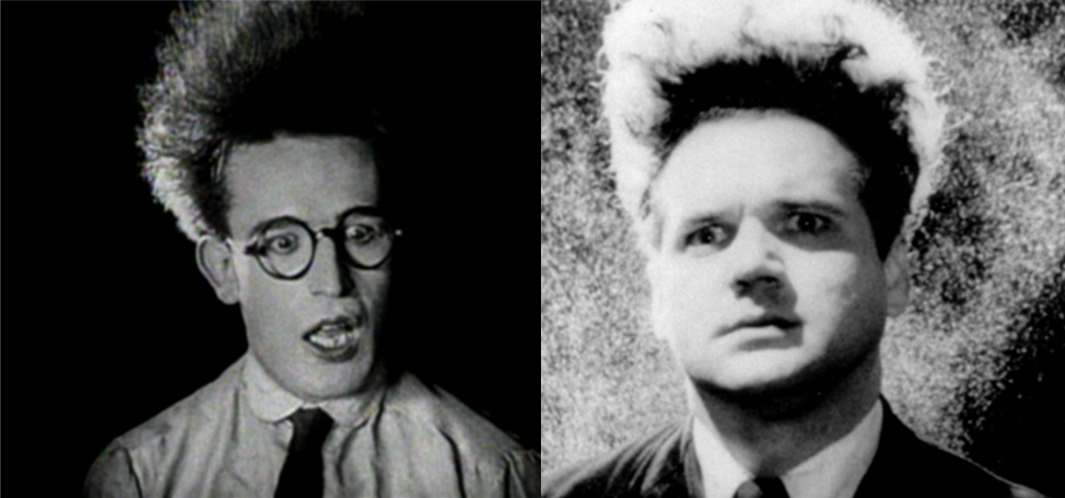
CANCELLED: HA! AAAH! THE PAINFUL RELATIONSHIP BETWEEN HUMOR AND HORROR (Los Angeles)
David Misch
12 March 2020
CANCELLED: HA! AAAH! THE PAINFUL RELATIONSHIP BETWEEN HUMOR AND HORROR (Los Angeles)
We regret to inform ticketholders that Miskatonic and David Misch have agreed to postpone his Miskatonic LA class “Ha! Aaah! The Painful Relationship Between Humor and Horror” due to concerns about COVID-19. We will look at rescheduling his class in the fall, however in the meantime ticketholders will receive a refund through Eventbrite shortly.
From 1920’s Haunted Spooks to Pride and Prejudice and Zombies, the genre of horror-comedy has never really, you should excuse the expression, died.
Yet humor and horror seem pretty different; one’s a pie in the face, the other’s an axe in the skull. It’s obvious why watching someone being torn asunder would be horrible but why is the endless suffering of the Three Stooges funny? Could there be any congruencies between funny and fear, snickers and screams, gore and gags, slapstick and slaughter?
Yes.
This class proposes – carefully, while remaining alert and well-armed – that the two genres are not mortal enemies.
For one thing, people in pain are a perennial part of every art; to be fascinated with human suffering is to be human. Both comedy and horror can show us how to live (and, of course, die); from Psycho we learn that Death can come to anyone at any time. Also, to always shower with a friend.
The class will examine horror’s relationship with philosophers’ explanations of comedy: Immanuel “Carrot Top” Kant’s Incongruity Theory (it’s funny when two things that don’t go together go together); Sigmund “Shecky” Freud’s Relief Theory (comedy is a rapid expulsion of tension); Thomas “Nutso” Hobbes’s Superiority Theory (“You’re in pain and I’m not – ha!”); Henri “Giggles” Bergson (comedy requires “a momentary anesthesia of the heart”); and Mel Brooks (“Tragedy is when I cut my finger; comedy is when you fall into an open sewer and die”).
We’ll explore the mechanics of both using video clips and examples ranging from Frankenstein and Dracula to Abbott & Costello, and try to figure out what makes us laugh and/or scream.
We’ll see that both genres love loss of control, anarchy, the breakdown of rules and conventions – the beast within us set free. And both exploit our paradoxical feelings about helplessness: seeing someone out of control can be hilarious (a clumsy person falling) or horrifying (a clumsy person falling into a snake-pit suspended over a shark-pit next to a zombie zoo).
Both humor and horror also share a mordant view of our relationship to pain; an obsession with the human body and its multifarious fluids; and a subtext of death and transcendence underlying the eviscerated flesh and fart jokes. What could be more blood-curdlingly fun?
David Misch
12 March 2020
Read more
12 March 2020

GOLEMS, DYBBUKS & OTHER MOVIE MONSTERS: THE SEARCH FOR A JEWISH HORROR FILM (London)
Mikel J. Koven
12 March 2020
GOLEMS, DYBBUKS & OTHER MOVIE MONSTERS: THE SEARCH FOR A JEWISH HORROR FILM (London)
This class is divided into two parts. In the first part, Mikel Koven illustrates the representation of Jews and Jewish characters. Mainstream horror cinema has been known to draw upon Jews and Jewish belief traditions as a kind of domesticated exotica. Jews are cast as either wise scholars of arcane magic, or as voices for cynical positivism, proponents of scientific rationalism in opposition to Christian metaphysics and mysticism. In many cases, the cosmology shown in these films is much less Jewish, and more likely to be Christian beliefs performing a kind of Jewish drag show.
The second part of the session explores Jewish folklore and looks to legends about Golems and Dybbuks as sources for cinematic horror. Ultimately, this class is designed to explore the relationship between cultural identity and horror cinema. Specifically, Koven discusses the extent to which these films avail themselves to Jewish lore and also maintain the cultural contexts which first developed these narratives. In other words, just how Jewish are these Jewish horror movies?
Mikel J. Koven
12 March 2020
Read more
12 March 2020
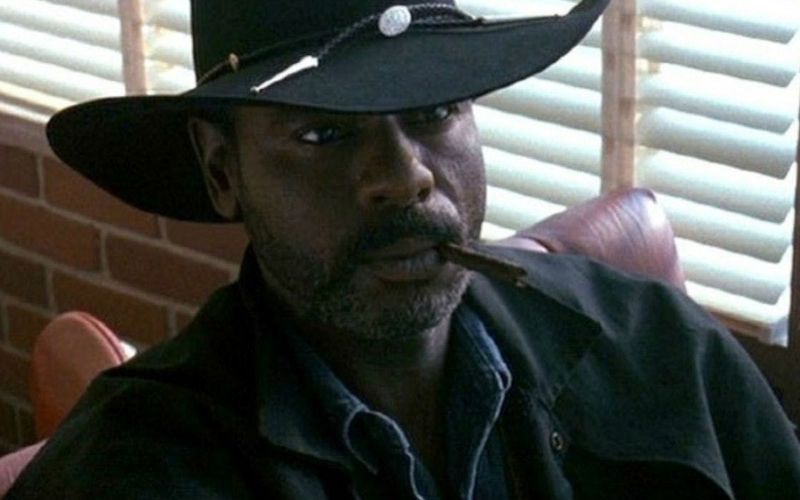
HOW TO DELIVER A TERRIFYING INFO DUMP: EXPOSITORY MONOLOGUES IN HORROR (Los Angeles)
Gillian Wallace Horvat
13 February 2020
HOW TO DELIVER A TERRIFYING INFO DUMP: EXPOSITORY MONOLOGUES IN HORROR (Los Angeles)
Expository monologues – the long speeches delivered by a character to provide backstory or motivation – can be the downfall or the showstopper of a horror film, and there’s at least one in a vast majority. The purpose of all these soliloquies is an extended, intense effort to overcome the unusually high threshold of disbelief concomitant with the horror genre, generally in an attempt to answer questions for the audience like: How is this possible? Why did she do this – and in such a convoluted and oblique way? Why is this not a plot hole?
For actors and directors in the genre space expository monologues are an occupational hazard that have the potential to be a moment of cinematic glory… if you have the right tools. In this presentation for both performers and filmmakers, we will study the four types of expository monologues and review instructive examples of each. They comprise:
Explaining an implausible/supernatural situation (Poltergeist) and possibly encouraging a risky solution
Tenuous justification for a character’s actions up to this point (usually involves a reveal or twist)
Providing backstory from previous film(s) to catch up the franchise fan or fully inform a viewer who hasn’t seen the earlier installments
Retrocontinuity – indispensable for franchises and reboots where the director maybe changing mythology (Scream 3, Jason Goes to Hell)
In analyzing clips we’ll explore the difference between a naturalistic approach and “excess” in performance, briefly digressing here into a discussion of the theories of genre scholars Linda Williams and Kristin Thompson.
Because a performance built around excess requires a lot of character work, in the second part of the class we will focus on more natural techniques when we study our text: Creighton Duke’s monologue from Jason Goes to Hell. Using detailed textual analysis – aided by Creighton Duke himself, Steven Williams, who will appear in person as a special guest – we’ll discover how to bring emotional authenticity to language dense with proper nouns and also examine patterns of inflection and breath in relating anecdotes in our own lives.
*Please note Steven Williams’ appearance is subject to change dependent on his professional schedule.
Gillian Wallace Horvat
13 February 2020
Read more
13 February 2020
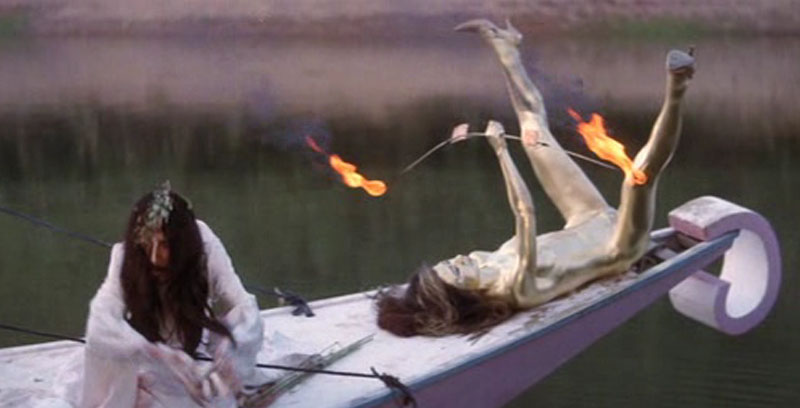
EROTIC GROTESQUE NONSENSE & THE FOUNDATIONS OF JAPAN'S CULT COUNTERCULTURE (London)
Jasper Sharp
13 February 2020
EROTIC GROTESQUE NONSENSE & THE FOUNDATIONS OF JAPAN'S CULT COUNTERCULTURE (London)
In this illustrated lecture, Japanese cinema expert Jasper Sharp leads us into the feverish world of ero guro nansensu, a term abbreviated from the English “erotic grotesque nonsense” that first entered common parlance in Japan in the 1920s, when it was applied by reactionary cultural critics to a group of writers who traded in detective, horror, and mystery fiction with an emphasis on deviant sexuality, the irrational, and the bizarre.
Most influential of these was Edogawa Rampo (1894-1965), whose very name, conjured from the Japanese syllabary in homage of his literary model, Edgar Allan Poe, highlighted the true threat of this new cultural wave: it’s overseas origins. The alienness of ero guro from Japan’s cultural traditions and its popularity with the masses saw it increasingly viewed as a threat by nationalist and conservative voices during the late 1920s and 1930s, and proponents soon fell victim to the repressive state censorship of the wartime years.
However, in the more relaxed climate of the postwar decades, a focus on a decadent and perverse sexuality, and the altered states of the physical body as a metaphor for the national body saw this seductive tension between the outlandish and the homegrown, the horrific and the ludicrous given full vent.
Sharp will explore the page, stage and screen manifestations of a term that has come to embody more an ethos than a genre, looking at, among other things, the impact of the avant-garde theatre and the modern Butoh dance movement on the work of Ishii Teruo (Shogun’s Joys of Torture; Horrors of Malformed Men) in the 1960s, the role of voyeurism and the shock of new and foreign cultural forms in Watcher in the Attic (1976), and articulations of the monstrous and the carnivalesque in the underground animation Midori: The Girl in the Freak Show (1992).
Jasper Sharp
13 February 2020
Read more
13 February 2020
MAN-EATER: CANNIBAL WOMEN IN FILM (NYC)
Kate Robertson
12 February 2020
MAN-EATER: CANNIBAL WOMEN IN FILM (NYC)
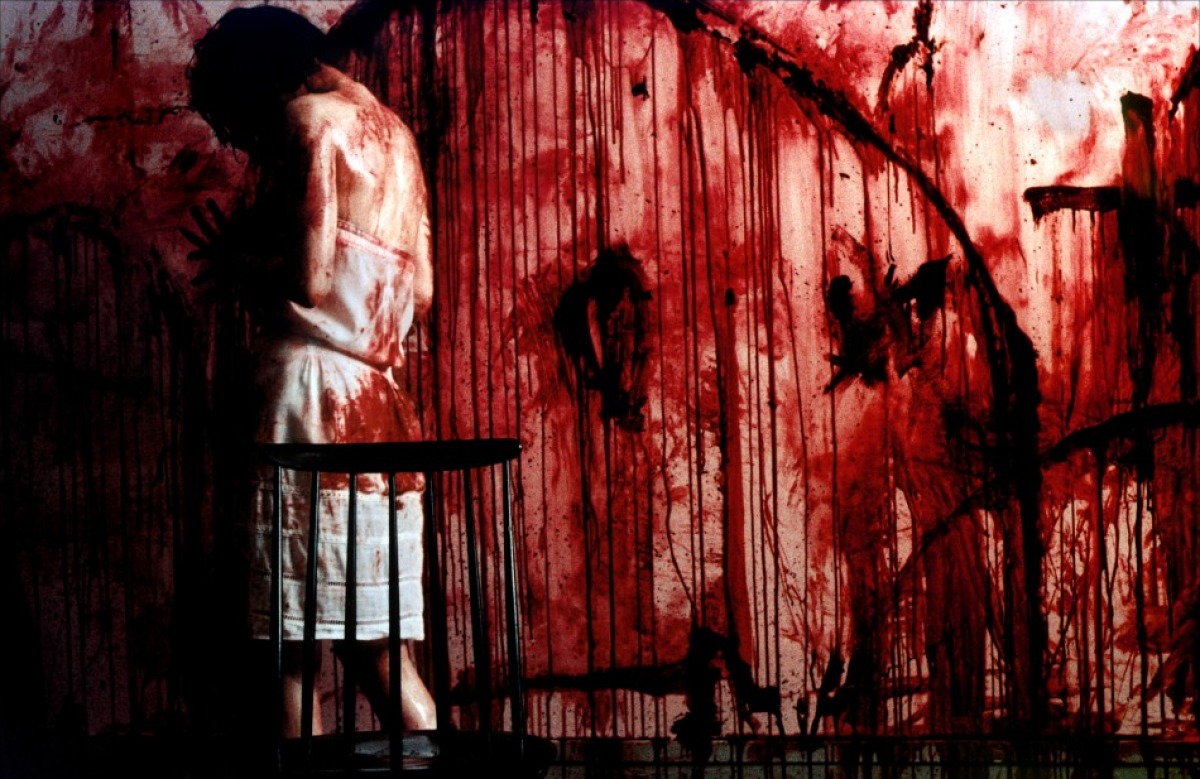
A representation of crossing bodily and social boundaries, cannibalism exemplifies transgression. If it provokes revulsion in theory, then its enactment on screen is truly affecting, tapping into a deep horror. Drawing from my long-term project, ‘Man-Eater: Cannibal Women in Contemporary Visual Culture’, introduced in The Atlantic and the peer-reviewed Australasian Journal of Popular Culture, this lecture focuses on women cannibals in films from the past fifty years. These women devour – sexually, metaphorically and, sometimes, literally. Their excessive physical hunger, often tied to unrestrained sexual desire, disturbs the idea that they are objects, empty vessels to be filled. But these women cannot (or will not?) deny or contain their urges.
The type of the cannibalistic woman can be found in stories throughout history – Lilith, the Sirens, Snow White. But she is of particular interest right now by capturing ever-present social anxieties about the tense and endlessly complicated relationship between gender, hunger, desire, sex, autonomy and power. The characters in these films negotiate and subvert expectations for how women should look and behave. Drawing in particular from the legacy of the femme fatale, many of them actively deceive the men they intend to eat, using their beauty to seduce and then devour. They reflect the dangers of the female body, taken literally and to the extreme – mouths that swallow, teeth that bite, nails that tear. The presence of this type in cinema provokes an exploration of the idea of boundaries, interrogating distinctions between self and other, inside and outside, touch and penetration. In their pursuit of complete incorporation, these women reduce humans to their physical qualities, treating bodies like meat, provoking an experience of abjection which forces the question of what it means to be human.
Examples in this lecture are drawn from a lineage of women cannibals on screen, across a diverse range of roles: Mothers (Flesh Eating Mothers 1988; Parents, 1989; Macabre, 2009); Demons (Jennifer’s Body, 2009); Mermaids (The Lure, 2015); Women with a family curse (Frightmare, 1974; Raw, 2016); Cult members (Cannibal girls, 1973; The Perfume of the Lady in Black, 1974; We are what we are, 2013); Club-members (Femmine Carnivore, 1970; Madam Yankelova’s Fine Literature Club, 2017); Scientific test subject (Trouble Every Day, 2001); Autocannibal (In My Skin, 2002); Youth-seekers (Dumplings, 2004); Fame-seekers (Neon Demon, 2016). Though it is for a variety of reasons, the women in these films actually eat people, narrowing the focus from a much broader range of types, like vampires, werewolves and zombies.
Kate Robertson
12 February 2020
Read more
12 February 2020
MAGIC AND POLITICS IN ALAN MOORE & JACEN BURROWS' ADAPTATIONS OF LOVECRAFT (London)
Matt Green
9 January 2020
MAGIC AND POLITICS IN ALAN MOORE & JACEN BURROWS' ADAPTATIONS OF LOVECRAFT (London)
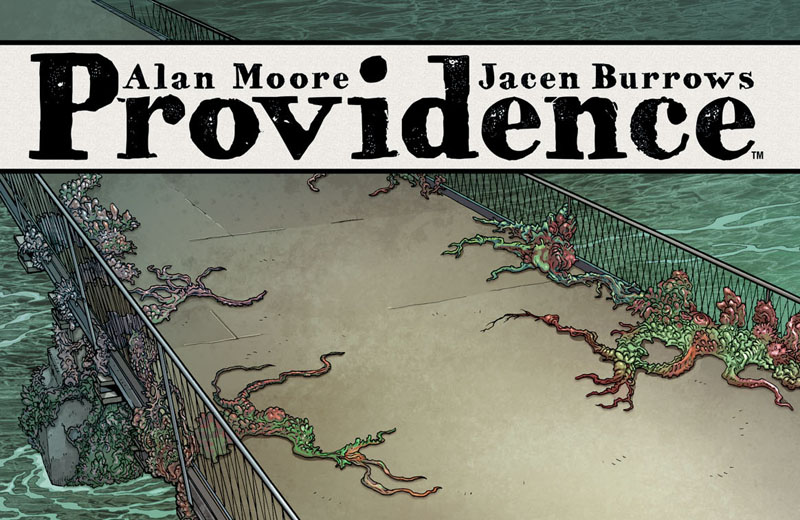
Alan Moore reports that, through researching his latest adaptation of Lovecraft’s life and work, Providence, he “became more fully acquainted with academic literary criticism.” The extensive evidence of research throughout the series supports this claim. In this talk, scholar Matt Green argues that Providence uses the comics form to assert the value of humanities research, and of the arts more broadly. The comics series educates its audience in reading and research practices (some of which are more providential than others). Green’s focus– like Moore’s and, arguably, like Lovecraft’s — is on the relationships between imagination and the historical realities of readers; the discussion maps Moore’s reworking of Lovecraft onto current political turmoil in Britain and the US via Moore’s underlying premise that we can trace the origins of our contemporary moment through the societal anxieties encoded in Lovecraft’s fiction. The analysis combines key concepts from adaptation studies, comics studies and postmodern theory to help us understand the way in which Providence uses the comics medium to put into practice Moore’s hopes concerning the world-altering potential of art and scholarship. Put differently, Green will be discussing some of the less obvious ways in which Lovecraft has been deployed by one of Britain’s most prolific contemporary magicians.
Advance Recommended Reading: Providence by Alan Moore and Jacen Burrows
Matt Green
9 January 2020
Read more
9 January 2020

NORTHERN SCARS: THE FOUNDATIONS OF CANADIAN HORROR CINEMA (Los Angeles)
Caelum Vatnsdal
6 January 2020
NORTHERN SCARS: THE FOUNDATIONS OF CANADIAN HORROR CINEMA (Los Angeles)
*Note this class is on a Monday, not our usual Thursday, due to our visiting instructor’s travel schedule!
Prepare yourself for a snowstorm of malevolent miners, ravenous rats, killer sex-slugs and ZED (not ZEE)-grade zombies: all this and much more can be found in the frosty annals of Canadian horror movie history. Oh, and there’s some Cronenberg in there too, of course.
Canada got into the horror game late, and even then started slowly, but by the beloved and despised tax-shelter years of the 70s and 80s the country more than made up for its initial delinquency. Movies by the dozens were being turned out: during the peak years of Canadian moviemaking, more films came out of Toronto than they did Hollywood, and a great percentage of these were horror pictures. Monsters and maniacs, scientists and shamans, Leslie Nielsen disco dancing and John Candy rolling around in his underwear: Canadian horror delivers more of what you want.
This lecture will bring the audience through the development of this genre in Canada, including behind-the-scenes peeks into the making of the movies; personal stories of the makers and stars; scandals and controversies associated with them; and the political gamesmanship behind the development of the Canadian commercial film industry. Never a dry recitation of facts, the talk describes a wild tapestry of high drama and crazy incident, with characters from David Cronenberg to Lawrence Zazelenchuk: a sort of Easy Riders, Raging Bulls with a much more specific focus and a lot more plaid flannel shirts.
This rollercoaster ride through history will be capped by a snapshot of the state of things today, and we may even take a guess as to where things will go next. A question and answer opportunity at the end ensures that any remaining bafflements will be addressed.
Accompanying the lecture will be mind-twisting clips from movies like The Mask (Canada’ first horror feature), The Corpse Eaters (its cheapest), Shivers, Black Christmas, Rituals, and Spasms.
Lecturer Caelum Vatnsdal is a filmmaker and writer from Winnipeg, Canada; the author of The Came From Within: A History of Canadian Horror Cinema, he is currently in the process of turning his book into a feature-length documentary film.
Caelum Vatnsdal
6 January 2020
Read more
6 January 2020
DEAD EYES OF LONDON: THE GERMAN 'KRIMI' FILM (NYC)
Samm Deighan
19 December 2019
DEAD EYES OF LONDON: THE GERMAN 'KRIMI' FILM (NYC)
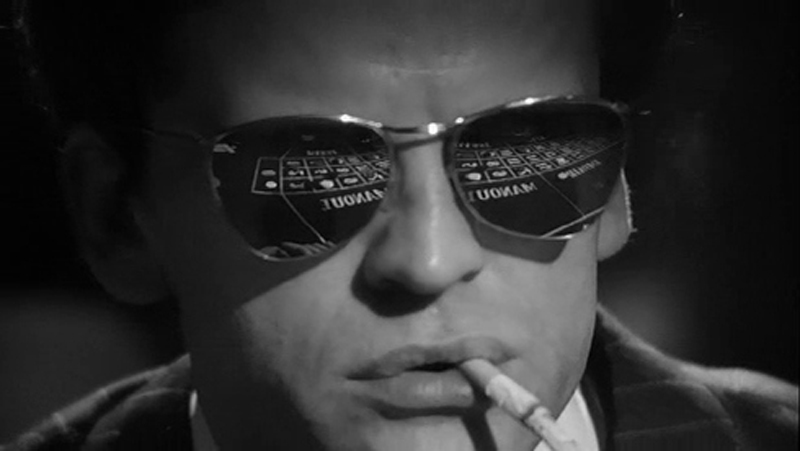
This class will explore the German krimi film, or Kriminalfilm, a genre of West German crime thrillers inspired by the novels of British mystery writer and King Kong creator Edgar Wallace. Began in the late ‘50s with Der Frosch mit der Mask (The Fellowship of the Frog, 1959), made in partnership between Danish production company Rialto Films and West German distributor Constantin Film, krimi films somewhat made up for the lack of a robust postwar national horror cinema in Germany. Though the krimi are not strictly horror films, they feature a madcap blend of genres: horror, crime, mystery, and police procedural, with elements of fantasy and science fiction, resulting in an often surreal mashup of genre tropes.
The popularity of these films led to dozens being produced throughout the ‘60s, with 32 films in the official Rialto series and more spin offs from other production companies. In general, these films follow a simple format inspired by the crime serial of silent filmmakers like Louis Feuillade: a detective, generally from Scotland Yard, is hot on the trail of a criminal mastermind and must wade through an outlandish sea of potential suspects. Often, the antagonists are masked or costumed members of a criminal conspiracy whose motivations are sex, drugs, blackmail, or cold hard cash; sometimes the krimi plots take on a more gothic cast and feature revenge, dark family secrets, and madness. Red herrings and fake identities abound, and many of these films borrow from literary “locked room” mysteries, where the crime committed seems physically impossible, or follow a similar format as future slasher films, where characters in a fixed location are killed off one by one.
With their lurid violence and macabre humor, and shadowy, fog-drenched sets in an imaginary London or in spooky castles replete with secret passageways, the Kriminalfilm is an important but relatively unexplored subgenre. Perhaps this neglect is due to the death of home video releases for English language audiences, but the krimi represent a vital stepping-stone: they are effectively the bridge between German Expressionism and film noir, and later horror subgenres like the Italian giallo film and Eurohorror of the ‘70s. This class will explore the importance of the krimi as a stepping-stone, while also examining the evolution of the series and its relationship to and influence on the horror genre. Though they retained common themes and shared stock characters—often embodied by beloved cult actors like Christopher Lee and Klaus Kinski—krimi plots would become increasingly lurid and pulpy as the series wound to a close in the late ‘60s and early ‘70s, directly influencing the Eurohorror of the ‘70s.
Samm Deighan
19 December 2019
Read more
19 December 2019
The Frequency of Fear: The Power and the Glory of the Motion Picture Soundtrack (Huntington, NY)
Dean Hurley
18 December 2019
The Frequency of Fear: The Power and the Glory of the Motion Picture Soundtrack (Huntington, NY)
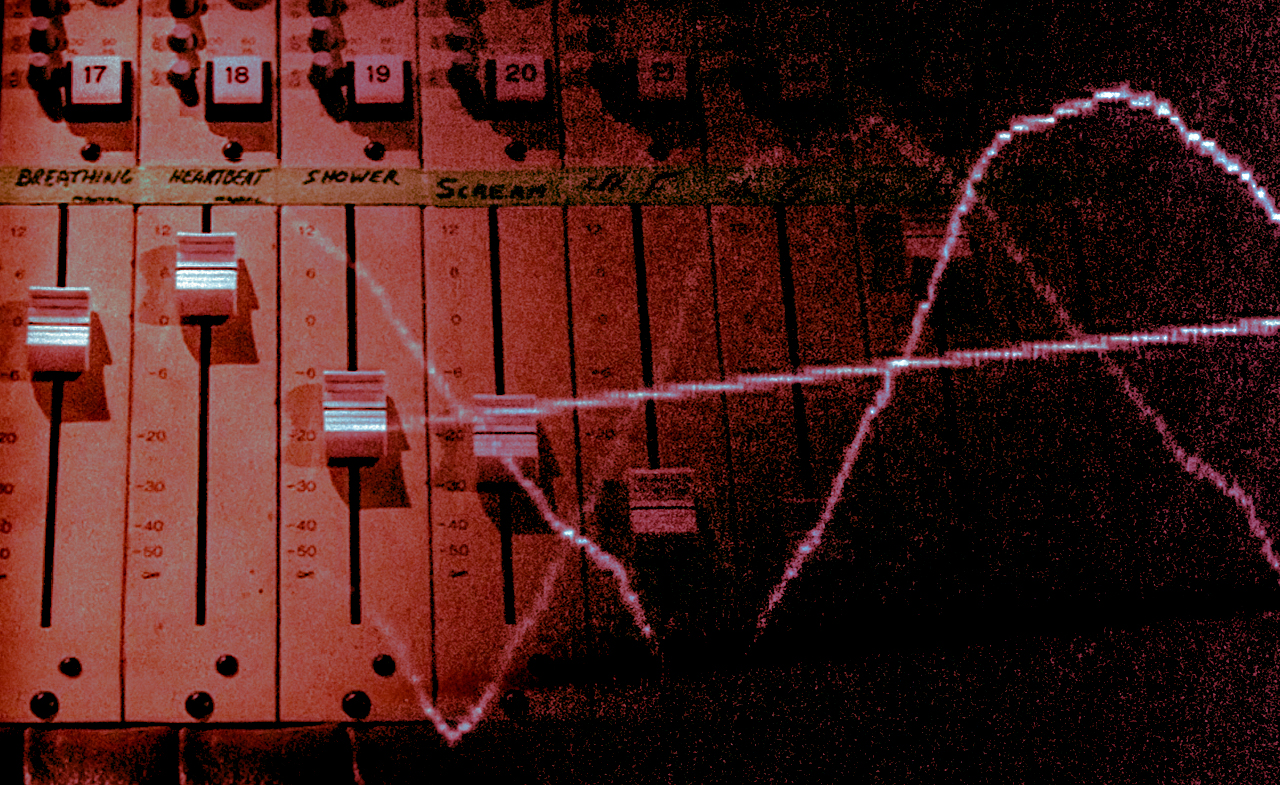
Cinema has long tapped into the fundamental devices of fear in its employment of sound. Even before the advent of the loudspeaker and synchronized motion picture sound, organs and pianos collided tense sonic energy against images in the physical spaces of film exhibition parlors and nickelodeons. As humans, the audible sliver of the frequency spectrum provides a unique window into concepts of how energy and vibration physically manifest and affect the matter of our material world. After all, sound is simply vibrational energy we can hear. How we’ve arrived at organizing frequencies into the form of modern music is a mystery itself, dating back 5,000 years and involving ‘sky god visitors’ who bestowed humanity its system of measurement. Understanding our physiological experience of sound and its relation to our universe can illuminate and unlock a deeper understanding of the design of sound and music for the motion picture.
Journeying through concepts of cymatics, standing wave levitation, musical tunings, as well as film examples, demonstrations, and dissections of modern mix sessions, The Frequency of Fear guides its participants through an awakening in understanding the spiritual power of sound both onscreen and beyond.
++++
Dean Hurley’s first installment of the library-style Anthology Resource series showcases his original ambient music contributions featured in Twin Peaks: The Return‘s very distinctive-sounding third season. Listen at the link below.
https://deanhurley.bandcamp.com/album/anthology-resource-vol-1
++++
The Cinema Arts Centre (CAC) is Long Island’s premiere, year-round, independent and international film showcase and its leading 501(c)3 not-for-profit community cinema. Located on Long Island’s North Shore, just an hour from Manhattan, the CAC is unique in scope and programming, with three state-of-the-art theaters, including a main theater holding nearly 300 seats. Founded by Vic Skolnick, Charlotte Sky and Dylan Skolnick in 1973, the CAC has over 10,000 members and serves approximately 150,000 individuals each year.
Dean Hurley
18 December 2019
Read more
18 December 2019