MIS
KA
TON
IC
Institute of
Horror Studies
Archive
Archive
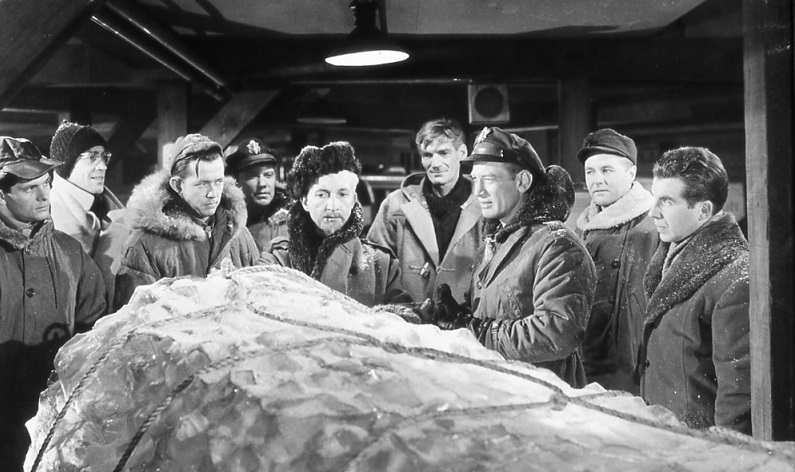
THINGS FROM OTHER WORLDS: ADAPTING, TRANSFORMING AND TRANSLATING 'THE THING' (London)
Laura Mee
12 December 2019
THINGS FROM OTHER WORLDS: ADAPTING, TRANSFORMING AND TRANSLATING 'THE THING' (London)
This lecture explores the rich narrative universe of The Thing, using its various iterations to examine the multi-platform and serial nature of contemporary genre storytelling. While John Carpenter’s 1982 film remains the best-known (and most widely celebrated) version, the tale of the eponymous alien ‘thing’ which invades and imitates its host body has its origins in a 1938 novella (John W. Campbell, Jr.), which was adapted in two other films (Christian Nyby, 1951; Matthijs van Heijningen Jr, 2011). The Thing’s world has been further expanded or altered through comic books, video games, fan fiction and fan-made videos, novelisation, theme park attractions, and ancillary merchandising. These numerous story extensions, spin-offs and retellings contribute to a broad narrative which spans decades in terms of production and centuries in its fiction, frequently crossing or confusing boundaries of space, time, and occasionally genre (for example, from science fiction to Carpenter’s film as an example of 1980s’ body horror).
Transmedia storytelling allows for the creation and consumption of an entire narrative universe across various formats, with each text contributing to and enriching its universal whole. Simultaneously, individual entries into these wider story worlds are self-contained, allowing for their enjoyment as a singular text (Jenkins 2008: 97-98). However, transmediality can confuse categorisations of cinematic ‘multiplicities’ (sequel, prequel, remake, etc.) and the definition of one text solely by its connection to another. In the case of The Thing 2011, for example, which purports to be a prequel to John Carpenter’s film, it can be seen in many ways to more closely resemble a remake. Despite narrative and visual details which anticipate the events of Carpenter’s film, placing it in a clear position of ‘beforeness’, much of it plays out as a recreation of the 1982 film. Within a wider culture of adapting and recycling in genre cinema, remakes—like sequels, prequels, reboots or spin-offs—are becoming increasingly difficult to exhaustively define, and to clearly distinguish from many other forms of filmic adaptation – including prequels and sequels.
In a way reminiscent of the alien subject at its heart, which copies, transforms and mutates as its virus spreads, The Thing illustrates the way in which intricate and complex ‘worldbuilding’ can occur through the introduction of new narrative instalments across multiple media platforms. But it also highlights the impossibility of exhaustively defining categories of adaptation and serialisation. Ultimately, this lecture does not strive to resolve these complexities, but rather to identify the theoretical considerations raised by transmedia genre storytelling within a wider culture of recycling and adaptation.
Laura Mee
12 December 2019
Read more
12 December 2019
LIVE FROM MISKATONIC: PENNY SLINGER IN CONVERSATION (Los Angeles)
Jacqueline Castel
12 December 2019
LIVE FROM MISKATONIC: PENNY SLINGER IN CONVERSATION (Los Angeles)
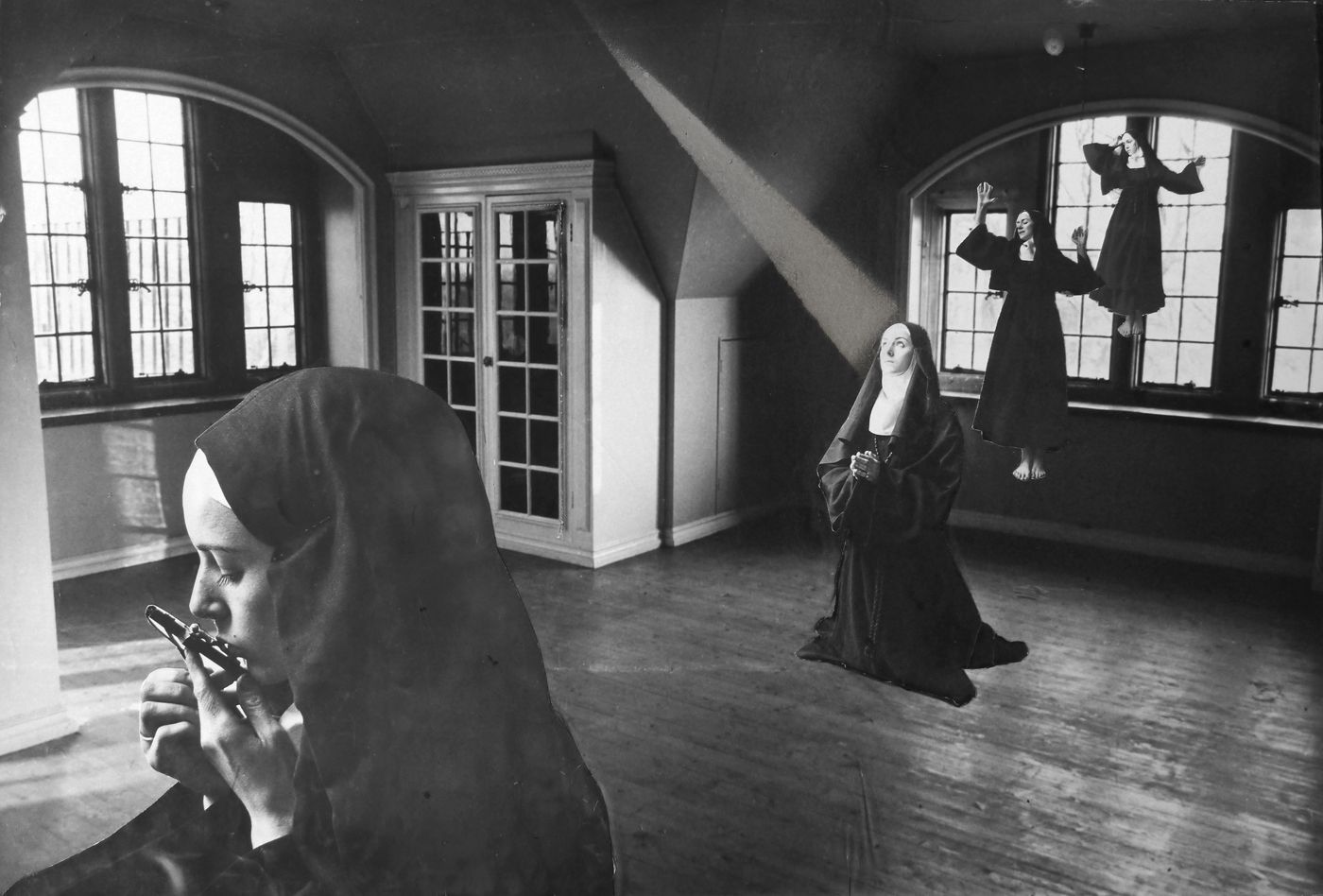
The Miskatonic Institute is pleased to welcome filmmaker, collage artist, sculptor and performer Penny Slinger to our LA branch for an exclusive, in-depth conversation about her dark surrealist work in multiple mediums, moderated by filmmaker and Miskatonic NYC co-director Jacqueline Castel.
In 1969 Slinger created her student thesis on the collage art of Max Ernst, which was a combination of written text, film and original collage work. “Having discovered the magic of surrealism,” she later wrote, “I wanted to employ its tools and methods to create a language for the feminine psyche to express itself. The kind of language that dove into the subconscious for images and wantonly combined them into situations and relationships that were both confrontational and expressive.” It was the beginning of an artistic identity that, while always evolving, frequently addressed themes of interior space, body horror, female sexuality and psychosis.
Penny’s work – from with her early student short films and first book of collage art, 50% The Visible Woman to her collaborations with filmmakers Peter Whitehead (Lilford Hall, 1969) and Jane Arden’s Holocaust Theatre troupe (culminating in the feature film The Other Side of the Underneath, 1972), and her masterpiece of psychic trauma, the collage art book An Exorcism (1977) – was the spark for a new mode of surrealism focused on the female experience that would have ripples throughout the film and art worlds, though it would take many years for her pioneering influence to be acknowledged – something that has recently been rectified with Richard Kovitch’s illuminating documentary feature Penny Slinger: Out of the Shadows (2017).
Jacqueline Castel
12 December 2019
Read more
12 December 2019
DESTRUCTIBLE MAN: THE DUMMY-DEATH AND CINEMATIC STORYTELLING LANGUAGE (NYC)
Howard S. Berger
21 November 2019
DESTRUCTIBLE MAN: THE DUMMY-DEATH AND CINEMATIC STORYTELLING LANGUAGE (NYC)
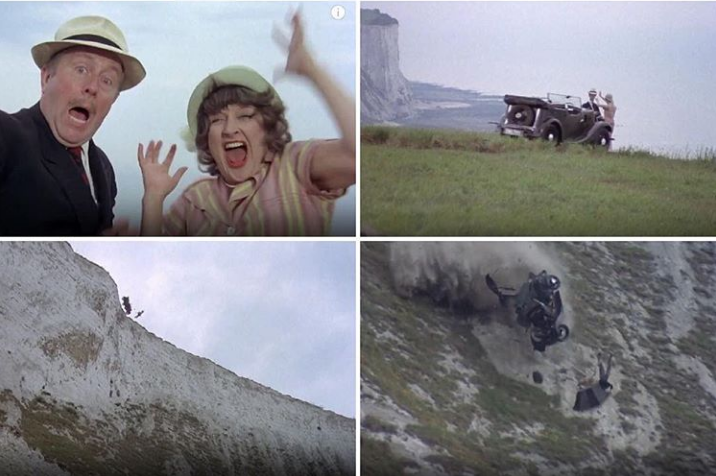
Prosthetic demise, or the “dummy death” as film historians Howard S. Berger and Kevin Marr refer to it, is a practical cinematic technique wherein an actor portraying a character is replaced by an articulated replica special-effects mannequin at a moment of extreme violence and/or death within a given film’s narrative. This device has been employed by filmmakers all over the world, at every level of production and in every genre since the dawn of the cinematic medium. When viewed in isolation, the dummy death effect can be characterized as the cinematic illusion in microcosm. Artificial celluloid images convey the illusion of life and reality – an illusion that is reflected in the (either subtle or abrupt) transition from actor/character to its corresponding prosthetic replica. It is also cinema at it’s most vulnerable – understanding that a viewer is to temporarily accept this illusion as reality, as such, the nature of this illusion invites this moment where, without explanation, a character physically transforms (however briefly) into something inanimate or inhumanly animate during his or her death. Berger and Marr call this the “Destructible Man effect” and its very existence creates ripples upon ripples of visual and thematic repercussions. Berger and Marr utilize a two-prong approach when examining films that contain a moment of prosthetic demise: one is thematic and one involves strictly visual elements of cinematic storytelling. The key thematic elements relatable to the dummy death effect include (but are not limited to): transformation, substitution, deception, duality and abstraction.
Transformation refers to the abrupt shift in method of presentation from actor/character to prosthetic facsimile (also reflected in narrative aspects such as personality or physical changes in characters); substitution refers to the replacement of actor/character with a prosthetic facsimile (and any story arcs that depict substitution of one or more characters for others); deception refers to the intended, illusory effect on the audience (and any experienced by characters within the plot); duality is reflected in the pairing of the actor/character with their dummy twin (and often reflected by twinning characters either with another character or psychologically, as in schizophrenia); abstraction defines the dummy as an inanimate image/replica of its living, human counterpart (again, which may also have metaphoric impact on the story’s characters). In addition, ever-present are themes of dehumanization, re-humanization and familial dislocation. Elements of visual storytelling in cinema that are relatable to cinematic dummies include (but are not limited to): shadows, silhouettes, mirror reflections, paintings, statues, photographs, dolls, mannequins, costumes and masks.
An examination of films that contain a dummy death, using these two methodologies in tandem, allows the viewer to bypass potential analytical roadblocks like personal taste, subjective notions of high and low art and more traditional approaches to film criticism in favor of a more objective, fixed set of thematic and physical elements that can be used like tools to uncover hidden, recurring patterns of meaning, symbolism and sub-textual counter-narratives in all (including non-dummy-death) cinema.
This overall approach also levels the cinematic playing field, allowing for an examination of films by directors as disparate as Alfred Hitchcock and William Castle, Francois Truffaut and Al Adamson, Quentin Tarantino and Edwin S. Porter, Steven Spielberg and Shohei Imamura, within the same cinematic, storytelling continuum.
The class will be illustrated by clips from such dummy-death emboldened films like STRAIT-JACKET, SCANNERS, DRACULA VS FRANKENSTEIN, THE BIRDS, 2001 and THE FURY in addition to two crucial silent films: Alfred Clark’s Execution of Mary, Queen of Scots (1895), known to be the first edit in cinema as well as the first dummy-death and The Great Train Robbery (1903), the first complex narrative film and also the first dummy-death within a complex narrative film.
Howard S. Berger
21 November 2019
Read more
21 November 2019
THE MORBIDO CRYPT’S GUIDE TO MEXICAN FANTASY AND HORROR CINEMA (Los Angeles)
Abraham Castillo-Flores
21 November 2019
THE MORBIDO CRYPT’S GUIDE TO MEXICAN FANTASY AND HORROR CINEMA (Los Angeles)
For decades, Mexican fantasy and horror cinema hid in the shadows; wearing a luchador mask, surviving budgets tainted by economic gloom, holding vampires with a nylon thread, receiving the scorn of near-sighted critics and consumption by audiences sunk into tongue-in-cheek appreciation.
But things have changed. Over the past two decades there has been a clear rise in the amount, quality and risk found in Mexican horror and fantasy cinema. It is not by chance that today, in the midst of a horrifying reality, Mexican genre films enjoy popularity, freedom and sometimes, profitability. As if that were not enough, our beloved national genre warrior – Guillermo del Toro – has recently been knighted by Hollywood.
Join us for a scenic tour of Mexican genre cinema guided by Morbido Fest’s head programmer, Abraham Castillo Flores. Delving beyond luchadores and psychotronica, Abraham unearths the monsters that fomented a distinctive but barely acknowledged corner of our cinematic consciousness.
We will revisit the origins of Mexican fantasy and horror cinema and examine its development through the 20th Century and the start of the 21st. Along the way we will meet the filmmakers and performers responsible for these celluloid nightmares. Some of these films can be questioned but rest assured, anything they lack is compensated by their sheer honesty and passion.
In parallel we will dissect national legends and traumas that have been continuously reinterpreted by our national filmmakers that stand as a reaction to the tragic reality that Mexico is now experiencing.
Who would have thought that stories filled with wailing legends from our pre-Hispanic past, starved female vampires, Aztec mummies, monk ghosts, child practitioners of the dark arts and tropicalized sci-fi Queens, would become part of our cultural heritage?
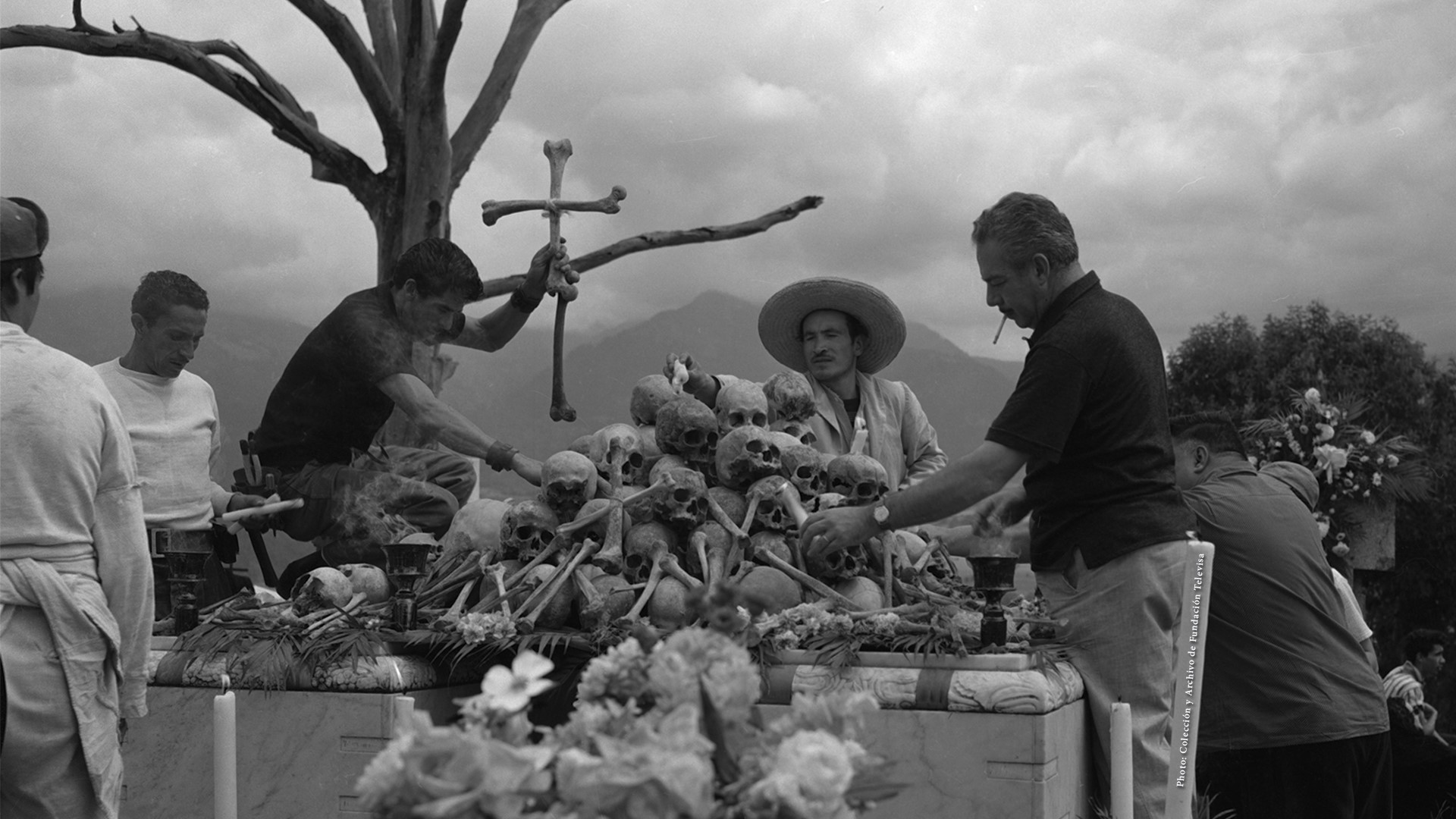
Photo courtesy of the Collection of Fundación Televisa
Abraham Castillo-Flores
21 November 2019
Read more
21 November 2019
LIVE FROM MISKATONIC: GARY SHERMAN IN CONVERSATION (London)
Gary Sherman
18 November 2019
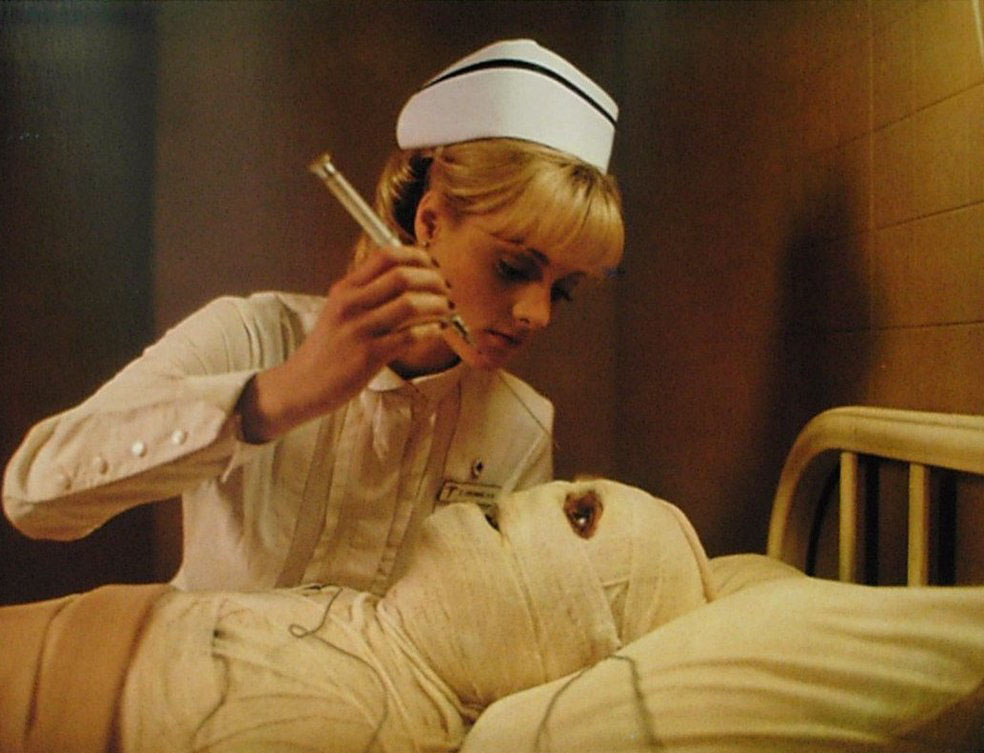
LIVE FROM MISKATONIC: GARY SHERMAN IN CONVERSATION (London)
Note: This class is on a Monday night, to accommodate Gary’s schedule in the UK
In association with the Abertoir Film Festival, Miskatonic is proud to present an evening in conversation with renowned genre director Gary Sherman, bringing him back to where it all began – Russell Square.
After cutting his teeth in advertising, Sherman’s ferocious debut Death Line (1972) announced the arrival of a major new directorial talent. Predating the higher profile The Texas Chainsaw Massacre (1974) and The Hills Have Eyes (1977) with its blend of visceral cannibal horror and social satire, Death Line is a major contribution to the new wave of 1970’s horror that has perhaps only recently started to receive the acclaim it deserves. He followed this with other such notable works as the darkly atmospheric Dead & Buried (1981), the gritty sleazefest Vice Squad (1982), old school 80’s actioner Wanted: Dead or Alive (1987), and the troubled production that was Poltergeist III (1988).
Sherman’s work is notable for its visual inventiveness and political subtext, often displaying a keen affinity for the plight of the marginalised and oppressed. While many of his films were met with relative critical indifference upon their initial release, several have been warmly reappraised in recent years. Guillermo del Toro has consistently championed Death Line over the course of his career, calling it ‘one of the unsung masterpieces of the genre’, and the film’s recent restoration and blu-ray release earned it a whole new generation of admirers. Forthcoming restorations of Dead & Buried and Vice Squad seem set to do the same, and so Miskatonic is delighted to offer its audience this rare UK opportunity to hear the cult auteur discuss his work in depth.
We’ll talk to Sherman about working with genre greats Donald Pleasence and Christopher Lee, how it was an American expat nailed the thoroughly English class satire of Death Line, his struggles to maintain his voice and personality in the face of Hollywood interference, the trials and tribulations of Poltergeist III, his ‘lost’ film 39: A Film by Carroll McKane (2006) and why he considers it too disturbing to release, and much more besides.
Moderated by filmmaker Sean Hogan
Gary Sherman
18 November 2019
Read more
18 November 2019
SECRET POWERS OF ATTRACTION: FOLK HORROR IN ITS CULTURAL CONTEXT (Cardiff)
Howard David Ingham
27 October 2019
SECRET POWERS OF ATTRACTION: FOLK HORROR IN ITS CULTURAL CONTEXT (Cardiff)
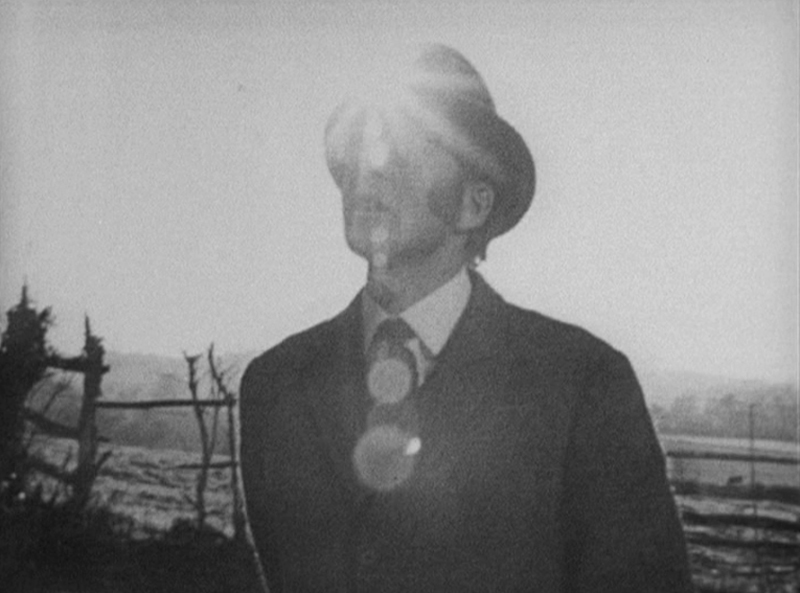
British “folk horror” was in many ways a phenomenon of the 1970s, but it has seen a massive revival of popularity in the last decade. What caused it to grow in the fields, forests and furrows of the 1970s and early 1980s? And why has it come back with such a vengeance?
In Secret Powers of Attraction, Howard David Ingham gives a broad overview of British folk horror in its time and space, and how popular interest in the occult creates the conditions for it to become a force in our collective imagination.
Howard’s overview of British folk horror is the starting point for an exploration into the cultural atmosphere of the 1970s and the present. If horror is a reaction to our culture, folk horror holds a mirror up to the concerns of the day. The politics and popular culture of both eras give ample space for folk horror to grow. Howard looks at period ephemera and cultural concerns of the time, drawing parallels with the present day. The Wicker Man and Ghost Stories for Christmas sprang from a world of TV astrologers and spiritualists in the national news, the National Front and the Three-Day Week; The Witch, Without Name and the films of Ben Wheatley come from the same milieu that brought us #witchesofinstagram, the return of the far right and Brexit. Secret Powers of Attraction explores how a world where the uncanny has become normal reflects itself in the horror genre, just as it did decades ago.
Secret Powers of Attraction begins with a look at the central filmic texts of the Folk Horror movement: Witchfinder General, Blood on Satan’s Claw and The Wicker Man, explores folk horror in the British TV play (including classics such as Robin Redbreast, the Exorcism, and The Stone Tape) and examines how folk horror tropes invaded popular TV, from Doctor Who to Robin of Sherwood. Finally, bringing the story into the present, Howard will look at the folk horror renaissance, including the films of Ben Wheatley and Peter Strickland, the rise of independent folk horror and the unexpected places it appears in popular culture right now.
Presented off-site as a special event at the Fractured Visions Film Festival – A genre film festival based in Cardiff, South Wales that is dedicated to bringing the finest in independent cinema to the BIG screen!
Howard David Ingham
27 October 2019
Read more
27 October 2019
GOD OF THE OUTSIDERS: SATAN IN LITERATURE, CULTURE, AND ENTERTAINMENT—OLD MYTH AND NEW INSIGHT (Los Angeles)
Mitch Horowitz
24 October 2019
GOD OF THE OUTSIDERS: SATAN IN LITERATURE, CULTURE, AND ENTERTAINMENT—OLD MYTH AND NEW INSIGHT (Los Angeles)
Co-presented with the Philosophical Research Society, as part of Mitch Horowitz’ Lecturer-in-Residence events
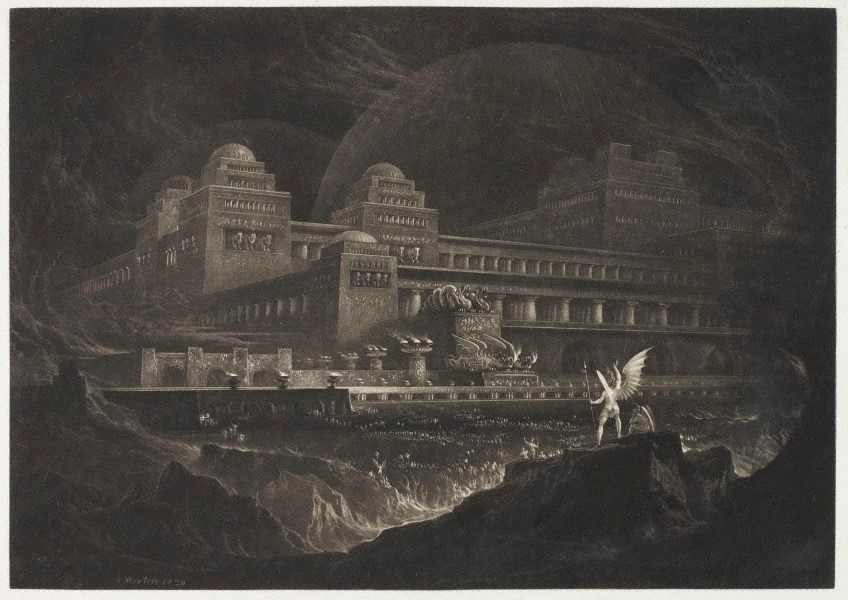
There exists a little-understood counter tradition in Western life that often goes under the easily misconstrued term Satanism. In this intellectually stimulating and probing evening, Mitch Horowitz (“solid gold” – David Lynch) explores the interplay between our primeval understandings of the Dark Side and how Satan is reflected back to us in myth, parable, legend, culture, horror, music, and fashion. Tracing the earliest origins of humanity’s conception of an opposing force in the Eastern and Western worlds, Mitch explores some of history’s most bracing and provocative interpretations of the Satanic—from the work of Milton and the Romantic poets (William Blake’s The Marriage of Heaven and Hell; Lord Byron’s Cain) to more recent fiction and nonfiction literary efforts (Arturo Pérez-Reverte’s The Club Dumas; Anton LaVey’s The Satanic Bible; Michael Aquino’s The Diabolicon), and examines how even some of our most recognized supernatural films (Devil’s Advocate; Rosemary’s Baby; The Ninth Gate) enunciate Satanic themes with penetrating classical validity. In the process, Mitch strips away historical and cultural preconceptions, misunderstandings, and shibboleths to open an entirely fresh window on the intellectual and cultural idea of the Satanic in Western history and contemporary life. He shines a new light into ancient myths, canonical literature, legends, and pop culture to trace out an authentic outsider tradition of Satanic thought. Join us for a challenging and eye-opening evening. You will come away with an entirely new conception of a “familiar devil.”
Mitch Horowitz
24 October 2019
Read more
24 October 2019
CORRIDOR GOTHIC (London)
Roger Luckhurst
24 October 2019
CORRIDOR GOTHIC (London)
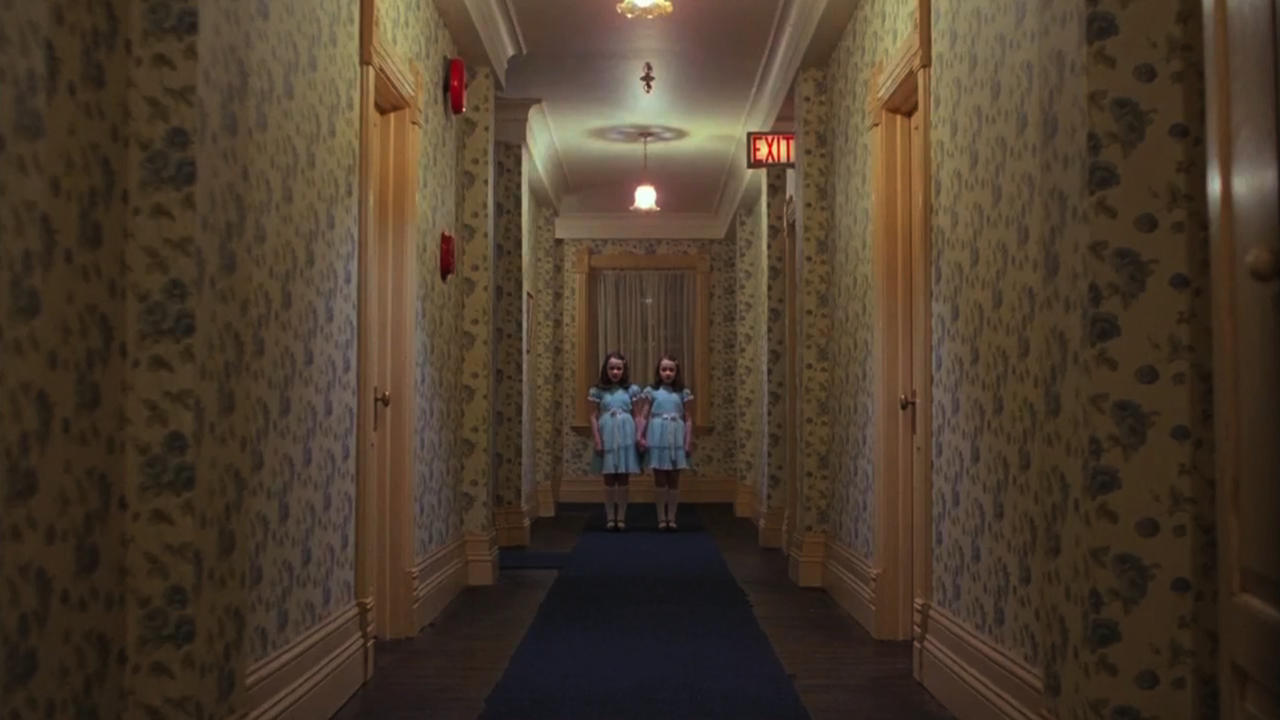
This class investigates the role of the corridor in Gothic fiction and horror film from the late 18th century to the present day. It seeks to establish this transitional place as a crucial locus, by tracing the rise of the corridor as a distinct mode of architectural distribution in domestic and public buildings since the 18th century. The lecture tracks pivotal appearances of the corridor in fiction and film, and argues that it has become associated with a specific emotional tenor, less to do with amplified fear and horror and more to do with emotions of Angst or dread.
This talk will explore how the corridor has become a modern place of unease and dread, from the hotel hallway of H. P. Lovecraft’s ‘The Shadow over Innsmouth’ via Kafka’s labyrinthine passages in ’The Trial’ to the contemporary horror film obsession with corridors, as evidenced in ’Stranger Things’ or Jordan Peele’s ‘Us’. The talk will give a history of the origins of the corridor and its often utopian associations in the 18th and early 19th century, before it became associated with faceless institutions, bureaucracies and the mid-20th century office. By the end of class, Miskatonic students should be able to assess whether we have passed from a corridic to a profoundly anti-corridic era.
Roger Luckhurst
24 October 2019
Read more
24 October 2019
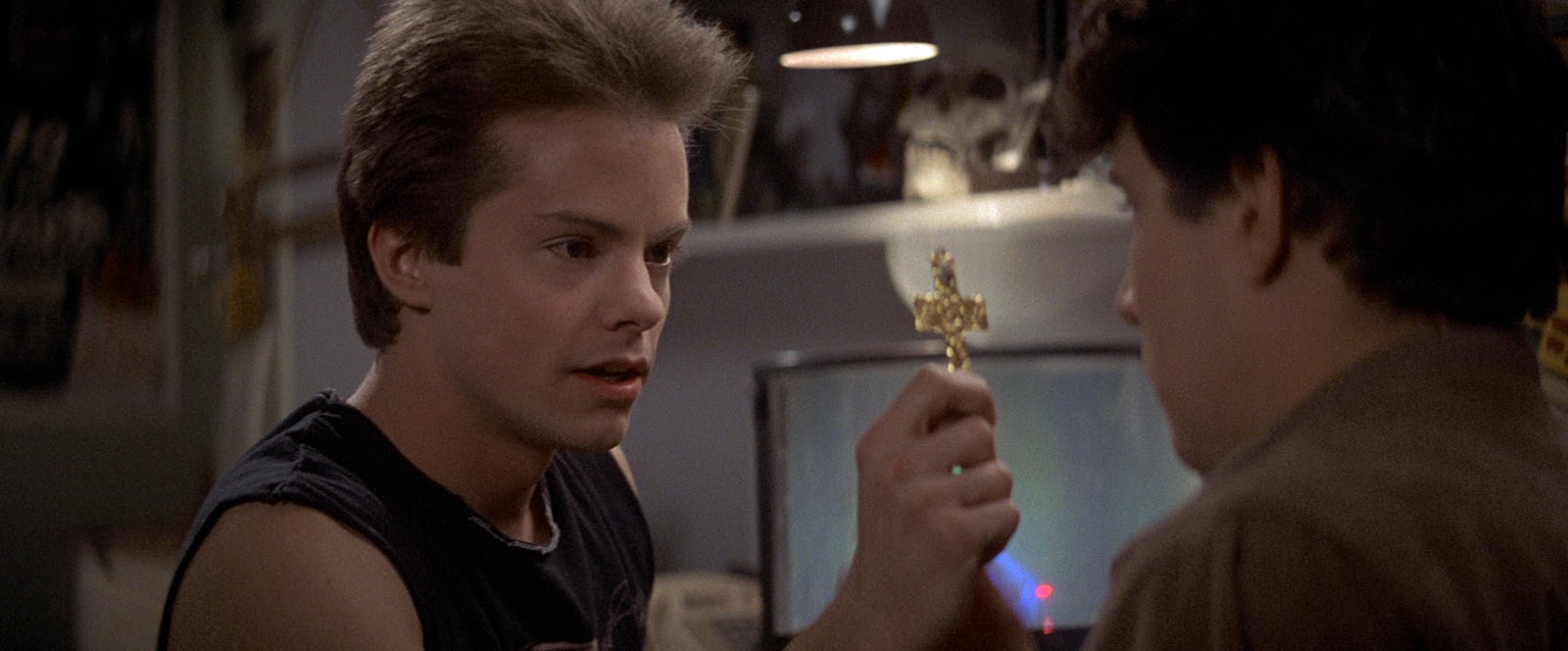
Screening: Terror Tuesday: FRIGHT NIGHT (Los Angeles)
Amy Voorhees Searles
22 October 2019
Screening: Terror Tuesday: FRIGHT NIGHT (Los Angeles)
Hosted by Amy Searles in conjunction with the Miskatonic Institute of Horror Studies class “Wanted: More Viewers Like…” Depictions of Horror Fandom in Film and Television
If Joe Dante and John Landis set the course of revisionist horror, then FRIGHT NIGHT drove it home. A reworking of Tod Browning’s DRACULA with more neon, sexual tension, and teen angst, this movie has everything that you could want out of a 1980s fun-grenade that features a theme song by the J. Geils Band. When total hunk Jerry Dandrige (Chris Sarandon) moves to the neighborhood, his next door neighbor Charlie suspects that something is wrong. Mostly because Charlie sees Dandrige turn into a vampire before having sex with a prostitute. Charlie and his friends enlist the help of TV horror host Roddy McDowall to take Dandrige down. BUT CAN THEY DO IT?! From McDowall’s slasher movie trash-talk to Stephen Geoffreys’s out-of-control performance as a vampire named Evil Ed, FRIGHT NIGHT is a meta-enhanced ode to the nostalgic spirit of golden age horror. Just with more melting faces and dance floor seductions. Plus Chris Sarandon, the only guy on the planet who can make a white turtleneck look cool. (Joseph A. Ziemba)
++++
Alamo Drafthouse LA is a state-of-the-art facility featuring twelve auditoriums, each with 4K laser projectors and one with 35mm film projection. Like the brand’s nearly forty other locations across the country, the downtown Los Angeles theater includes a full bar and kitchen, as well as the unique bar and video store Video Vortex, where Blu-Rays and DVDs will be available for free rental.
Alamo Drafthouse LA is conveniently located at The Bloc, an open-air urban center in the heart of downtown Los Angeles where the Blue, Red, Purple, and Expo lines converge – making it easy to reach from Hollywood, North Hollywood, Mid-Wilshire, Santa Monica, South LA, and Long Beach. Easy-access validated parking is available on-site in the BLOC garage, and bike parking is readily available inside the theater.
Alamo Drafthouse Los Angeles social media:
Facebook: Alamo Drafthouse Los Angeles
Twitter: @DrafthouseLA
Instagram: @DrafthouseLA
Website: Drafthouse.com/los-angeles
Amy Voorhees Searles
22 October 2019
Read more
22 October 2019
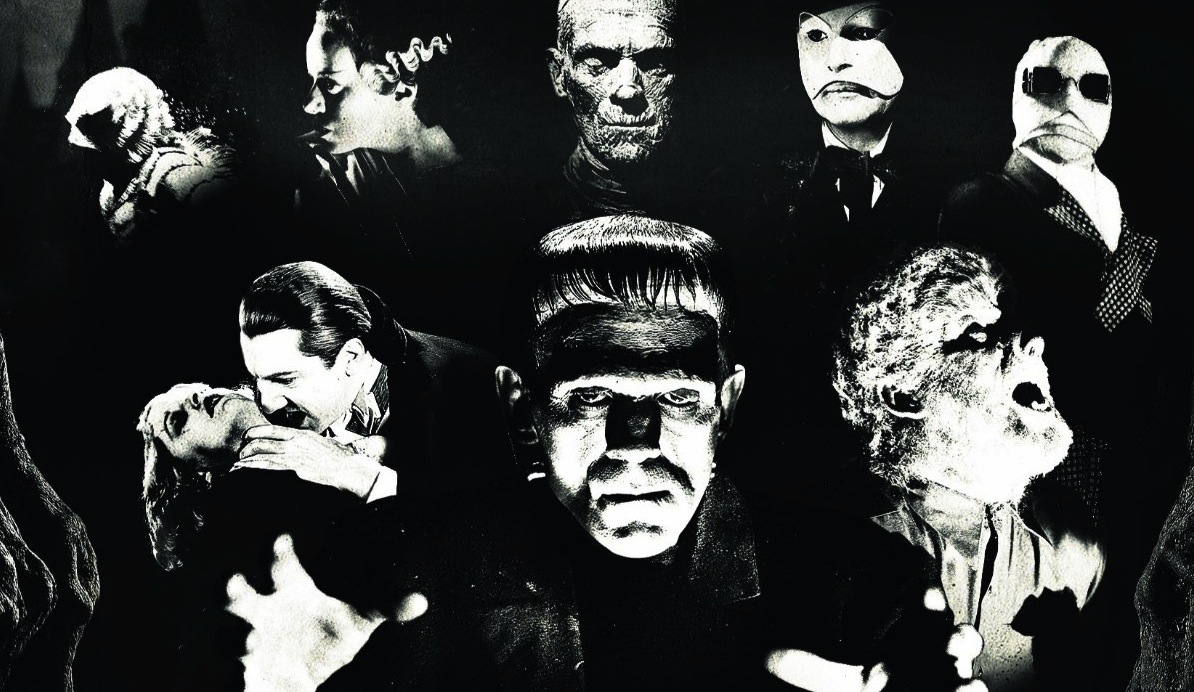
HAUNTED MUSEUM: THE LORE AND LEGACY OF THE UNIVERSAL MONSTERS (Los Angeles)
C. Courtney Joyner
20 October 2019
HAUNTED MUSEUM: THE LORE AND LEGACY OF THE UNIVERSAL MONSTERS (Los Angeles)
In partnership with the Natural History Museum of Los Angeles, Miskatonic is proud to present this panel on the Universal Monsters as part of a all-day special event.
What truly created the classic Universal Monsters? The iconic figures of the Frankenstein Monster, Dracula, The Wolfman, The Mummy and The Creature from the Black Lagoon were the not only the results of great performance, make-up and filmmaking skill, but a response to the events of the world around them. From the movie monsters birthed by the Great Depression to the creatures who emerged from the atomic age of the 1950s, director Joe Dante (The Howling, Gremlins), author Mallory O’Meara (author, The Lady from the Black Lagoon: Hollywood Monsters and the Lost Legacy of Milicent Patrick) and special guest Sara Karloff will discuss these origins and more on a panel moderated by author and screenwriter C. Courtney Joyner and curated/presented by the Miskatonic Institute of Horror Studies.
This panel is part of the Natural History Museum’s annual “Haunted Museum” event, in conjunction with their Natural History of Horror exhibit, running through October 2019. Your $25 ticket includes activities at the Museum from 4pm-8pm – including complimentary appetizers and non-alcoholic refreshments, a ghostly scavenger hunt, access to the spider pavilion, a taxidermy demonstration and the panel discussion hosted by the Miskatonic Institute of Horror Studies from 7-8 pm.
There is free parking on site and a cash bar will be available.
Note: Tickets are VERY limited so get yours before they run out!
Images of the Universal Monsters courtesy of Universal Studios Licensing LLC.
C. Courtney Joyner
20 October 2019
Read more
20 October 2019