MIS
KA
TON
IC
Institute of
Horror Studies
Archive
Archive
Enchanting Technology: Making, Hacking, and the Occult Imagination (NYC)
Peter Bebergal
19 March 2019
Enchanting Technology: Making, Hacking, and the Occult Imagination (NYC)
Magic and technology share a deeply intimate relationship to the human experience as they are both methods that use tools to gain control over nature and ourselves. The magician and the inventor both attempt to break open conventional ways of working with the forces that shape our lives. Magic is, indeed, a kind of spiritual hacking: They are opening the machine of the universe to understand how it works and bend it towards a new purpose. And when magicians and artists use technology to explore the occult imagination they reveal new ways of enchanting our lives.
Based on the research from Peter Bebergal’s Strange Frequencies, this multi-media presentation will take participants through the history of how human beings have attempted to interact with the otherworldly using technology. John Dee’s shew stones, spirit photography, and ghost radios, are all examples of our capacity to reengineer our spiritual lives. These, and other kind of occult practices require experimentation, breaking boundaries, and using devices in ways they might not be originally intended for. This desire to restore some inner agency to our own lives is also apparent recent popularity of DIY and maker culture. We are seeking enchantment and wonder in new ways and are coming to see it means pushing up against spiritual and material restrictions.
Peter will stage the fantastic with film clips, photographs, and sound recordings. Topics include: The legend of the golem; automata and the uncanny valley; magic lanterns and natural magic; spirit photography; electronic voice phenomena; and the dreamachine.
The course will propose that belief in the supernatural is not required to be enchanted. Technology provides means through which we can activate that part our imagination. Hacking is a state of mind.
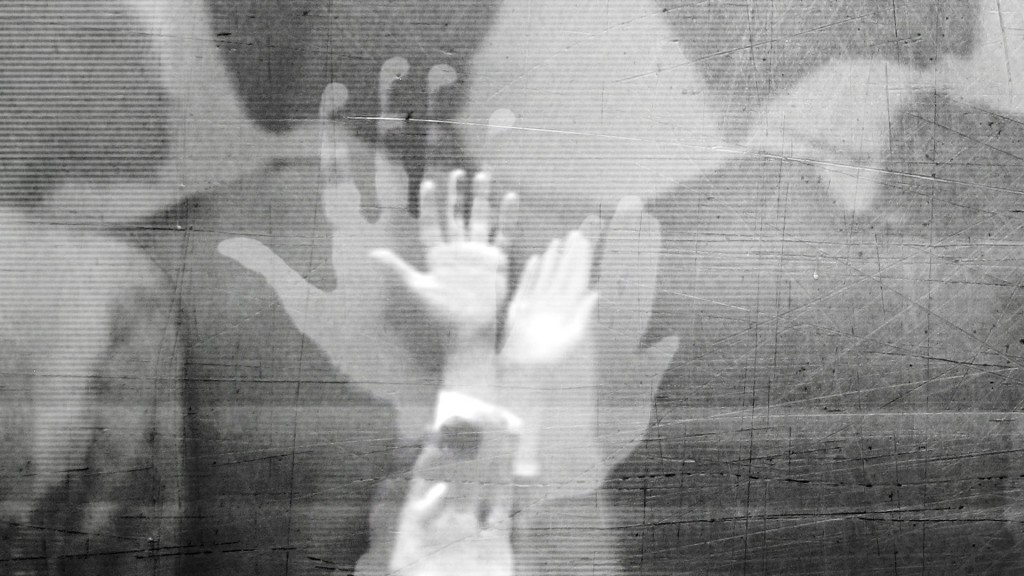
Image from: Peter Strickland’s radio adaptation of Nigel Kneale’s The Stone Tape
EVENT TRAILER:
Peter Bebergal
19 March 2019
Read more
19 March 2019
In Your Face Till Your Face Comes Off: John Skipp on The History of Splatterpunk, and the Triumph of the Overt (LA)
In the 1980s, a handful of writers — Clive Barker, David J. Schow, Joe R. Lansdale, and John Skipp & Craig Spector — inadvertently kicked off a seismic shift in literary horror. Less a conscious revolution than a spontaneous eruption of the arts, these restless artists bucked against the constraints of conventional horror, serving up whopping doses of wildly explicit sex, visionary violence, and really loud rock ‘n’ roll, underlying an even more subversive layer of fierce cultural critique.
At the time, it was accused of “coarsening the genre”. And when the 80s horror boom crashed and burned in the 90s, there were those who held splatterpunk responsible. In the years that followed, “extreme horror” fiction paved the way to cinematic “torture porn”. And even network cop shows started showing more graphic onscreen violence than would have gotten an “R” rating a mere fifteen years before.
Best-selling novelist, award-winning book editor and filmmaker John Skipp conducts a crazy three-hour tour through a history of horror’s most hilariously-named subgenre. The forces that shaped it. And the forces it has shaped, as we enter the fresh horrors of the 21st century.
For a full reading list of the books discussed in Skipp’s class, see HERE >>
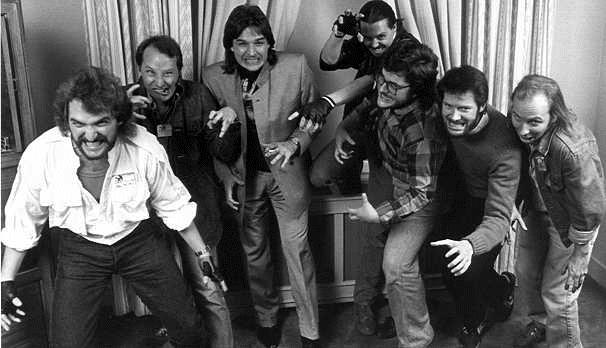
photo: Craig Spector, Joe R. Lansdale. Richard Christian Matheson, David J. Schow, Ray Garton, Robert McCammon and John Skipp in 1986 by Beth Gwinn
John Skipp
14 March 2019
Read more
14 March 2019
The Paranoid Woman's Film (London)
Mark Jancovich
7 March 2019
The Paranoid Woman's Film (London)
This class will introduce students to the horror films of the 1940s through those films often described as examples of the paranoid (or Gothic) woman’s film. These films, which emerged in response to the phenomenal success of Hitchcock’s Rebecca, feature a woman in love with a potential murderous lover. Although the cycle begins before the war, its key period of productivity was during the war years, and it can therefore also be seen as a key genre associated with changes in the audience during this period. With many men away fighting the war, women were encouraged to disassociate with domesticity in favour of war work and this changed the nature of the cinematic audience. Rather than simply going to the cinema as part of a couple or a family, Hollywood was overwhelmed by the new audience of women that were going to the cinema in groups or alone, and these changed circumstances encouraged these female audiences to play with new forms of femininity. The films therefore exhibit these ambivalent relationship to both the home and the world beyond in both of which require their female leads to turn detective.
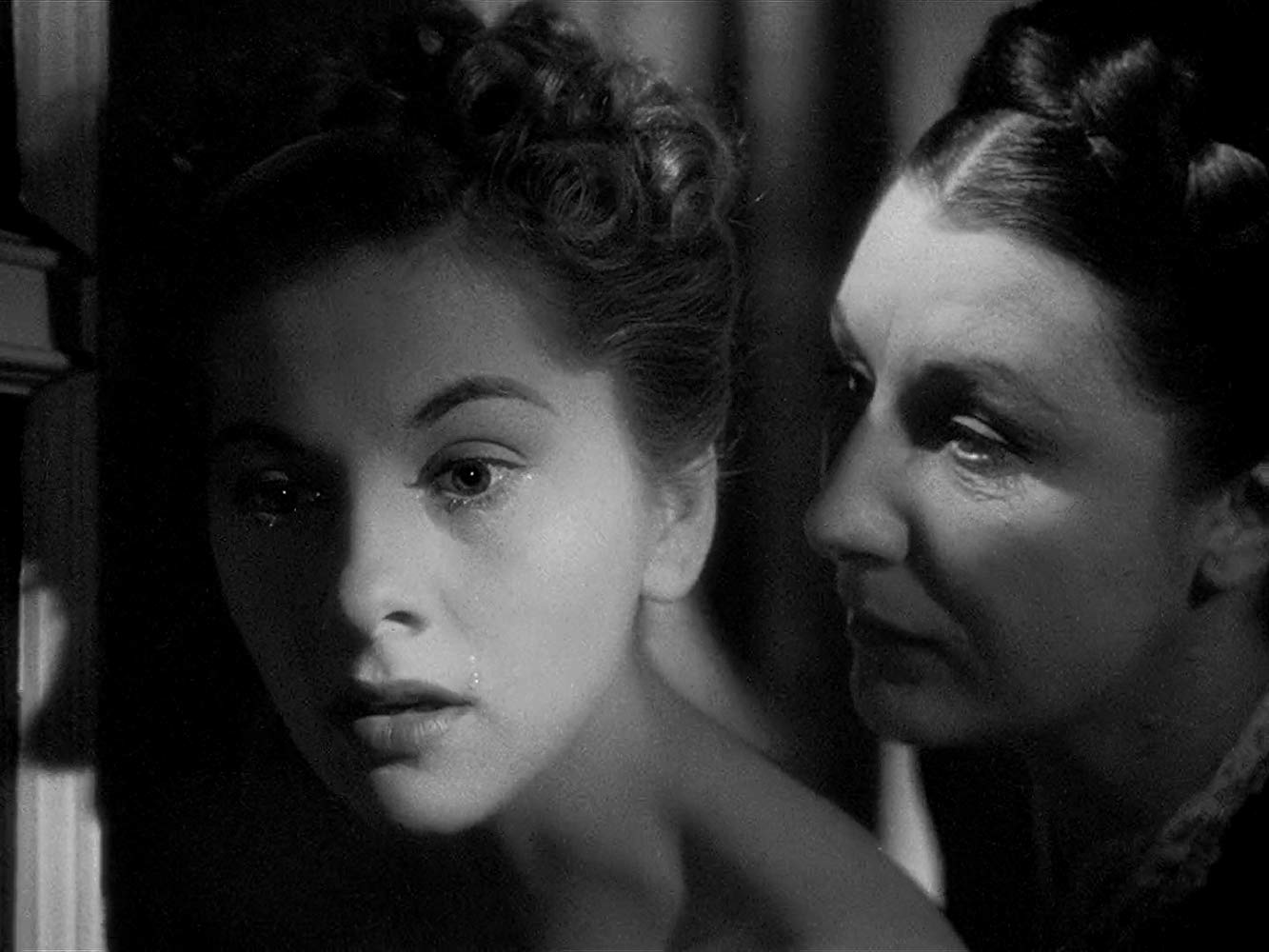
We will therefore begin with a discussion of Rebecca as a key text within this cycle. It will examine the ways in which these film plays with their heroines’ struggle to make sense of their husbands; and the ways in which these women find themselves unable to tell whether these husbands love or hate them, a uncertain which motivates their investigative narratives.
We will then move onto other examples of the genre, such as another Joan Fontaine classic, the 1944 adaptation of Jane Eyre, which was (like Rebecca) explicitly understood as a horror film at the time. This will also be used to illustrate another key feature of the period, that these were not low budget horror films but major prestige studio productions, and ones that sought to acquire associations with legitimate culture. We will also look at Gaslight in this context, a film that sweep the academy awards in the 1945.
The class will then move on to explore the ways in which these materials were linked to another key feature of the period, film noir, which is often seen as distinct from the paranoid woman’s film, although neither of these terms existed at the time, and the films that are now associated with these two categories were usually identified with being part of the same category in the 1940s: the horror film. The class will therefore look at Phantom Lady (1944), a film often seen as a classic of film noir but one which was produced by a woman, Joan Harrison, who had also been one of Hitchcock’s key collaborators. Although often seen as a film noir, this film features a female, rather than a male, detective (film noir is often distinguished from the paranoid woman’s film on the basis that the former is supposed to be male centred and the latter female centred), and one that features another key aspect of these films, a focus on psychological horror: the heroine’s antagonist is a psychologically deranged killer.
Finally, the class will end with a consideration of Val Lewton’s films. Lewton is often read as both a low budget filmmaker and as one of the key contributors to the horror film in the period. However, through an examination of his first film, Cat People (1942), the class will explore how Lewton’s films feature many of the elements discussed above: a female detective, psychological horror, and an attempt to acquire associations with legitimate culture. We will therefore examine its associations with Rebecca and Jane Eyre, on which Lewton had been a script editor before being hired to produce films for RKO.
Mark Jancovich
7 March 2019
Read more
7 March 2019
Blood Born: The Horror of AIDS (NYC)
Karen Herland
26 February 2019
Blood Born: The Horror of AIDS (NYC)
Infected, transformed and destroyed bodies appear regularly in the horror genre. Our fears are often fueled by the uncanny otherness of the monster – a familiar figure transformed or possessed and made unrecognizable. The HIV+ body becomes reduced to its potential to transmit risk. Ultimately, infection films play with notions of communication and community – can a way of life, or society be protected or quarantined against an external invader? The advent of AIDS coalesced cultural fears around otherness, sexual danger and the tensions between nature and science.
In the early 80s, the advent of AIDS was heralded as an unstoppable menace to a (largely imaginary) well-behaved and blameless ‘general population’. Those living with HIV/AIDS were marked as other, by their sexuality, their origins or their decisions. As such, those infected could be blamed for the threat they posed and simultaneously charged with the responsibility for protecting the health and safety of those who are uninfected. Regardless of the context of their exposure, HIV+ people were (and continue to be) stigmatized as perverse and defiling bodies. Moral judgment on conditions of transmission and the conflation of desire and danger feed into fears and anxieties about intimacy. Assumed to derive a monstrous pleasure from spreading infection, HIV+ people are targeted, punished and criminalized.
In the early years of the pandemic, bodies fatally transformed by infection and marked by Kaposi’s Sarcoma, easily allowed representations of AIDS to borrow from classic horror texts. Bringing up old eugenicist notions of protecting bodies and borders from seductive ruin, vampires were quickly reread through the lens of HIV. Blood Born traces the spectre of infected bodies, and their cultural resonance with AIDS – in sexual, racial and border-defying terms. How was HIV/AIDS represented in mass media? How did popular culture express (or reflect) the anxieties of those who feared their private lives would be marked publicly on their bodies, or who imagined that their potential infection would identify them as deviant? Understanding how horror tropes serve to complicate and recast public health concerns, we will compare news, PSAs and other representations of AIDS with works as diverse as The Fly, Bram Stoker’s Dracula, Pontypool and more recent films such as It Follows.
Karen Herland
26 February 2019
Read more
26 February 2019
Big Scares on the Small Screen: A Brief History of the Made-for-TV Horror Film (LA)
Amanda Reyes
7 February 2019
Big Scares on the Small Screen: A Brief History of the Made-for-TV Horror Film (LA)
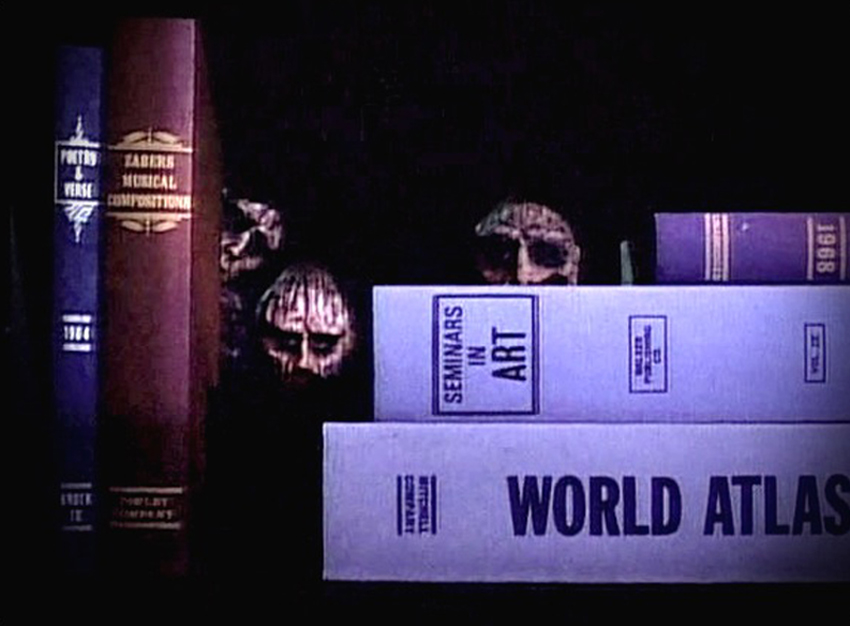
Although rarely held in high regard by critics, the made for television horror film remains an intriguing artifact of network programming. Any subgenre was up for grabs, and the output was disparate, vast, and surprisingly subversive, often producing a collective memory (or trauma, depending) shared by millions of viewers. Join us for a retrospective on the golden age of the telefilm and beyond. This event will be hosted by Amanda Reyes, editor and co-author of Are You in the House Alone? A TV Movie Compendium: 1964-1999.
Amanda Reyes
7 February 2019
Read more
7 February 2019
Horror and Hilarity: The Legacy of the Grand-Guignol (London)
Richard J. Hand
7 February 2019
Horror and Hilarity: The Legacy of the Grand-Guignol (London)
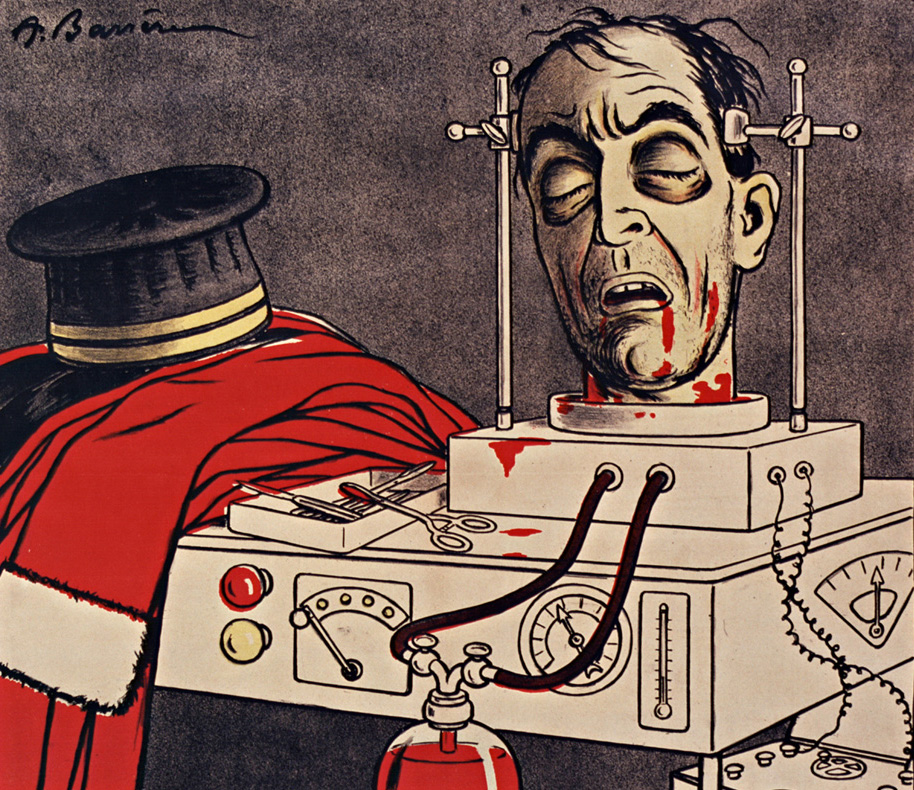
Hidden at the end of cobblestoned alley in Pigalle lurked a little theatre which was home to the smallest stage in Paris. This was the Théâtre du Grand-Guignol (1897-1962), the legendary ‘Theatre of Horror’. In a district famous for its brothels, streetwalkers and gangsters, the unique Grand-Guignol had a loyal local fanbase and drew in many nervous visitors from further afield. Originally, its repertoire was slice-of-life realism, but it soon discovered what its audience really wanted: a little slice-of-death and a delirious mixture of sang, sperme et sueur (blood, sperm and sweat). Sure enough, the Grand-Guignol’s intense evenings of short plays, interspersing horror with comedy, took its spectators on a journey into the depths of depravation and graphic reality as they watched dramas frequently based on true stories which showed them the effects of sulphuric acid thrown in a face… Or a prostitute skinned alive as her client watches in ecstasy… Or a man cleave off his own hand and hand it to his triumphant wife… Or a suicide bomber who decides to self-detonate… Or brain surgery going gruesomely wrong… Or nipples cut off with scissors… Members of the audience might vomit or lose consciousness requiring the theatre’s very own doctor to revive them… At the same time, other spectators roared with laughter or found their private pleasures in the grilled booths at the back of the auditorium…
Such is the legend of the Grand-Guignol and it masks the brilliant sophistication of its craft: the writers, actors and technicians who with exquisite finesse co-created this extraordinary, salacious and thrilling theatre. The original Grand-Guignol is long gone now, nothing but a ghost. But the phantom of this unique theatre casts a long shadow with an incalculable influence over subsequent popular horror in film, television, radio, comic books and, of course, theatre. The Grand-Guignol remains an essential antecedent to live horror performance of all kinds, from immersive experiences and Halloween shows to the work of contemporary companies such as Molotov Theatre Group (Washington DC) which continue to keep the classic Grand-Guignol repertoire alive.
In this talk, the academic and theatre director Richard Hand will take you on an intimate journey into a night at the Grand-Guignol, recounting the shocking stories, vivid personalities and ingenious tricks of the original theatre before exploring the theatre’s profound legacy and abiding influence over subsequent horror culture.
Richard J. Hand
7 February 2019
Read more
7 February 2019
Andy Milligan: Artist, Auteur or Asshole? (NYC) - CANCELLED
15 January 2019
Andy Milligan: Artist, Auteur or Asshole? (NYC) - CANCELLED
Please note due to unforeseen circumstances the Andy Milligan class scheduled for January 15th has had to be cancelled, but we hope to revisit in a future semester.
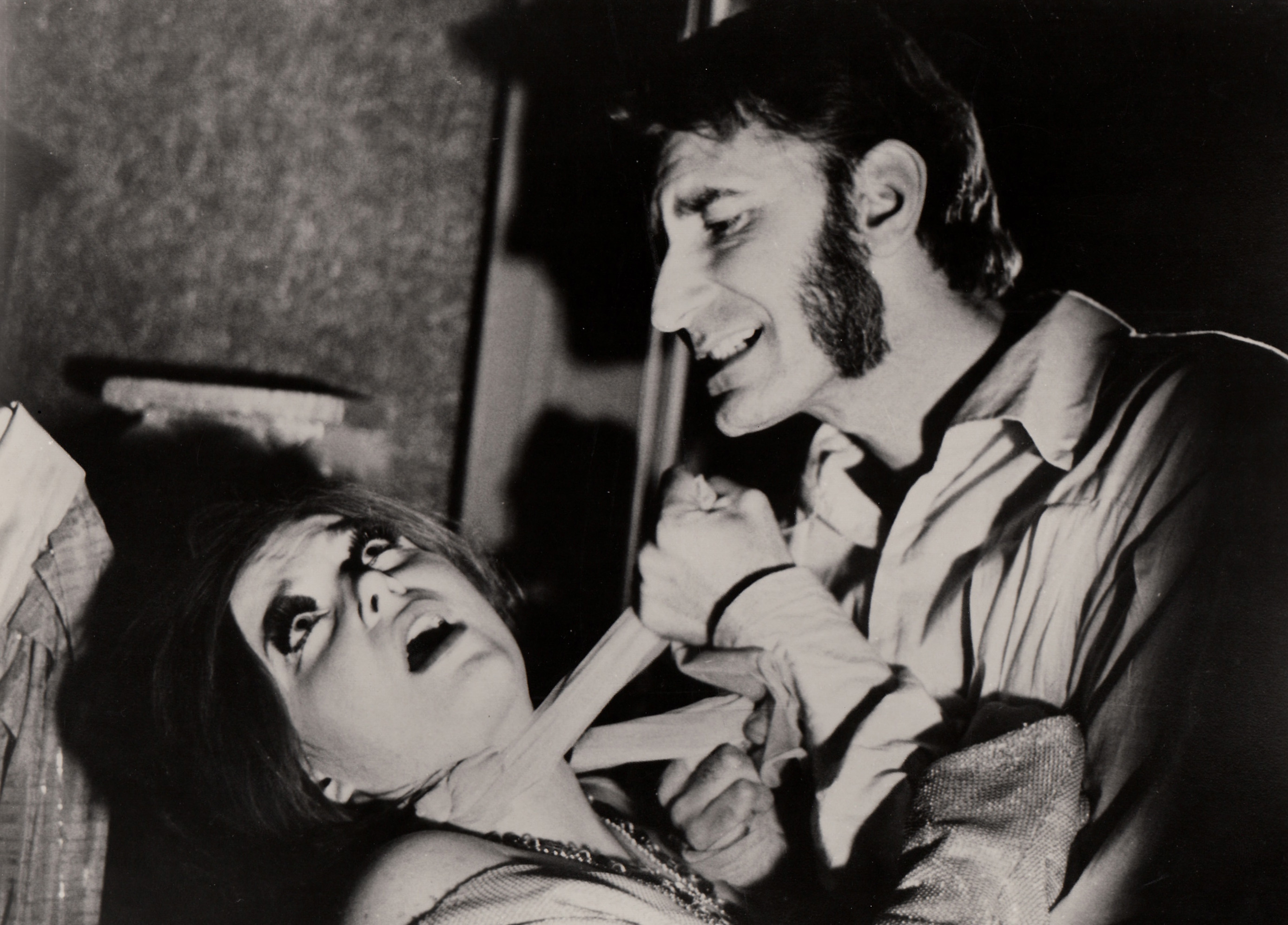
Between 1965 and 1988, Andy Milligan produced, wrote and directed 29 films. He also photographed, edited and provided costumes, make-ups and set design. He is the embodiment of the fierce self-reliant filmmaker, a literal one-man powerhouse taking on the jobs of several people. Even more fascinating was that Milligan also ran an off Broadway theater, producing and writing plays as well as staging the works of other writers.
Yet, despite all the energy and productivity, Milligan was long regarded as a pariah in cult film circles. In Michael Weldon’s book The Psychotronic Encyclopedia, he wrote “If you’re an Andy Milligan fan there is no hope for you.” Producer Richard Gordon wrote a letter to Fangoria magazine after they published an article on Milligan, ranting against Milligan and the lack of production value in the films he made. Most cult film fans tend to relegate Milligan to the bottom of the barrel and use disparaging remarks when describing his output. Yet since his death in 1991, Milligan’s work has attracted a lot of attention and re-evaluation, most notably in Jimmy McDonough’s book The Ghastly One (2001).
Milligan laid bare his soul in just about every film he made. Wallowing in a sea of self-hatred, Milligan willingly shared his misanthropy and laid it out for all to see on the screens of some of the scummiest grind houses and drive-ins this side of 42nd Street. He never let a film go by without using the classic Milligan tropes, all of which stem back to his life, which started in Saint Paul, MN, in 1929. In Milligan’s view all problems start at home and usually with the mother, and he used the films he was contracted to make for the exploitation circuit as his therapy.
So come on out and explore the life and films of Andy Milligan. Through a combination of clips of his work and stills of his life, we’ll put together an understanding of the man who made such exploitation masterpieces as Bloodthirsty Butchers, Torture Dungeon, The Ghastly Ones, Vapors, Kiss Me, Kiss Me, Kiss Me and so many more. Find out why the men who produced his films hated him, and how he shined that hatred right back onto them.
15 January 2019
International Remakesploitation: The Horror Meme from The Turkish Exorcist to Dracula in Pakistan (London)
Iain Robert Smith
10 January 2019
International Remakesploitation: The Horror Meme from The Turkish Exorcist to Dracula in Pakistan (London)
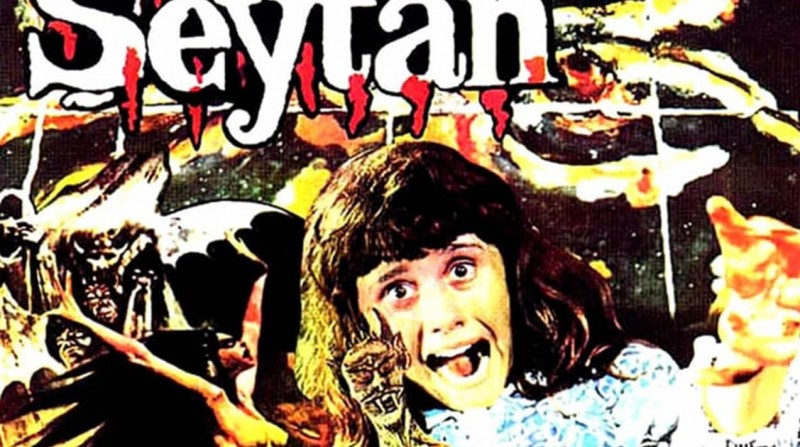
This lecture will introduce students to the world of horror ‘remakesploitation’ – international exploitation remakes of successful horror films that were often unlicensed and aimed primarily at the domestic market. For example, in 1974 the celebrated Turkish filmmaker Metin Erksan directed Şeytan, a near shot-for-shot remake of The Exorcist (1973), albeit with the Catholic iconography replaced with equivalents from Islam. This was part of a global trend for producing unlicensed reworkings of William Friedkin’s film including the blaxploitation film Abby (1974), the Italian-American rip-off Beyond the Door (1974) and the re-release of Mario Bava’s Lisa and the Devil with additional scenes under the title The House of Exorcism (1974). Similarly, in 1967 the Pakistani director Khwaja Sarfraz produced a loose remake of Dracula (1958) titled Zinda Laash that recreated many elements from the Terence Fisher Hammer film but with the notable addition of ‘item girl’ dance sequences – thereby creating one of the most unique adaptations of Bram Stoker’s novel.
Surveying a range of examples of horror remakesploitation from around the world, this lecture uses Richard Dawkins’ concept of the ‘meme’ – a cultural equivalent of the biological gene that spreads and mutates in a manner analogous to evolution – to explore what these films can tell us about processes of cultural globalization. What changes were required, for example, when the Ramsay Brothers reworked Nightmare on Elm Street (1984) in their Bollywood film Mahakaal (1993)? Or when filmmaker Mehmet Aslan directed a Turkish remake of Sergio Martino’s classic giallo The Strange Vice of Mrs Wardh (1971)? Or when Sanjay Gupta produced an Indian remake of Oldboy (2003)? Illustrated with numerous clips and posters from this international phenomenon, this class will investigate these processes of cross-pollination to explore how the horror genre adapts and mutates as it travels around the globe.
Iain Robert Smith
10 January 2019
Read more
10 January 2019
Roads to Hell: The Highway Horror Film (London) - CANCELLED
Bernice M. Murphy
13 December 2018
Roads to Hell: The Highway Horror Film (London) - CANCELLED
We regret to announce that instructor Bernice M. Murphy had to cancel due to unforeseen circumstances. Our ticket vendor wegottickets is working on refunds, but we hope to reschedule the class in the future. In the meantime, join us for Christmas drinks across the street at the Friend at Hand from 7pm.
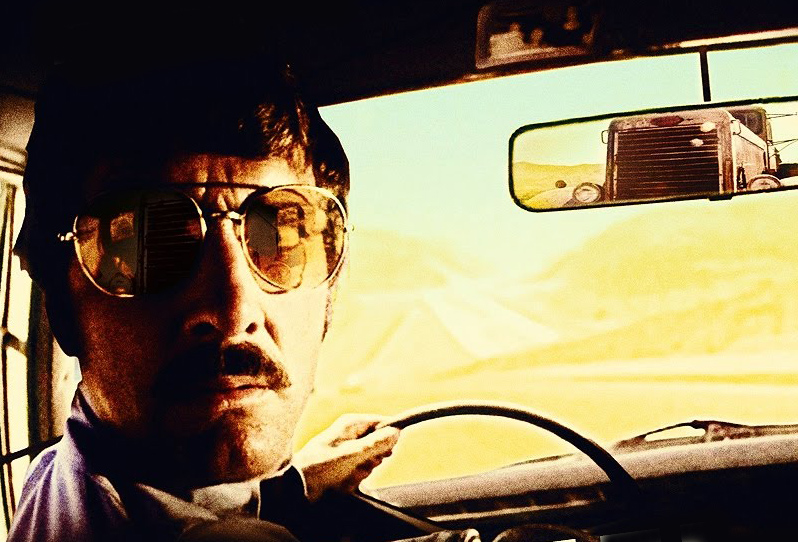
This class will introduce students to the ‘Highway Horror Film,’ an overlooked sub-genre of the wider American horror tradition which articulates profound unease about the transitory nature of modern American life, as well as the wider impact of mass automobility. The post-1956 construction of the Interstate Highway System (IHS) represents one of the most dramatic innovations of post-war American society. This ground-breaking new network of federally constructed roads provided Americans with a freedom to move around the entire nation that had previously been denied to them. In addition, the car assumed the vitally important practical and symbolic function it holds to this day. As we shall see, both these innovations are questioned in Highway Horror. In these films, the American landscape is by dint of its very accessibility rendered terrifyingly hostile, and encounters with other travellers (and with those whose roadside businesses depend on highway traffic) invariably have sinister outcomes.
We will begin with a discussion of one of the foundational ‘Highway Horror’ movies, Alfred Hitchcock’s Psycho (1960), focusing on the relationship between the film and the emergence in the 1930s of the motel as a new kind of roadside business. We’ll also explore the reasons why these locations are so often associated in American popular culture with criminality and murder. Psycho-influenced films such as Vacancy (2007) will be mentioned, as will motel-based explorations of identity dissolution such as Bug (2006) and Identity (2003).
Then we’ll move on to the second major theme in the sub-genre: the ‘highway nemesis’ narrative, in which in which middle-class male road users are forced to engage in deadly cat-and-mouse battles with monstrously aggressive blue-collar adversaries, as in Duel (1971), Race With the Devil (1975), The Hitcher (1986), and Joy Ride (2001). Next, the idea that the freedom of movement and culture of anonymity associated with the highways makes them an ideal killing ground for the serial killer will be discussed, with a focus on the theme of compulsive mobility in films such as Henry: Portrait of a Serial Killer (1986), Kalifornia (1993) Freeway (1996) and Death Proof (2007). Finally, the seminar will conclude with a consideration of the fourth and final ‘Highway Horror’ strand, which features films in which the protagonists are killed or seriously injured in car crashes, but find themselves trapped in a purgatorial space between life and death, as seen in Carnival of Souls (1962), Dead End (2003), Reeker (2005), Wind Chill (2007) and the recent anthology Southbound (2015).
Bernice M. Murphy
13 December 2018
Read more
13 December 2018
Focus on: The Murder Set Piece (LA)
Rodman Flender
13 December 2018
Focus on: The Murder Set Piece (LA)
Director Rodman Flender breaks down visual storytelling to its most basic narrative requirements. Often the centerpiece of horror and thriller films, the murder set piece is its own three-act “mini movie,” with beginning, middle and climax. With close-read examinations and comparisons of murder set pieces from the silent era through contemporary releases, students will gain an understanding of the essential tools needed to create tension and suspense on a visceral and psychological level. Deconstruction will include set pieces from classics many students know (Psycho, Halloween, The Texas Chain Saw Massacre), modern favorites (High Tension, The Babadook), and lesser-known films (Edison’s Frankenstein, Horror Hotel, Kristy). Flender will also walk through his own preparation for a set piece he directed for the Dimension TV series Scream.
Topics covered include: What are the individual elements in Hitchcock’s Psycho shower scene that created the template for the modern murder set piece (music, editing, cinematography, lighting, performance)? Where have directors Brian De Palma and Dario Argento taken Hitchcock’s template in films like Dressed to Kill and Suspiria? What elements in Fritz Lang’s 1931 German thriller M did Ron Howard use 65 years later in his Hollywood film Ransom? A discussion of “high” vs. “low” art will compare similar scenes in Ingmar Bergman’s The Virgin Spring and Wes Craven’s Last House on the Left — why one is considered an art film while the other is thought of as grindhouse sleaze? Which do the students prefer, and why? We will compare antagonists in murder set pieces, from man (Frenzy), nature (Jaws), technology (2001, Demon Seed), and the supernatural (Nosferatu, Final Destination 5). Hitchcock’s Frenzy will also be examined as a master-class in blocking a scene.
Rodman Flender
13 December 2018
Read more
13 December 2018