MIS
KA
TON
IC
Institute of
Horror Studies
Archive
Archive
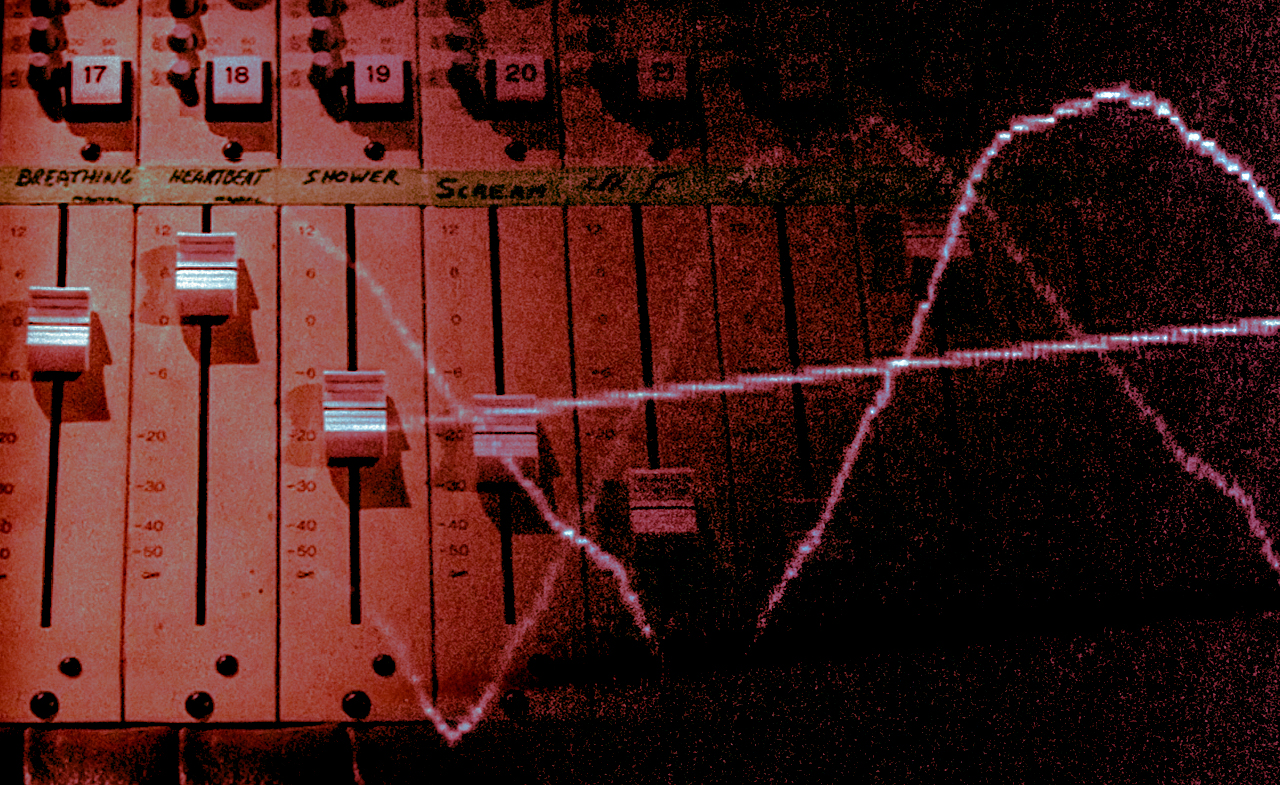
The Frequency of Fear: The Power and the Glory of the Motion Picture Soundtrack (NYC)
Dean Hurley
11 December 2018
The Frequency of Fear: The Power and the Glory of the Motion Picture Soundtrack (NYC)
This class is sold out!
Cinema has long tapped into the fundamental devices of fear in its employment of sound. Even before the advent of the loudspeaker and synchronized motion picture sound, organs and pianos collided tense sonic energy against images in the physical spaces of film exhibition parlors and nickelodeons. As humans, the audible sliver of the frequency spectrum provides a unique window into concepts of how energy and vibration physically manifest and affect the matter of our material world. After all, sound is simply vibrational energy we can hear. How we’ve arrived at organizing frequencies into the form of modern music is a mystery itself, dating back 5,000 years and involving ‘sky god visitors’ who bestowed humanity its system of measurement. Understanding our physiological experience of sound and its relation to our universe can illuminate and unlock a deeper understanding of the design of sound and music for the motion picture.
Journeying through concepts of cymatics, standing wave levitation, musical tunings, as well as film examples, demonstrations, and dissections of modern mix sessions, The Frequency of Fear guides its participants through an awakening in understanding the spiritual power of sound both onscreen and beyond.
++++
Dean Hurley’s first installment of the library-style Anthology Resource series showcases his original ambient music contributions featured in Twin Peaks: The Return‘s very distinctive-sounding third season. Listen at the link below.
https://deanhurley.bandcamp.com/album/anthology-resource-vol-1
Dean Hurley
11 December 2018
Read more
11 December 2018
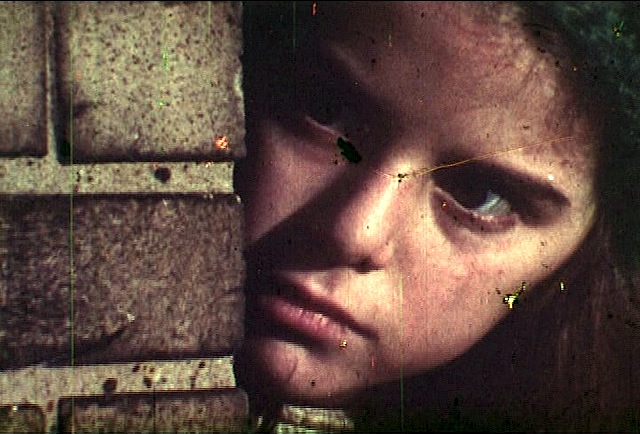
School of Shock: Pain and Pleasure in the Classroom Safety Film (LA)
Kier-La Janisse
29 November 2018
School of Shock: Pain and Pleasure in the Classroom Safety Film (LA)
For many genre fans, a love affair with horror and the grotesque began early on, sometimes fueled by unlikely sources. One of these was the classroom safety film, which for many kids was their first time seeing other children threatened by true danger, being confronted with a combination of gore effects and actual accident footage, and being offered a pictorial glimpse at things their parents didn’t want to talk about. Thousands of these films were made in North America from the 1940s through the 1980s, when companies like Centron, McGraw-Hill, Coronet, Encyclopaedia Britannica Films, Avis Films, Crawley Films, Bell Labs, the NFB and others thrived on the burgeoning market for classroom or workplace educational films.
Subjects ranged from safety in and around vehicles, to drug abuse and venereal disease, teaching children scary lessons about everything from dental hygiene to how to spot a pedophile. The most memorable of these films deliberately used horror visuals to entice and/or shock children into paying attention – such as those by prolific producer Sid Davis (1916-2006) – and some were even made by directors with genre film pedigrees, such as Carnival of Souls’ Herk Harvey, a key figure in the industrial film scene.
This lecture and screening by Kier-La Janisse, founder of The Miskatonic Institute of Horror Studies, will present some of the most notorious educational films of the 40-year golden age of social hygiene onscreen. We’ll also briefly look at educational television PSAs, from the British Public Information Films through the incredibly grisly Australian drunk driving commercials of the 1990s.
The classic era of classroom films may be over, but viewed from today’s perspective, some of these films offer up a fascinating survey of changing social mores and cultural preoccupations (not to mention fashions!). Being safe has never looked so grim.
WARNING: This program contains graphic imagery, including real accident and casualty footage.
Kier-La Janisse
29 November 2018
Read more
29 November 2018
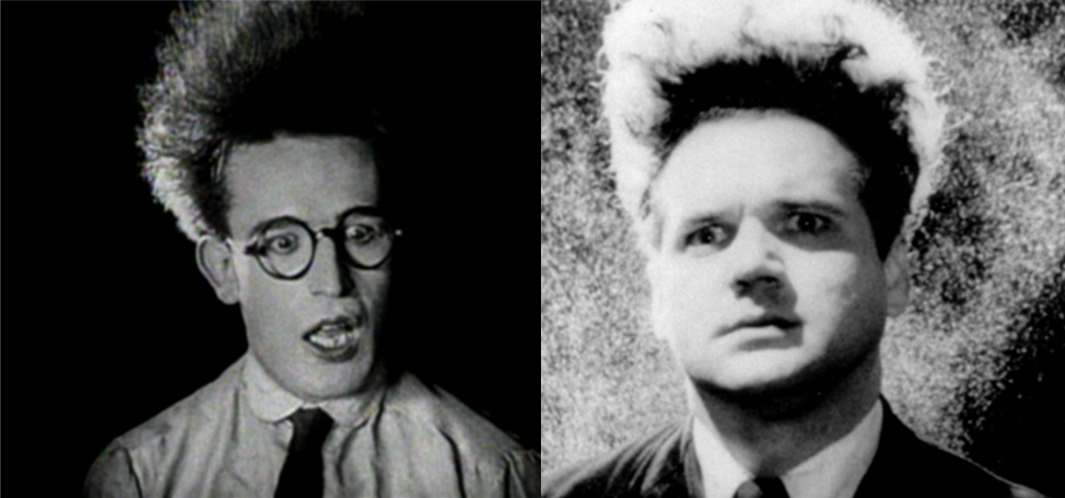
Ha! Aaah! The Painful Relationship Between Humor and Horror (NYC)
David Misch
13 November 2018
Ha! Aaah! The Painful Relationship Between Humor and Horror (NYC)
From 1920’s Haunted Spooks to Pride and Prejudice and Zombies, the genre of horror-comedy has never really, you should excuse the expression, died.
Yet humor and horror seem pretty different; one’s a pie in the face, the other’s an axe in the skull. It’s obvious why watching someone being torn asunder would be horrible but why is the endless suffering of the Three Stooges funny? Could there be any congruencies between funny and fear, snickers and screams, gore and gags, slapstick and slaughter?
Yes.
This class proposes – carefully, while remaining alert and well-armed – that the two genres are not mortal enemies.
For one thing, people in pain are a perennial part of every art; to be fascinated with human suffering is to be human. Both comedy and horror can show us how to live (and, of course, die); from Psycho we learn that Death can come to anyone at any time. Also, to always shower with a friend.
The class will examine horror’s relationship with philosophers’ explanations of comedy: Immanuel “Carrot Top” Kant’s Incongruity Theory (it’s funny when two things that don’t go together go together); Sigmund “Shecky” Freud’s Relief Theory (comedy is a rapid expulsion of tension); Thomas “Nutso” Hobbes’s Superiority Theory (“You’re in pain and I’m not – ha!”); Henri “Giggles” Bergson (comedy requires “a momentary anesthesia of the heart”); and Mel Brooks (“Tragedy is when I cut my finger; comedy is when you fall into an open sewer and die”).
We’ll explore the mechanics of both using video clips and examples ranging from Frankenstein and Dracula to Abbott & Costello, and try to figure out what makes us laugh and/or scream.
We’ll see that both genres love loss of control, anarchy, the breakdown of rules and conventions – the beast within us set free. And both exploit our paradoxical feelings about helplessness: seeing someone out of control can be hilarious (a clumsy person falling) or horrifying (a clumsy person falling into a snake-pit suspended over a shark-pit next to a zombie zoo).
Both humor and horror also share a mordant view of our relationship to pain; an obsession with the human body and its multifarious fluids; and a subtext of death and transcendence underlying the eviscerated flesh and fart jokes. What could be more blood-curdlingly fun?
David Misch
13 November 2018
Read more
13 November 2018
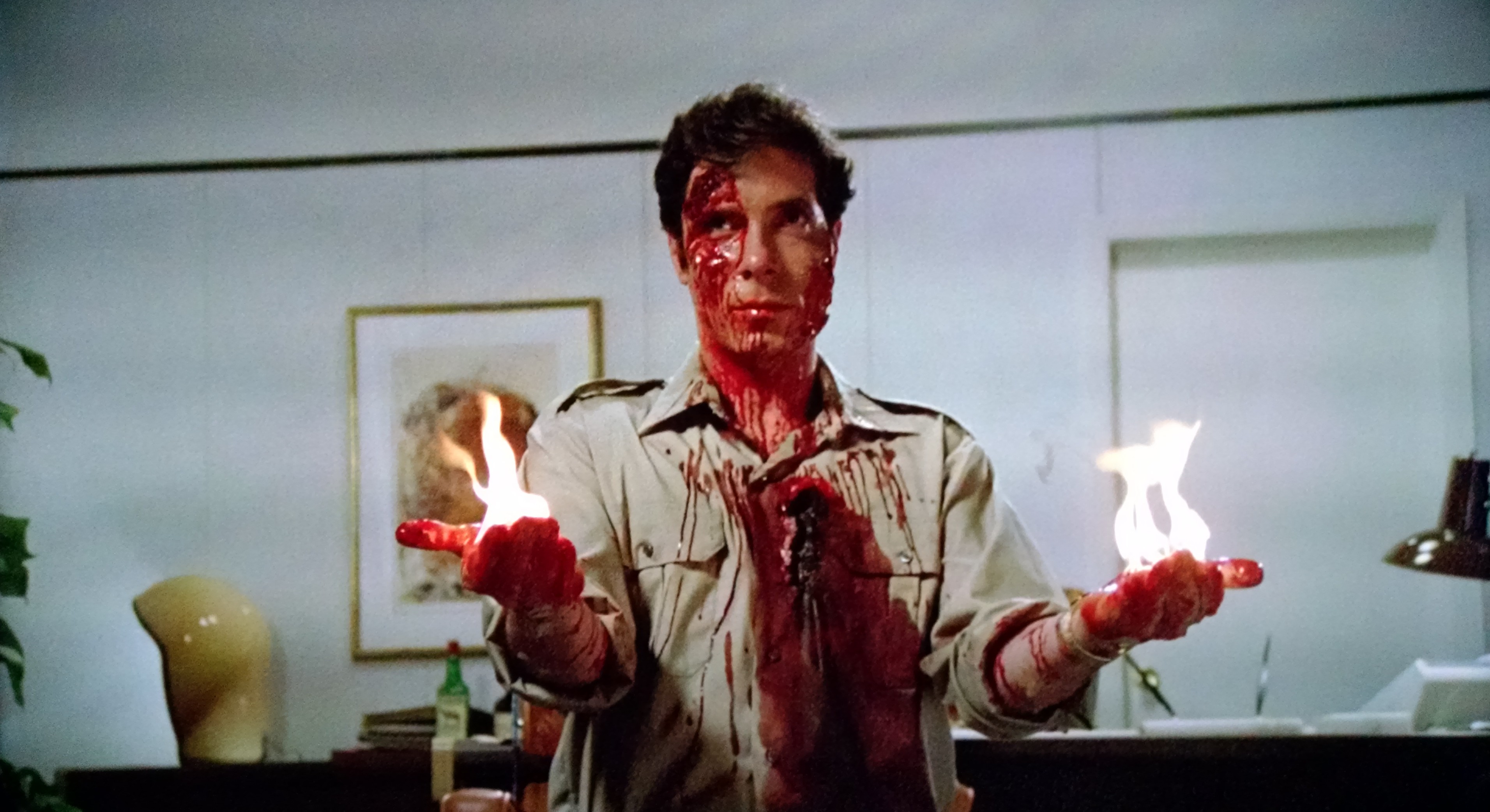
Rotten Bodies, Rotten Blood: Medical Crises and Controversies as Reflected through Horror Cinema (LA) - CANCELLED
David J. Skal
8 November 2018
Rotten Bodies, Rotten Blood: Medical Crises and Controversies as Reflected through Horror Cinema (LA) - CANCELLED
We regret to announce that David J. Skal has had to cancel his Miskatonic LA class. We will notify ticket holders of this cancellation by email and will also notify you if the class is rescheduled at any point. We have however scheduled a separate class for November to make up for the cancellation – “School of Shock: Pain and Pleasure in the Classroom Safety Film,” taught by Kier-La Janisse – and you can either have your tickets transferred over to this new class or receive a refund.
The horror genre has always been informed by bottomless displaced anxieties about the body, disease, and medicine. In this lecture, David J. Skal, the author of THE MONSTER SHOW and HOLLYWOOD GOTHIC explores the pop culture underpinnings of modern horror in real-life medical crises and controversies, including the preoccupation with demon children that took hold as thalidomide, birth control, and abortion changed the reproductive landscape; the poisoned Tylenol crisis of 1982; the vogue in visceral, transformative special effects that paralleled the development of the plastic surgery industry; the link between the AIDS epidemic and a resurgent fascination with vampires; and much more.
David J. Skal
8 November 2018
Read more
8 November 2018
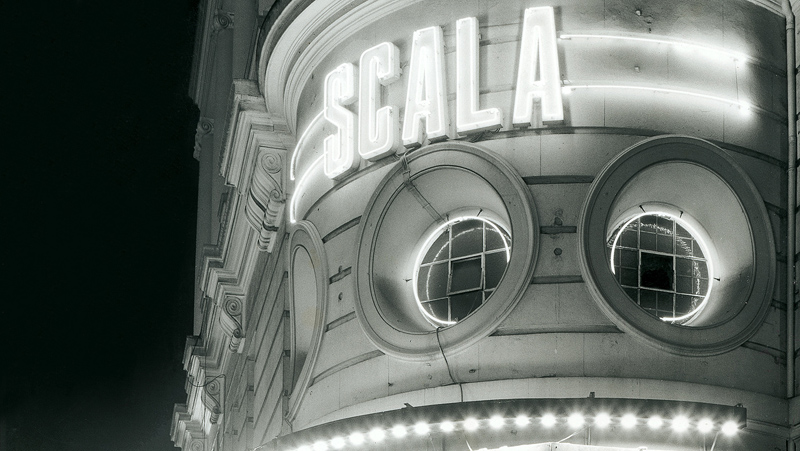
Cabinet of Curiosities: the strange case of the Scala cinema (London)
Jane Giles
8 November 2018
Cabinet of Curiosities: the strange case of the Scala cinema (London)
BUY TICKETS >>
‘A country club for criminals and lunatics and people that were high… ’
This was how the Pope of Trash John Waters described London’s Scala cinema, a hallowed venue beloved of film freaks but forced to close in 1993. The Scala’s deep roots were in the site of an old brewery in 18th century Fitzrovia, a concert hall which was rebuilt in 1905 as an ornate folly of a theatre. The Scala theatre housed both the birth of colour cinema and an exclusive year-long run of the racist epic Birth of a Nation, as well as onstage appearances by resident Bohemian Quentin Crisp, Kenneth Williams as a Lost Boy and Sean Connery, unplaced in the ‘Tall Men’ category of the Mr Universe competition, 1953. Fast-forward to 1976: the Fitzrovia site is occupied by a soon-to-be-bankrupt socialist film collective, but overtaken by a teenage punk who transformed it into the legendary and notorious Scala cinema.
Unique to the Miskatonic Institute, a cache of rare archival documents, architects’ plans, drawings, photographs and other ephemera will form the visual backdrop to a guided tour of the Scala, which moved from Fitzrovia to the defunct Primatarium in King’s Cross, 1981. Specialising in an alchemical mixture of horror, music and LGBT films, Psychotronic and Kung Fu, the Scala pushed back against censorship in all of its forms, culminating in a devastating law suit. The soundtrack to the lecture will feature the Scala’s jukebox and intermission music, 1978-1993.
Jane Giles
8 November 2018
Read more
8 November 2018
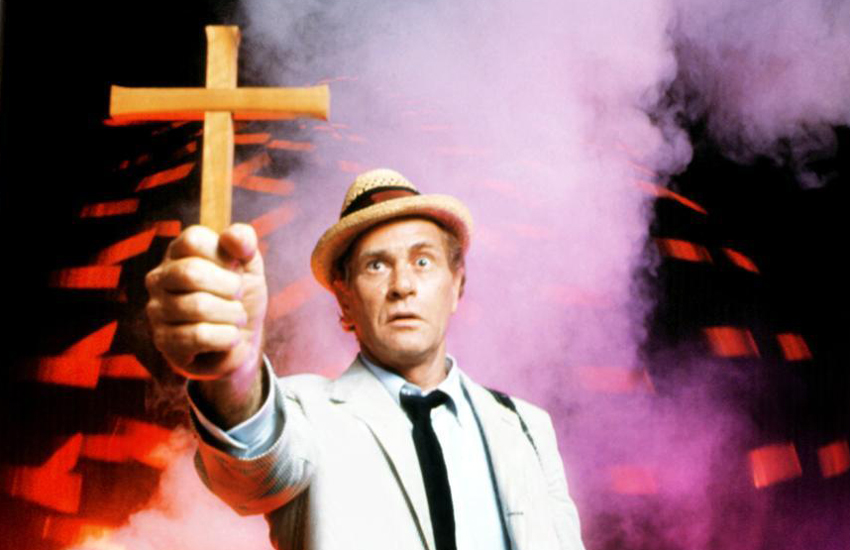
Dan Curtis: Old School/New School (NYC)
David Bushman
25 October 2018
Dan Curtis: Old School/New School (NYC)
In the early 1970s, just before Hollywood auteurs like Wes Craven and John Carpenter invented the modern horror film, eschewing old-school, fantastical monsters for gritty, politically edged stories aimed at excavating our deepest anxieties, producer/director Dan Curtis dominated television horror with a series of programs reinterpreting traditional genre tropes for what novelist Don DeLillo famously referred to in Running Dog as “the of conspiracy, the age of connections, links, secret relationships.” Although major newspapers almost unfailingly remembered him first and foremost in his 2006 obituary as the man who brought the epic World War II-themed miniseries The Winds of War and War and Remembrance to television in the 1980s, with their graphic depictions of concentration camp existence, Curtis had earlier built his reputation as a purveyor of a different kind of horror – first with the Gothic-turned-supernatural daytime soap Dark Shadows (1966 to 1971) and then with a series of TV movies and specials airing between 1968 and 1975, including The Night Stalker, The Night Strangler, Trilogy of Terror, and adaptations of such classic monster tales as Dracula, Frankenstein, The Picture of Dorian Gray, The Turn of the Screw, and The Strange Case of Dr. Jekyll and Mr. Hyde.
Knowingly or not, Curtis – praised by Stephen King in Danse Macabre for an “unerring, crude talent for finding the terror place inside you and squeezing it with a cold hand” – tapped into the zeitgeist of the time – the turbulent sixties, the paranoid seventies – by imbuing classical, literal monsters with human dimensions, beginning with Dark Shadows, whose conflicted, Hamlet-esque vampire, Barnabas Collins, spoke to the outlaw culture of the late sixties just as the antiheroes of Bonnie and Clyde and Butch Cassidy and the Sundance Kid did, and paved the way for a stacked roster of tortured successors, including Angel and Spike (Buffy the Vampire Slayer), Stefan Salvatore The Vampire Diaries), and Edward Cullen (Twilight).
With The Night Stalker (1972), scripted by horror legend Richard Matheson (I Am Legend, The Twilight Zone), Curtis once again turned to the classic creature of the night, in this case a vampire terrorizing young women on the streets of Las Vegas, but, in the age of Watergate, stirred in a political cover-up, foreshadowing a rash of literary and cinematic paranoid thrillers and mesmerizing a young viewer by the name of Chris Carter, who, twenty years later, would create The X-Files.
Join us as we explore these and other titles in Curtis’s horror oeuvre, exploring his thematic and aesthetic preoccupations, his evocation of the times, his own influences, and his influence on the men and women who have followed in his footsteps by finding the terror place inside us and squeezing it with a cold hand.
David Bushman
25 October 2018
Read more
25 October 2018
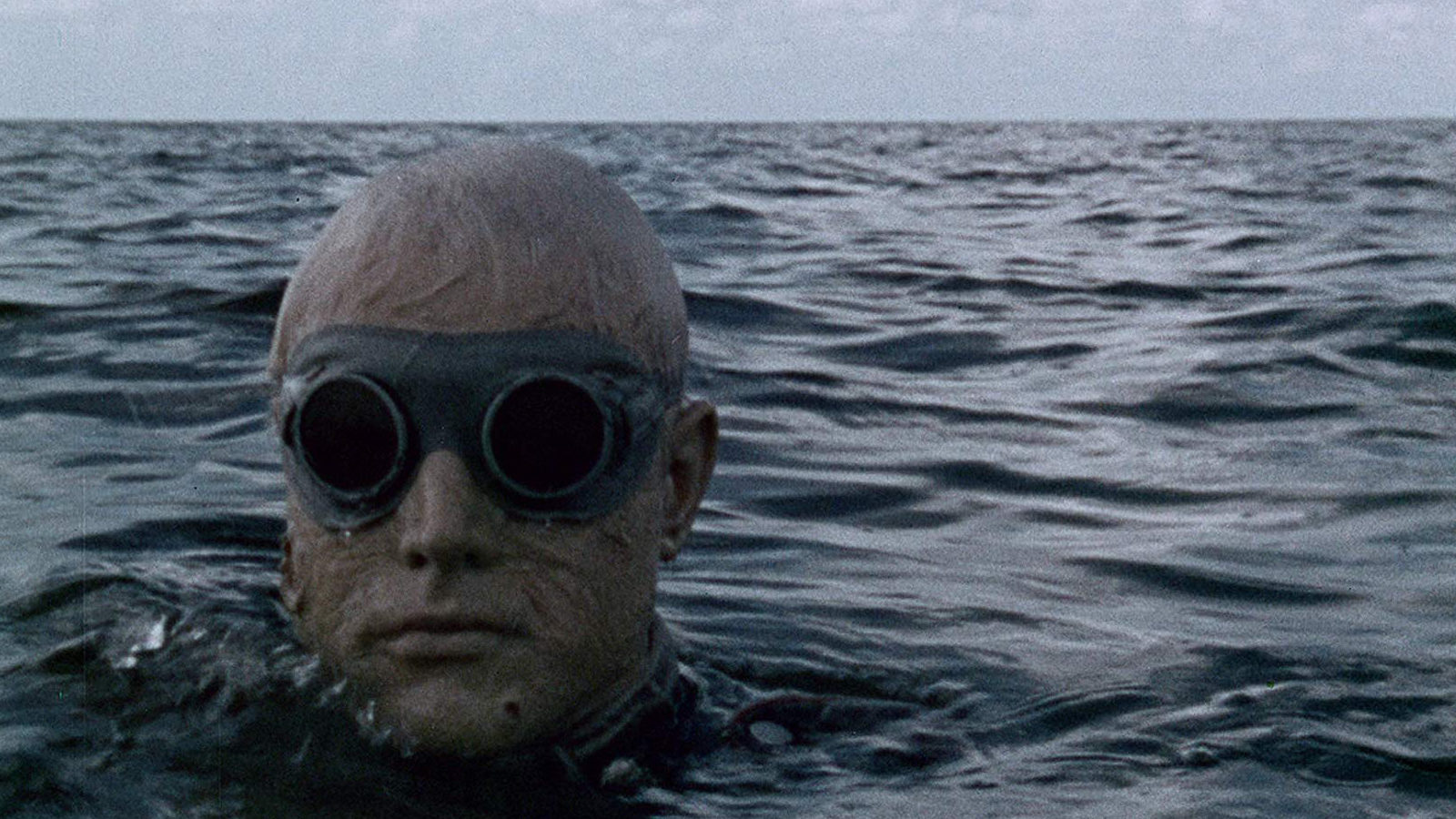
I Dream of Deep Water: An Exploration of the History and Psychology of Aquatic Horror (LA)
Rebekah McKendry
24 October 2018
I Dream of Deep Water: An Exploration of the History and Psychology of Aquatic Horror (LA)
The summer of 1975 completed changed movie history. Not only did the release of JAWS set the standard for the “summer blockbuster”, it also ignited society’s communal anxiety, fear, and fascination with what could be lurking just the below the surface of the water. The success of JAWS not only led to a slate of rip-off films soon to be dubbed as “sharkploitation”, but also had real life repercussions of pure terror leading to deserted beaches and massive shark culls. However, JAWS was by no means the first or last aquatic horror media to pique our interest in the deep blue. Our fascination for monsters of the abyss goes back to the dawn of man and has traveled with us throughout time, from Jonah’s whale to ancient sea monsters depicted in early cartography to Moby Dick to the upcoming MEG film.
From unknown ghosts of the deep to sharks, mermaids, gators and the Great Old Ones of Lovecraftian lore, This lecture by Rebekah McKendry will examine not only the history of aquatic horror, focusing on film, but also touching on earlier texts and visual arts. McKendry will also explore the psychology behind our fascination with unknown fathoms, exploring the mental intersections of fear and fascination, the symbolism of submergence, and the subconscious primordial elements of the deep.
Rebekah McKendry
24 October 2018
Read more
24 October 2018
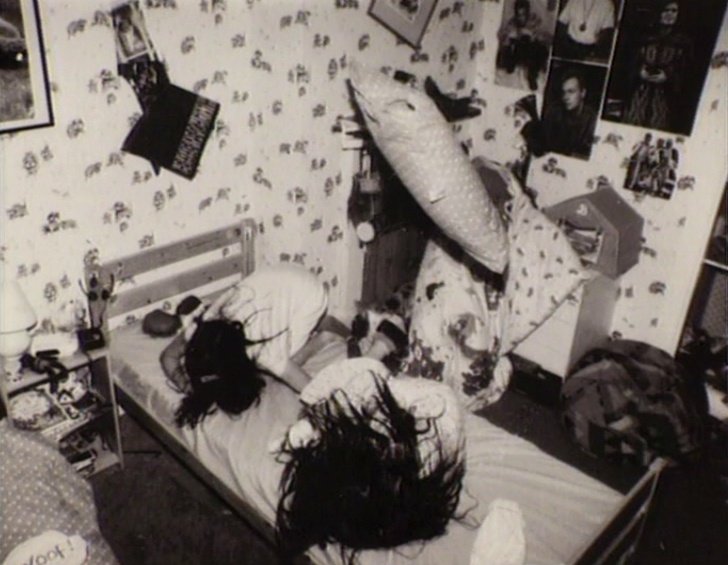
Live From Miskatonic: Stephen Volk in Conversation with Sean Hogan (London)
Sean Hogan
11 October 2018
Live From Miskatonic: Stephen Volk in Conversation with Sean Hogan (London)
TICKETS HERE >>
Screenwriter and author Stephen Volk is perhaps best known for writing the notorious BBC Halloween hoax Ghostwatch, which spooked the nation, hit newspaper headlines and prompted questions to be asked in Parliament. However, his many other notable screenplays include those for the films Gothic (directed by Ken Russell), The Guardian (directed by William Friedkin), the BAFTA award-winning The Deadness of Dad, and The Awakening, while his other TV credits range from Afterlife to the recent Midwinter of the Spirit. In addition, he is also a renowned prose author of novellas and short fiction, winning British Fantasy Awards for his collection Monsters in the Heart and his novella “Newspaper Heart”. Arguably his most acclaimed work of fiction so far has been the 2013 novella Whitstable, a story featuring legendary horror icon Peter Cushing. He followed this in 2015 with another novella, Leytonstone, about the early life of Alfred Hitchcock, and will be completing his Dark Masters Trilogy this year with the publication of Netherwood, a fictional account of an encounter between famed black magic author Dennis Wheatley and notorious mystic Aleister Crowley.
During this exclusive event, Stephen Volk will discuss his career and work with screenwriter & filmmaker Sean Hogan. Covering both his film & TV credits as well as his prose fiction, the pair will look at the differences between writing for film and television; his contrasting screenwriting experiences in the UK and the US; the process behind writing fictionalised biographical works such as Gothic and the Dark Masters Trilogy; discuss the stories behind the creation of some of his most famous/infamous credits; examine why and how he built a successful prose career away from screenwriting; and talk more broadly about the methodology of representing the supernatural onscreen and what horror is actually ‘for’. The evening will end with a Q&A session with the audience, and should provide an invaluable insight into writing for page and screen by an acknowledged master of the forms; no aspiring writer should miss the chance to learn from Stephen Volk’s hard-earned experience across a wide range of writing disciplines.
Sean Hogan
11 October 2018
Read more
11 October 2018
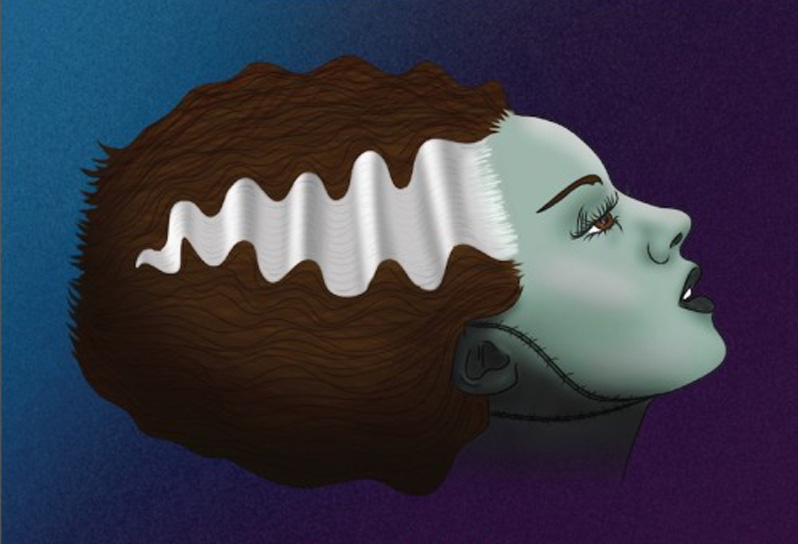
Ghouls to the Front: Rethinking Women's Horror Filmmaking (Austin)
Alexandra Heller-Nicholas
25 September 2018
Ghouls to the Front: Rethinking Women's Horror Filmmaking (Austin)
The Miskatonic Institute of Horror Studies is proud to present this special one-off class with film writer and scholar Alexandra Heller-Nicholas (Rape Revenge Films: A Critical Study) at Austin’s Fantastic Fest.
While the growing noise in recent years surrounding the inequalities facing women filmmakers has been very welcome, when it comes to horror especially there’s often a subtle suggestion that women who make these kinds of films are some kind of novelty, a cute little curio often approached by mainstream critics with an unspoken air of “can you believe women today even make horror films?”.
Scratch beneath the surface, however, and as any horror fan worth their mettle will tell you it is hardly a new phenomenon. But outside the usual suspects who appear with near-uniform regularity on the token listicles that pop up every time a woman-directed horror film makes a splash, there is a long, diverse history of women’s filmmaking in the horror genre.
While researching and writing her upcoming book 1000 Women in Horror, Australian film critic and author Alexandra Heller-Nicholas was struck by the scope of women’s horror filmmaking. That scope lead to some important – and sometimes difficult – questions: are horror films made by women necessarily ‘feminist’? What do we mean when we talk about ‘feminism’ anyway? What can we learn from art history? Do women make necessarily different kinds of horror films to men and represent violence in different ways? And who has told us which women horror filmmakers’ matter – and, through their omission from popular memory, which ones don’t?
Rather than presenting a singular alternate history of women’s horror filmmaking, Heller-Nicholas seeks to blow open the way we think about this subject more broadly, looking at a range of examples from around the world from 1898 to 2018 in order to think through ways we can collectively rethink the history of horror more broadly to be more inclusive, more representative, and more fun.
Image: Cover detail from Alexandra Heller-Nicholas’ forthcoming book 1000 Women in Horror.
Alexandra Heller-Nicholas
25 September 2018
Read more
25 September 2018

Drag Me to Hell: Representations of Drag and Transvestism in Horror Film and Television (London)
Sarah Crowther
13 September 2018
Drag Me to Hell: Representations of Drag and Transvestism in Horror Film and Television (London)
TICKETS HERE >>
‘When reality came too close, when danger or desire threatened that illusion – he dressed up, even to a cheap wig he bought.’ (Psycho, 1960)
From Ed Wood’s Glen Or Glenda (1953) to the Boulet Brothers’ Dragula (2017-), drag and transvestism have appeared as a recurring theme in genre cinema and television. This history of representation could be argued to have been broadly delineated into two categories: the ‘deviants’ and the divas. Appropriately, perhaps, the double-Ds. A recurrent representation of cross-dressing/gender subversion in horror has been that of the opposite gender embodying the protagonist’s murderous or ‘deviant’ impulses.
‘And so Warren created Emily, a homicidal maniac who did his killing for him’ (Homicidal, 1961)
Simultaneously, however, some of genre cinema’s greatest anti-heroes have simply just been transvestite (get over it), or played by iconic drag queens. This lecture will explore key cinematic and televisual genre representations, identifying shared symbolic themes and imagery. Progression of representation will be considered in the context of societal change and increased visibility.
The lecture will explore scenes from films which may include A Blade in the Dark (1983), Sleepaway Camp (1983), Homicidal (1961), Der Samurai (2014), Psycho (1960), Switchblade Romance (2004), Dolly Deadly (2016) and Dressed to Kill (1983), alongside the televisual delights of RuPaul’s Drag Race (2009-) and Dragula (2017-). There may also be a Divine sprinkling of John Waters and the chance to chew over O’Brien/Curry’s Frank’n’Furter.
We will explore the two key categories of representation, while also considering those who fall in between, and what that difference signifies. Angela, Linda, Bobbi, Warren… Male to female and female to male transvestism will be explored. Are there thematic links between drag and horror and what are the recurrent elements? The culture of subversion? Of extremity? The ‘fear of the other’ which is a recurrent narrative driver in genre cinema? In contemporary society where representations of drag are crossing into the mainstream (RuPaul’s Drag Race, 2009-) and cross-dressing represents less of an extreme counter-cultural revolt, what has been the impact on that relationship? And did some of the more progressive filmmakers representing drag reflect this in earlier representations?
Sarah Crowther
13 September 2018
Read more
13 September 2018