MIS
KA
TON
IC
Institute of
Horror Studies
Archive
Archive
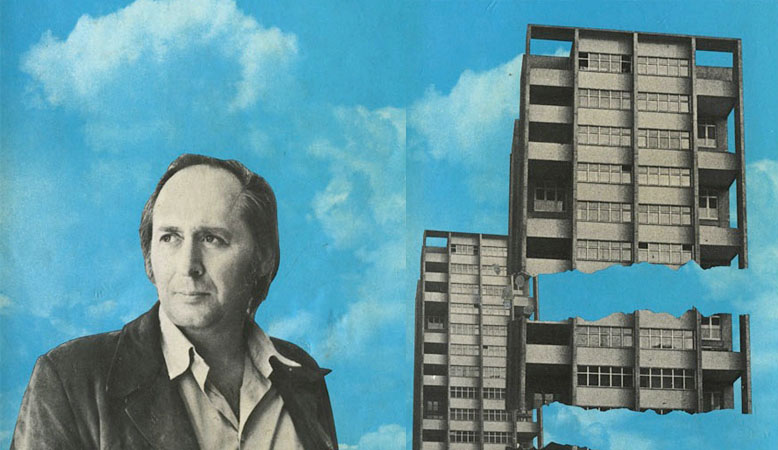
J.G. Ballard: Crash, The Atrocity Exhibition and Moving Beyond Literature
Jack Sargeant
7 January 2016
J.G. Ballard: Crash, The Atrocity Exhibition and Moving Beyond Literature
Building on Jack Sargeant’s previously published research on J.G. Ballard, this talk explores Ballard in the realms beyond literature, looking at his graphics, use of performance and the infamous Crashed Cars exhibition as well as the short film Crash, in relation to the aesthetic ‘perversions’ that emerged around his ground-breaking 1970s novels. The talk offers an exploration of Ballard’s radical experimental work, and traces its influence into the subcultural mise en scène of the era and beyond.
The talk will include a screening of The Unlimited Dream Company (dir: Sam Scoggins, 1983, 24 mins).
Jack Sargeant
7 January 2016
Read more
7 January 2016
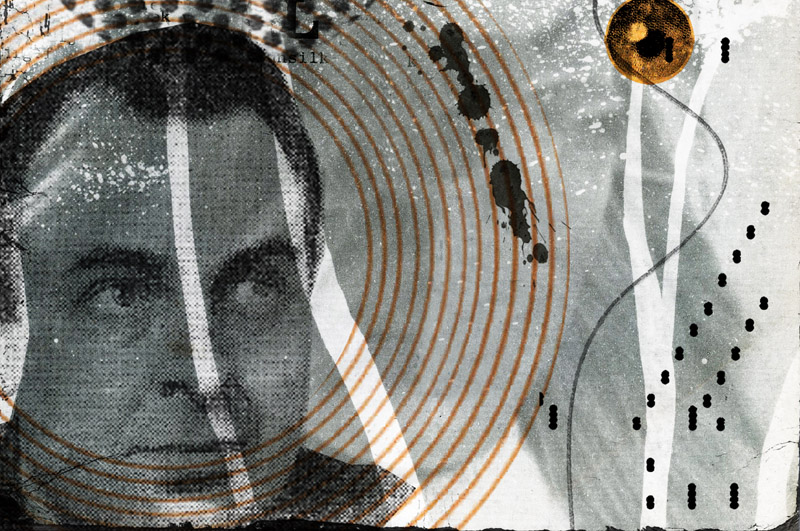
LIVE FROM MISKATONIC: NIGEL KNEALE’S ‘THE ROAD’
David Pirie
10 December 2015
LIVE FROM MISKATONIC: NIGEL KNEALE’S ‘THE ROAD’
In 1950 Thomas Nigel Kneale won the Somerset Maugham Award for his prose collection TOMATO CAIN & OTHER STORIES.
In 1953 he changed the face of British Television with THE QUATERMASS EXPERIMENT. Public houses across the country emptied as each installment of this thrilling new story went out live to the nation. Never before had a television drama become a national event, and few enough have had such an impact since.
His adaptation of NINETEEN EIGHTY FOUR would raise questions in Parliament, such was its power, while original dramas like THE YEAR OF THE SEX OLYMPICS accurately predicted, and indicted, the sensationalism of ‘Reality TV’ and the passivity of the society that produced it.
In the years that followed QUATERMASS & THE PIT, THE STONE TAPE, MURRAIN, BEASTS, THE WOMAN IN BLACK and more, would influence successive generations of authors, film makers and screenwriters. From Russell T. Davies to The League Of Gentlemen, John Carpenter to Stephen King, Chris Carter, Peter Strickland, Ramsey Campbell, China Mieville and more…
Jacques Derrida may have coined the term, but it is Kneale – in his style, themes, and the unique tone of his work – who provides a touchstone for the Hauntological movement which has pervaded our culture in recent years.
To mark the launch of WE ARE THE MARTIANS, a new book of essays about Kneale and his work from Spectral Press, The Miskatonic Institute presents a unique celebration of the work of Nigel Kneale.
A rehearsed reading of Kneale’s lost drama THE ROAD will be followed by an in depth discussion of Kneale’s work and influence by some of the book’s authors, including screenwriter Stephen Volk (GHOST WATCH, AFTERLIFE, THE AWAKENING), author and critic Kim Newman (ANNO DRACULA, NIGHTMARE MOVIES), author and editor Mark Morris (ALBION FAY), stage, screen and comics writer Maura McHugh (SIR EDWARD GREY: WITCHFINDER, JENNIFER WILDE), author and critic David Pirie (A HERITAGE OF HORROR), author Stephen Laws (THE MIDNIGHT MAN), author, screenwriter and playwright Jeremy Dyson (THE LEAGUE OF GENTLEMEN, BRIGHT DARKNESS: THE LOST ART OF THE SUPERNATURAL HORROR FILM) and WE ARE THE MARTIANS editor Neil Snowdon.
And, just to add even more excitement, here’s the cast line-up for the reading:
Big Jeff – David Morley Hale
Lukey Chase – Michael Shaw
Sam Towler – James Swanton
Sir Timothy Hassall – Jason Morell (son of Quatermass actor Andre Morell)
Tetsy – Annabel Bates
Jethro – Clarence Smith
Gideon Cobb – Mark Gatiss
Lady Lavinia Hassall – Claire Louise Amias
narrator / director – Jonathan Rigby
David Pirie
10 December 2015
Read more
10 December 2015
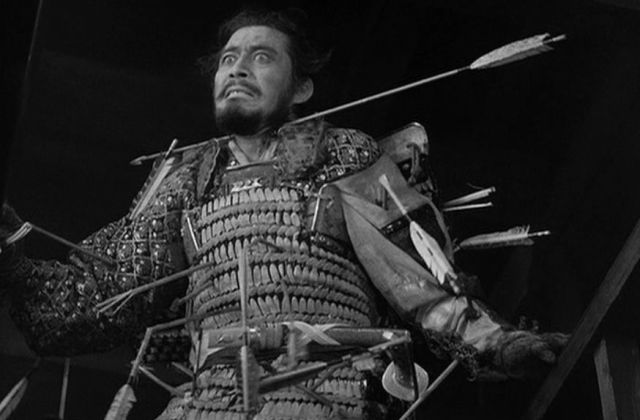
“Daggers of the Mind”: Shakespeare’s Occult Influences and Japanese Horror
J. Shea
17 November 2015
“Daggers of the Mind”: Shakespeare’s Occult Influences and Japanese Horror
This year’s edition of “Shakespeare and Horror” looks at Early Modern beliefs in witchcraft, magic, and especially mind-control. In addition to discussing Renaissance discourse on the “transitive” powers of vision and imagination—the notion that minds and matter can be influenced by another subject across the visual field—we’ll consider how Shakespeare’s allusions to proto-hypnosis, “fascination” by the evil eye, and demonic mental influences translate into the Japanese art-horror films of two (unrelated) Kurosawas. During our first session we’ll view THRONE OF BLOOD aka SPIDER WEB CASTLE (1957), Akira Kurosawa’s gothic, Noh-influenced adaptation of Macbeth. In our second class we’ll watch Kiyoshi Kurosawa’s CURE (1997), a cinematic initiation into a world mesmerism and contagious violence.
J. Shea
17 November 2015
Read more
17 November 2015
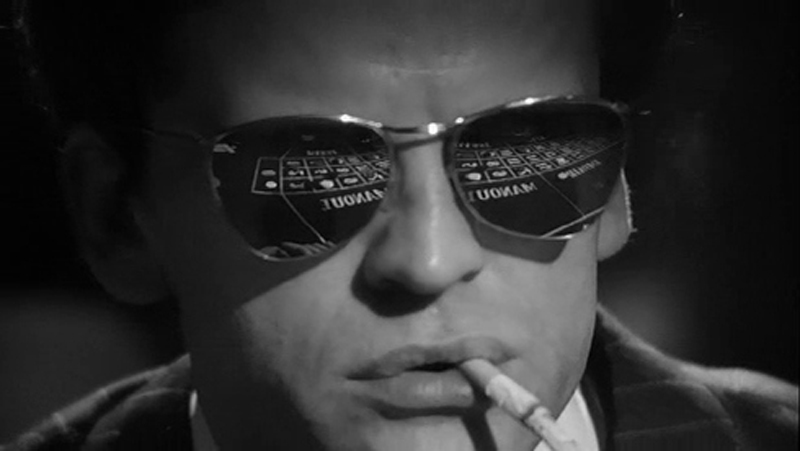
SHADOWS AND FOG: THE FORGOTTEN HISTORY OF THE GERMAN EDGAR WALLACE KRIMI
Jim Harper
12 November 2015
SHADOWS AND FOG: THE FORGOTTEN HISTORY OF THE GERMAN EDGAR WALLACE KRIMI
Between 1959 and the early 1970s, German film companies released more than fifty low-budget crime thrillers inspired by the works of British writer Edgar Wallace. Featuring some of Europe’s most well-known cult and horror actors (including Christopher Lee, Klaus Kinski and Gert Fröbe) the Edgar Wallace krimi combined fast-paced action, surprising violence and zany humour. Sold en masse to US television and shown in an edited and badly dubbed form, these films have rarely received the attention they deserve. Jim Harper explores the background and history of the Wallace krimi, from their beginnings to their long-term influence in Germany and beyond, discussing the charm and appeal of these quintessential European cult favourites.
Jim Harper
12 November 2015
Read more
12 November 2015

BRITISH OCCULT CINEMA
Michael Wood
20 October 2015
BRITISH OCCULT CINEMA
The occult loomed large in British horror films of the latter part of the 20th century. In the Night of the Demon (1957) ancient folklore, arcane writings, séances and a malevolent magician are subject to the skeptical inquiries of a team of international paranormal investigators lead by Dana Andrews. The Witches (1966) follows a school teacher (Joan Fontaine) recovering from a mental breakdown while working in Africa as she takes up a new post in a peaceful and rather conservative English village. She soon finds out that not all is what it seems as she encounters the evil forces and sinister rituals lurking below the surface of an otherwise tranquil rural setting. The Devil Rides Out (1968), based on the novel of Denis Wheatley, gives a glimpse into the occult experiments of the 1920’s British upper-class. A world of ecstatic rituals, esoteric texts, demonic conjurations and the figure of Mocata, a practitioner of the magical arts based on the infamous occultist Aleister Crowley. These three films reflect contemporary realities of gender, class, race, colonialism and modernity as post-war Britain dealt with the end of empire and profound social changes. These films also reflect popular conceptions of and reactions to various aspects of the Western occult tradition such as spiritualism, ceremonial magic and Wicca, the set of neo-pagan beliefs that was becoming known to a wider public for the first time as these movies were first released.
Films: Night of the Demon (1957); The Witches (1966); The Devil Rides Out (1968)
Michael Wood
20 October 2015
Read more
20 October 2015
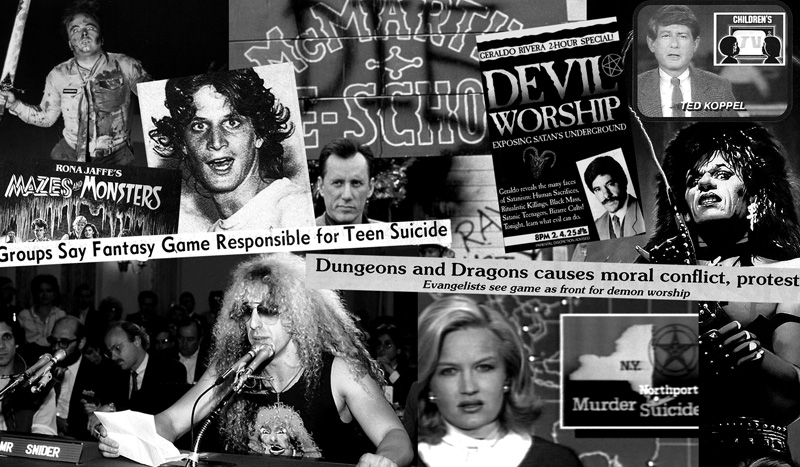
SATANIC PANIC: POP-CULTURAL PARANOIA IN THE 1980s
David Flint
8 October 2015
SATANIC PANIC: POP-CULTURAL PARANOIA IN THE 1980s
In 1980s North America, everywhere you turned there were warnings about a widespread evil conspiracy to indoctrinate the vulnerable through the media they consumed. This percolating cultural hysteria, now known as the “Satanic Panic,” was both illuminated and propagated through almost every pop culture pathway in the 1980s, from heavy metal music to Dungeons & Dragons role playing games, Christian comics, direct-to-VHS scare films, pulp paperbacks, Saturday morning cartoons and TV talk shows —and created its own fascinating cultural legacy of Satan-battling VHS tapes, music and literature. As the hysteria moved overseas to the UK, Australia and South Africa, its life extended into the 1990s – and some say it never went away. From con artists to pranksters and moralists to martyrs, this lecture – based on the instructors’ book of the same name, which will be available at the screening – aims to capture the untold story of the how the Satanic Panic was fought on the pop culture frontlines and the serious consequences it had for many involved.
Read more about the SATANIC PANIC book HERE.
David Flint
8 October 2015
Read more
8 October 2015

Mondo Realism and the Cinema of Joe D’Amato
Mario DeGiglio-Bellemare
29 September 2015
Mondo Realism and the Cinema of Joe D’Amato
This course will examine Joe D’Amato’s body-centred films within the context of Italian cinema, the paracinematic, and genre studies. We will focus on what I call D’Amato’s “Mondo Realist” films, made within a very short period between 1975-1979. D’Amato’s films bridge Neo Realism and the Mondo film, which continue to be understood in almost mutually exclusive terms in film theory. His films offer a way to open up these categories through the embodied and sensual experiences of the porn and horror genres.
Films: Emanuelle and Françoise (1975); Emanuelle in America (1977); Buio Omega (1979).
Mario DeGiglio-Bellemare
29 September 2015
Read more
29 September 2015
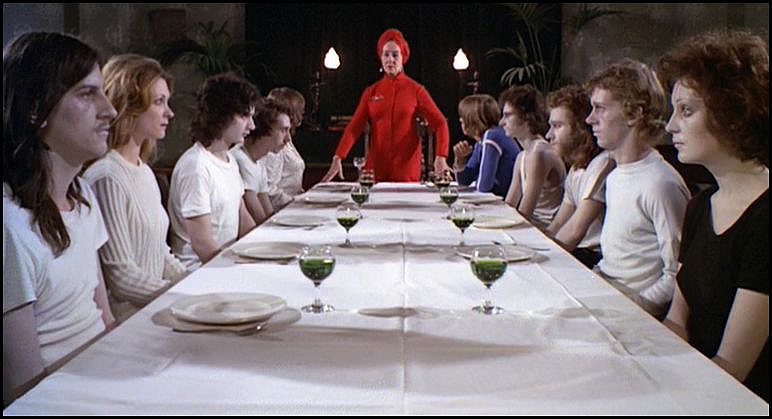
FREAKS, HIPPIES AND WITCHES: THE STRANGE, SALACIOUS CINEMA OF ANTONY BALCH
William Fowler
10 September 2015
FREAKS, HIPPIES AND WITCHES: THE STRANGE, SALACIOUS CINEMA OF ANTONY BALCH
‘An awful lot of people are going to miss all that gusto and kindness and fun,’ reflected distributor Derek Hill when Balch died in 1980. Critic Tony Raynes remembered a ‘lively, interesting, engaged, vigorous’ man who ‘threw a hell of a party’.
An extraordinary figure of 1960s-70s British film, Antony Balch was a true original. His love of cinema was infectious and he worked across nearly all the different areas of the business. Best known for directing the camp, grisly Horror Hospital and for collaborating with William Burroughs, he also ran two London cinemas, directed ads, made trailers, wrote reviews and distributed exploitation movies such as Don’t Deliver Us from Evil, Truck Stop Women and Massacre for an Orgy.
Horror and weird cinema fans should celebrate him for securing the first ever UK release of Tod Browning’s banned Freaks (with the help of Kenneth Anger). The 70s were a heady time for boundary pushing and he played an important part, resisting criticism whilst calling the press ‘the number one exploiter of fear, horror, hate and violence in the world’.
In this wide-ranging illustrated lecture (part of Scalarama 2015), William Fowler will explore Balch’s holistic approach to cinephilia as well as his ideas about censorship. Selected short films by Antony Balch will screen as part of the evening.
William Fowler
10 September 2015
Read more
10 September 2015
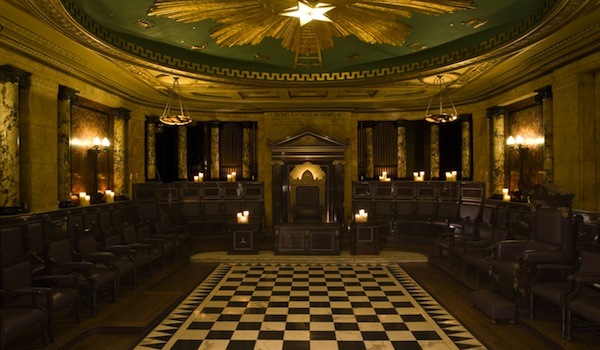
Miskatonic Graduation at the Masonic Temple with "DEAD EYES OF LONDON"
Kim Newman
4 July 2015
Miskatonic Graduation at the Masonic Temple with "DEAD EYES OF LONDON"
The Miskatonic London 2015 pilot semester has now wrapped, but we would like to invite all our graduates (those who were with us for the whole semester) to a screening of The Dead Eyes of London at the fantastic Masonic Temple in Liverpool Street on Saturday 4 July at 1pm (part of the East End Film Festival). This will be followed by a panel discussion on krimi films with Kim Newman, Jim Harper and Alex Fitch, after which the graduates will receive their Miskatonic diplomas from the hands of Kim Newman.
The screening is ticketed for the general public (see details and ticket links for the full day’s programming at the temple below), but Miskatonic graduates have free admission with RSVP. IMPORTANT: Please email us at miskatonic.london[at]gmail.com to reserve your place. It is essential that you reserve your place by FRIDAY 26 JUNE.
Congratulations to the graduates of the first Miskatonic London semester!
Antony Caiger
Ralph Dorey
John Etherington
Brian Graham
Duncan Hopper
Graham Humphreys
Justin Merritt
Tom Oldham
Anthony Page
Bradie Poole
Mat Rowlands
Stephanie Scaife
Matthew Tilt
Justin Woodman
Find out more about the Masonic Temple HERE.
MASONIC TEMPLE: FROM MURDER TO MIND CONTROL
Descend into the eerie confines of a masonic temple for this devilishly unsettling combination of screenings and events: taking you from murder and mayhem into the sinister sinews of the brainwashed and their puppet-masters…
Saturday 4 July
SESSION 1 | Ticket Price: £10 | BUY TICKETS
1 PM | ELECTRIC SHEEP PRESENTS:
The Dead Eyes of London + Talk
Director: Alfred Vohrer | USA | 1961 | 104 min
Nothing is as it looks in this murder mystery lead by a mysterious reverend. Followed by a special talk on krimi cinema hosted by Electric Sheep’s Alex Fitch, who will be joined by author and critic Kim Newman, and author Jim Harper.
Miskatonic Graduation
A ceremony for the graduates of the Miskatonic Institute of Horror Studies – London
__
SESSION 2 | Ticket Price: £10 | BUY TICKETS
4 PM | CIGARETTE BURNS PRESENTS:
The Case of the Scorpion’s Tail (16MM)
Director: Sergio Martino | Italy | 1971 | 90 min
This deliciously macabre setting paired with a lustrous 16mm projection make this a rare opportunity to sample this devilishly entertaining 70s thriller as a millionaire dies in a mysterious freak accident leaving his widow set to enjoy the rich spoils.
EVENING SESSION | Ticket Price: £25 | BUY TICKETS
8 PM | MACABRE MASONIC MASQUERADE + SCREENING OF JUDEX
Director: Georges Franju | France | 1963 | 98 min
Join us for a macabre night of ballroom play, immersive cinema and murder mystery masquerade featuring a screening of Favraux’s thrilling pulp-hero remake of the 1916 French film serial of the same name.
Kim Newman
4 July 2015
Read more
4 July 2015
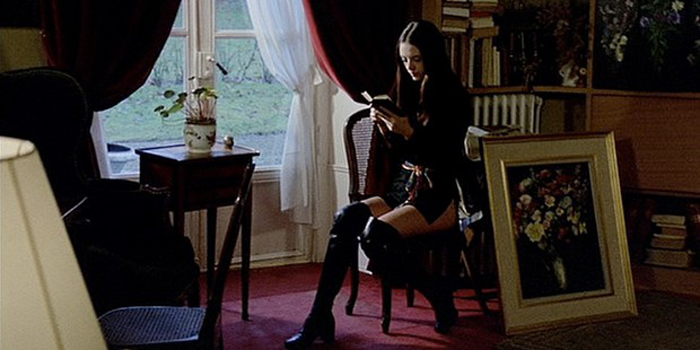
Jesús Franco: Shooting at the speed of life
Stephen Thrower
11 June 2015
Jesús Franco: Shooting at the speed of life
TICKETS: https://www.wegottickets.com/event/319653
During a career spanning more than fifty years, Jesús (‘Jess’) Franco created a strange and unique style of commercial genre filmmaking, bordering at times on the avant-garde. Obsessed with ‘aberrant’ sex, erotic horror and the writings of the Marquis De Sade, he took a resolutely personal approach to movie-making, and after spending the 1960s honing his technique on slightly more conventional projects he embarked in the 1970s on a sustained period of intensive shooting, making as many as ten or twelve films in one year. Shooting with a small crew, exclusively on location, he worked at a speed that allowed little time for the honing of a perfect finished product, instead creating a cinema of spontaneity, improvisation and caprice. Franco valued freedom above all: by combining a rapid-fire series of small-scale commercial film projects, a ‘creative’ approach to finance, and a dedicated passion for the sensational, he was able to carve his own niche and digress into the most extraordinary experimental ellipses. In this evening’s discussion, Stephen Thrower will explore Franco’s ability to juggle the commercial and personal dimensions of filmmaking through his confrontational works of horror, sadism and erotic spectacle.
**UPDATE: Due to a late shipment, the publisher of Stephen Thrower’s new book MURDEROUS PASSIONS: THE DELIRIOUS CINEMA OF JESUS FRANCO will not have the books available at the Miskatonic class. He will have an advance copy available for viewing and will be able to take pre-orders.
HOWEVER! Our pals at Cigarette Burns are presenting a screening of Franco’s VAMPYROS LESBOS at the Prince Charles Cinema on June 29th, introduced by Stephen Thrower, and rumour has it the books should arrive in time for that! Here is the link to their event: http://www.facebook.com/events/103274273345634/
Stephen Thrower
11 June 2015
Read more
11 June 2015