MIS
KA
TON
IC
Institute of
Horror Studies
Archive
Archive
Engulfed by Nature: Psychological and Supernatural Landscapes
Jasper Sharp
14 May 2015
Engulfed by Nature: Psychological and Supernatural Landscapes
TICKETS: http://www.wegottickets.com/event/315971
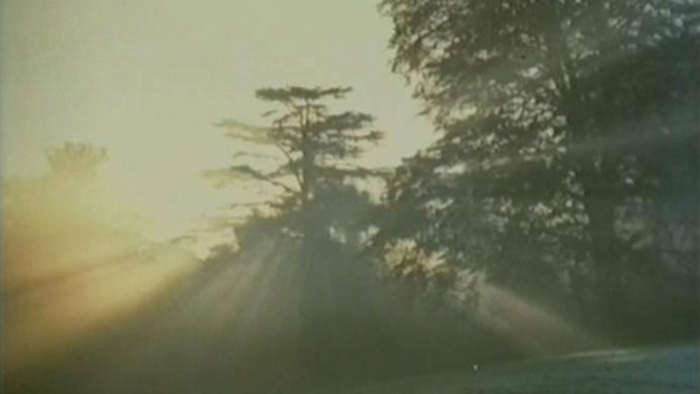
‘There is magic all around us’, Udo Kier famously states at a key point in Dario Argento’s Suspiria (1977), a sentiment reiterated by one of the characters in Richard Stanley’s Dust Devil (1992), which sees its protagonists drawn out of their mundane suburban environment in small-town South Africa into the heart of the Namib desert to be confronted by their darkest demons.
Stanley’s film in particular presents a sublime example of how landscape and elemental conditions can be evoked to express dangerous forces existing beyond man’s perceptual and belief systems, but also, in contrast, how heightened psychological states can be given visual form through use of such timeless spaces, taking the viewer out of their comfort zones and back into nature at its most wild, mysterious and untamed.
In an ever-urbanising world, the textures, rhythms and sounds of nature can be made to seem increasingly alien and alienating on film, making us realize we are but a small part of a wider world beyond our control. Works ranging from Kaneto Shindo’s Onibaba (1964) through José Larraz’s Symptoms (1974) and Jerzy Skolimowski’s The Shout (1978) reframe our perceptions, interrogating the boundaries between the physiological and the supernatural, as interior worlds collapse beneath the weight of exterior ones.
This lecture and screening by Jasper Sharp will look at how such mysterious invisible forces of nature are given vent in a number of films depicting the rupture between these rational and irrational domains. It will explore how pantheistic belief systems that hold that spirits reside in everything, such as Japan’s Shinto religion, overlap with a British folk tradition of supernatural writers such as Arthur Machen and William Hope Hodgson, and how foreign directors often have a keener, more nuanced eye for the expressive potential of the English landscape to portray characters off-kilter with their environment.
Jasper Sharp
14 May 2015
Read more
14 May 2015
London Underground: Death Line
Kim Newman
9 April 2015
London Underground: Death Line
TICKETS: https://www.wegottickets.com/event/312733
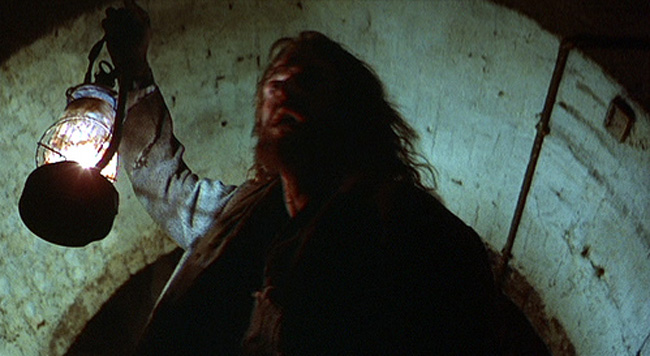
Kim Newman will screen and talk about Gary Sherman’s 1972 British horror film, Death Line (aka Raw Meat), one of the first British horror films to compete with the wave of stronger, more politicised American splatter movies that came in the wake of Night of the Living Dead.
A series of disappearances on the London Underground Railway are traced back to the inbred, cannibal descendants of navvies trapped by a cave-in during the building of the tunnels. A human monster (Hugh Armstrong) who looks like a scabrous tramp haunts the Piccadilly Line, picking off and eating the odd commuter, trying to keep alive his diseased wife. Tea‑drinking copper Inspector Calhoun (Donald Pleasence) is called into the case with his sidekick sergeant (Norman Rossington) when the latest victim (James Cossins) turns out to be a high-ranking civil servant fresh from a neon-lit sleaze spree in Soho, and has to cut through bureaucratic red tape (represented by Christopher Lee in a bowler hat). Meanwhile, down in the tunnels, the last of the monsters lives out his pathetic, horrid leftover life, expressing himself through the only words he knows, ‘mind the doors’. It includes a wonderful, apparently improvised drunk scene from Pleasence and a breathtaking 360º pan around the cannibals’ dripping, dank, corpse-strewn underground lair.
Less makeshift than a lot of its rivals from the 1970s, it has solid, witty dialogue, a memorably funky music score and the sort of urban legend premise that people will swear is based on truth rather than new-minted for the movie. American writer-director Gary Sherman also made the cloying New Seekers ‘I’d Like to Buy the World a Coke’ ads, and used his share of the fee from that to finance this gutsy, gritty debut. The discussion will highlight the film’s political subtext, transgressive use of cannibalism as metaphor and for shock value, black humour, performance styles, relationship with American and other British films on similar subjects (The Texas Chain Saw Massacre, Frightmare) and exploration of London lore and locations. The Horse Hospital is just round the corner from Great Russell Street Station, so attendees who come by tube will pass through the film’s main setting before and after the class.
Kim Newman
9 April 2015
Read more
9 April 2015

HITCHCOCK AND THE APOCALYPSE
Ned Schantz
7 April 2015
HITCHCOCK AND THE APOCALYPSE
This 3-week course will revisit The Birds (Hitchcock 1963) as an approach to two unique films on the edge of the apocalyptic tradition: Safe (Haynes 1995) and Take Shelter (Nichols 2011). Like The Birds, these are relatively quiet melodramas overtaken by an uncanny horror that scrambles space and subject, defying explanation and leaving cinematic representation up for grabs. Together, the three films will let us consider the boundaries of the horror genre as well as its capacity to intervene in other modes and complicate the project of realism.
Ned Schantz
7 April 2015
Read more
7 April 2015
The Battle of the Sexes: Sado-masochism in 1960s-70s cinema
Virginie Sélavy
12 March 2015
The Battle of the Sexes: Sado-masochism in 1960s-70s cinema
TICKETS HERE: www.wegottickets.com/event/310105
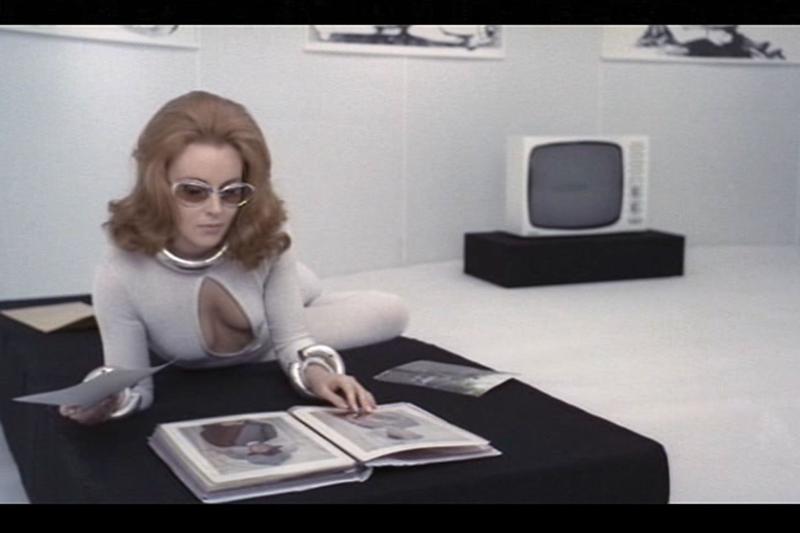
In the 1960s-70s, the relaxation of censorship, together with women’s greater social assertiveness, led to the appearance of a substantial number of art and/or exploitative films that explored male/female relationships through sexual power games. A large sub-section, including Mario Bava’s The Whip and the Body (1963), Luis Buñuel’s Belle de jour (1967), Sergio Martino’s The Strange Vice of Mrs Wardh (1971) and Vicente Aranda’s The Blood Spattered Bride delve into what are presented as women’s secret repressed desires and internal conflicts. Aside from his numerous Sade adaptations, Jess Franco also dreamily explored female characters who are both victims and tormentors in Venus in Furs (1969) and Succubus (1968). Henri-Georges Clouzot’s Woman in Chains (1968) and Alain Robbe-Grillet’s Eden and After (1970) create hyper-aesthetic worlds of kinky abstract obsession while in Kôji Wakamatsu’s The Embryo Hunts in Secret (1966) and Pete Walker’s House of Whipcord (1974), the violence of amorous relationships takes on social and political connotations. Artist Niki de Saint Phalle made two unusual and fascinating contributions to this theme: not only did she co-direct her own semi-autobiographic perverse family fantasy, Daddy, with Peter Whitehead (1973), but her art also appears in the fascinating Femina Ridens (Piero Schivazappa, 1968), which toys with expectations about dominant and submissive roles. The lecture will examine all these and more ramifications of the period’s unfettered sado-masochistic fantasies.
Virginie Sélavy
12 March 2015
Read more
12 March 2015
THEORIZING HORROR, PART 2: HORROR AND SENSATION
Alanna Thain
17 February 2015
THEORIZING HORROR, PART 2: HORROR AND SENSATION
Our second instalment of horror theory courses focuses on the synesthetic pleasures and sensual pains of horror with five classes devoted to the body and the senses. Course content will include the place of affect theory in horror studies, the revelatory tradition in cinema and photography, Deleuzian bodies without organs, the desire and dread conjured by the Gothic documentary (gothumentary), and a trip through the nightmarish world of Kenneth Anger.
We will also screen a wide variety of films and moving-image works, including French cinema of sensation, body horror, B-horror, avant-garde horror, documentary horror, and more.
Instructors: Mario DeGiglio-Bellemare, Kristopher Woofter, Alanna Thain and Ayanna Dozier, Papagena Robbins, Anne Golden
Week 1: February 17 – “Affect, Sensation, and Horror Studies”
Instructor: Mario DeGiglio-Bellemare
Film: Trouble Every Day (Claire Denis, 2001) – France (100 minutes)
Reading: “Between Meaning and Mattering: On Affect and Porn Studies” by Susanna Paasonen (2014)
Week 2: February 24 – “Horror, the Revelatory and the Gothic ‘Thing’”
Instructor: Kristopher Woofter
Film: Leviathan (Lucien Castaing-Taylor and Verena Paravel, 2012) – France / USA (87 minutes)
Reading: Le Cinéma du diable by Jean Epstein (1947)
SPRING BREAK – MARCH 3
Week 3: March 10 – Intensities: David Lynch Between Life and Death
Instructors: Ayanna Dozier and Alanna Thain
Film: Twin Peaks: Fire Walk with Me (David Lynch, 1992) – USA (135 minutes)
Reading: 6 – “How do you make yourself a body without organs?” from A Thousand Plateaus: Capitalism and Schizophrenia by Gilles Deleuze and Félix Guattari (1980)
Week 4: March 17 – “‘Caging the Monster that Will Live for 100,000 Years’ in the Future-Tense Gothumentary”
Instructor: Papagena Robbins
Film: Into Eternity: a Film for the Future (Michael Madsen, 2010) – Denmark – 75 minutes
Reading: “Gothumentary: The Gothic Unsettling of Documentary’s Rhetoric of Rationality” by Papagena Robbins and Kristopher Woofter (2012)
Week 5: March 24 – “Mad About the Boy: Kenneth Anger”
Instructor: Anne Golden
Films: Inauguration of the Pleasure Dome (1954, 38:00), Scorpio Rising (1963, 28:00), and Lucifer Rising (1972, 28:00) – USA.
Reading: “Illuminating Lucifer” by Carel Rowe (1974)
Alanna Thain
17 February 2015
Read more
17 February 2015
I Eat Cannibals: Atavism, Exoticism and Atrocity
Mark Pilkington
12 February 2015
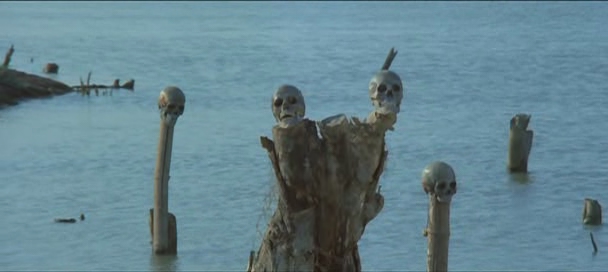
I Eat Cannibals: Atavism, Exoticism and Atrocity
Tickets: http://www.wegottickets.com/event/305248
With a screening of Man From Deep River (Umberto Lenzi, 1972)
The late 1970s and early 1980s saw a proliferation of increasingly gruesome jungle-set horror thrillers emerge from Italy’s teeming pulp cinema studios. A postscript of sorts to the ever-popular, and equally ethically challenged, Mondo cycle, the cannibal genre was prematurely seeded by Man from Deep River, Lenzi’s gut-busting homage to the international hit A Man Called Horse (1970).
Although it would be another five years before the genre really took off (with Ruggero Deodato’s Last Cannibal World in 1977) Man from Deep River contains all the vital ingredients for a cannibal feast – racism and ethnic exploitation, animal abuse, nudity, sex and extreme violence, all presented in the guise of dispassionate ethnographic cinema.
Tonight we screen Lenzi’s rarely seen film followed by a series of classic cannibal film trailers to uncover the genre’s roots in the West’s growing interest in environmentalism, atavistic cultures, lost worlds and the perils of the green inferno. Bring a plate.
Mark Pilkington
12 February 2015
Read more
12 February 2015

GOTHIC SCIENCE
Pradeep Pillai
3 February 2015
GOTHIC SCIENCE
The anxiety unleashed by the Industrial Revolution at the end of the 18th and the beginning of the 19th century helped propel a new Romantic sensibility regarding the natural sciences. The mixture of both fear and fascination that accompanied the discoveries of new, almost magic-like forces – particularly those in electromagnetism and electrochemistry, as made famous by Luigi’s Galvani’s demonstration of “animal electricity” – have become a persistent theme in the genre of both horror and science fiction from Shelly’s Frankenstein (1818) onward. This course will trace how our current notions of science, which first arose during this period, have served continuously as a cipher for both the anxieties and perceived horrors of modernity in literature and film.
The Romantic period was also the beginning of what has been called the “Second Scientific Revolution”, a revolution which began with the investigation of the so-called “imponderable fluids” — that is, electricity, heat, and magnetism. This lecture will discuss how the study of what was regarded as semi-occult forces and ‘fluids’ provided critical impetus to the Romantic imagination’s attempt to explain how matter could be animated to give rise to machines, both biological and mechanical, living and dead. The lecture will demonstrate how a new scientific metaphysics served as a source for the “fantastic” and “uncanny” in Gothic fiction and film, from Frankenstein through to the Gothic-Noir film Blade Runner, thus illustrating how the Gothic can be viewed as the shadow of scientific realism.
Pradeep Pillai
3 February 2015
Read more
3 February 2015
School of Shock: Pain and Pleasure in the Classroom Safety Film
Kier-La Janisse
8 January 2015
School of Shock: Pain and Pleasure in the Classroom Safety Film
Tickets: http://www.wegottickets.com/event/299642
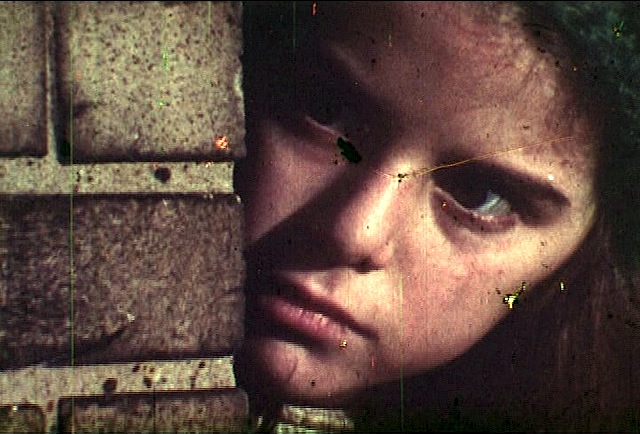
For many genre fans, a love affair with horror and the grotesque began early on, sometimes fueled by unlikely sources. One of these was the classroom safety film, which for many kids was their first time seeing other children threatened by true danger, being confronted with a combination of gore effects and actual accident footage, and being offered a pictorial glimpse at things their parents didn’t want to talk about. Thousands of these films were made in North America from the 1940s through the 1980s, when companies like Centron, McGraw-Hill, Coronet, Encyclopaedia Britannica Films, Avis Films, Crawley Films, Bell Labs, the NFB and others thrived on the burgeoning market for classroom or workplace educational films.
Subjects ranged from safety in and around vehicles, to drug abuse and venereal disease, teaching children scary lessons about everything from dental hygiene to how to spot a pedophile. The most memorable of these films deliberately used horror visuals to entice and/or shock children into paying attention – such as those by prolific producer Sid Davis (1916-2006) – and some were even made by directors with genre film pedigrees, such as Carnival of Souls’ Herk Harvey, a key figure in the industrial film scene.
This lecture and screening by Kier-La Janisse, founder of The Miskatonic Institute of Horror Studies, will present some of the most notorious educational films of the 40-year golden age of social hygiene onscreen. We’ll also briefly look at educational television PSAs, from the British Public Information Films through the incredibly grisly Australian drunk driving commercials of the 1990s.
The classic era of classroom films may be over, but viewed from today’s perspective, some of these films offer up a fascinating survey of changing social mores and cultural preoccupations (not to mention fashions!). Being safe has never looked so grim.
WARNING: This program contains graphic imagery, including real accident and casualty footage.
Kier-La Janisse
8 January 2015
Read more
8 January 2015
Petite philosophie du zombie
Maxime Coulombe
2 December 2014
Petite philosophie du zombie
présenté en français
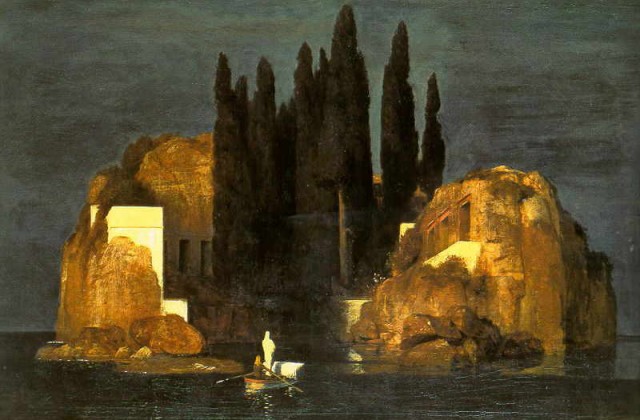
Depuis un siècle, la figure du zombie a changé, s’est transformée, a évolué, s’est adaptée aux différentes cultures qui l’auront invoquée. Pour la culture haïtienne, le zombie aura été la figure cauchemardesque de l’esclavage, d’une servitude faisant de l’individu un simple pantin incapable même de s’arracher à sa condition par la pensée. Il aura aussi matérialisé cet étrange pouvoir, inspiré de la religion catholique, de ramener les morts à la vie. Il aura incarné, en Occident, la figure d’un châtiment divin et le retour des morts à la vie, la métaphore d’une inquiétude quant à un nouvel avatar de la mort – le sida – et la crainte des recherches sur la biotechnologie. Le zombie aura de même figuré l’inquiétude d’une époque, la nôtre, quant au sens de la mort. Le zombie, pour nous, aura été le monstre d’une certaine vacuité, voire d’une certaine fatigue de l’Occident.
Le zombie est figure d’inquiétudes – il représente nos craintes, ce que nous préférerions taire. C’est bien en cela qu’il se fait symptôme de ce qui taraude la conscience de notre époque. L’image – le cinéma, le jeu vidéo – n’est pas uniquement une fiction, un divertissement, elle est aussi la marque d’une époque, et en cela le moyen d’une analyse. Voilà pourquoi à côté d’une analyse du zombie comme produit typiquement commercial de notre époque, il importe aussi de l’appréhender comme un produit psychique : on y découvre alors quelques-unes des principales raisons de sa prodigieuse popularité actuelle.
Maxime Coulombe
2 December 2014
Read more
2 December 2014
SHAKESPEARE AND HORROR
J. Shea
18 November 2014
SHAKESPEARE AND HORROR
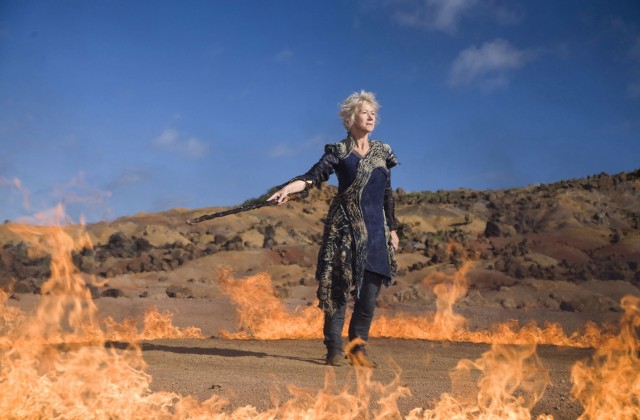
OCCULTISM, MONSTERS, DISMEMBERMENT, CANNIBALISM—these are some of the spectacles that earned Shakespeare star power in his time and continue to secure his cultural authority and commercial worth today. This two-session course will explore Shakespeare’s ongoing relationship to “horror.” In it we will begin with a broad overview of Elizabethan contexts (revenge tragedies, demonological discourse, monster shows); move to a discussion of Shakespeare’s unusual place among 19th-century freak shows; and end by examining 20th- and 21st century “horror” films adapted from or inspired by Shakespeare’s most horrific mindbenders and gore-fests.
J. Shea
18 November 2014
Read more
18 November 2014