MIS
KA
TON
IC
Institute of
Horror Studies
Archive
Archive
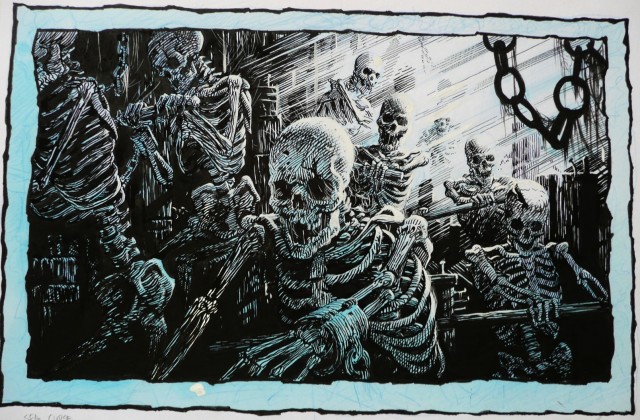
Beyond Conan: The Horror Literature of Robert E. Howard
Michael Wood
4 November 2014
Beyond Conan: The Horror Literature of Robert E. Howard
Michael Wood returns fresh from his lecture on pseudo-archaeology for our course on H.P. Lovecraft to take on one of HPL’s contemporaries and most frequent correspondents, Robert E. Howard. Despite his enormous influence on popular culture, Howard’s name is barely recognizable as the creator of Conan the Barbarian, and master of the sword and sorcery genre. But the troubled author also produced a significant body of work that was an inventive blend of dark fantasy and horror in tales like Red Nails (first serialized in 1936 in Weird Tales) and “Pigeons from Hell,” the latter tale adapted for an episode of the Boris Karloff-hosted 60s horror TV series, Thriller. Howard also created horror-adventurer, Solomon Kane, in a series of tales that inspired a recent film adaptation, and he produced (upon Lovecraft’s encouragement) numerous tales inspired by Lovecraft’s fictional topography, which helped to generate an intertextual body of fiction that is now dubbed the “Cthulhu Mythos.”
Michael Wood
4 November 2014
Read more
4 November 2014
BLOOD BORN: INVASION OF THE BODY
Karen Herland
7 October 2014
BLOOD BORN: INVASION OF THE BODY
The advent of AIDS coalesced cultural fears around otherness, sexual danger and the tension between nature and science. Horror films often explore the body made unfamiliar through infection or mutation. Blood Born traces the spectre of infected bodies, and their cultural resonance with AIDS – in sexual, racial and border-defying terms. How much did early representations of AIDS borrow from classic horror texts? Do works as diverse as Cronenberg’s films and Charles Burns’ graphic classic BLACK HOLE inevitably demand rereading through the lens of HIV infection?
Karen Herland
7 October 2014
Read more
7 October 2014
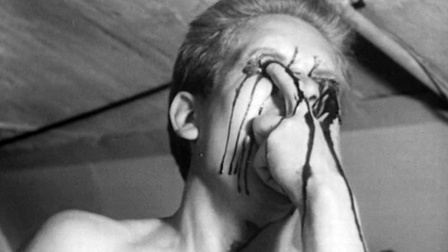
PURE PROVOCATION: AVANT-GARDE HORROR CINEMA(S)
Anne Golden
18 March 2014
PURE PROVOCATION: AVANT-GARDE HORROR CINEMA(S)
This course will investigate the locus of horror within avant-garde cinema(s). Beginning with canonical films which are examples of Dadaism and Surrealism, the course will progress through European and American avant-garde horror, including the work of Jean Cocteau, J.S. Watson and Melville Webber, Stan Brakhage, Maya Deren, Sidney Peterson, Arthur Lipsett, Shirley Clarke and recent examples of Canadian independent media artworks. We will look briefly at manifestos written in the early period of film history. These manifestos were written by Dadaists, Futurists and Surrealists and called for cinema to be both ‘pure’ (Louis Aragon, Guillaume Apollinaire) and a ‘provocation’ (The Futurists).
Anne Golden
18 March 2014
Read more
18 March 2014

H.P. LOVECRAFT: FROM COSMIC HORROR TO HEAVY METAL
Carl Sederholm
4 February 2014
H.P. LOVECRAFT: FROM COSMIC HORROR TO HEAVY METAL
Horror fiction writer, theorist, philosopher, and prolific epistolarian, H.P. Lovecraft is one of the most important American authors of the 20th century. Lovecraft was a mentor to major horror writers such as Robert Bloch and Ray Bradbury. His work has inspired everything from film festivals, to board games, to the ancient alien theories popularized by TV shows like In Search of …. Over this five-week course, various instructors will lecture on key aspects of Lovecraft’s work and influence, including his influence on heavy metal music, his connections to theology, his inspiration from and influence on pseudo-science, his importance to 20th century horror literature, television, cinema, music and gaming, and his influence on major authors of the “Weird,” like Peter Straub, Stephen King, China Miéville, Thomas Ligotti, Joyce Carol Oates, Kathe Koja and Caitlín Kiernan.
Individual Classes and Instructors
Readings for all classes can be found at the H.P. Lovecraft Library page at H.P.Lovecraft.com: http://www.hplovecraft.com/writings/texts/
4 February: Shedding the Gothic, Theorizing the Weird: H.P. Lovecraft’s Mid- to Late-Period Works (Instructor: Kristopher Woofter) Reading for the Class: “The Colour Out of Space” (1927)
11 February: Religious Awe and Otherness in the Early Works of H.P. Lovecraft (Instructor: Mario DeGiglio-Bellemare) Reading for the Class: “Dagon” (1917) & “The Shunned House” (1924)
18 February: H.P. Lovecraft’s Influence on Heavy Metal Music (Guest Instructor: Carl Sederholm, Brigham Young University) Reading for the Class: Edgar Allan Poe’s “Facts in the Case of M. Valdemar” (1845) & H.P. Lovecraft’s “The Statement of Randolph Carter” (1920) and “The Dunwich Horror” (1929)
25 February: Pseudo-archaeology and the Lovecraftian Narrative (Guest Instructor: Michael Wood, with K. Woofter) Reading for the Class: “The Nameless City” (1921)
4 March: Screening and Discussion, film TBA
Carl Sederholm
4 February 2014
Read more
4 February 2014
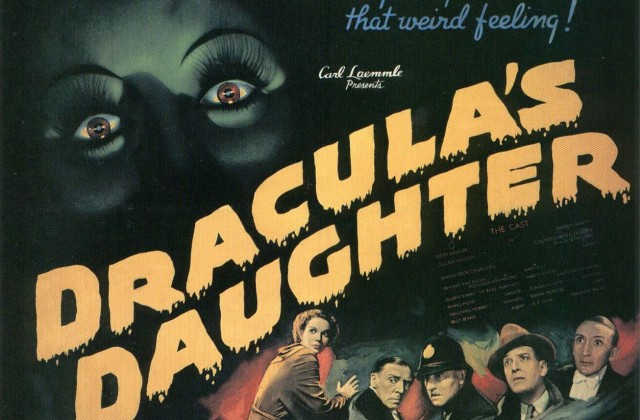
QUEER BITES!
Cory Legassic
21 January 2014
QUEER BITES!
Come sink your teeth into a few queer questions about horror films that rub many queer fans the right way. Let’s take up Halberstam’s (1995) call to look for queer bodies in horror film that “present a monstrous arrangement of skin, flesh, social mores, pleasures, dangers and wounds.” We will take “queer forms of pleasure” in Hillyer’s Dracula’s Daughter (1936) and Bruce LaBruce’s Otto; or Up with Dead People (2008).
Cory Legassic
21 January 2014
Read more
21 January 2014
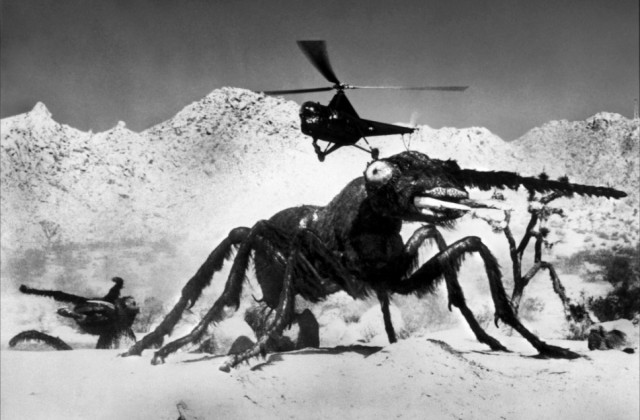
The Big, the Bad and the Impossible: The Physics of Movie Monsters
Chris Whittaker
10 December 2013
The Big, the Bad and the Impossible: The Physics of Movie Monsters
Equal parts special-effects marvel and revelation of cultural anxieties, the colossal movie monster has fascinated audiences since perhaps its most famous incarnation in King Kong (1933). From gargantuan radioactive ants in the 1950’s classic THEM! (1954) to the resurrected t-rex in Jurassic Park (1993), these giants seem unstoppable. But are they even possible? Nature has rules, after all. In this talk, movie monsters meet physics—and the news isn’t very good for the monsters.
Chris Whittaker
10 December 2013
Read more
10 December 2013
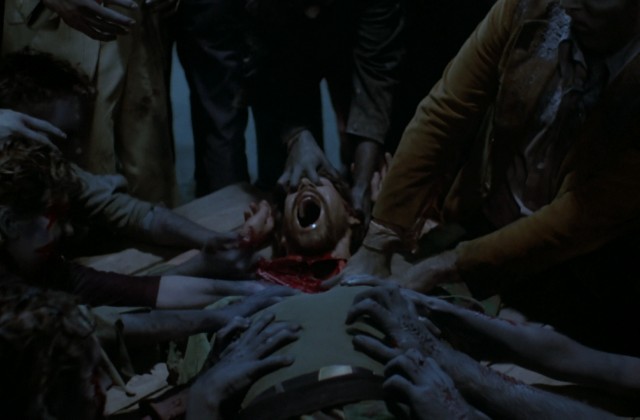
Transformations et métamorphoses: l’effet spécial et le cinéma d’horreur
Éric Falardeau
12 November 2013
Transformations et métamorphoses: l’effet spécial et le cinéma d’horreur
L’effet spécial est indissociable du cinéma de genre et particulièrement du cinéma d’horreur qui, de par sa nature, ne peut pas ne pas montrer. Des trucs horrificos-comiques de Méliès (fondus, arrêts de manivelle, surimpressions, etc.) aux disparitions et autres transformations du cinéma actuel qui sont directement réalisées à l’intérieur du plan (les maquillages, maquettes, etc.) ou ajoutées par ordinateur (morphing, blue screen, etc.), les innovations techniques ont permis de sans cesse repousser les limites de ce qui est possible de montrer à l’écran.
Les effets spéciaux ont également modifié l’esthétique cinématographique en imposant de nouveaux modes de filmage et de montage. L’art du montage d’une scène à effets consiste entre autre à trouver un équilibre entre le vrai et le faux permettant d’apprécier la virtuosité du metteur en scène ou de l’effet en lui-même. Tel un baron Frankenstein, le cinéaste morcelle l’action (plans et effets spéciaux) et la recoud par le montage (transitions, effets, mise en scène) afin soit de tromper le spectateur, soit de l’épater par les prouesses techniques accomplies. Pour qu’un effet soit réussi, il doit être filmé puis monté de la bonne manière.
Comprendre la nature des effets spéciaux (son esthétique, sa technologie, son public), c’est donc par extension saisir un peu mieux le médium cinématographique, le genre horrifique et comment ce dernier (s’) est construit.
Le cours se divisera en trois volets : historique, esthétique et théorique. Dans un premier temps, nous définirons ce qu’est un effet spécial puis nous inscrirons son existence et sa pratique à l’intérieur de l’histoire plus globale du cinéma et celle du cinéma de genre. Nous explorerons ensuite comment les techniques d’effets spéciaux ont transformé le genre horrifique aux niveaux esthétique, narratif et thématique. Finalement, nous aborderons les questionnements théoriques qui surgissent à propos ou en périphérie de l’effet spécial (qu’il s’agisse du cinéma des attractions ou de l’approche psychanalytique). Projections: Inferno (Giuseppe de Liguoro, 1919, Italie), The Thing (John Carpenter, 1982, États-Unis), troisième titre à determiner.
Éric Falardeau
12 November 2013
Read more
12 November 2013
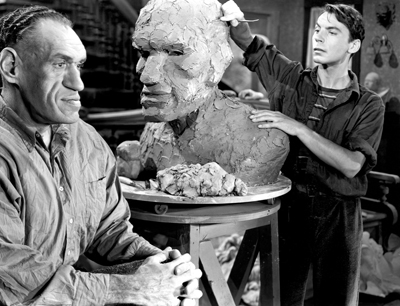
THE ELEPHANT MAN IN THE ROOM
Cory Legassic
15 October 2013
THE ELEPHANT MAN IN THE ROOM
From “freaks” to “creepers,” Hollywood horror has capitalized on the “crip” body for decades. From disability as metaphor, plot device, or the manifestation of monstrosity itself, we’ll explore “freakshows” and “abnormal” bodies in films, and ask what bodies on screen can suggest about broader ideological shifts in American culture in the 1930s-40s. In this course, Cory Legassic draws links between Browning’s Freaks (1932) and Universal’s “Creeper” films, and the fall of the studio system with the 1949 Hollywood Anti-Trust Act.
Cory Legassic
15 October 2013
Read more
15 October 2013
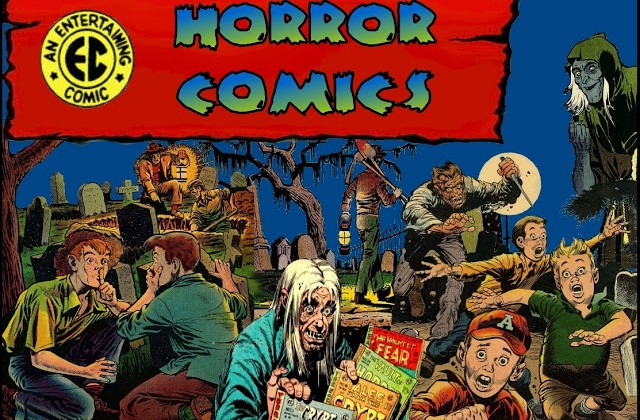
SHOCK AND DRAW: HORROR COMICS
Dru Jeffries
1 October 2013
SHOCK AND DRAW: HORROR COMICS
In the post-WWII comics industry, superheroes were on the decline and horror stories, particularly those published by William Gaines’ EC Comics, were on the rise. These graphic morality tales — including such familiar titles as Tales from the Crypt, The Vault of Horror and The Haunt of Fear – inspired a rabid readership, but they also attracted the attention of social interest groups that accused these books of corrupting young minds. Psychiatrist Fredric Wertham, who led the public crusade against comics, argued not just that horror comics had a negative influence on their readers, but that comics as a medium was fundamentally degenerative. This lecture will historicize the rise and fall of the horror genre in post-war comics and interrogate, using specific examples from the comics, the arguments made against the medium. When possible, we will look specifically at comics that would later be adapted cinematically and/or televisually in order to compare and contrast different modes of representation. Screenings may include clips from Tales from the Crypt (dir. Freddie Francis, 1972), The Vault of Horror (dir. Roy Ward Baker, 1973), Creepshow (dir. George Romero, 1982), and Tales from the Crypt (HBO, 1989-1996).
Dru Jeffries
1 October 2013
Read more
1 October 2013
HOMESICK HORROR
J. Shea
17 September 2013
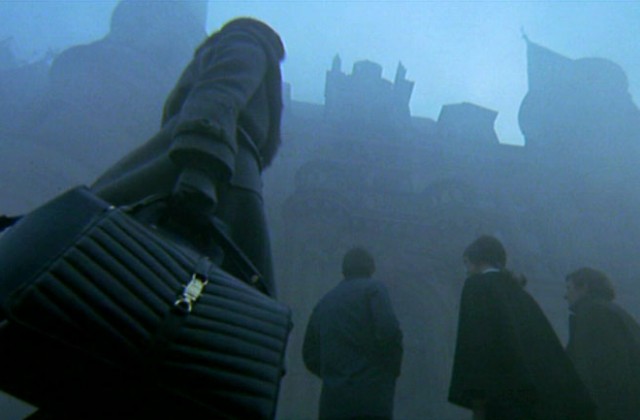
HOMESICK HORROR
Starting with ideas from Sigmund Freud and Anthony Vidler, this class considers homesickness as a cornerstone of the uncanny and as the imaginative center of what we will loosely call haunted house films from German Expressionism to the slasher and beyond. We will feel our way through sick, seeing, and beckoning homes: diseased structures shaped by troubled perspectives and characterized by irrational angles and impossible relations between interior and exterior. Simultaneously we will think about homesickness in the more conventional sense of the word, as we examine the narrative importance of nostalgia and the compulsion to return to safe spaces and slaughterhouses alike. Films and shows for discussion include Robert Wise’s The Haunting, the X-Files episode “Home” (1996) and Tobe Hooper’s The Texas Chain Saw Massacre (1974).
J. Shea
17 September 2013
Read more
17 September 2013