MIS
KA
TON
IC
Institute of
Horror Studies
Archive
Archive
“A Babel of Sound and Filth”: H. P. Lovecraft and New York City (Online)
David J. Goodwin
21 May 2024
“A Babel of Sound and Filth”: H. P. Lovecraft and New York City (Online)
For most of his life, Howard Phillips Lovecraft called Providence, Rhode Island his home, drawing upon it for the creation of his unique cosmogony. However, a formative chapter in Lovecraft’s biography has long been overlooked: his two years living in New York City between 1924 and 1926. Contrary to the narrative presented by many scholars and even Lovecraft himself, his collective New York experiences—including his marriage to Ukrainian-Jewish émigré and milliner Sonia H. Greene; his relationships with queer and leftist creatives and intellectuals; and his encounters with immigrants and ethnic minorities—shaped Lovecraft both as an individual and as a writer. His interactions with the city revealed both his admirable traits (e.g., his generous friendships) and his deplorable beliefs (e.g., his strident racism), and helped spur Lovecraft to develop into the author known and enjoyed by a contemporary global audience. Scholar David Goodwin will review Lovecraft’s stories in light of New York’s influence, with reference to the original research published in his book Midnight Rambles: H.P. Lovecraft In Gotham. He will also address a short selection of film and television productions that he has inspired, ranging from Stranger Things to the Hellboy franchise. The audience will come away with an appreciation of the complexity of Lovecraft’s biography and an understanding of the importance of the urban environment to his writing.
David J. Goodwin
21 May 2024
Read more
21 May 2024
Horrorigins: How the Female Gothic Still Haunts Women’s Homes (London)
Sophie Haywood
14 May 2024
Horrorigins: How the Female Gothic Still Haunts Women’s Homes (London)
This class aims to explore how eighteenth-century Gothic texts have influenced contemporary horror cinema by establishing the origins of both the ‘found footage’ genre and the female experience of being trapped in a house where safety has been corrupted by hostility. I will establish the principles of the Gothic form, the theoretical concepts of ‘horror’ and ‘terror’, and how their characteristics influence the experience of fear, particularly as a gendered phenomenon.
Initially focussing on two seminal ‘found’ Gothic texts, The Castle of Otranto (1764) and The Monk (1796) I will then move towards a discussion of Ann Radcliffe’s work. Radcliffe has been named the ‘Mother of the Gothic’ and her depictions of Gothic heroines trapped in patriarchal structures of control have become synonymous with what is loosely termed the ‘Female Gothic’. Narratives of women trapped in domestic spaces are still prescient in horror cinema today, with many ‘haunted house’ films featuring a female protagonist who is the focus of paranormal activity, which I will read as an expression of female entrapment and oppression.
Paranormal Activity (2009/10), I Am the Pretty Thing That Lives in the House (2016), Crimson Peak (2015), and Insidious (2011) are the main films on which I draw to elucidate the links between Radcliffe’s work, the Female Gothic more generally, and modern horror cinema. I will examine how her eighteenth-century texts have influenced and been transformed by the horror genre, articulating similar fears which are inherently gendered through their utilisation of the domestic space as unsettling and therefore unsafe for women. The Female Gothic thus becomes an intrinsic element to the haunted house narrative in its close association with patriarchal structures and the pressures they exert on women.
Their critical divergence from Radcliffe’s work is their positioning of the supernatural as reality, but I argue that this is further indebted to women’s Gothic. Female protagonists are those most likely to experience the initial hauntings, and therefore carry the psychological burden of seeking affirmation from their male counterparts. Haunting thus functions as a call-back to past Gothic heroines who were also at the mercy of male authority figures, indicating that patriarchy’s oppressive structures remain (mainly) intact. True fear lies in the terror the female protagonists experience, largely in isolation, as it relates to the larger phenomenon of women’s oppression. This class will demonstrate how the contemporary haunted house narrative is thus indebted to a tradition of Gothic texts authored by women.
Sophie Haywood
14 May 2024
Read more
14 May 2024
Architecture of Fear (Online)
Vincenzo Natali
23 April 2024
Architecture of Fear (Online)
We are born into a world of which we know nothing other than the certainty of our own death. That is the primal basis for horror: We appear to inhabit a universe whose architect either does not exist or is remote enough to not care. So, we construct shelters to protect ourselves from external evils, but we are inevitably inspired by the architecture of the natural world; thus, the fears that motivate us to build a house, a castle, a church, an office tower, are invariably wed to the structure itself. Lecturer Vincenzo Natali, whose film CUBE famously focuses on monstrous architecture, will examine how this drama plays out in horror fiction, dissecting the relationship between character and environment in horror cinema beginning with German Expressionism and leading into late 20th Century films like ROSEMARY’S BABY, SUSPIRIA, THE SHINING, and ALIEN. He will explain how these films use cinematic tools to create immersive environments with a heightened atmosphere that invites the uncanny. Finally, he will show how metaphor and anthropomorphism in architectural structures reflect the fears of protagonists moving through these spaces.
Vincenzo Natali
23 April 2024
Read more
23 April 2024
Christ-Figures, Commodity Fetishes, Monsters: The Legacy of Lynching Photography in Contemporary Horror Cinema (London)
The practice of lynching was an amalgamation of violences not limited to the physical. Alongside the torture and murder of victims, lynchings also enacted a spectacular performance of white supremacism for its predominantly white audiences. The links between the captive thrill of the lynching scene, at which viewers would stare whilst enjoying their picnics, and the screen violence of horror cinema, in which bodies are also burned, whipped, and torn asunder for the entertainment of (often snacking) tantalized onlookers, has been made by historians and film scholars alike, with W. Scott Poole (2011, p.84) noting that ‘Public executions filmed for public enjoyment functioned as the first horror films.’
This connection between lynching and cinema is compounded by the history of lynching photography and memorabilia, in which not only recorded images but physical artefacts taken from lynched bodies (including parts of the body itself) were bought and sold as part of an ancillary economy in which the suffering of lynching victims was commodified and capitalized. These souvenir items, which fetishize particular identities as well as the scenes and settings in which they are lynched, can be seen to prefigure the celebrity, prop, and merchandise economies of classic and contemporary cinema, in which key costume pieces, set photographs, and commercialized referents to actors and scenes circulate outside of the cinematic space as purchasable signifiers of on-screen action.
Early cinematic references to this ancillary economy, as well as to the act of lynching itself, are present in both D. W. Griffiths’s Birth of a Nation (1915) and James Whale’s Frankenstein (1931), films that clash in terms of genre, tone, acceptability, budget, audience, and cinematography, but are united by a shared focus on violence, shock factor, and ultimately, horror. In light of this historical, economic, and artistic overlap, the lecture aims to trace the cultural legacy of lynching, lynching photography, and lynching memorabilia from Griffiths’s and Whale’s films through to the contemporary horror of the twenty-first-century in order to highlight the continued presence of lynching in contemporary visual culture and the ways in which anti-black violence and racism remains at the centre of popular portrayals of othering and monstrosity.
Amy Bride
16 April 2024
Read more
16 April 2024
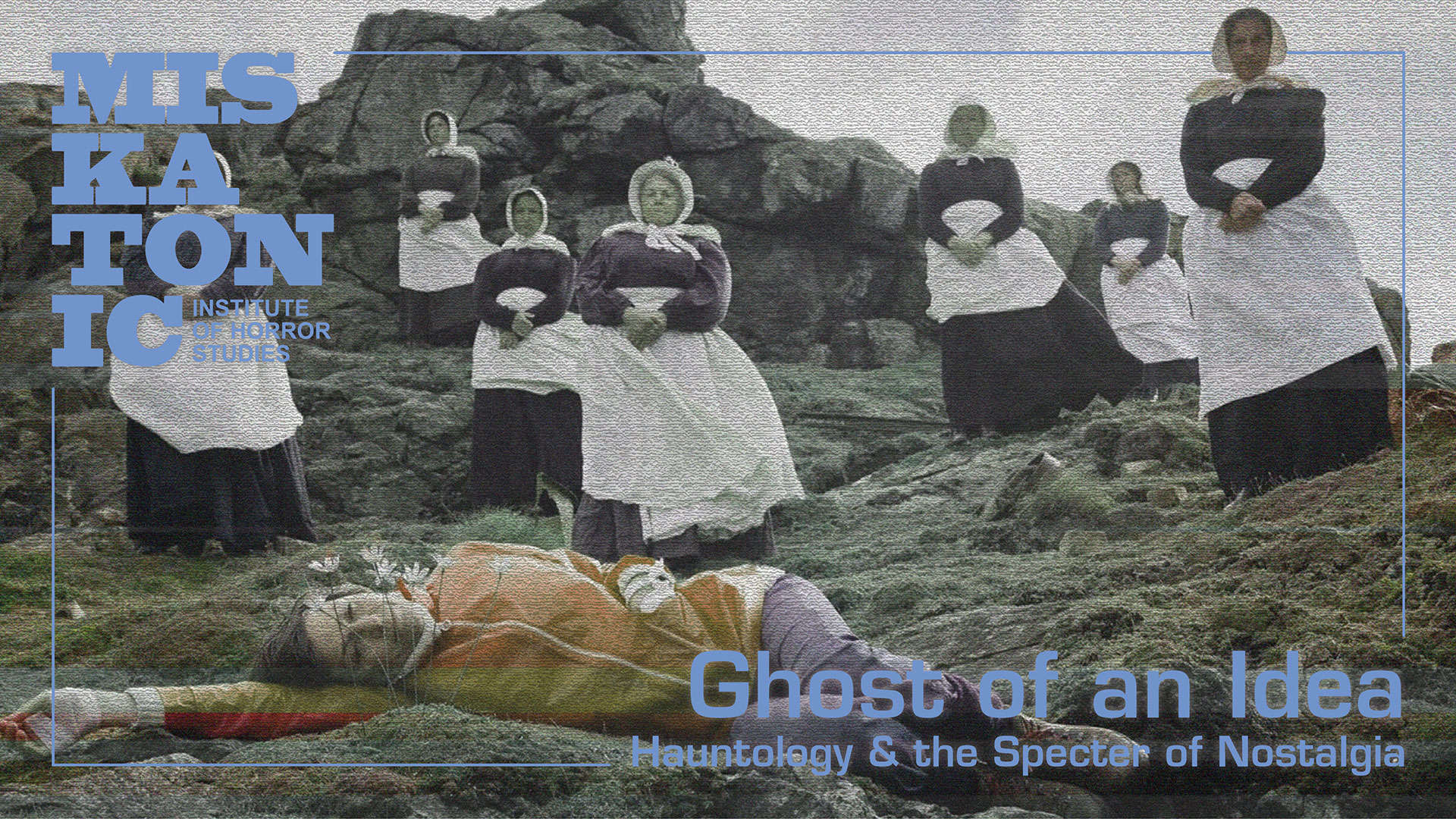
Ghost of an Idea: Hauntology and the Specter of Nostalgia (Online)
William Burns
26 March 2024
Ghost of an Idea: Hauntology and the Specter of Nostalgia (Online)
Is the past revitalizing or killing 21st century horror culture? This lecture is an introduction to the critical lens of hauntology, a philosophical approach that uses the metaphors of ghosts and hauntings to interrogate nostalgia, which has seeped into many aspects of 21st century horror. Subgeneric modes like folk horror and the urban wyrd are significant artistic responses to changing political, social, technological, and economic conditions—and they become increasingly valuable as we move into a future in which human memory and our access to the past are being radically transformed. To explore why idealized pasts and unfulfilled promises of the future feature so heavily in 20th and 12st century genre production, we will examine the writing of H.P. Lovecraft, Alan Moore, Nigel Kneale, and Rod Serling; in films such THE SHINING, DON’T LOOK NOW, and THE LAST WAVE; in television programs such as Sapphire and Steel, and Dark Shadows; and in music from Boards of Canada, Broadcast, The Caretaker, and the Ghost Box Records label. This talk offers a critical analysis of horror culture’s quest to acknowledge, understand, restore, and lay to rest the ghosts of the past and the present, and those that will inevitably haunt the future.
William Burns
26 March 2024
Read more
26 March 2024
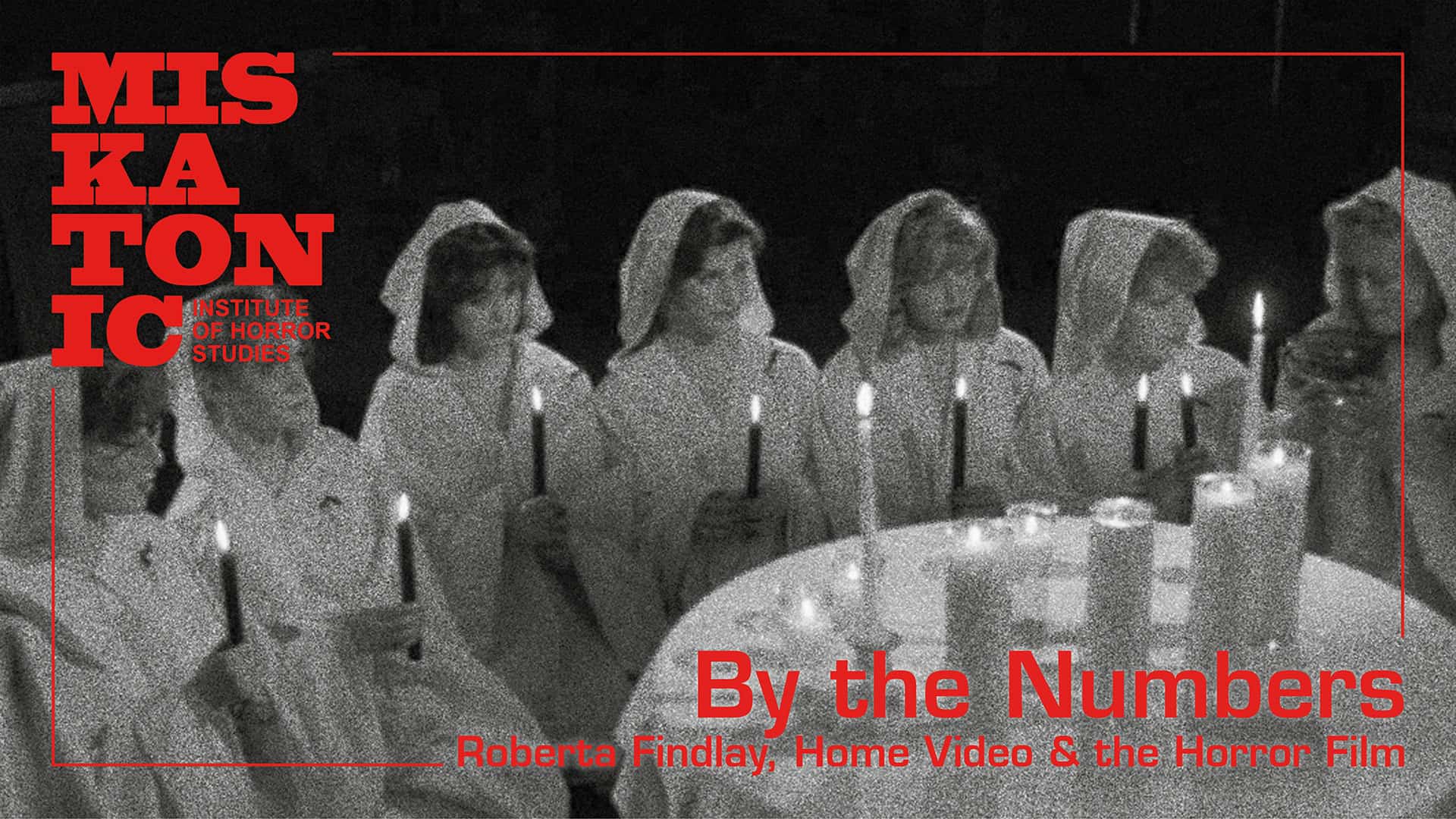
By the Numbers: Roberta Findlay, Home Video and the Horror Film (London)
Johnny Walker
12 March 2024
By the Numbers: Roberta Findlay, Home Video and the Horror Film (London)
Roberta Findlay’s association with horror cinema rarely extends beyond Snuff (Michael Findlay, 1976): the infamous Manson-inspired exploitation film which, in its promotional ballyhoo, falsely purported to depict the genuine murder of its lead actress. Protests that were sparked in New York City upon the film’s theatrical release, followed by its banning as a ‘video nasty’ in Britain in the early 1980s, has helped transform an otherwise run-of-the-mill exploitation film into an exemplar of boundary-pushing horror cinema. However, despite the film’s infamy, foregrounding Snuff in the way comes at the expense of side-lining Findlay’s directorial efforts in the horror genre: The Oracle (1985), Blood Sisters (1987), Lurkers (1987) and Prime Evil (1988).
Findlay’s gender is grounds enough for a scholarly reappraisal of her horror output, given that, as Alison Peirse argues ‘there are a vast number of women filmmakers completely absent from our written horror histories and that by not including the outputs from “half the human race,” our histories are faulty.’ This talk is, in part, a contribution to Peirse’s revisionist project, but not, I should make clear, its sole purpose. Nor is it my intention to champion Findlay’s horror films as offering a ‘perspective’ that challenges patriarchal hegemony, or to claim that they advocate for women or comment on ‘female experiences’. There remains an assumption, which Peirse challenges, that, ‘a woman director… will make a woman-centred film’ or that woman-directed horror films de facto lend themselves to ‘feminist’ readings. It would be frankly disingenuous to fold Findlay’s horror films into this discourse. While Findlay identifies as a woman and her horror films have female leads, she is not a feminist, nor have her films sought to make any political statements about feminism or otherwise. As she told Fangoria in 1985: ‘I don’t know if a movie is one thing or not’.
Alexandra Heller-Nicholas’s argument that Findlay is best understood as an ‘anti-auteur’, is a befitting label in this regard. Unlike the intentions that her horror contemporaries such as Wes Craven, David Cronenberg, and George A. Romero purported, Findlay’s chief driver when making horror movies was economic viability over artist intent. Critics were quick to recognise this too, dismissing her films as ‘horror by-the-numbers’ for the direct-to-video market.
However, pejorative though they are, comments such as these bring to light the economic context within which Findlay was operating, and the low-risk investment low-budget horror features held for filmmakers at the beginnings of the video age. This talk, rather than treating The Oracle, Blood Sisters, Lurkers, and Prime Evil as in some way innovative or as worthy of interest because they happen to be directed by a woman, shows instead how these films prove apposite case studies because of what they reveal about contemporaneous industrial practices. Analysis of the films in relation to contemporary trade publications and associated promotional materials enables a broader understanding of the economic context that birthed them and, by extension, leads to a fuller understanding of the industrial history of US horror cinema in the 1980s.
Johnny Walker
12 March 2024
Read more
12 March 2024
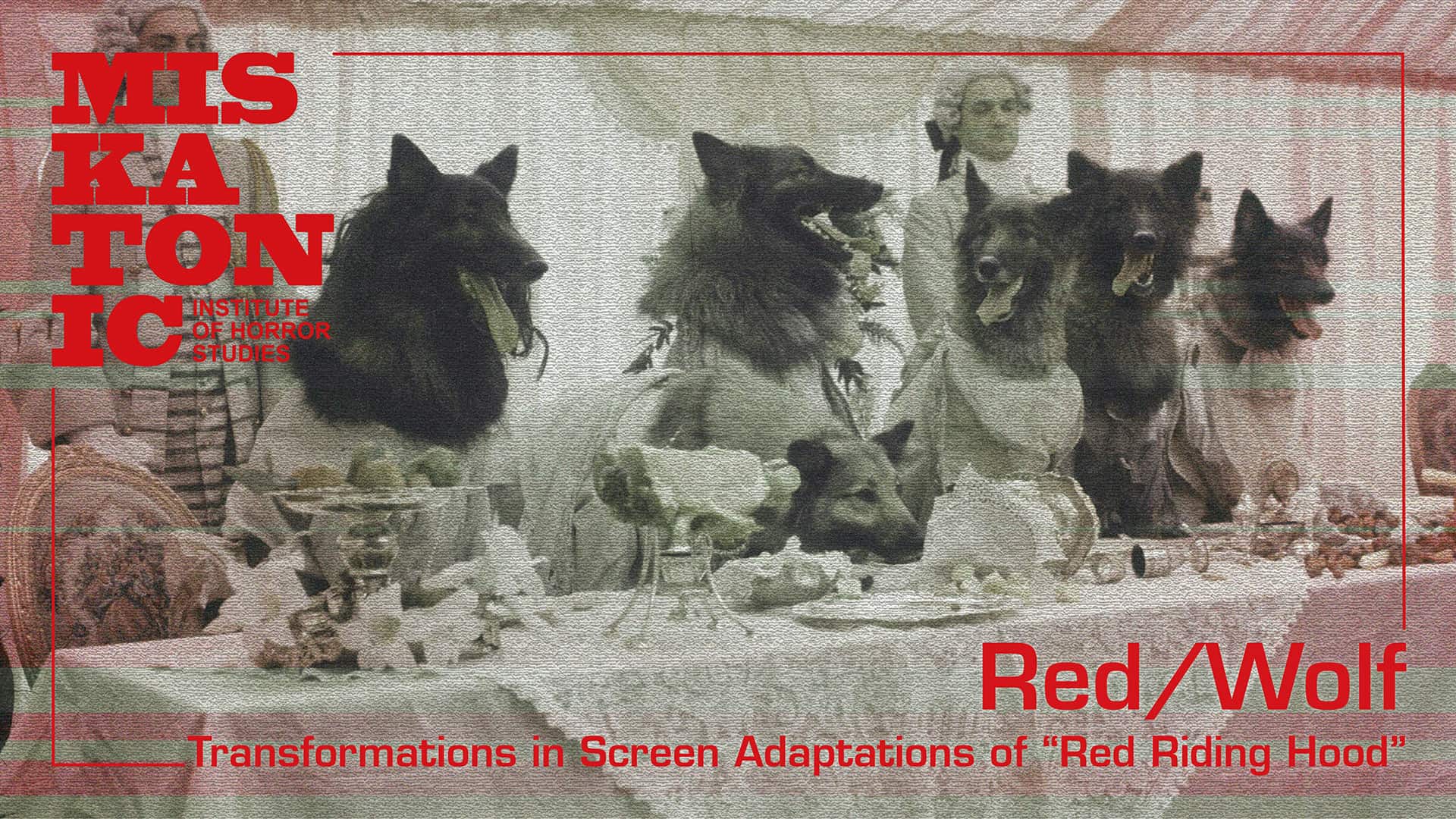
Red/Wolf: Transformations in Screen Adaptations of “Red Riding Hood” (Online)
Elizabeth Abele
20 February 2024
Red/Wolf: Transformations in Screen Adaptations of “Red Riding Hood” (Online)
In the late 20th century, fairy tales reemerged in popular culture, often reimagined as gothic fables for adults. These contemporary adaptations examine the false binaries within these tales, while exposing the themes of sexual abuse and recovery encoded therein. “Little Red Riding Hood” provided particularly fertile ground for such explorations, with films such as FREEWAY (1996) and RED RIDING HOOD (2011) following the perils and possibilities for a coming-of-age woman. Rather than passive victims, these protagonists are active, resisting both victimhood and inherited burdens. However, an equally important issue in “Red” adaptations is that monstrosity, like victimization, can be resisted. The figure of the Wolf is not clearly defined in the original tale: Is he an allegory for a predatory Gentleman? Is he a Werewolf? Or is he merely an animal, hungry for a meal? The Wolf may begin as the threatening Other, but his potential for violence can be overcome—or harnessed. This lecture will interrogate a set of deliberately gothic film and television adaptations of “Red Riding Hood” with a particular interest in their messages of recovery and agency.
Elizabeth Abele
20 February 2024
Read more
20 February 2024
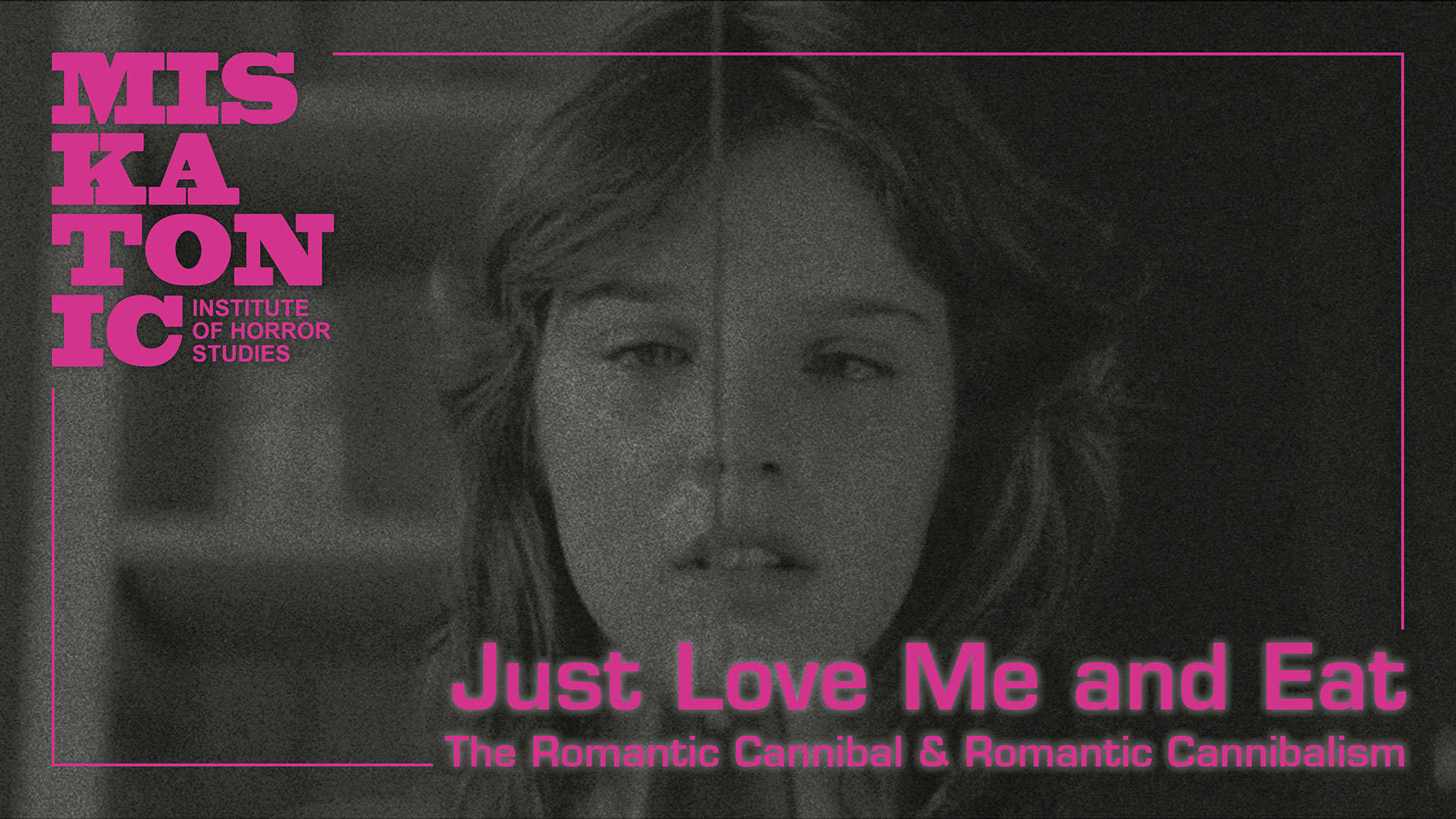
"Just Love Me and Eat": The Romantic Cannibal and Romantic Cannibalism (London)
Thea Bamber
6 February 2024
"Just Love Me and Eat": The Romantic Cannibal and Romantic Cannibalism (London)
The cannibal has long been a character archetype depicted in the horror genre, represented as early as the Greek epics and the literary Gothic, and was, arguably, innately typified through the mondo-extreme cannibal films coming from Italian filmmakers in the 1970s. William Arens theorised that, through these films, “cannibalism functions as a mythical device to separate civilized Western man from his barbaric foreign cousins. [It] insights innate disgust and is a potent means to designate the accused a subhuman”. However, it can be argued that the concept of ‘separation’ can be extended even further and be applied to the space of anyone that we deem as ‘Other’, to quote Robin Wood’s theories on the monstrous Other in the horror genre, thereby meaning that we can depict cannibalism being enacted by anyone and for whatever reason, including the eminently romantic.
Melvin writes that “the cannibal exists in two extremes. One for the depravity of it and one for the sacredness of the mouth.” It can therefore be argued that because they can occupy the space of two different extremes, of both horror and violence, the depravity, and sacred romanticism, the sacredness of the mouth, the figure of the cannibal can exist as a uniquely queered Gothic figure within the horror genre, a true representative of literary liminality and, indeed, ‘separation’ from the norm, between horror and romance, rich and poor, living and dead, eater and eaten.
This class will examine the romantic cannibal as it is specifically depicted in horror narratives such as Der Fan (Schmidt, 1982), Bones and All (Guadagnino, 2022) Preacher’s Daughter (Anhedönia, 2022) and others, and how the figure of the cannibal purveys as an intimately queered figure of Gothic Americana, while also seeking to define how the cannibal and the act of cannibalism can be read as eminently romantic. It will additionally use theory presented by scholars such as Shirley Lindenbaum and Helene Cixious, as a means of establishing a connection to other academics in the field and rooting a little-examined corpus with broader theory of literary criticism, as well as establishing a basis through which to examine the subject of cannibalism and subvert it within a romantic context.
Thea Bamber
6 February 2024
Read more
6 February 2024
Representations of Mexico in US Horror (Online)
Anna Marta Marini
23 January 2024
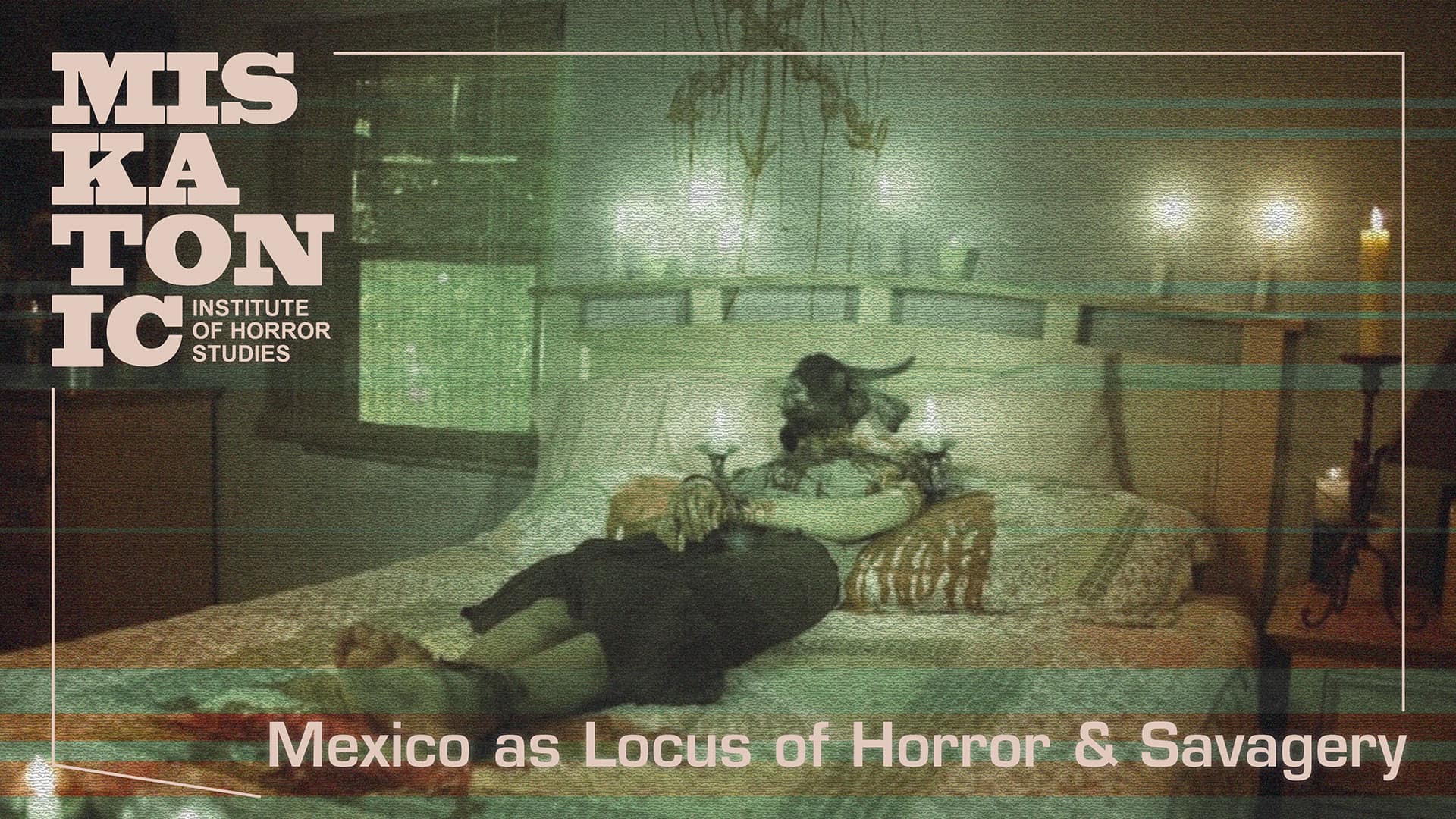
Representations of Mexico in US Horror (Online)
In United States horror cinema, representations of Mexico—or more precisely, of fictional US characters’ experience of Mexico—have contributed to the imagined position of Mexico as a familiar yet subordinate and dangerous Other. Mexico and the US-Mexican borderlands are a locus of danger and tragedy par excellence, as the act of crossing the border embodies a movement toward the unknown. Even when it is initially depicted as a (commodified) paradise characterized by alluring nature, Mexico is shown to be an inhospitable place that endangers protagonists who, after struggling against it, either perish or return to the United States—whose image of moral and cultural superiority is thus reinforced. The geopolitical transformations Mexico has undergone since the mid-1990s are reflected in a number of films, sparked by a renewed interest in topics related to undocumented migration and cross-border organized crime. Focusing on 21st century cinema, this talk will tackle four main themes—Horrific Nature, Haunted Heritage, Borderland Savagery, and Migrant Horror—as seen in films such as BORDERLAND, THE RUINS, THE FOREVER PURGE, THE EYE (2008), and many more.
Anna Marta Marini
23 January 2024
Read more
23 January 2024
Land Down Under: Australian Gothic Horror (London)
Lindsay Hallam
12 December 2023
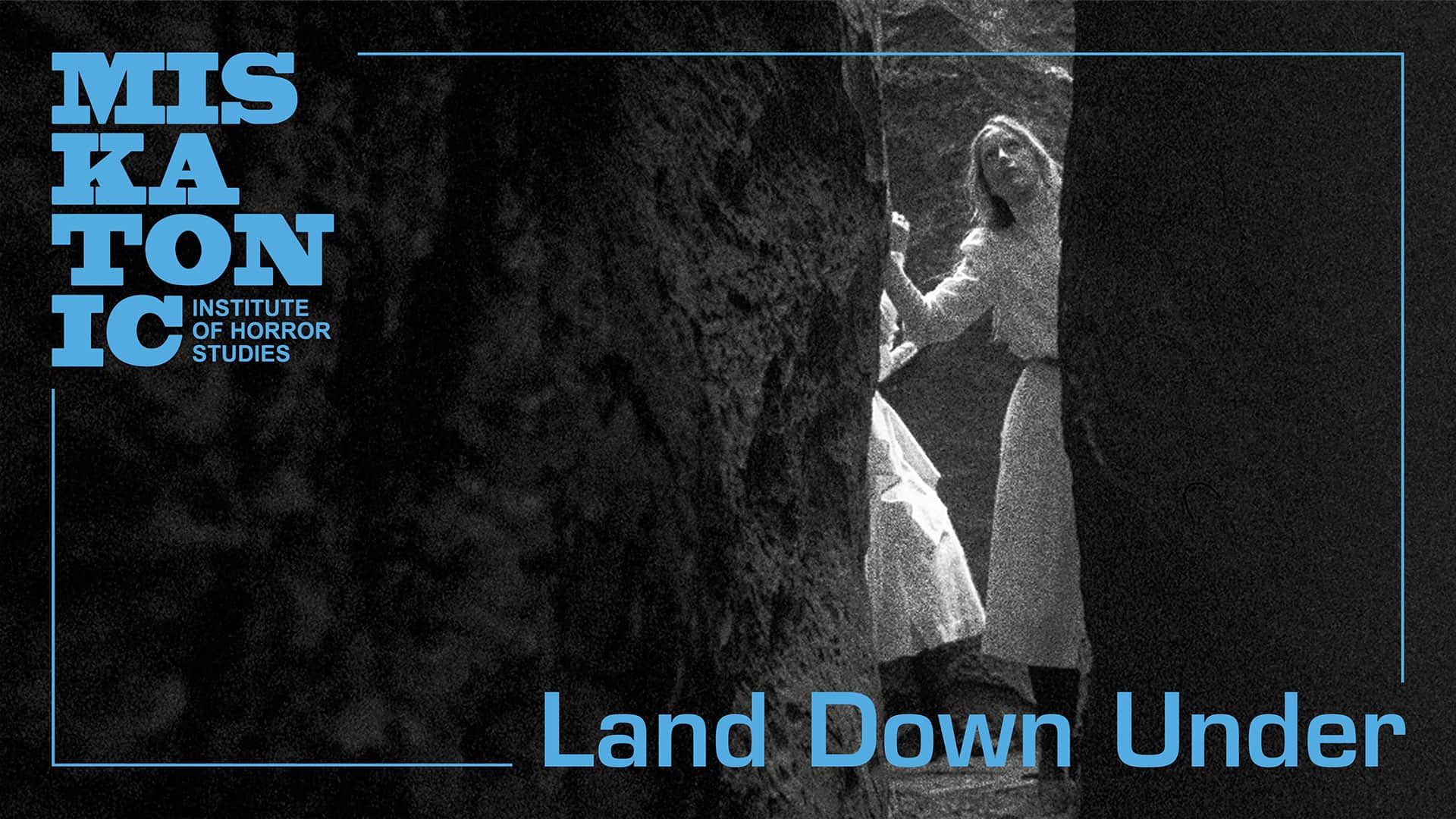
Land Down Under: Australian Gothic Horror (London)
In one of the first studies of Australian cinema, Susan Dermody and Elizabeth Jacka’s The Screening of Australia Volume 2: Anatomy of a National Cinema, “Australian Gothic” is cited as one of the key trends in Australian film production of the 1970s. For Dermody and Jacka, Australian Gothic is expressed through portrayals of Australian rural spaces revealed to be hotbeds of perversion, populated by grotesques, with the pervasive atmosphere of a living nightmare, typified by films such as Wake in Fright (1971), The Cars That Ate Paris (1974) Picnic at Hanging Rock (1975), Summerfield (1977). and The Chant of Jimmie Blacksmith (1978).
In this lecture Lindsay Hallam will explore what is meant by “Australian Gothic” and survey its use in films from the 1970s to the present. She will discuss how the representation of Australia as a Gothic landscape reveals the horror that has been enacted upon it through the process of colonisation. In these films the land is revealed to be haunted by secrets, holding within it knowledge of past crimes that are beginning to emerge, seeping into the so-called civilized society that has formed on top of it, twisting relations within families and communities.
The original conception of the Australian Gothic viewed it as grounded in a recognisable reality, operating within a Gothic space through an inversion, and perversion, of the everyday. However, there is a wealth of Australian films that use more traditional Gothic elements within a supernatural narrative. Hauntings, possessions, and ghostly visitations occur to expose secrets within a family, in films such as Cassandra (1987), Alison’s Birthday (1981), Next of Kin (1982), Lake Mungo (2008), Inner Demon (2014) and Relic (2020). This focus on the family also leads to a shift in location from rural to urban and suburban spaces, as in Boys in the Trees (2016), Observance (2015), Johnny Ghost (2011) and most notably The Babadook (2014), where the titular monster embodies the rage felt by a grieving mother.
The land itself gains sentience in The Last Wave (1977), Long Weekend (1978), In the Winter Dark (1998) and Primal (2010), becoming the ultimate vengeful force and agent of apocalypse. These films don’t feature the rampaging men usually found in eco-horror films, but instead involve people who are ignorant of the power of the land. Even those who seek to gain knowledge of these forces must realise that they are inherently unknowable, their power impossible to comprehend, let alone control. In these films, white settlers must acknowledge not just their guilt at what they have wrought upon the land, but also their fundamental insignificance.
While many films look to Aboriginal cultures and spiritualities for inspiration, such as The Last Wave, Dark Age (1987), The Dreaming (1988), and Kadaicha (1988), it must be noted that most representations of Indigenous cultures in Australian horror cinema are primarily in films made by white filmmakers. Indigenous filmmakers are beginning to tell their own stories though, as in Tracey Moffatt’s beDevil (1993), Warwick Thornton’s The Darkside (2013), anthology film Dark Place (2019) and short film The Moogai (2020). These works employ familiar genre tropes and monsters, such as ghosts and vampires, using the conventions of the Australian Gothic and horror cinema to expose and work through historical trauma, while also expressing, and celebrating, cultural identity in a variety of ways that is no longer homogenised.
Lindsay Hallam
12 December 2023
Read more
12 December 2023