MIS
KA
TON
IC
Institute of
Horror Studies
Archive
Archive
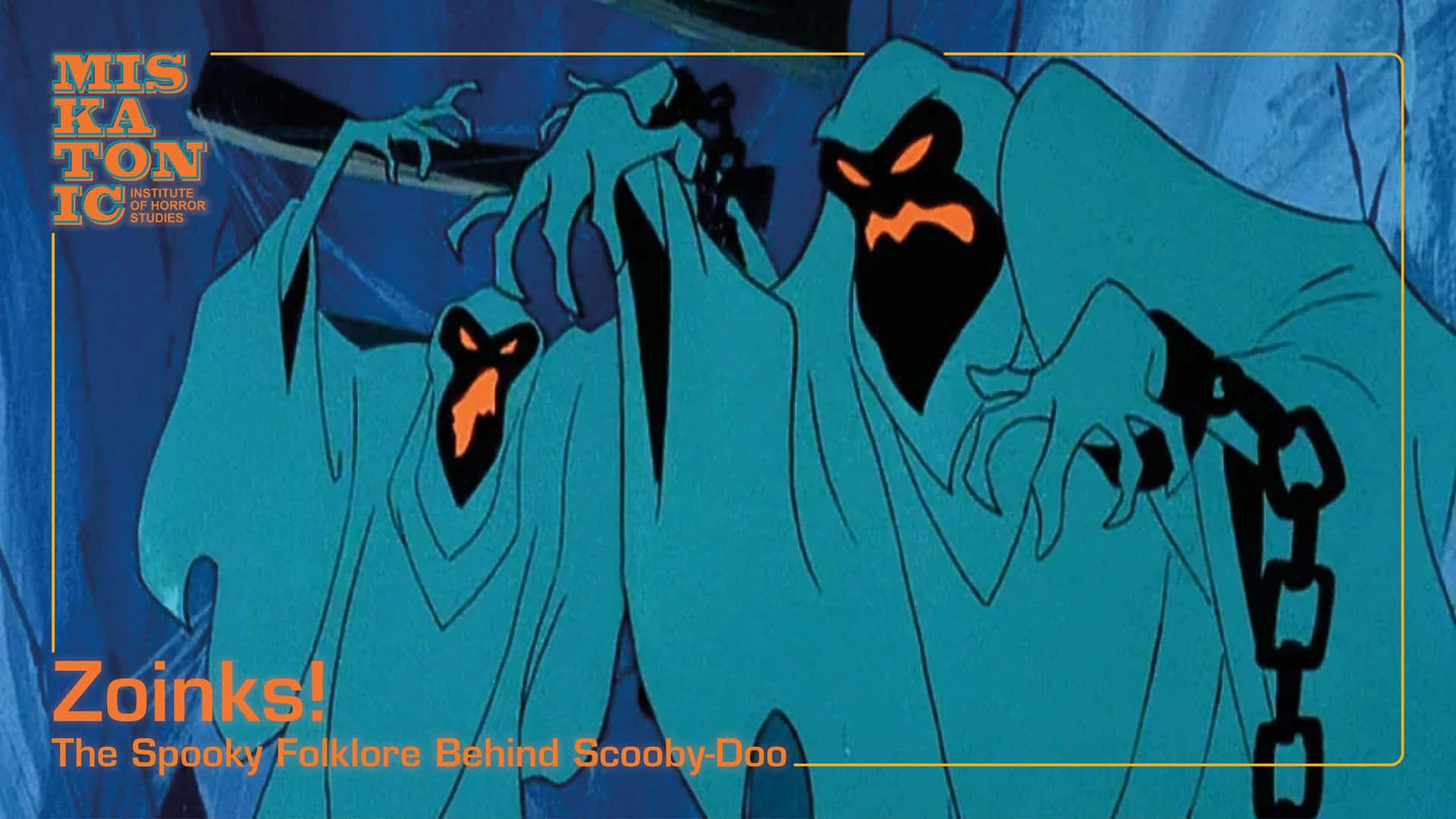
Zoinks! The Spooky Folklore Behind Scooby-Doo (London)
Mark Norman
13 May 2025
Zoinks! The Spooky Folklore Behind Scooby-Doo (London)
Mystery Incorporated – Fred, Daphne, Velma, Shaggy and Scooby-Doo – have been investigating supernatural events for over fifty years and, in that time, there has never been a serious study into the make-up of the show … until now. Scooby was the regular supernatural fix for an entire generation; the ultimate ‘pleasing terror’ and a foundation stone of The Haunted Generation.
The show has always been far more than a straight children’s cartoon about solving mysteries and unmasking villains. It has from its outset been a social and political commentary, a study on the supernatural, an exploration of the gothic and the hauntological landscape and a microcosm of the worlds of horror, the occult and more. There is much to learn about the genre from a (not so) simple Saturday morning entertainment.
The show has always drawn on real-world folklore and myth in its representations of ghosts, witches, monsters and more. It has parodied literature and film in its explorations of horror and the supernatural. In return, it has been a strong influence on our own pop culture through urban myth and linguistic references such as ‘Zoinks’ and ‘Scooby Snacks’. The Nickelodeon vehicle Scooby-Doo: Mystery Incorporated features the character of Professor Hatecraft, lecturer as Miskatonic University, who tells Velma that “Jinkies is not a real word”. This presentation begs to differ, and provides the proof!
‘Zoinks! The Spooky Folklore Behind Scooby-Doo’ is based on the presenter’s groundbreaking book which pulls off the mask and reveals the truth behind the fiction. Written with input from a number of the show’s writers and producers and with an afterword from one of the voices of Scooby and Shaggy, Scott Innes, it uses film and TV analysis, folkloric knowledge and gothic theory to examine the construction of the Scooby world and the background behind the characters and landscapes.
Mark Norman
13 May 2025
Read more
13 May 2025
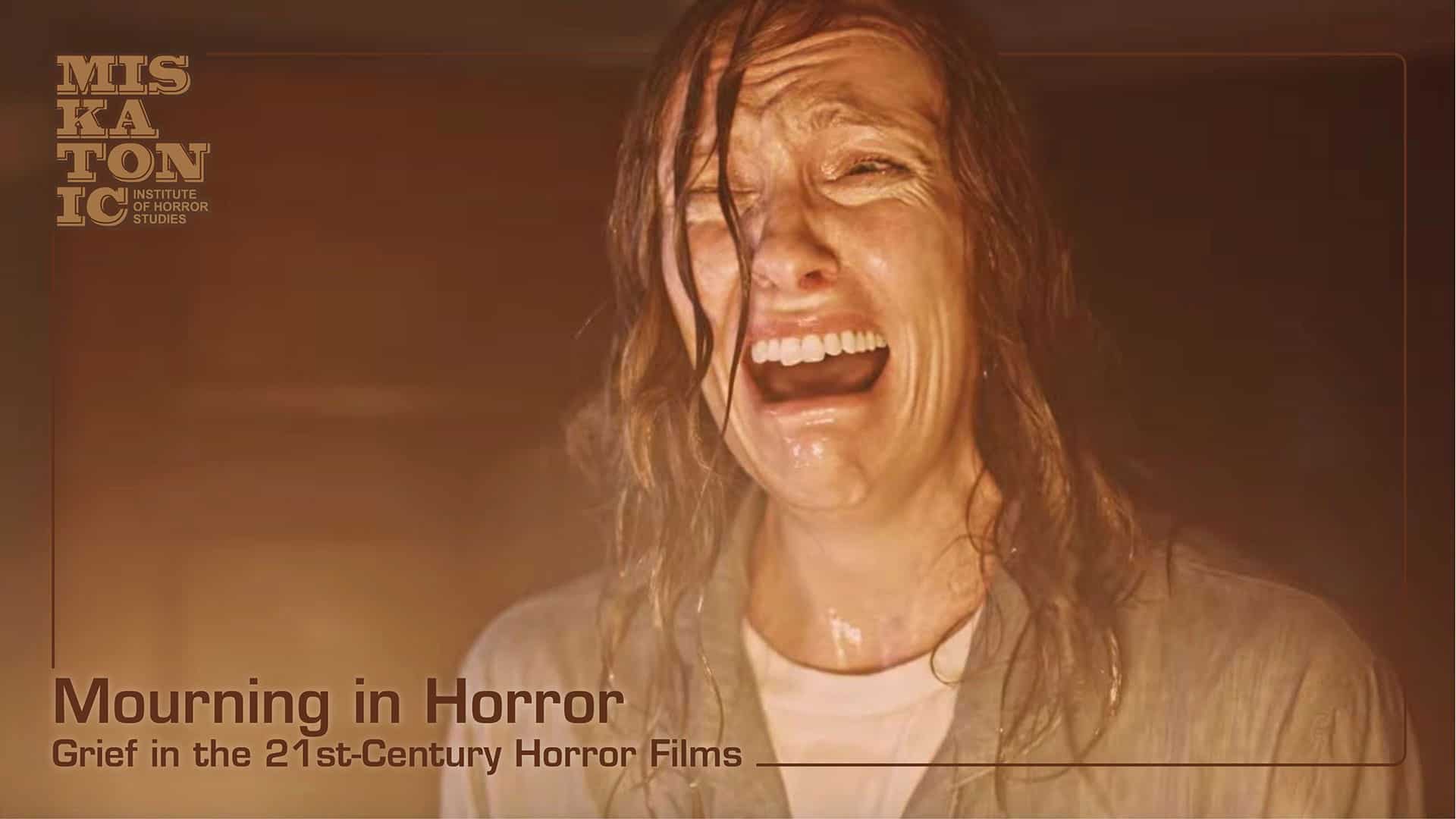
Mourning in Horror: Grief in the 21st-Century Genre Films (Online)
Tugce Kutlu
6 May 2025
Mourning in Horror: Grief in the 21st-Century Genre Films (Online)
In the Director’s Cut of Ari Aster’s MIDSOMMAR, Christian asks Ulla and Maja about the “attestupan” ritual which takes place at the end of the life cycles of the Hårga people: “Do you have a typical period of grieving? Is there a time when you mourn?” Ulla’s answer is a simple, yet so complex: “We grieve and celebrate”. In this incisive lecture, horror scholar Tugce Kutlu analyzes the intricacies of grief and mourning in contemporary horror cinema, introducing a new way of understanding the function of such films.
The turn of the millennium saw a rise in violent events transpiring in the public eye as well as a surge in public displays of mourning, as in the cases of 9/11 and the funeral of Princess Diana. Death was everywhere, on our televisions, on our computers, and finally, on our smartphones. There was nowhere to hide. This may have urged contemporary horror filmmakers to create cinematic “memento mori,” five of which will be examined using Elisabeth Kübler-Ross’ “Five Stages of Grief.” MIDSOMMAR will be addressed in a section on “Denial”; HEREDITARY receives an in-depth reading in the section on “Anger”; the latest iteration of PET SEMATARY facilitates a consideration of “Bargaining”; THE WOMAN IN BLACK goes back to horror’s roots in gothic literature to examine “Depression”; and the section on “Acceptance” investigates one of cinema’s most tangible portrayals of grief, THE BABADOOK.
For a genre with such unbreakable bonds to death, serious studies regarding grief in horror cinema are still sparse — and guest speaker Tugce Kutlu aims to change that. This talk explores the reasons why representations of mourning in horror may have risen in the last two decades, and proposes a view of these films as cinematic “memento mori” that can finally unite grief studies with cinema, and perhaps help usher viewers through their own grieving processes.
Tugce Kutlu
6 May 2025
Read more
6 May 2025
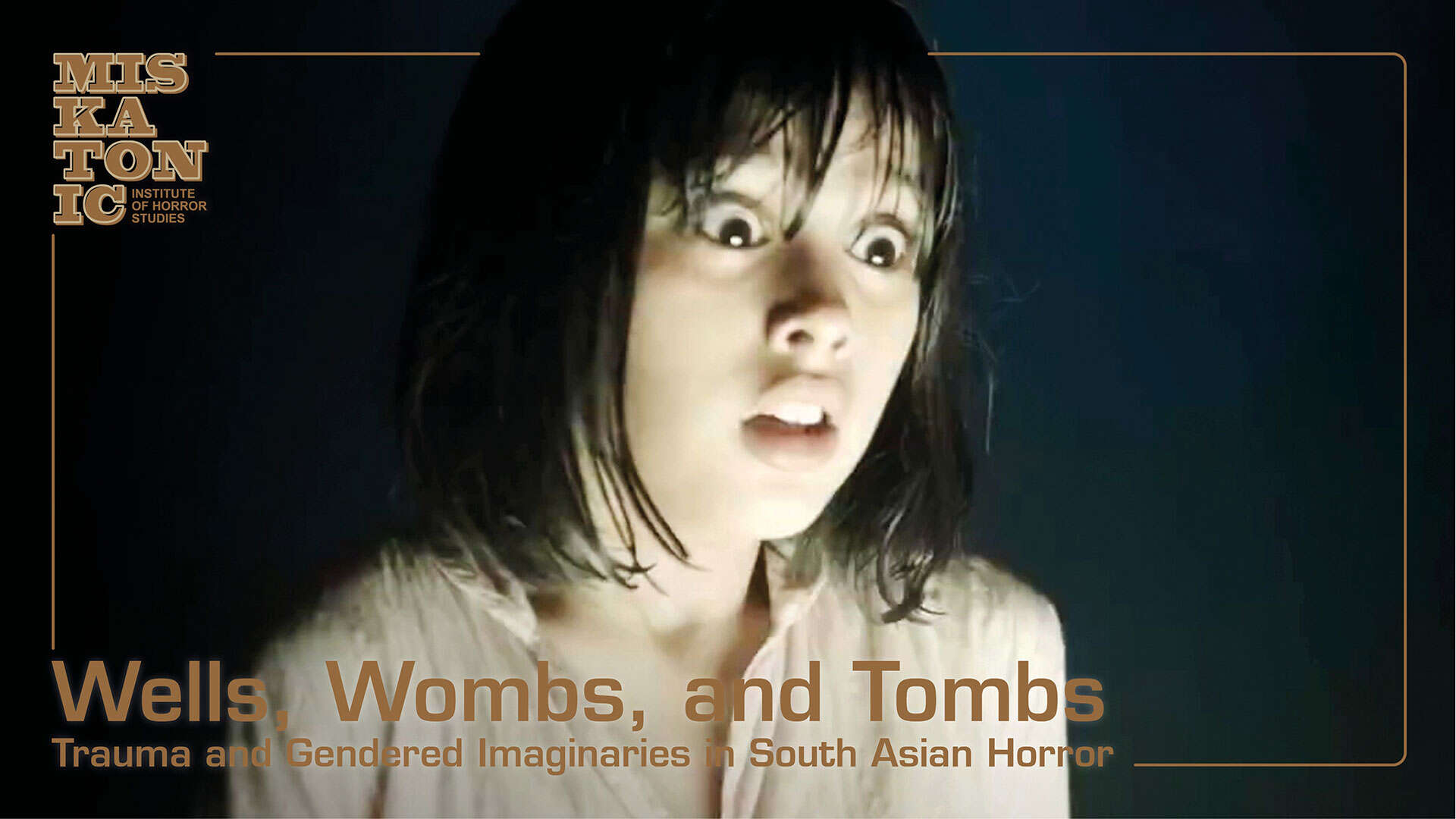
Wells, Wombs, and Tombs: Trauma and Gendered Imaginaries in South Asian Horror (Online)
Meheli Sen
15 April 2025
Wells, Wombs, and Tombs: Trauma and Gendered Imaginaries in South Asian Horror (Online)
The most iconic image in the global horror hit RINGU (1998) is arguably that of a dead and sodden Sadako (Rie Inoo) climbing out of the grainy footage on a television set to kill the film’s male protagonist — a climactic sequence that echoes her equally terrifying emergence from the well earlier in the film. However, the water-well appears across Asian horror cinema as an overdetermined site of violence against women and the transgenerational transmission of historical traumas. Burdened with the symbolic weight of the vagina and womb, the well nonetheless functions as an index of both individual and collective tragedies.
In Indian horror films, the well inevitably invokes the historical catastrophe of the Partition, when hundreds of women either willingly committed mass suicides by throwing themselves into wells in rural areas or were brutally assisted in the act by kin and community. The well is probably the most potent affective image of the violence that women endured in the period that birthed the modern states of India and Pakistan. In this context, therefore, the well is never simply a metaphor for the fecund/abject female body, although it is always that too.
In this talk, professor and author Meheli Sen will perform a deep analysis of recent Indian horror films like KAALI KHUHI (2020), CHHORI (2021), and NEELAVELICHAM (2023) alongside earlier texts like RINGU to provide a generative framework for understanding the ways in which genre films continue to situate women and girls within a continuum of violence and precarity in non-western cinemas.
Meheli Sen
15 April 2025
Read more
15 April 2025
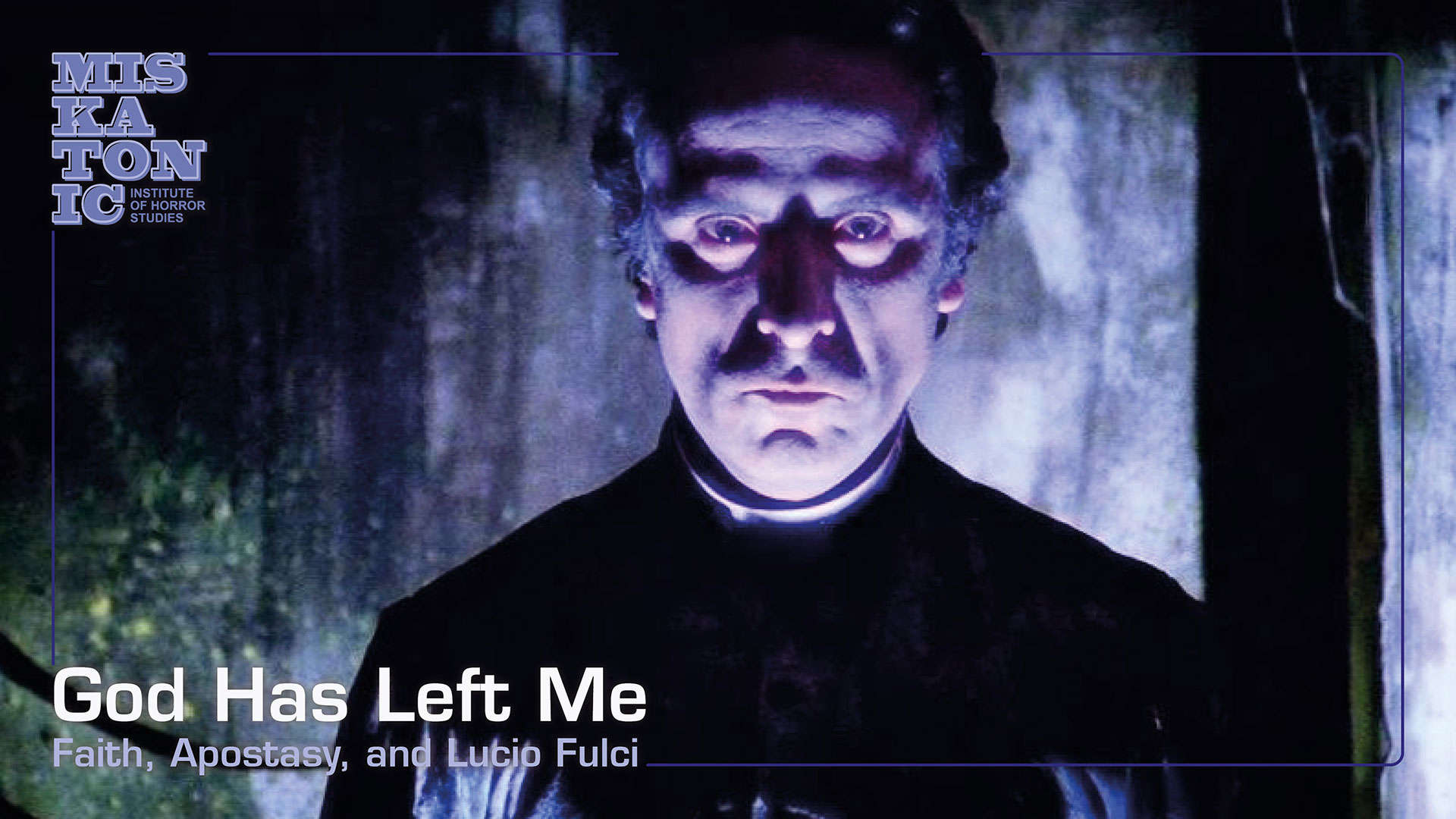
"God Has Left Me" Faith, Apostasy, and Lucio Fulci (London)
Matt Rogerson
8 April 2025
"God Has Left Me" Faith, Apostasy, and Lucio Fulci (London)
Italian director Lucio Fulci garnered an international cult following for his horror and giallo films. He is most well-known for his zombie horror cycle of the late 1970s-early 1980s, films that were censored and censured by moral guardians around the world and prosecuted in the UK during the ‘Video Nasties’ controversy. There is, however, much more to Fulci. Beyond the gore and cruelty lies an ongoing and complex commentary on the Roman Catholic faith, including a number of battles fought against the Italian Church and State.
This lecture focuses on the journey of Fulci the Apostate; the conscious uncoupling of a man from his Church and his Faith, as manifested across his filmography. The director weaved a faith-based narrative throughout his four decade career, from his earliest credits as screenwriter and assistant director in the 1950s to his very final films as director in the 1990s. Analysis of the tenets and iconography of Fulci’s Roman Catholic faith across key films in his filmography will plot an apostatic journey through his art in the vein of many celebrated Italian artists that went before him, from Dante Alighieri to Pier Paolo Pasolini.
Exploration of Fulci’s upbringing and development will reveal a man of complex contradictions: a tortured Catholic and heretical Marxist who, despite going on to work in what are considered the ‘low’ genres, was trained by some of the nation’s most celebrated directors (including Luchino Visconti, Roberto Rossellini, Federico Fellini and Stefano ‘Steno’ Vanzina) and developed a mastery of both the mechanics of filmmaking and the importance of sub-textual messaging that few of his genre peers could match.
From there, the lecture explores the socio-political and the anti-Catholic themes across his key works, including: student documentaries and early screenwriting assignments for the likes of Steno and Camillo Mastrocinque; his comedies, which gently poked fun at the Italian establishment and patriarchal institutions; his period as a self-styled ‘genre terrorist’, marked by historical dramas, satires, spaghetti westerns and gialli that often attacked the Church and State directly and with fury (and repeatedly got him into trouble with both, including several court appearances, and secret screenings of his films in the bowels of the Vatican that led to attempts to censor, censure, and outright ban them); his move into horror, that saw his narratives develop from attacks on the Church to meditations on faith and the afterlife in the vein of the great Dante.
Matt Rogerson
8 April 2025
Read more
8 April 2025
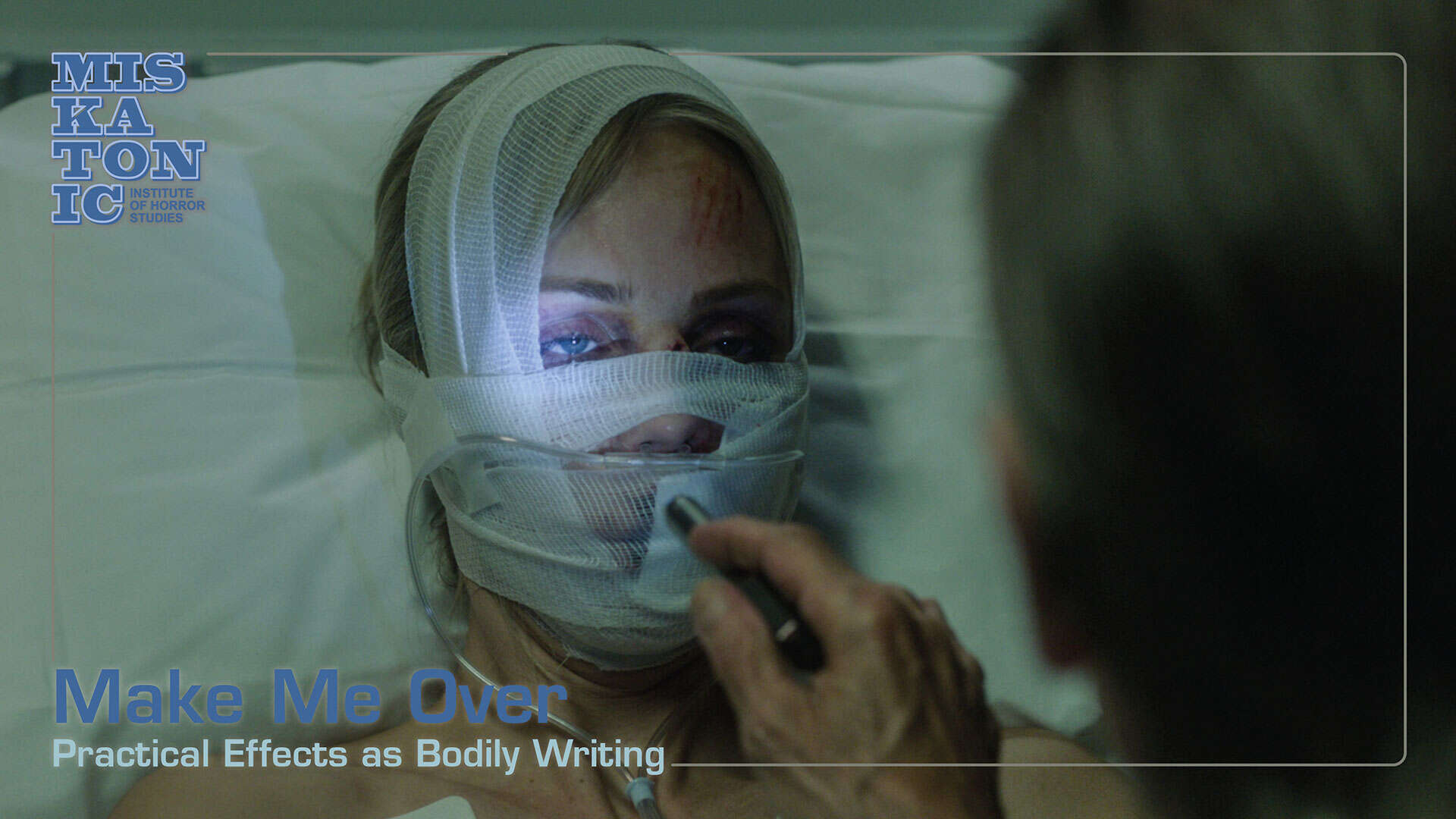
Make Me Over: Practical Effects as Bodily Writing In AMERICAN MARY and DARKMAN (Online)
Sarah Woodstock
18 March 2025
Make Me Over: Practical Effects as Bodily Writing In AMERICAN MARY and DARKMAN (Online)
PLEASE NOTE that this class begins at 3pm EST. All other classes in the series have the usual start time of 2pm EST. If you cannot make the livestream, please email us within a day of the event, and we will send you a link to a recording.
For horror critics and fans, conventional wisdom suggests that practical special effects are superior to their digital counterparts because of their clear material connection to the human performer. They have weight and take up space, in opposition to the ephemeral computer-generated images unconvincingly inserted into a film during post-production. However, this conventional wisdom relies upon a hierarchical understanding of technology as inferior to and separate from the human body. Instead of conceptualizing prosthetic effects as tools that merely augment or obscure a performer’s ‘true’ self, this talk explores the potential of these technologies to rework and transform the human form.
While digital effects are more frequently associated with the ability to morph and alter a performer’s appearance, horror scholar Sarah Woodstock talk argues for the capacity of practical effects to serve as the medium for the material realization of a new body. Her lecture draws on the work of philosopher Jacques Derrida to conceptualize practical special effects as a mode of writing, with a capacity for creation and (re-)inscription that is unbound from any single referent or origin. The argument will focus primarily on two films that center bodily transformation: While Sam Raimi’s DARKMAN (1990) follows a man who tries and fails to recover from a disfiguring accident through prosthetic technologies, the Soska Sisters’ AMERICAN MARY (2012) demonstrates the extreme malleability of the human form through elective surgery.
Each of these films focus on bodies transformed through practical effects (alongside computer generated imagery and, in American Mary, actors with real-life body modifications) but offer strikingly divergent accounts of the potential of these effects as a form of writing. DARKMAN insists on the altered body’s inferiority to its past self, while AMERICAN MARY pointedly refuses this hierarchical construction. Through these two examples, among others, this talk considers latex and plaster alongside bone, sinew, and flesh as potential materials for writing and meaning-making, ultimately advocating for an understanding of the body as continually open to change, untethered from any singular, preset form.
Sarah Woodstock
18 March 2025
Read more
18 March 2025
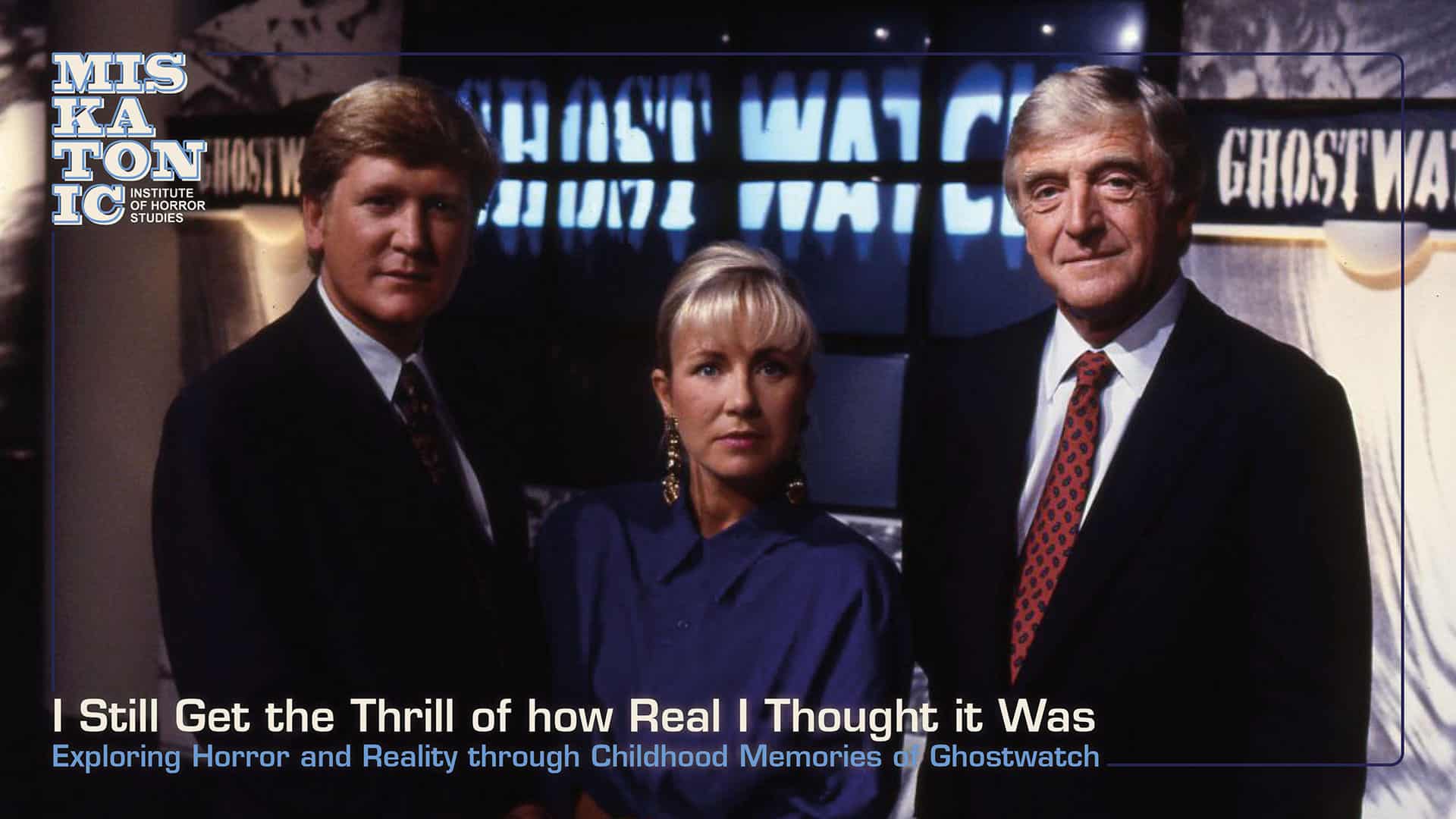
‘I Still Get the Thrill of how Real I Thought it Was’: Exploring Horror and Reality through Childhood Memories of Ghostwatch (1992) (London)
Location update: Please note that this class takes place at Off Broadway
As Catherine Lester has noted, ‘the meeting of “horror” and “children”’ has often being considered to be ‘an inherent contradiction’, incompatible with ‘the cultural constructions of childhood in Western modernity as a distinct stage of life defined by innocence, naivete and vulnerability’ (2022: 2). On Halloween 1992, BBC One broadcast a one‐off ghost story, Ghostwatch, and it ‘was viewed by a sizeable child audience’ (Leeder, 2013: 178). During and after the broadcast, it caused significant controversy, and, despite being advertised as a drama, many people watching thought the broadcast to be factual and live. To date, it has never been repeated by the BBC or any UK‐based television channel. However, fan and media interest has grown exponentially since the early 2000s, including through a succession of DVD and Blu-ray releases and documentaries, from Ghostwatch: Behind the Curtains (2021) to the recent 30th anniversary documentary Do You Believe in Ghosts? (2022), and fan events and activities on social media such as the National Séance.
Key to Ghostwatch’s retrospective appreciation is substantial recognition of its influence on the subsequent development of found footage horror, in particular through its innovative play with conceptions of factuality and liveness. Drawing on the analysis of the detailed memories of 500 Remembering Ghostwatch project participants, this talk will consider how memories of childhood encounters with Ghostwatch on first broadcast allow participants to revisit the ways in which this pioneering work of horror challenged their childhood conceptions of the boundaries between reality and fantasy. Through this, the talk will consider the value and importance of exploring horror spectatorship through audience memories and viewing histories, as well as the aspects of Ghostwatch that were seen to inform these remembered responses and forms of cognitive dissonance, such as the ‘screen surrogate’ roles played by the television presenters Michael Parkinson and Sarah Greene.
Kate Egan
11 March 2025
Read more
11 March 2025
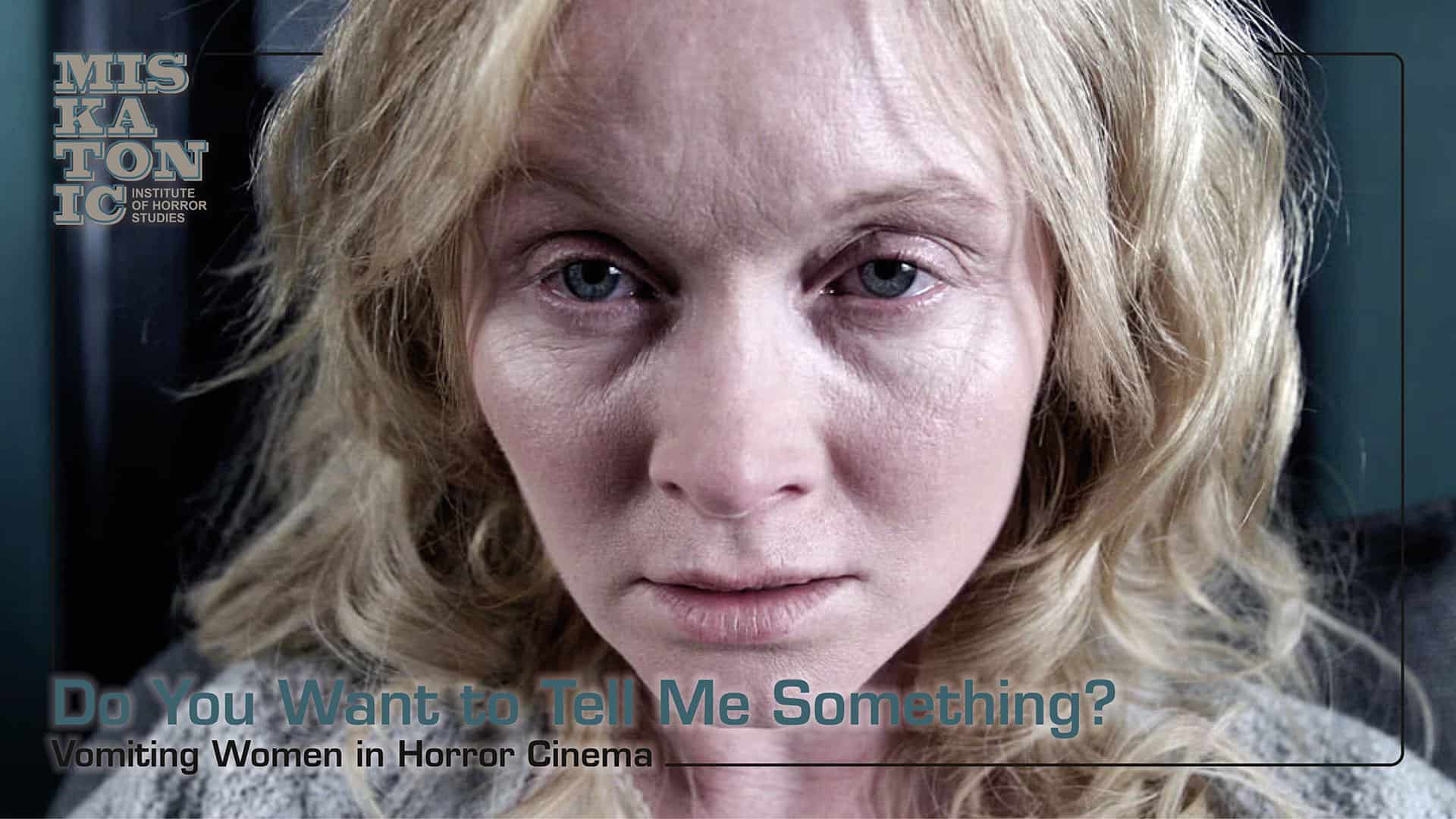
“Do You Want to Tell Me Something?” Vomiting Women in Horror Cinema (London)
Sarah Cleaver
25 February 2025
“Do You Want to Tell Me Something?” Vomiting Women in Horror Cinema (London)
Location update: Please note that this class takes place at Off Broadway
From the infamous pea soup of The Exorcist (1973), through to the almost unwatchable (and multiple) oral discharges of Drag Me to Hell (2009), the vomiting scene in contemporary horror cinema is an almost exclusively female trope. In recent years, feminine emesis has spewed beyond the abject enclosure of horror and into other genres, from vomiting housewives in Mad Men and Big Little Lies, to the 15-minute maritime puke fest in Triangle of Sadness. The trope has even been the object of mainstream discourse in publications such as Vulture and The Guardian.
Watched closely (if queasily), it’s clear that there’s more going on in these scenes than mere shock value, gross-out comedy or unimaginative screenwriting in search of a physical signifier of anxiety. What are all these vomiting women trying to tell us?
For female characters in horror, vomit is closely interlinked with their status and struggles in the family, workplace or social realm, particularly when it comes to communication. Wherever women in horror films throw up, certain speech-related motifs are reliably present: ‘modulation’ (speech that is practised or altered), ‘verbal violations’ (speech that shocks and offends), ‘communication problems’ (speech that is thwarted or misunderstood) and ‘the unspoken’ (speech that mustn’t be spoken at all). If on-screen vomit is more than just a bodily function, then could it actually be an extension of language? Might it be a demonstration of what happens when language fails and characters regress to alternative forms of expression?
This talk will explore vomiting female characters in horror films using the linguistic and cinematic theories of Julia Kristeva, Helene Cixous and Barbara Creed. Through the lens of concepts such as the abject, the symbolic and the semiotic, the class aims to throw up alternative interpretations of films such Drag Me to Hell, Jennifer’s Body and The Ring, and give participants an understanding of the connection between vomiting women in horror and the female struggle to speak.
Sarah Cleaver
25 February 2025
Read more
25 February 2025

Consuming Ghost Stories: The Spectre of Snuff Films Is Haunting Canadian Obscenity (Online)
Meg D. Lonergan
4 February 2025
Consuming Ghost Stories: The Spectre of Snuff Films Is Haunting Canadian Obscenity (Online)
Ghosts are consumed by their quests for justice. The very presence of spectres denotes that something has gone wrong and has yet to be righted. Canadian obscenity law is haunted by the same unresolved issues that have existed since the first obscenity laws were introduced in Victorian England; haunted by the crime legend of the snuff film and its mythos; and haunted by the cultural traumas of two of Canada’s most infamous violent crimes — those of Paul Bernardo and Luka Magnotta — both of which involve recordings of those crimes. In this talk, scholar Meg Lonergan explores how obscenity law in Canada is based on consuming ghost stories; that is, the obscenity provisions continue to exist because of the reappearance of cultural anxieties and ghosts of past traumas, rather than empirical proof that these laws are effective at protecting against harm.
Using a Derridean theory of hauntology and textual analysis, Meg Lonergan argues that the spectre of the snuff film and its mythology is haunting Canadian obscenity law. This is manifested in three interconnected anxieties: 1) that viewers, including government officials, are unable to distinguish fictional representation and authentic recordings; 2) that regardless of whether material is real or fake, the influence of such materials is the same; 3) that obscene content — whether real or fictional — is becoming increasingly sexually violent and thus must necessitate a natural progression to making snuff films real.
Lonergan’s lecture draws on fictional films such as Michael Findlay’s SNUFF and Philip Marshak’s DRACULA SUCKS, as well as the docuseries DON’T FUCK WITH CATS, alongside her hauntological readings of both real snuff films, and those that only exist in the phobic imagination.
Meg D. Lonergan
4 February 2025
Read more
4 February 2025
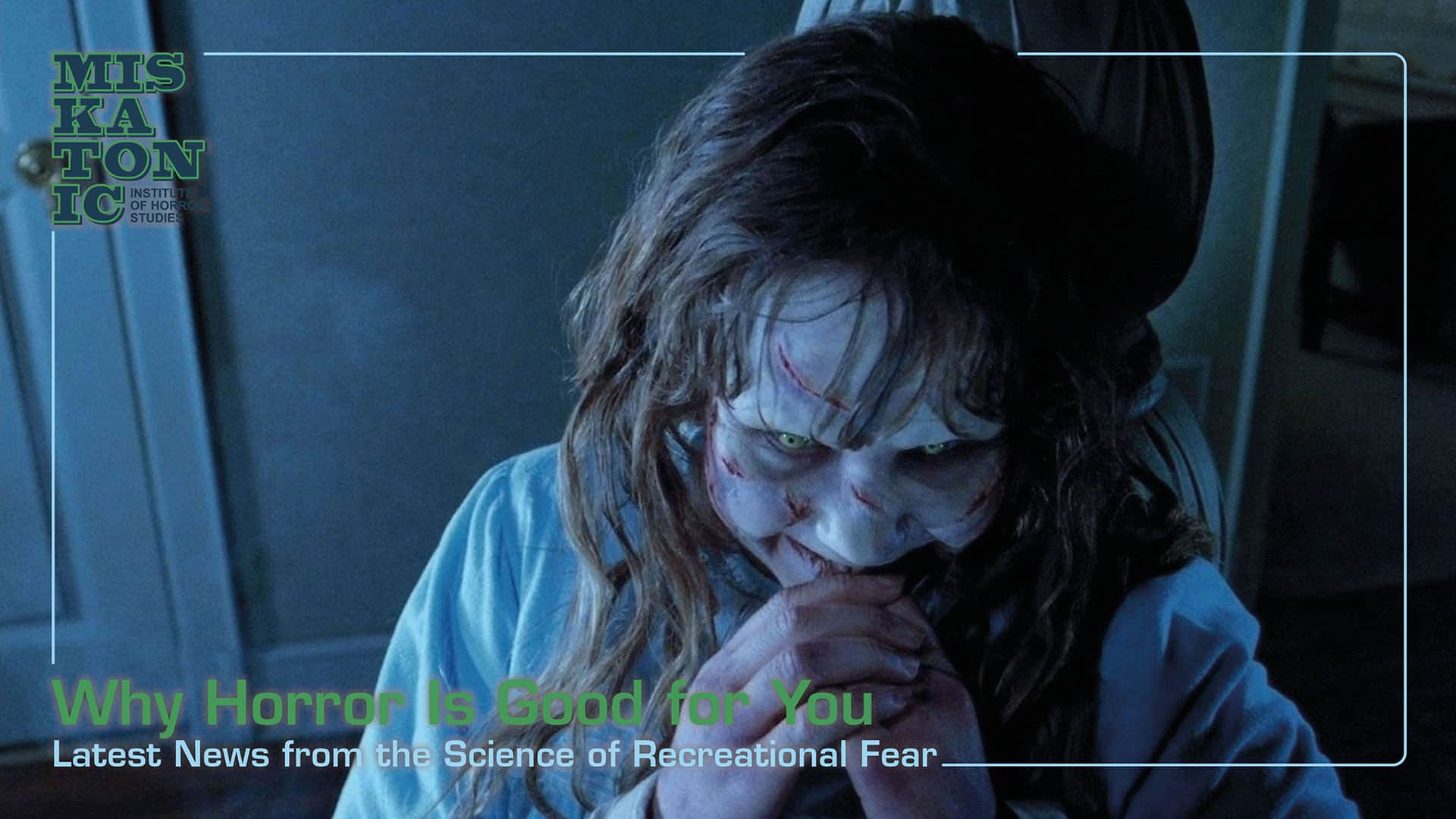
Why Horror Is Good for You: The Latest News from the Science of Recreational Fear (Online)
Mathias Clasen
7 January 2025
Why Horror Is Good for You: The Latest News from the Science of Recreational Fear (Online)
Horror movies are more popular than ever before, even as the world seems to become increasingly scary and unpredictable. Why would we turn to dark fiction when the world shows its teeth? And why are we drawn to terrifying tales of demons, ghosts, and psycho killers in the first place? What are the effects of immersing ourselves in frightening story-worlds? Aren’t we told that such fiction morally corrosive, psychologically harmful, and aesthetically bankrupt?
In this class, Mathias Clasen, co-director of the Recreational Fear Lab at Aarhus University and author of A Very Nervous Person’s Guide to Horror Movies (2021), takes us on a journey to the psychological machine room of horror. We will investigate the mental mechanisms that evolved to protect our species from harm, and come to understand how fictional depictions of threat scenarios—horror, in a word—exploits such mechanisms and may allow us to train our ability to cope with stress, fear, and anxiety. Emerging evidence is suggesting that we can use horror to build psychological resilience and preparedness and perhaps counteract anxiety. In other words, the science of recreational fear is proving Stephen King right when he said that “we make up horrors to help us cope with the real ones.” Moreover, horror seems to have the ability to bond us and may contribute to fine-tuning our moral compass in a prosocial direction. Contrary to what many critics believe, horror thus seems to come with a range of significant positive effects, and even children may benefit from age-appropriate scary stories. The positive effects of horror even seem to go beyond the social and psychological levels; brand-new research from the Recreational Fear Lab suggests that horror and other forms of “recreational fear” may have a beneficial effect on the immune system. But there’s still much to learn about the effects of horror.
Mathias Clasen
7 January 2025
Read more
7 January 2025
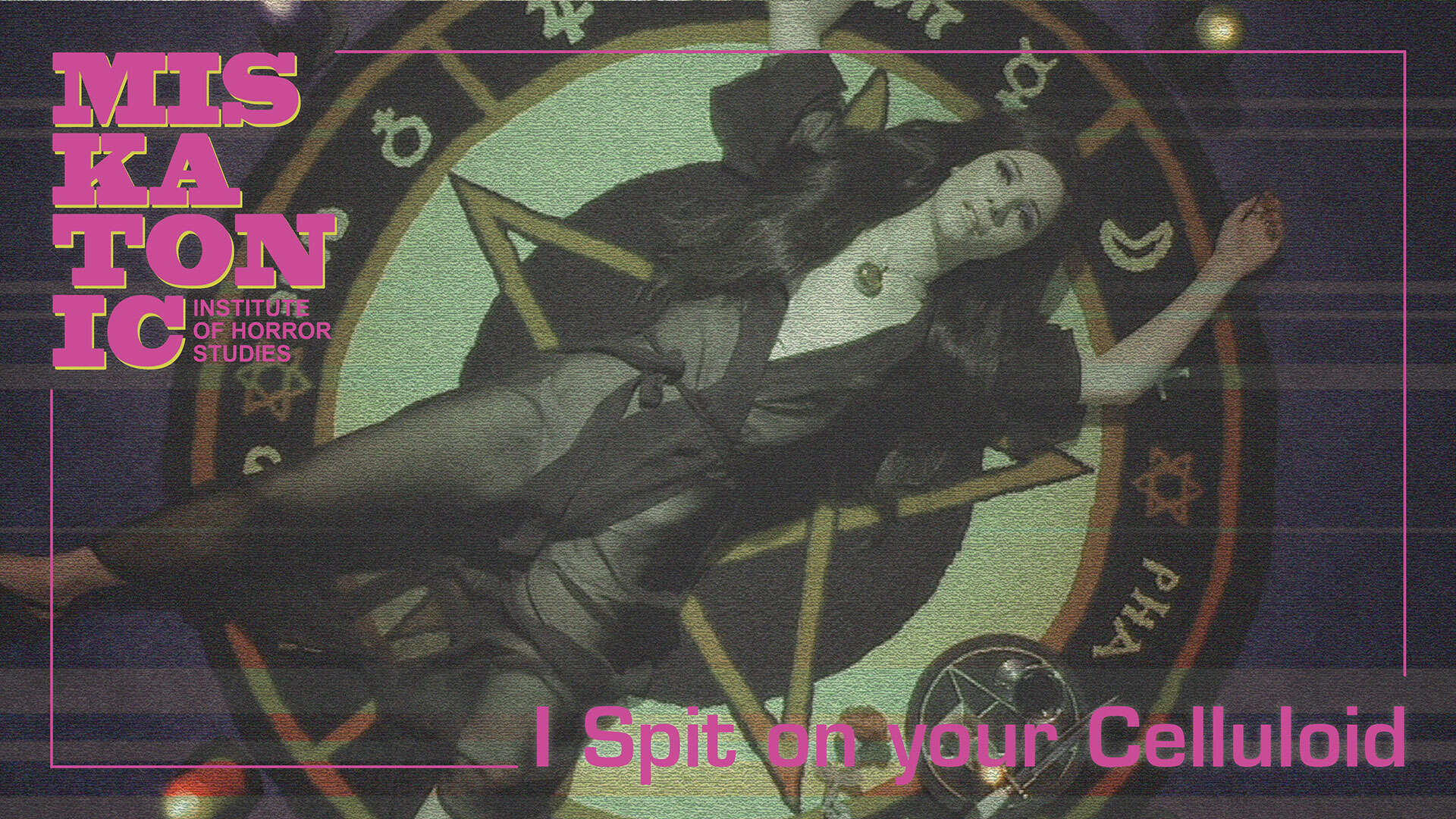
I Spit On Your Celluloid: The History of Women Directing Horror Movies (Online)
Heidi Honeycutt
17 December 2024
I Spit On Your Celluloid: The History of Women Directing Horror Movies (Online)
SLUMBER PARTY MASSACRE. PET SEMATARY. NEAR DARK. AMERICAN PSYCHO. These movies have heavily influenced pop culture, are loved by fans everywhere, and were made by women working in what has been traditionally considered a men’s genre. The truth is that from the first silent reels to modern independent movies, female filmmakers have contributed the good, the bad, the ugly, the beautiful, the gruesome, and the just-plain-wrong to the world’s greatest genre. This lecture by critic and historian Heidi Honeycutt will sing the praises of creators from Mary Harron to Katherine Bigelow, and plumb the depraved depths of film fatales like Doris Wishman to Roberta Findlay, in order to tell the true history of women directing horror movies.
Having conducted hundreds of interviews and watched thousands of horror films over the last twenty years, Heidi Honeycutt has spoken at sold-out venues around the world about the political and cultural forces that shape the way women make modern horror movies. This lecture is based on her book I Spit On Your Celluloid: The History of Women Directing Horror Movies (Headpress Books), a comprehensive work that covers the evolution of women making horror cinema from 1896 to the present day.
Heidi Honeycutt
17 December 2024
Read more
17 December 2024