MIS
KA
TON
IC
Institute of
Horror Studies
Archive
Archive

BASHA: FILM POSTERS
26 July 2013
BASHA: FILM POSTERS
BASHA: FILM POSTERS
Rare North American Exhibit as part of the Fantasia Film Festival
Co-presented by The Miskatonic Institute of Horror Studies and Spectacular Optical
Friday July 26-Sunday August 4, 2013
J.A. de Seve Cinema Foyer
Talk by Daniel Bird: Friday July 26, 3:30pm-4:30-pm
Barbara ‘Basia’ Baranowska – best known in North America for her poster for Andrzej Zulawski’s POSSESSION – is the unsung hero of Polish poster art. Whereas the likes of Jan Lenica developed a distinct, often instantly recognizable style, Barbara Baranowska was a chameleon (as reflected in her alternating use of ‘Basia’, ‘Basha’ and ‘Bacha’ as her professional name). She donned a variety of graphic personae – from the sometimes brutal cut outs of her early Polish book jackets to voluptuous, almost psychedelic surrealism of her French film posters.
-Text by Curator Daniel Bird
26 July 2013
DREAMING REVOLT: JEAN ROLLIN, THE FRENCH FANTASTIQUE AND BEYOND
Mario DeGiglio-Bellemare
16 April 2013
DREAMING REVOLT: JEAN ROLLIN, THE FRENCH FANTASTIQUE AND BEYOND
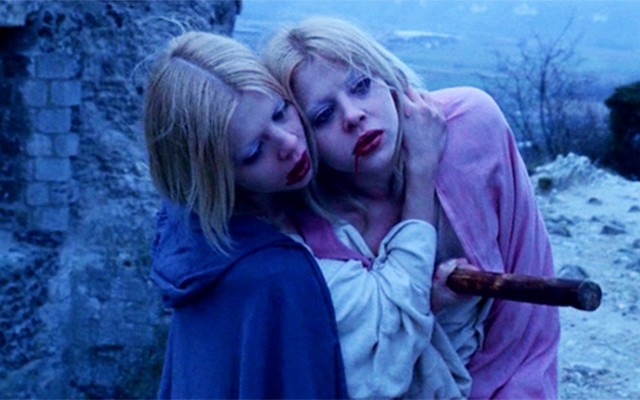
A filmmaker ridiculed by film critics and genre fans alike, Jean Rollin (1938-2010) has only recently begun to find acceptance in his native France. Rollin was first discussed in a positive light in the Anglo-Saxon world by British author David Pirie, who championed him as a pioneer of the sex-vampire movie in his book The Vampire Cinema (1977). However, genre fans in North America only began to see Rollin’s films in earnest when a mail-order company called Video Search of Miami released “special edition” VHS tapes of his films in 1995. Rollin’s films have been described in often paradoxical ways, from poetic and literary, to absurdist and oneiric, to technically inept and narratively impenetrable. Hence, Rollin films occupy a liminal space in film history – where art-house horror mixes with sexual taboo, where the fantastique tradition mixes with the “serial film,” and where lyricism mixes with the macabre – resulting in a disarmingly unique and personal cinematic vision. This three-week course will examine the career of Jean Rollin (aka Michel Gentil) within the specific trajectories that inform his oeuvres as a French genre filmmaker: the history of the French fantastique, the impact of the surrealist movement, the historical (and political) context of sexploitation and pornography in the 1970s and 1980s, and finally, an aspect rarely discussed about his work, the influence of the Parisian Grand-Guignol theatre (1897-1962).
Note: Some of the reading material for this course will be in French.
Mario DeGiglio-Bellemare
16 April 2013
Read more
16 April 2013
STEPPING THROUGH TIME: THE SCIENCE OF TIME TRAVEL
Chris Whittaker
19 March 2013
STEPPING THROUGH TIME: THE SCIENCE OF TIME TRAVEL
“The universe is not only queerer than we imagine, but it is queerer than we can imagine.”
— J. B. S. Haldane
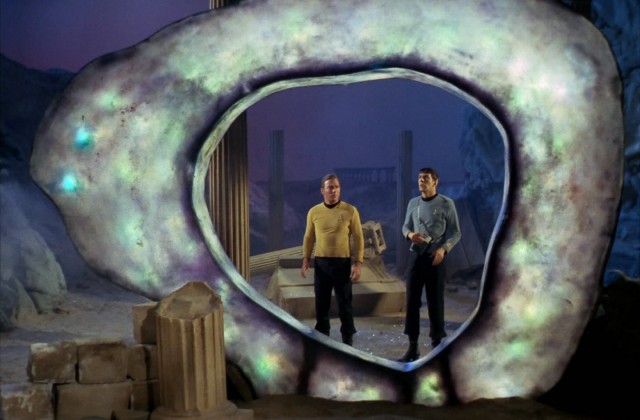
Can we travel through time? Can we slow the ticking of a clock? Could we watch our sun age a billion years and turn to dust, all between lunch and dinner? The answer to each of these questions, surprisingly, is ‘yes’ (mostly). Of course, movies love to play with time, but are they playing fair? This two-class course punctuated by a dazzling arrray of film and TV clips will explore time in science-fiction and in science-fact. To understand time we will dive into physics by exploring the basics of theories like Relativity and Quantum Mechanics, but we won’t dive too deep. No background in science or mathematics is required, but there will be select readings.
Chris Whittaker
19 March 2013
Read more
19 March 2013
SMALL SCREENS, BIG CHILLS: CLASSIC AMERICAN TV HORROR
Anne Golden
22 January 2013
SMALL SCREENS, BIG CHILLS: CLASSIC AMERICAN TV HORROR
As we reflect upon the recent popularity of horror melodramas such as True Blood, The Walking Dead and American Horror Story, it becomes essential to explore the influence of earlier examples of TV horror (aka Gothic TV, or what television scholar Helen Wheatley has referred to as ‘telefantasy’). In his book The Pleasures of Horror, Matt Hills has argued that TV horror should be seen not as a “para-site” of the genre, but as a major influence on the development of horror. This course takes up this issue with reference to representative horror TV series and made-for-TV horror films, and the horror conventions, themes and issues they both borrowed from, and helped to establish in, cinematic and literary horror. We will cover three of the most influential horror-themed television shows of the “classic” period of horror TV, from roughly 1950 to 1980: writer-producer Rod Serling’s The Twilight Zone (1959-1964), writer-producer Joseph Stephano’s The Outer Limits (1963-1965), and Dan Curtis’s unique daytime Gothic soap opera, Dark Shadows (1966-1971). In addition to these “key” series, the course will also look at less popular and more short-lived horror TV series such as One Step Beyond (1959-61), something of a prototype for later shows like Unsolved Mysteries, and the Boris Karloff-hosted anthology series, The Veil (1958) and Thriller (1960-1962). The final two classes will address feature-length made-for-TV horror films that proliferated throughout the 1970s (Crowhaven Farm, Duel, Don’t Be Afraid of the Dark, Bad Ronald), as well as iconic horror hosts such as Vampira, Ghoulardi, Zacherley and Elvira, who helped to bring horror films into TV viewers’ homes.
Schedule:
——————
Week 1: Tuesday, January 22, 2013, 7:00pm-10:00pm
The Space of Subversion: Limited Perspective and Liminal Horror in Rod Serling’s The Twilight Zone (1959-64)
Instructors: Karen Herland and Kristopher Woofter
“Now the fear is no longer vague. The terror isn’t formless; it has a form.”
— from The Twilight Zone episode, “The Hitch-hiker,” aired 22 January 1960
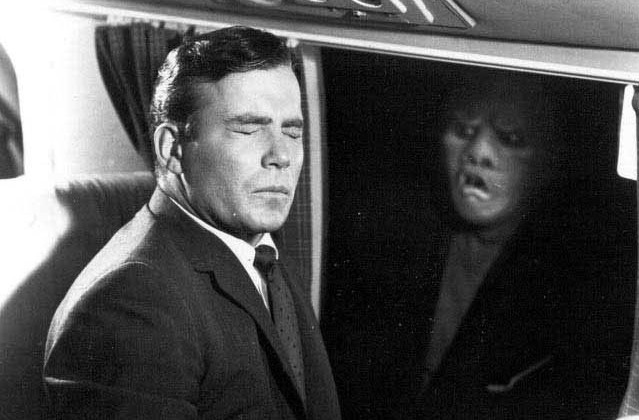
The brainchild of writer-producer Rod Serling, The Twilight Zone was an oasis of the fantastic in a desert of quotidian American TV shows that perpetuated the stifling patriarchal ideals of the American domestic sphere, from Father Knows Best,to Leave it to Beaver, to My Three Sons. Serling’s magnum opus was diverse enough to include horror, fantasy, satire and even dark comedy, and proved to be one of the most successful and influential series ever on American television. Serling wrote 99 of the show’s 156 aired episodes; others were written by literary horror giants such as Richard Matheson and Charles Beaumont. Classic episodes of the show include the William Shatner-starring “Nightmare at 20,000 Feet,” the science-fiction tinged classic, “Where Is Everybody?,” and the speculative moral tale, “Time Enough at Last.” Our entry point will be with the show’s specific engagement with the discourses and conventions of horror and the fantastic, dredging up the terror of the mundane and the everyday as a way to open up spaces for analyses of culture and politics. We will show three representative episodes of the series, each of which responds to one of three key Twilight Zone themes: Fragmented Subjectivity and Limited Perspective, Suburban Paranoia, and Cosmic Paradigmatic Shifts.
———————-
Week 2: Tuesday, January 29, 2013, 7:00pm-10:00pm
TV Horror’s “Others” and the (Pulp) Anthology Series: Lights Out! (1946, 1949-52), The Veil (1958), One Step Beyond (1959-61), Thriller (1960-62) and Night Gallery (1969-73)
Instructor: Kristopher Woofter
“What you are about to see is a matter of human record. Explain it, we cannot. Disprove it, we cannot. We simply invite you to explore with us the amazing world of the Unknown—to take that One Step … Beyond.”
— from John Newland’s Introduction to numerous episodes of One Step Beyond
Horror has had a pervasive presence on television since the late 1940s, a fact that may have been overshadowed by the enormous influence of two canonical 1960s horror series, The Twilight Zone and The Outer Limits. This class surveys five series that for various reasons now speak to a more limited, select audience than their monolithic counterparts. The earliest of these shows, Lights Out!, has its origins in the 1940s horror radio work of Arch Oboler. The short-lived, Boris Karloff-hosted The Veil predates Serling’s Twilight Zone and is a prototype for the later, more popular Karloff-fronted show, Thriller, which Stephen King called the best of all TV horror programs.The under-seen and equally underappreciated One Step Beyond, is prototypical of pseudo-scientific shows popular in the 1970s and 1980s focusing on the paranormal and the unexplained, such as In Search of … and Unsolved Mysteries. Finally, Night Gallery, Rod Serling’s pulp-inspired follow-up series to The Twilight Zone, will leave us on the verge of the contemporary period of horror on television, suggesting the anthology format attempted with fleeting success by 1980s horror series such as Darkroom (1979) and Cliffhanger (1981).
Television’s half-hour to one-hour formats were an ideal space to adapt the sustained atmosphere of intense gloom and dread of the short horror tale. This class focuses on select episodes that are either adaptations or extrapolations of horror short stories and radio scripts. We also will look into the aesthetics of the horror anthology series within the tradition of the pulps. Screenings will include representative clips from three of the series, as well as two complete episodes, one 25-minutes in length, and the other 50-minutes.
———————-
Week 3: Tuesday, February 5, 2013, 7:00pm-10:00pm
A ‘Bear’ of a Series: The ‘Wonder’ and ‘Tolerable Terror’ of The Outer Limits
Instructor: Philip L. Simpson (*visiting instructor!)
First airing in 1963, the ABC-TV network’s black-and-white anthology series The Outer Limits was created by Leslie Stevens as a vehicle for exploring his ideas about human frailties within a science fiction setting. Its blend of insightful character study, Gothic mood, intelligent themes, expressionistic visuals, and science fiction with a decidedly dark edge showed The Outer Limits daring to confront some of the most difficult political and humanistic questions of the times. Series co-producer and writer Joseph Stefano (of Hitchcock’s Psycho fame) both capitulated to the network’s commercially driven desire for “more monsters” and subverted this desire by referring to the show’s “monster of the week” as a “bear.” While seemingly lampooning the network’s incessant clamoring for monsters, Stefano is also making a serious point, in that the Gothic borderlands of the human psyche that the “bears” represent grip or even prey upon the subconscious or pre-conscious, leaving a sense of unsettlement or unease within the viewer long after the episode itself has ended.
Reading: Worland, Rick. Sign-Posts Up Ahead :The Twilight Zone, The Outer Limits, and TV Political Fantasy 1959-1965
———————-
Week 4: Tuesday, February 12, 2013, 7:00pm-10:00pm
The Gothic As Soap Opera: Dark Shadows and Uncanny Domesticity
Instructors: Mario DeGiglio-Bellemare and Anne Golden
From 1966-1971, ABC-TV broadcast a 30 minute daytime Gothic soap opera called Dark Shadows. Produced by an “auteur” of television horror, Dan Curtis, the show began as a brooding gothic tale in the style of Jane Eyre (Charlotte Brontë), and quickly established itself as a vehicle for ghosts, witches, vampires, werewolves, and Frankenstein-like creatures. Dark Shadows brought into the living rooms of millions of Americans elements that have come to be associated with the 18th century Gothic, such as supernatural beings, malevolent aristocrats, orphaned daughters, family dishonour, old castles, craggy rocks, stormy weather, hidden passageways, persecuted romance, wanderers and uncanny doubles, and above all, an excess of tragic romance that only a soap opera could deliver. As Richard Davenport-Hines argues, the Gothic and the soap opera have much in common: “confused paternities, improbable coincidences, melodrama, sudden death, cheap ideas, trivially stereotypical characters, [the] television soap opera provides the twentieth century equivalent of the gothic novels.”
But more importantly, the Gothic and the soap opera have traditionally been associated with women and the domesticity. This section of the course will trace the evolution of Dark Shadows as a show that was radically uncanny (unheimlich), precisely because it fuelled anxieties around domestic space, where the boundaries between the public and private collapse. In this uncanny ambiguity arises subversions to the patriarchal family: powerful matriarchs, hysterical males, “queer” characters, youth with agency, powerful witches, parodic portrayals of the gothic ingenue, a reluctant vampire, etc. Because it was a daytime soap opera, the Gothic was not only presented in simply temporal categories (a return to the past), but as an invasion of domestic quotidian space.
Reading: Wheatley, Helen. 2006. Gothic Television. Manchester, UK: Manchester University Press (pp. 146-160).
———————-
Week 5: Tuesday, February 19, 2013, 7:000pm-10:00pm
The Golden Age of TV Terror: The Made-for-Television Horror Boom of the 1970s
Instructor: Kier-La Janisse
Back before we had hundreds of cable channels to create custom-packages from, there were only three networks – CBS, NBC and ABC – that had the monopoly on home viewing, and they utilized this captive audience as a means of testing out some bold new programming. The Made-for-Television film – where genre directors like John Carpenter, Steven Spielberg, John Badham, Tobe Hooper and Wes Craven got to play out some of their earliest ideas – was a unique experiment that – although its golden age runs through the decade 1969-1979 – would have lingering impact on how TV would be programmed going forward to this day. when NBC introduced the Project 120 series in 1964 and its follow-up series World Premiere in 1966 – both platforms for original 2-hour films – it was a pioneering move. But it was Barry Diller and Leonard Goldberg over at ABC who really upped the ante with the groundbreaking Movie of the Week series, launched in 1969 with an ambitious mandate: “25 original 90-minute Movies Made Especially for ABC-TV Comprise the Most Costly Series in Network History,” the trades loudly proclaimed. This broadstroke of programming momentum coincided with the emerging counterculture, and many of the risks being taken by the major studios with feature films following the success of Easy Rider were mirrored on the small screen. The original horror films being pumped out by the networks were no less critical of their turbulent social context. Television provided us with some of the most lingering, affecting horror films that anyone reared in the 70s can remember witnessing: Duel, Bad Ronald, The Legend of Lizzie Borden, Don’t Be Afraid of the Dark, Brotherhood of the Bell, Crowhaven Farm, Salem’s Lot, Frankenstein the True Story, not to mention the numerous productions of television titan Dan Curtis (The Night Stalker, Trilogy of Terror). We’ll see clips from all these films and more, looking at the people who made them, the society that fuelled them, and tracing the history of a very special moment in time for genre fans everywhere.
——————–
Week 6: Tuesday, February 26, 2013, 7:00pm-10:00pm
“Ooh, That’s Scary!” A History of TV Horror Hosts
Instructors: Mario DeGiglio-Bellemare, Kristopher Woofter and Kier-La Janisse
Course description coming soon!
Anne Golden
22 January 2013
Read more
22 January 2013
A GHOST STORY FOR CHRISTMAS: A BRITISH HOLIDAY HORROR TRADITION
Kier-La Janisse
10 December 2012
A GHOST STORY FOR CHRISTMAS: A BRITISH HOLIDAY HORROR TRADITION
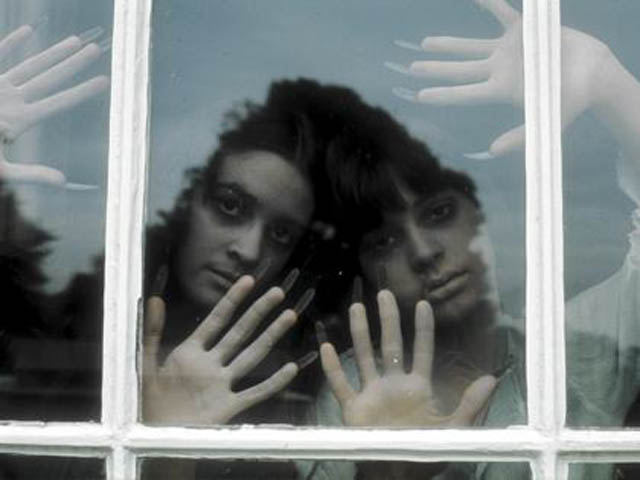
To kick off the holiday break, we’ll say farewell to the Fall 2012 semester with a one-off class celebrating the British holiday horror tradition of the BBC’s seminal A Ghost Story for Christmas series that ran from 1971 to 1978. While the confluence of Christmas and horror has folkloric beginnings (in such things as Europe’s alpine Krampus monster) and a literary tradition that stretches back to Dickens’ A Christmas Carol, it was the success of the stark but scary M.R. James adaptation Whistle and I’ll Come to You by the BBC’s Omnibus series in 1968 that prompted the BBC to tap James’ writing for a holiday-season horror series that would hearken back to the oral tradition of terror tales by the fireside (Author and medieval scholar M.R. James – widely held as Britain’s greatest ghost story writer – was known for reading his terrifying tales aloud to guests over the holidays).
We’ll look at this series in particular but will also extend discussion to its influence over British holiday horror programming in general (such as Nigel Kneale’s The Stone Tape), and the series’ revival in the 2000s. We’ll also discuss the English ghost story—with its ritual emphasis on specters, revenants and impossible beings returning as resurrected figures of redemption—as a form particularly apt for expressing the spirit of the holiday season in the popular Christian tradition.
Kier-La Janisse
10 December 2012
Read more
10 December 2012
FRAGMENTS OF THE MONSTER: RECOVERING FORTIES HORROR
Kier-La Janisse
29 October 2012
FRAGMENTS OF THE MONSTER: RECOVERING FORTIES HORROR
Mondays, October 29-December 3, 2012
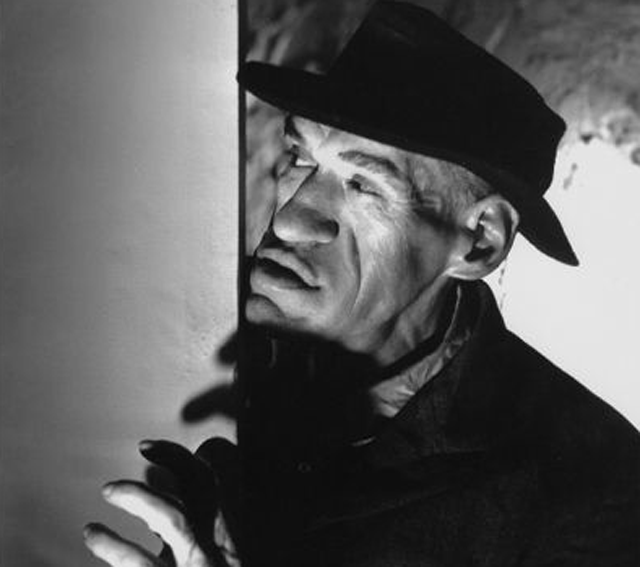
This six-week course will attempt to revise and reframe persistent claims in scholarly discourse that 1940s horror is somehow inferior to a “classical” or “canonical” mode of horror in the 1930s, especially as represented by Universal Studios horror. Aside from their valorization of a handful of films, such as The Wolf Man (1941), The Uninvited (1944), and Val Lewton’s RKO films (1942-46), early scholarly views on the horror genre rendered the 1940s as a fragmented and lost decade. Within this framework, the creepers, chillers and thrillers of the 1940s become lost—the result of favoring monolithic binaries, or strict divisions within genre classifications, between high art and low art, auteurs and craftsman, and major studios and poverty row. Expect to see films you may not have ever heard of before in this class! Every session will be taught by a different instructor. A film
screening will accompany each session.
Week 1 – October 29: Mario DeGiglio-Bellemare
Rethinking 40s Canons: Lewton and the Grand-Guignol
Screening: “Mademoiselle Fifi” (Robert Wise, 1944)
Suggested readings for forties horror research:
Jancovich, Mark. 2008a. “Pale Shadows: Narrative Hierarchies in the Historiography of 1940s Horror.” Shifting Definitions of Genre, eds. Lincoln Geraghty and Mark Jancovich. Jefferson, NC and London: McFarland, pp. 15-32.
Worland, Rick. 1997. “OWI Meets the Monsters: Hollywood Horror Films and War Propaganda, 1942 to 1945.” Cinema Journal, Vol. 37, No. 1., pp. 47-65.
Coleman, Robin R. Means. 2011. Horror Noire: Blacks in American Horror Films from the 1890s to Present. New York: Routledge.
Week 2 – November 5: Kristopher Woofter
Gothic Realism in 1940s Horror: John Brahm’s “Hangover Square”
Screening: “Hangover Square” (John Brahm, 1945)
Readings:
Jancovich, Mark. ‘Frighteningly Real’: Realism, social criticism and the psychological killer in the critical reception of the late 1940s horror-thriller
Week 3 – November 12: Anne Golden
Only The Shadow Knows: Robert Siodmak’s “The Spiral Staircase” as Key Horror Text
Screening: “The Spiral Staircase” (Robert Siodmak, 1945)
Week 4 – November 19: Karen Herland
Madness and Control in “The Snake Pit”
Screening: “The Snake Pit” (Anatole Litvak, 1948)
Week 5 – November 26: Charlie EllBé
The Sound of Terror: Horror Radio Programs and Film Adaptations in the 1940s
Screening: “Calling Dr. Death” (Reginal Le Borg, 1943)
Week 6 – December 3: Kier-La Janisse
Mail-Order Monster Kids and The Legacy of Forties Horror
Screening: “The Window” (Ted Tetzlaff, 1949)
Kier-La Janisse
29 October 2012
Read more
29 October 2012

SCHOOL OF SHOCK: PAIN AND PLEASURE IN THE CLASSROOM SAFETY FILM
Kier-La Janisse
15 October 2012
SCHOOL OF SHOCK: PAIN AND PLEASURE IN THE CLASSROOM SAFETY FILM
Mondays, October 15 + 22, 7-10pm
For many genre fans, a love affair with horror and the grotesque began early on, sometimes fuelled by unlikely sources. One of these was the classroom safety film, which for many kids was their first time seeing other children threatened by true danger, being confronted with a combination of gore effects and actual accident footage, and being offered a pictorial glimpse at things their parents didn’t want to talk about. Thousands of these films were made from the 1940s through the 1980s, when companies like Centron, McGraw-Hill, Coronet, Encyclopaedia Britannica Films, Avis Films, Crawley Films, Bell Labs, the NFB and others thrived on the burgeoning market for classroom or workplace educational films.
Subjects ranged from safety in and around vehicles, to drug abuse and venereal disease, teaching children scary lessons about everything from dental hygiene to how to spot a pedophile. The most memorable of these films deliberately used horror visuals to entice and/or shock children into paying attention – such as those by prolific producer Sid Davis (1916-2006) – and some were even made by directors with genre film pedigrees, such as Herk Harvey of Carnival of Souls, William Crain of Blacula and Dr. Black and Mr. Hyde, and cinematographer Douglas Knapp, who later shot John Carpenter’s Dark Star and Assault on Precinct 13.
Each week we’ll have lecture and discussion, punctuated by viewings of some of the most notorious educational films of the 40-year golden age of social hygiene onscreen. We’ll also briefly look at educational television PSAs, from the British Public Information Films through the 1980s Partnership for a Drug Free America and Latter Day Saints commercials, and up to the incredibly grisly Australian drunk driving commercials of the 1990s
The classic ‘era’ of classroom films may be over, but viewed from today’s perspective, some of these films – many of which were not made by people with a professional background in education – are horribly misguided (and unintentionally hilarious), but offer up a fascinating survey of changing social mores and cultural preoccupations (not to mention fashions!). Being safe has never looked so grim.
—————————————–
Instructor: Kier-La Janisse
Kier-La Janisse is a writer and film programmer who co-founded the Blue Sunshine Psychotronic Film Centre and The Miskatonic Institute of Horror Studies, and currently curates the film section of the POP Montreal International Music Festival and serves as editor of the online magazine, Spectacular Optical. She has been a programmer for the Alamo Drafthouse Cinema in Austin, Texas, founded the CineMuerte Horror Film Festival and the Big Smash! Music-on-Film Festival (both in Vancouver) and was the subject of the documentary Celluloid Horror (2005). She has written for Shindig!, Filmmaker, Rue Morgue and Fangoria magazines, has contributed to The Scarecrow Movie Guide (Sasquatch Books, 2004) and Destroy All Movies!! The Complete Guide to Punk on Film (Fantagraphics, 2010), and is the author of A Violent Professional: The Films of Luciano Rossi (FAB Press, 2007) and House of Psychotic Women (FAB Press, 2012).
Kier-La Janisse
15 October 2012
Read more
15 October 2012
WATCHERS IN THE WOODS: REFLEXIVITY IN HORROR CINEMA
Kristopher Woofter
8 October 2012
WATCHERS IN THE WOODS: REFLEXIVITY IN HORROR CINEMA
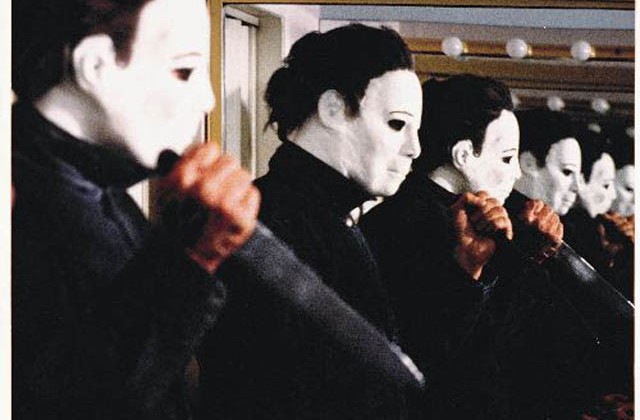
The critical frenzy around the recent postmodern horror film, The Cabin in the Woods (2012), as a game-changer or reinvention of the horror genre, suggests that journalists (and even fans) have forgotten that horror is always-already a reflexive genre. Horror films show a formal awareness of the constraints and conditions within which horror genre artists work, regarding the expectations of a knowledgeable fan-base, the production realities of a limited budget, having to work within and against traditional horror themes and conventions, and with other genres and other media (e.g., television, gaming), and even with existing horror scholarship. This introductory class will give students a pathway into the critical study and discussion of horror through healthy debate around the way popular (and sometimes scholarly) discourse problematically frames horror as constantly in crisis and in need of rejuvenation. In addition to clips from The Cabin in the Woods, we will screen in its entirety Tod Browning’s 1935 film Mark of the Vampire.
Kristopher Woofter
8 October 2012
Read more
8 October 2012
WATCHERS IN THE WOODS: REFLEXIVITY IN HORROR CINEMA
Speaker
8 October 2012
WATCHERS IN THE WOODS: REFLEXIVITY IN HORROR CINEMA
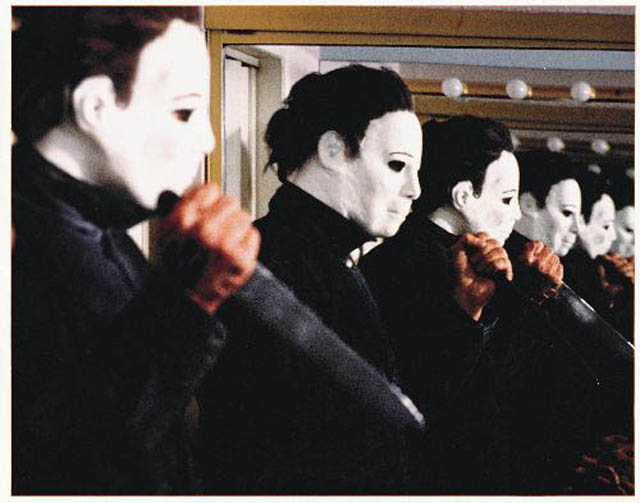
The critical frenzy around the recent postmodern horror film, The Cabin in the Woods (2012), as a game-changer or reinvention of the horror genre, suggests that journalists (and even fans) have forgotten that horror is always-already a reflexive genre. Horror films show a formal awareness of the constraints and conditions within which horror genre artists work, regarding the expectations of a knowledgeable fan-base, the production realities of a limited budget, having to work within and against traditional horror themes and conventions, and with other genres and other media (e.g., television, gaming), and even with existing horror scholarship. This introductory class will give students a pathway into the critical study and discussion of horror through healthy debate around the way popular (and sometimes scholarly) discourse problematically frames horror as constantly in crisis and in need of rejuvenation. In addition to clips from The Cabin in the Woods, we will screen in its entirety Tod Browning’s 1935 film Mark of the Vampire.
———————————-
Instructor: Kristopher Woofter
Kristopher is a fifth-year PhD student in Film and Moving Image Studies at Concordia University and a tenured faculty member of the English Department at Dawson College in Montreal, where he teaches courses on the Gothic, the fantastic, and horror in literature and film. He has served for six years as a co-chair for the Horror Area of the Popular Culture / American Culture Association (PCA/ACA), and is a charter associate and secretary of the Whedon Studies Association. He has published on the television series Buffy the Vampire Slayer in the edited anthology Buffy in the Classroom: Essays on Teaching with the Vampire Slayer (McFarland 2010), and has a forthcoming (2012) co-authored essay (with Papagena Robbins) on the intersection of the Gothic and documentary in the journal Textus, entitled “Gothumentary: The Gothic Unsettling of Documentary’s Rhetoric of Rationality.” Kristopher is currently at work on two edited anthologies, Fragments of the Monster: Relocating Forties Horror (with Mario DeGiglio-Bellemare and Charlie EllBé) and Horror in the “Terror” Age (with Will Dodson). His current research interests in cinema, television and literature include the horror genre, the Gothic, spirit photography, documentary, mockumentary, pseudo-documentary and new media. Kristopher holds an FQRSC doctoral research fellowship for his dissertation research involving generic hybridity and intermediality in mock-documentary horror films such as The Last Broadcast (1998), The Blair Witch Project (1999), George A. Romero’s Diary of the Dead (2007) and Lake Mungo (2009).
Speaker
8 October 2012
Read more
8 October 2012

WRITTEN IN BLOOD: SCORING HORROR CINEMA
Speaker
22 September 2012
WRITTEN IN BLOOD: SCORING HORROR CINEMA
Co-presented by Film POP
Since the early days of tent-bound magic lantern shows, music has accompanied the grand illusion of motion pictures. This lecture will not only discuss the history of musical composition in the horror film, it will specifically illustrate some of the finest examples of how music can radically accentuate and dictate an audience’s sensory and emotional connection to imagery. From the employ of “Swan Lake” in Tod Browning’s Dracula to the thundering symphonies in the British Gothics; from the romantic leanings of early 60’s European pictures to the brash post-mod rock in the Italian horrors; pop music, sparse electronics and note-heavy orchestras; we’ll speed through decades of sound, led by Fangoria Magazine editor and composer/filmmaker Chris Alexander.
Instructor: Chris Alexander
Chris Alexander has spent his life eating, sleeping and breathing movies, breaking only to obsess over music. He is the editor-in-chief of FANGORIA magazine, has released several collections of his own music, has written a book about movies he loves, and his first feature film – which he wrote, directed, co-shot, edited, composed the music, handled FX and even catered – BLOOD FOR IRINA will be released via Autonomy Pictures later this year. Visit Chris at www.chris-alexander.ca.
——————————–
This class will also act as our annual free info session, where you can pick up schedules and find out more information about the 2012/22013 Miskatonic curriculum.
Speaker
22 September 2012
Read more
22 September 2012