MIS
KA
TON
IC
Institute of
Horror Studies
Archive
Archive
Shifting Representations of the Witch in Hindi Horror Cinema: From Sexploitation to Social Justice (Online)
Saira Chhibber
6 December 2022
Shifting Representations of the Witch in Hindi Horror Cinema: From Sexploitation to Social Justice (Online)
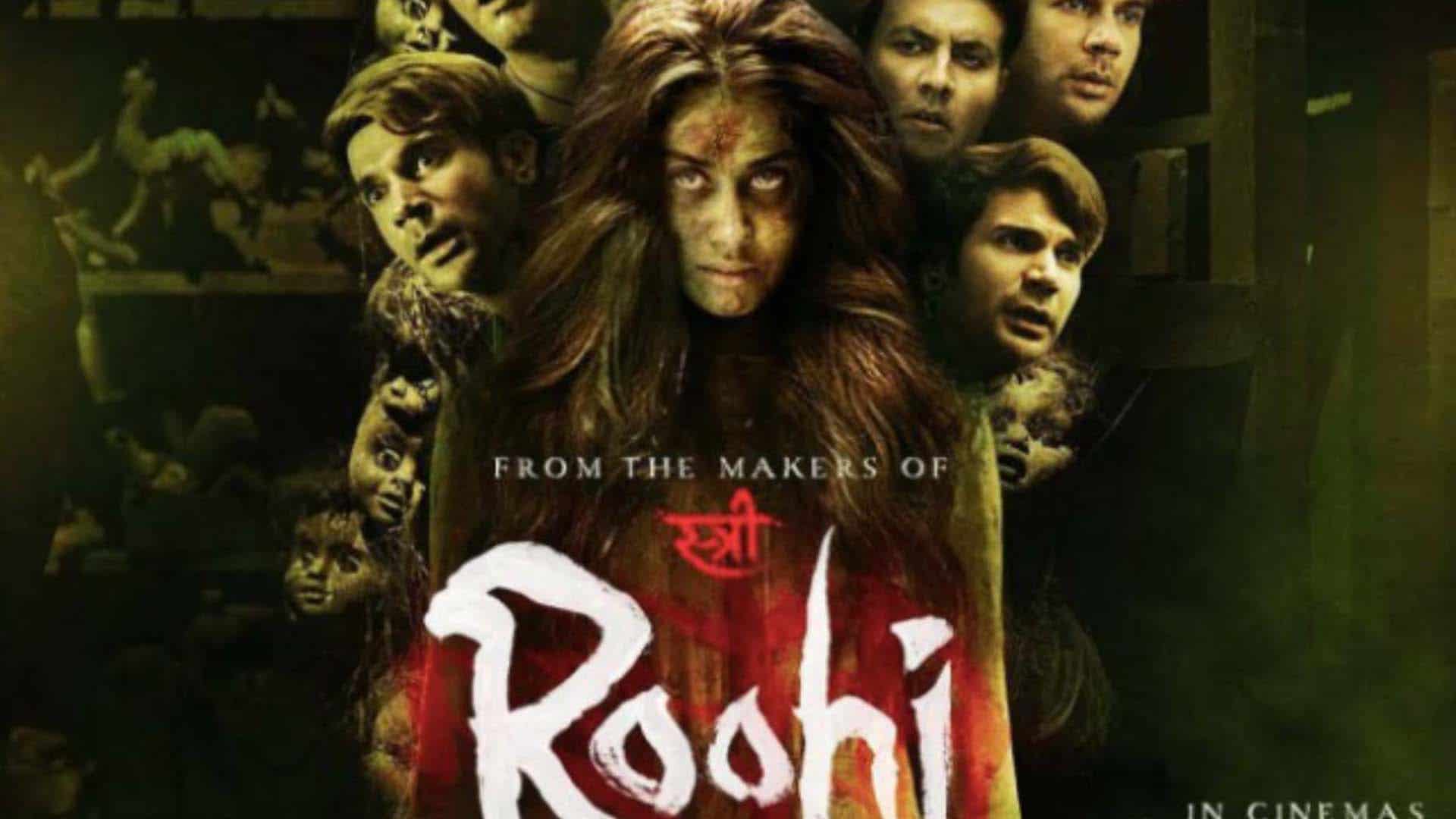
The focus of this lecture is ostensibly on representations of the witch in contemporary Bollywood film. But it is also a discussion on how the supernatural as a genre is being used to challenge problematic gender codes and social conventions in South Asian popular cultures. Hindi popular cinema is in many respects unique in relation to other global cinemas, particularly in its historic reliance upon strictly proscribed guidelines for representations of women and a ‘good woman/bad woman’ binary. In Bollywood, this gender binary has been used to code socially acceptable behaviours that have privileged an imagined concept of India, one that is patriarchal, Hindu-centric and homogenous. Historically, the figure of the witch or churail as she is known in both Hindi and Urdu, has fit the context of this binary through her representation as a ‘bad woman’ who is inevitably punished for acting outside of filmic norms of gender behaviour. However, recent iterations of the witch in Hindi film productions, have seen a complete volte-face, as new witch films have represented the figure as a sympathetic protagonist and fighter for gender justice.
Looking at the films Veerana (dirs. Shyam and Tulsi Ramsay, 1988), Chudail No.1 (dir. R. Kumar, 1997), and contemporary Netflix co-productions, Stree (dir. Amar Kaushik, 2018), and Roohi (dir. Hardik Mehta, 2021) we can observe how the witch and relatedly, gender conventions, are evolving in Bollywood. Situating these films within socio-political, cultural and production contexts, it becomes apparent that there has been a rupture with the traditional gender paradigms that have historically sought to police and control women’s gender expression.
View instructor Saira Chhibber’s class citations here.
Saira Chhibber
6 December 2022
Read more
6 December 2022
Little Horrors: Parasites in Hollywood and Their Real Counterparts (LA + Simulcast)
Kevin Lafferty
29 November 2022
Little Horrors: Parasites in Hollywood and Their Real Counterparts (LA + Simulcast)
Please note this class has two options to participate: Live and virtual via simulcast.
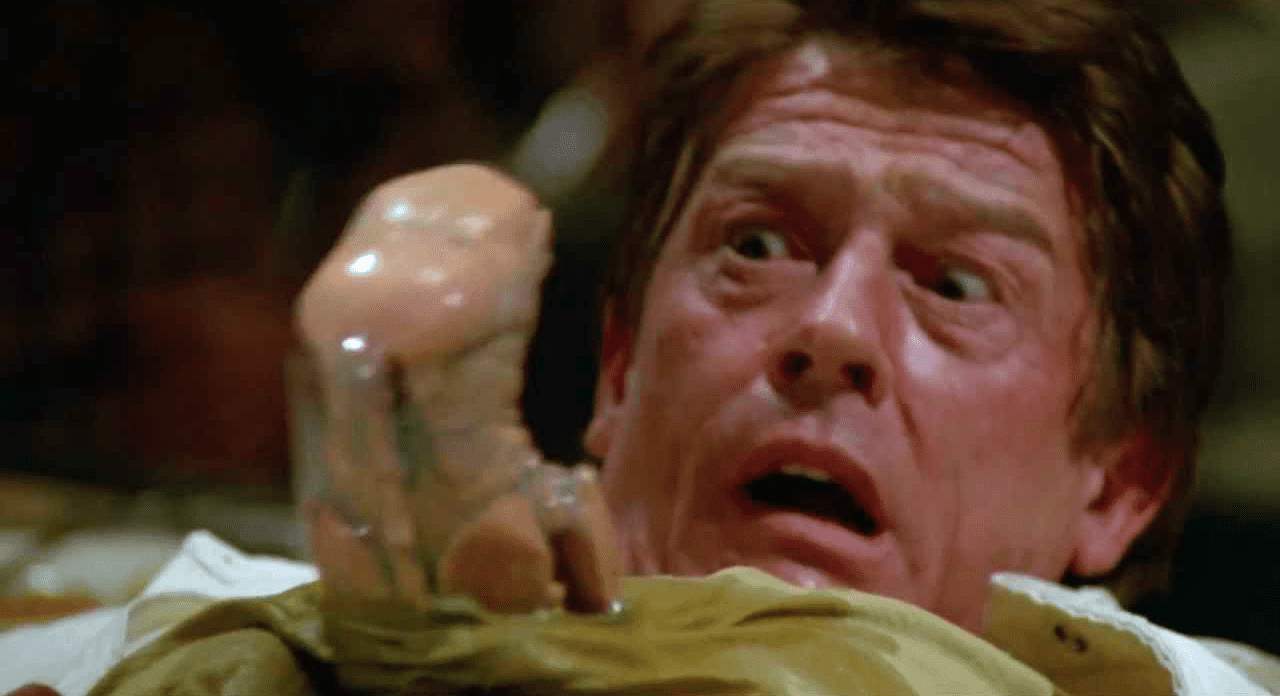
Wuchereria causes your scrotum to swell like a grapefruit, Leishmania can eat your nose, and people infected with Pulex speak willingly of self-amputation. It should be no surprise that we evolved both fear and disgust as a way to avoid being infected by parasites.
Parasites are why we think poop stinks and why we find a symmetrical face beautiful. Parasites were with us before we evolved as a species, and have since left their mark on our history and many of our cultural practices, and traditions. They also make great villains. Fear of the rabies virus likely led to notable legends about the creatures and monsters that inspired Shelley and Stoker. Invasion of the Body Snatchers, Shivers, and Alien use parasites to create genuine horror. Such films have, at their core, four common elements.
The first, is the horrifying premise that dangers hide unnoticed in our friends, loved ones, or pets. Thus, your boss is their Trojan horse. Your child is their sheep’s clothing. And sometimes your wife is just your wife. The second is the extent that being infected changes “you” to “us”. Namely, some parasites have the capacity to hijack their hosts and take them for unwise, and sometimes tragic trips. Many of us, in fact, host a parasite that wants us dead, and messes with our personality to increase those odds. The third theme is that parasites are outsiders. Usually they are presented as some kind of one-off alien creature we did not see coming. Finally, parasites often have shallow motives, and they come across as pointless, violent monsters.
As such, films about parasites have barely scratched the surface of their ingenuity. In fact, their evolutionary acrobatics are often admirable and unmatched in complexity. Their motives are pure, and often gentle in comparison to carnivores and herbivores. And parasites are not alien, or even oddities. Rather, parasitism is the most popular lifestyle on the planet. We are a parasitic planet, so to speak. Rich functioning ecosystems support rich and diverse parasite communities. Organic food depends on parasites to control insect pests. And some parasites are among the most endangered species on earth, leading to calls for their protection.
In this lecture, Kevin Lafferty will consider how parasites are far more fascinating than how they are represented by the entertainment industry. Then, we’ll go out for sushi.
—
If participating in the live/physical event, please check with your local health authority on the current requirements for masks and vaccination for attending live events.
If participating via live simulcast event – the class cannot be watched later, so please be sure you are available at the date and time the class is being offered in before registering.
Classes curated by Miskatonic Los Angeles are in Pacific Time.
Kevin Lafferty
29 November 2022
Read more
29 November 2022
Stranger Danger: Child Abduction in the Horror Film (London)
Robert Dee
22 November 2022
Stranger Danger: Child Abduction in the Horror Film (London)
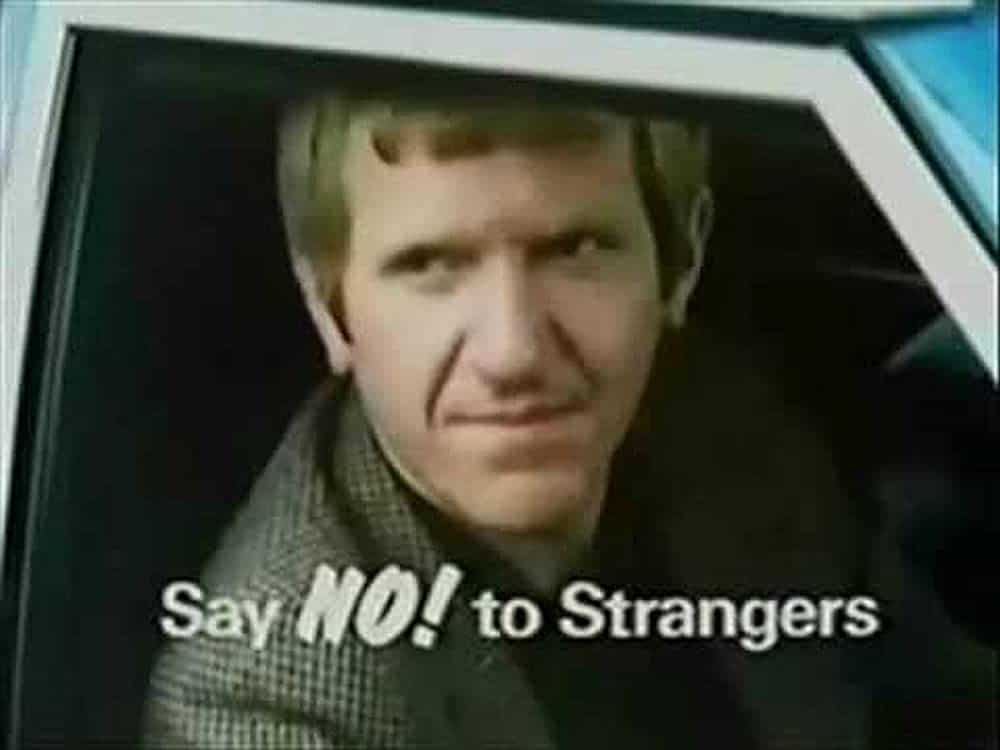
From Lang’s M to Derrickson’s The Black Phone, the spectre of the child murdering stranger has long haunted cinema. Aside from adult concerns for child safety, scenes of ‘stranger danger’ in horror and related media reignite repressed magical thinking and our childhood fears of the dangerous adult Other. Unlike mature adults, these abductors (or Danger Strangers) – The Child Catcher, Pennywise the Clown, Rose the Hat, The Grabber – are more akin to grown-up children, possessing supernatural talents and/or childlike characteristics that act as magical lures to entrap their victims, making them all the more unsettling.
In this lecture I will present a loose structural model that represents 13 recurring stages in child abduction scenes, with examples from a number of films. As a filmmaker my focus is on formal aspects so we will be digging down into visual subtext and cinematic storytelling devices to see how meaning and tension are created on screen.
Form here I will broaden out the investigation to look at both Freud’s essay on the uncanny and the Jungian concept of the puer aeterna, touching on the Trickster archetype and Pan, and relate these ideas to the character of the Danger Stranger and what it means to us as spectators.
Following this we will investigate the language of Stranger Danger in a wider context by examining preventative public information films from the UK and US, Victorian cautionary tales and fairy tales. We will also look at how the irrationality of satanic panics and the scapegoating of minorities play into stranger danger narratives.
The lecture will conclude with a presentation of my most recent horror short, The Watcher, which was built on my research and the 13 stage model I developed.
Due to unforeseen circumstances, we have to postpone this lecture (originally scheduled for October 26th), STRANGER DANGER: CHILD ABDUCTION IN THE HORROR FILM (LONDON), to Tuesday, November 22nd, 7:00 pm GMT.
Robert Dee
22 November 2022
Read more
22 November 2022
Miskatonic Presents Home Is Where the Horror Is: A Conversation With Douglas Buck (NYC)
Douglas Buck
8 November 2022
Miskatonic Presents Home Is Where the Horror Is: A Conversation With Douglas Buck (NYC)
For some, Thanksgiving is a time for gratitude and togetherness; for others, it’s a stark reminder of hidden abuses, hypocrisy, and historic violence. We hope you’ll join us for a heaping helping of pre-holiday horror in this unique conversation with firebrand filmmaker Douglas Buck, where we’ll discuss his searing critiques of the American family unit.
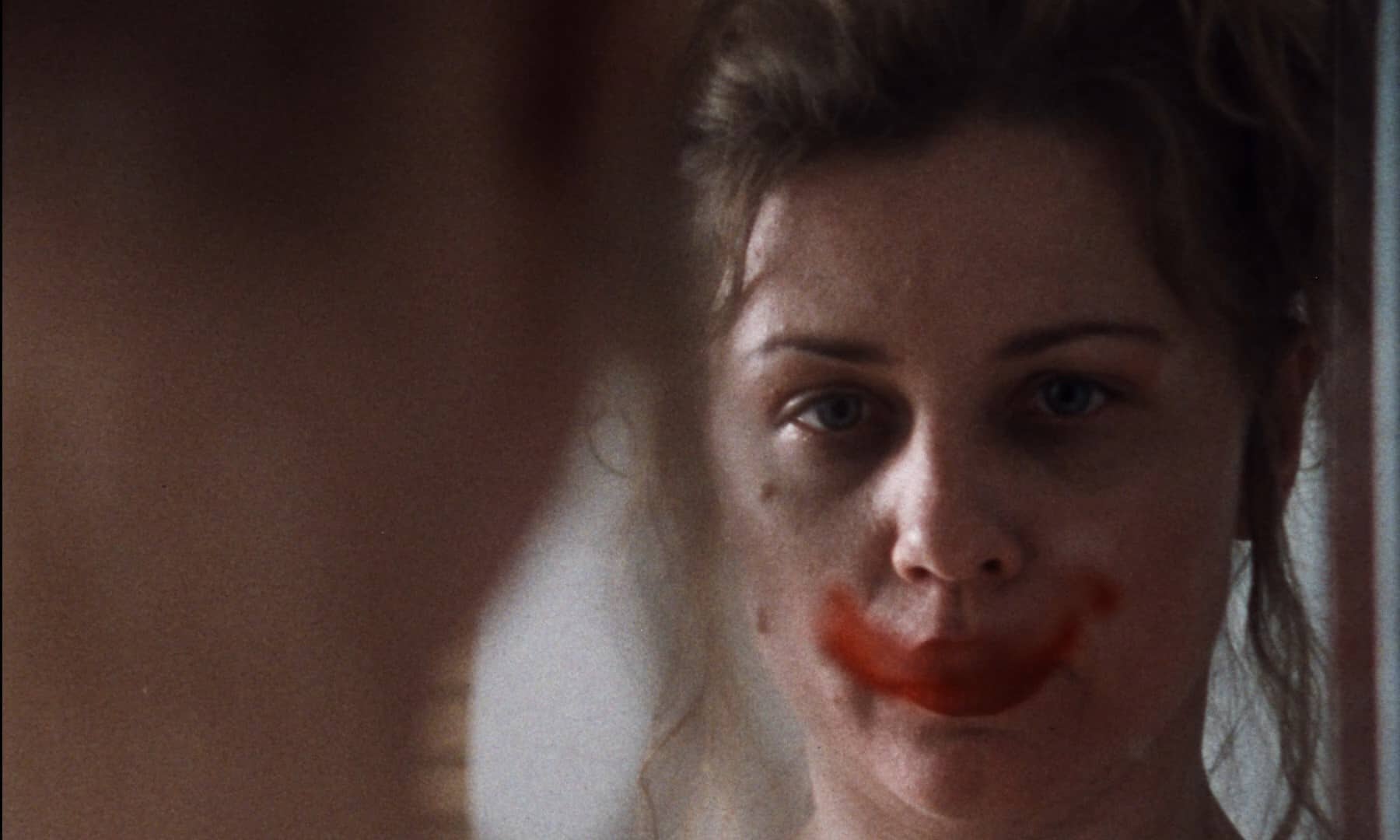
Buck’s harrowing anthology film FAMILY PORTRAITS: AN AMERICAN TRILOGY inspired standing ovations and outright fainting in festival audiences, and anyone who has seen it knows why. In his other work, from the blackly comic short AFTER ALL, to his THEATER BIZARRE segment THE ACCIDENT, to his intimate reimagining of Brian DePalma’s SISTERS with Chloë Sevigny, Buck demonstrates a profound understanding of childhood alienation, family secrets, and the cyclical nature of abuse.
In addition to his own filmography, this conversation will also reflect on Buck’s influences, from the lofty heights of Bergman and Polanski, to the gritty early work of George Romero and Tobe Hooper.
Long Island native Douglas Buck became an underground favorite for his confrontational attacks on smug American idealism, which caused one critic to call him “Todd Solondz on crack”. He has kept company with upstarts such as Abel Ferrara, Zoe Lund, and Gaspar Noe, and collaborated with genre stalwarts Tom Savini and Larry Fessenden. This event offers a unique opportunity to hear about his storied career, and his incisive acumen on kindred creators from Atom Egoyan to Ari Aster. We invite you to join us as we turn our focus on the family—just in time for the holidays.
Douglas Buck
8 November 2022
Read more
8 November 2022
Beneath the Bandages: The Horror Behind The Mummy’s Curse (London)
Rebecca Bruce
8 November 2022
Beneath the Bandages: The Horror Behind The Mummy’s Curse (London)
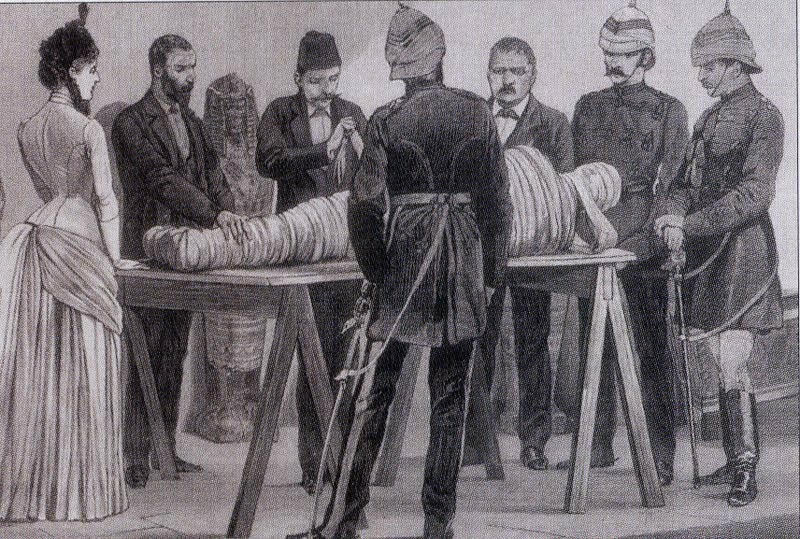
If you have ever seen an ancient Egyptian mummy, apart from in a film, it is likely you saw one in a museum. There is usually some information attached to the exhibit, a note where the mummy was found, their age, perhaps even a name. However, have you ever wondered; how did it arrive there? If it was ‘acquired’ during the nineteenth century, likely it was either ‘legally stolen’ (through the loophole of colonialism) or illegally smuggled. Either way: you are looking at a stolen corpse on display for all to see.
This lecture aims to unravel the history of mummies and the ‘mummy’s curse’ by focusing on their treatment and perception in the nineteenth-century. It will focus on the consequences of the mummy-trade in nineteenth-century Britain focusing on how mummies were perceived and treated during this time. There are four specific areas that will be examined; mummy pits (mass tombs and Victorian descriptions of pits, visual culture); mummies on display (mummy unwrapping parties); Victorian mummy Gothic fictions (by Bram Stoker, H. P. Lovecraft, Arthur Conan Doyle and Louisa May Alcott); and mummies in media (early horror films featuring mummies and their connection to museums).
I focus on key case studies, exhibitions, and events to demonstrate the overall, (and some important individual) perceptions of the mummy, and how this unethical treatment shaped the idea of the mummy in modern society. What does it mean to be human? How can we honour mummies by focusing on the very thing that makes them terrifying? How did the perceptions of the mummy create a Gothic monster? How did mummy fiction in the nineteenth-century contribute to the figure of the mummy? What is the relationship between horror and mummies beyond the media? And how can examining the past create a more ethical and respectful future for mummies?
By the end of the lecture, attendees will have a wider understanding of this under-researched area of history, and develop an appreciation for the history surrounding mummies. Additionally, attendees will gain an insight into how mummy fictions and films perceive mummies as the ‘villain’/’monster’ and how the mummy figure bridges the gap between history and horror through various mediums. Furthermore, this conversation extends to the wider debate surrounding human remains in museums, a current and significant discussion regarding decolonisation, and (un)ethical displays.
Rebecca Bruce
8 November 2022
Read more
8 November 2022
The Anguish and Unleashing of the Body at the Grand Guignol (Online)
Jean-Charles Ray
1 November 2022
The Anguish and Unleashing of the Body at the Grand Guignol (Online)
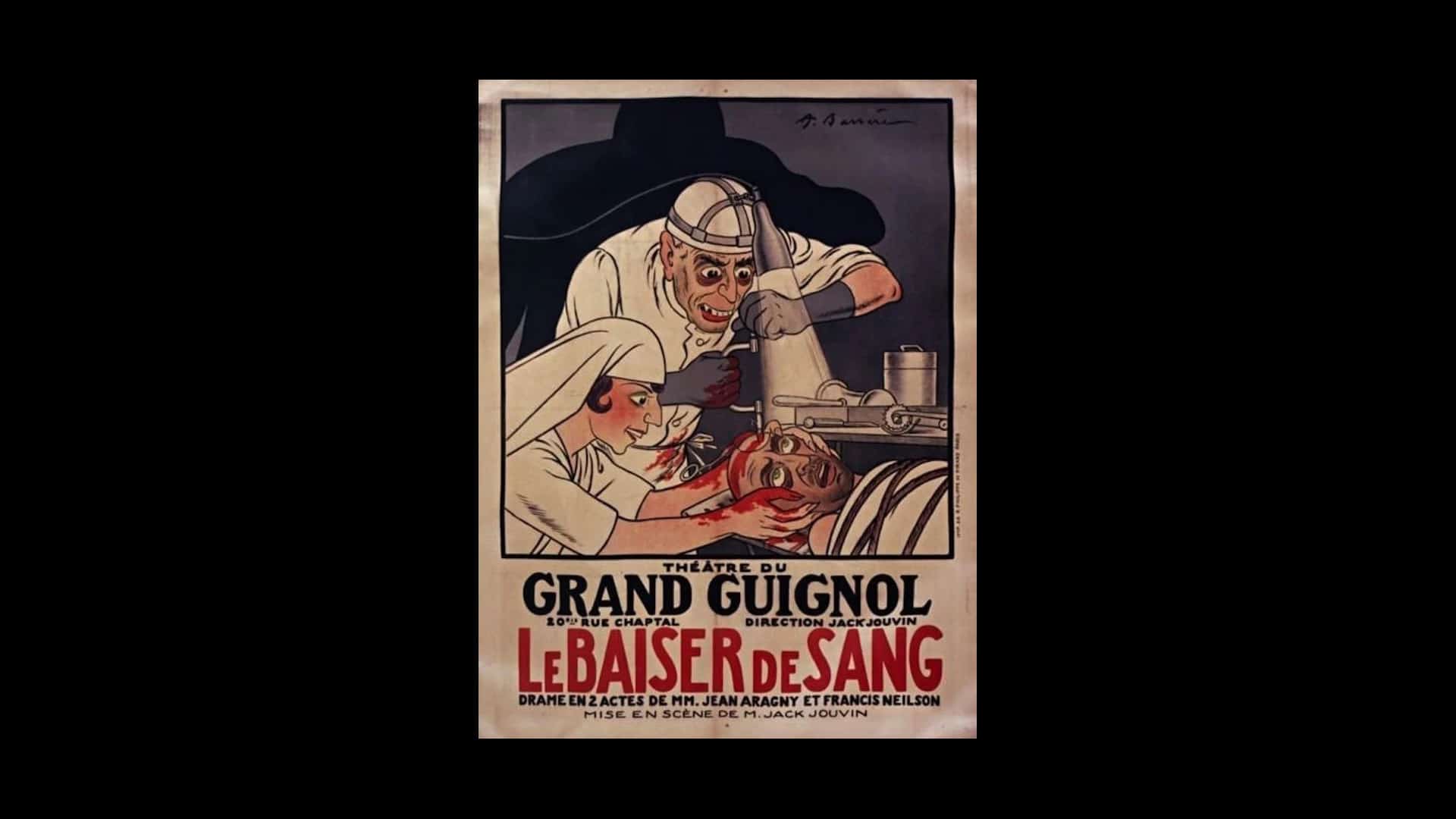
A precursor to gore cinema, the Grand Guignol theater exposes, through its form and themes, an ambiguous relationship to the body as a strange mechanic that must be restrained and controlled while demanding unbridled explosions. In the Paris of “La Belle Epoque”, the Grand Guignol was situated at the confluence of bourgeois and popular cultures, scientific innovations and social transformations.
He drew from it a fascination mixed with fear towards the contradictory and complementary dynamics of control and unleashing, as well as a deep anguish both towards the authorities, whose shackles crush the individuals with an implacable and inhuman rigor and towards the potential monster which hides in everyone and threatens to emerge if not tamed. It is in this soil of fear that the techniques of the “Scottish shower”, the timing of plays and the bloody special effects that have made the identity of this theater were developed.
This lecture will explore this dimension that cinema has largely inherited and focus on explaining how the Grand Guignol evolved from a subversive naturalistic theater to a festival of horrific and erotic thrills, and how its social and cultural context Guignol perspires through its plays and irrigated modern horror after its demise.
Jean-Charles Ray
1 November 2022
Read more
1 November 2022
Live From Miskatonic: Tom Holland in Conversation (Online, LA)
Tom Holland & Mark Miller
25 October 2022
Live From Miskatonic: Tom Holland in Conversation (Online, LA)
Please note this class has two options to participate: Live and virtual via simulcast.
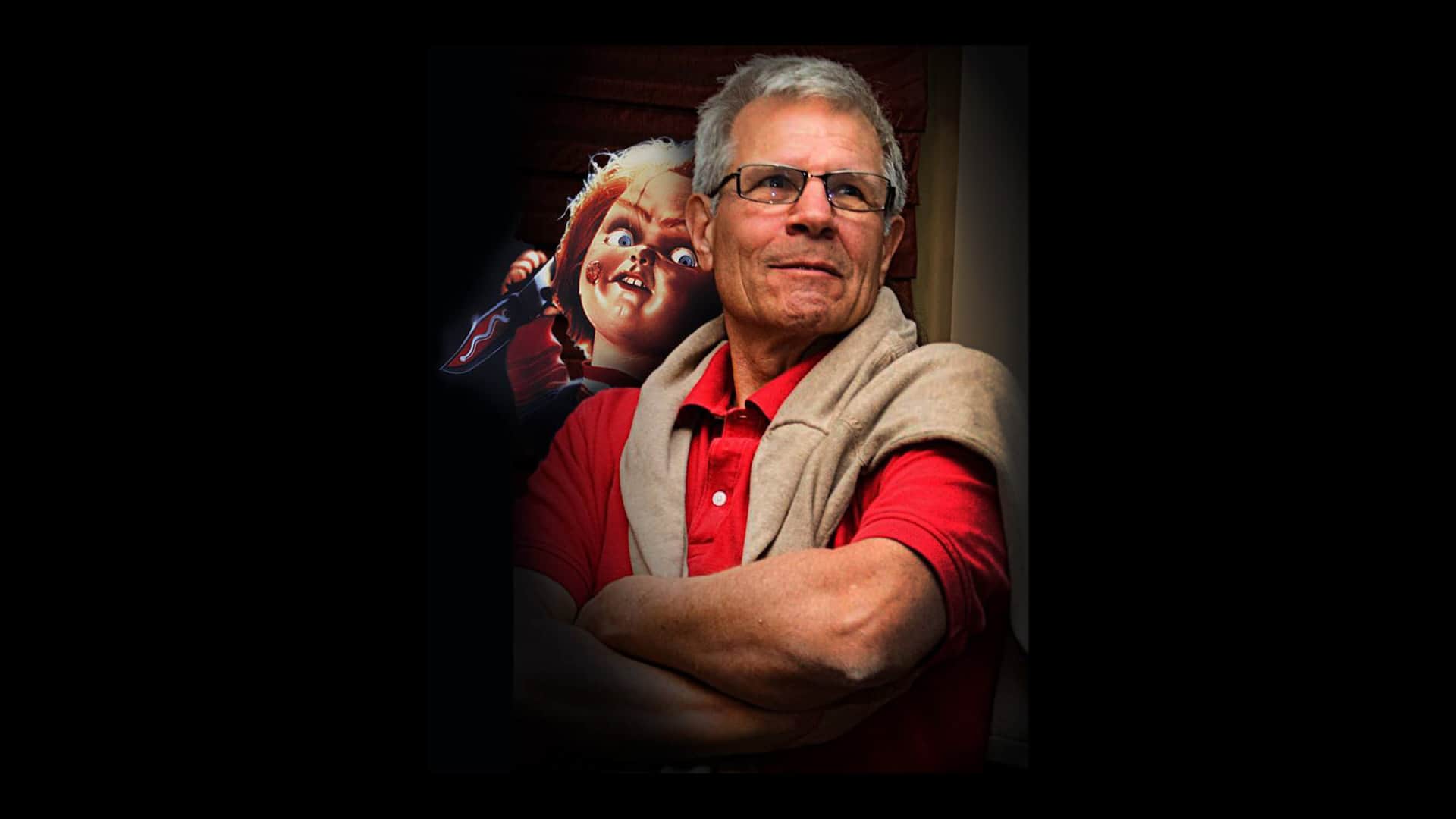
Join us for an intimate and entertaining evening with horror legend and irrepressible storyteller, Tom Holland. Hosted by Mark Miller.
Tom Holland is an icon of horror whose career has spanned 60 years.
As a young man watching Peter Cushing and Vincent Price, Holland fell in love with the horror genre, and worked tirelessly to position himself as one of its pioneers.
Starting his career as an actor and model, Holland soon found he had a gift for storytelling. Through tenacity, hard work, and the spark of genius, he carved a singular path, and paved the way for generations of future storytellers to make their mark, and break free from the labels assigned by others.
Holland has always been a workhorse. Throughout the ‘60s and early ‘70s, Holland appeared in over 200 commercials and television shows (Including the original The Incredible Hulk television series). He was hungry for more, however, and began directing Hasbro commercials. From there, he started writing screenplays. His breakout writing project was Psycho II. He had studied the genre and the craft, and it showed. He soon found, however, that a screenwriter’s life is fraught with anxieties. After despising the treatment some of his screenplays had received, eventually, he made the leap to director.
“I started directing in self-defense. I had a movie called Scream for Help [directed by Michael Winner and released in 1984] that didn’t turn out so well. I was so in love with the script for Fright Night, it was the most joyous writing experience I ever had. So, after the experience I had with Scream for Help I didn’t trust it in anybody’s hands except my own.”
Apparently, the world owes Michael Winner deep gratitude for Fright Night ultimately ending up in Holland’s hands. It was a long road from Holland’s first photoshoot as a fresh-faced model, to finding himself in the director’s seat on the set of Fright Night. In 1985, Holland’s professional journey was a road seldom traveled. Today, the multi-hyphenate artist is ubiquitous. As such, Holland’s experiences, career advice, and contributions to Hollywood (old and new), are unparalleled.
Miskatonic Los Angeles is frightfully thrilled to host an evening with an official master of horror; Tom Holland. Chronicling Holland’s pivot, a lonely path in the 1970s, we’ll take a walk from model to maestro; the duality of the delicate soul of the artist, and the beast yearning to break free.
—
If participating in the live/physical event, please check with your local health authority on the current requirements for masks and vaccination for attending live events.
If participating via live simulcast event – the class cannot be watched later, so please be sure you are available at the date and time the class is being offered in before registering.
Classes curated by Miskatonic Los Angeles are in Pacific Time.
Tom Holland & Mark Miller
25 October 2022
Read more
25 October 2022
I'm Afraid to Answer the Telephone: The Semiotics of Gender and the Telephone in Horror (NYC)
Kelly Boner
18 October 2022
I'm Afraid to Answer the Telephone: The Semiotics of Gender and the Telephone in Horror (NYC)
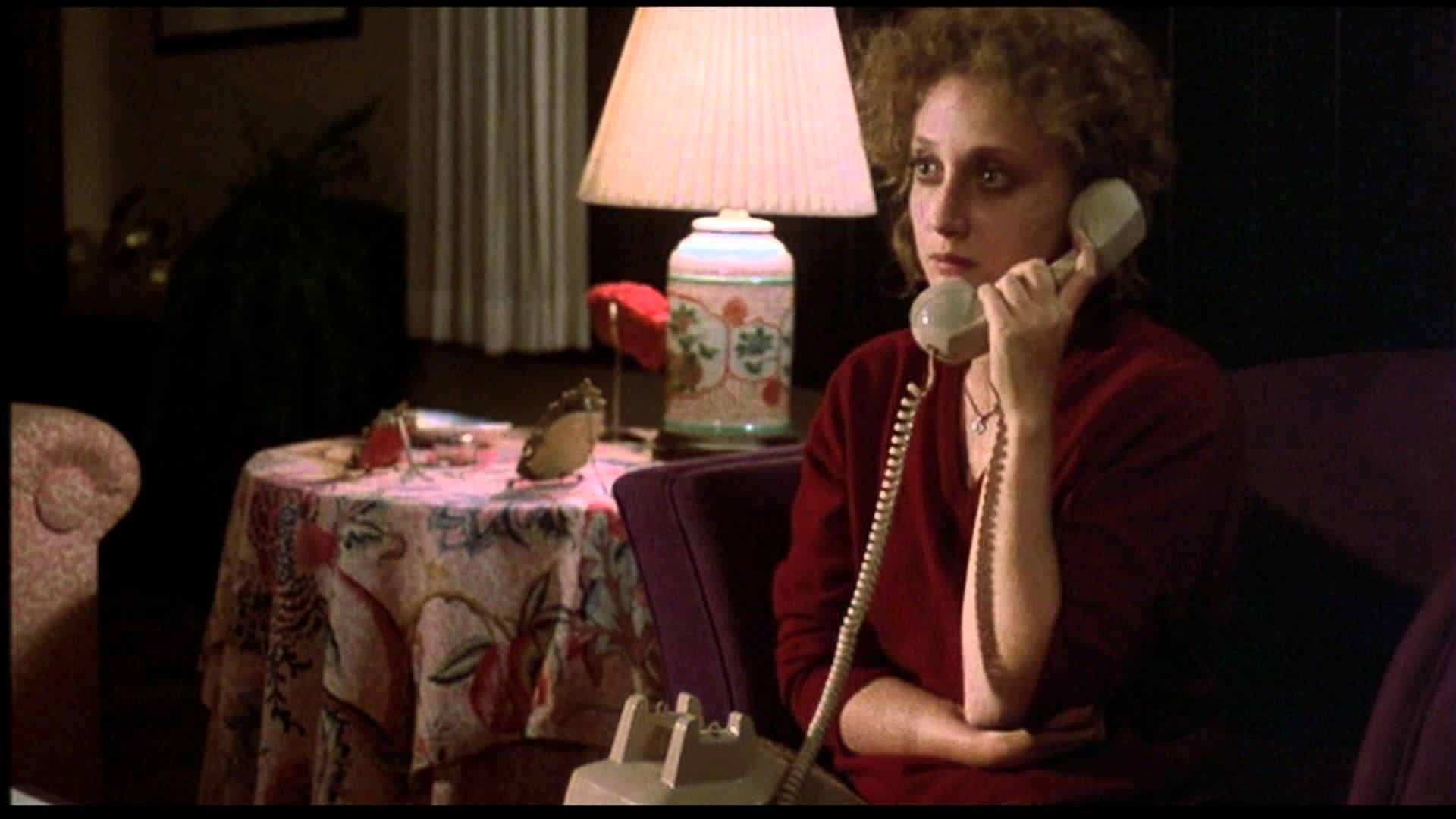
“THE CALL IS COMING FROM INSIDE THE HOUSE” is an oft-quoted line that reveals a relationship between horror, the home, and gender. From the muttering prank calls of Black Christmas (1974) to the frantic opening scene of Scream (2022), the telephone is often a source of intrusion and terror inflicted upon women in places culturally coded as feminine: places where, in theory, they should be safe).
In this lecture, we will examine the historical relationship between gender and the telephone, specifically the telephone as an instrument of femininity and domesticity. Through this historical grounding, we will explore a selection of 20th century American horror films (with exceptions from Italy, Korea, Japan, and the early 21st century) to dissect the ways in which the phone is weaponized against women specifically in arenas in which they are supposedly blameless or safe. By interrogating this relationship, we can start to construct an understanding of the phone as a site of technological anxiety while we simultaneously deconstruct our understanding of how women become victims, and why, in these films.
Since the number of films in which the telephone is a conduit of fear is remarkably vast, we will take some key detours throughout the lecture to consider other ways that gender and sexuality are policed by an unknown assailant using telephones and communications technology. As our technologies and understandings of gender evolve, so do the ways that our films reflect their attendant anxieties.
Reference texts include scholarly articles on the history of labor and telephone, as well as the role of telephone in film. Films discussed include (but are not limited to): SORRY WRONG NUMBER, DIAL M FOR MURDER, DISCONNECTED, BLACK CHRISTMAS (1974), PERSONAL SHOPPER, WHEN A STRANGER CALLS, LISA, BLACK SABBATH, SOMEONE’S WATCHING ME!, ARE YOU IN THE HOUSE ALONE?, DIAL: HELP, THE TAKING OF DEBORAH LOGAN, and the SCREAM franchise.
Kelly Boner
18 October 2022
Read more
18 October 2022
The Horror of the Void in The Spiral Staircase (Online)
Luke Robinson
18 October 2022
The Horror of the Void in The Spiral Staircase (Online)
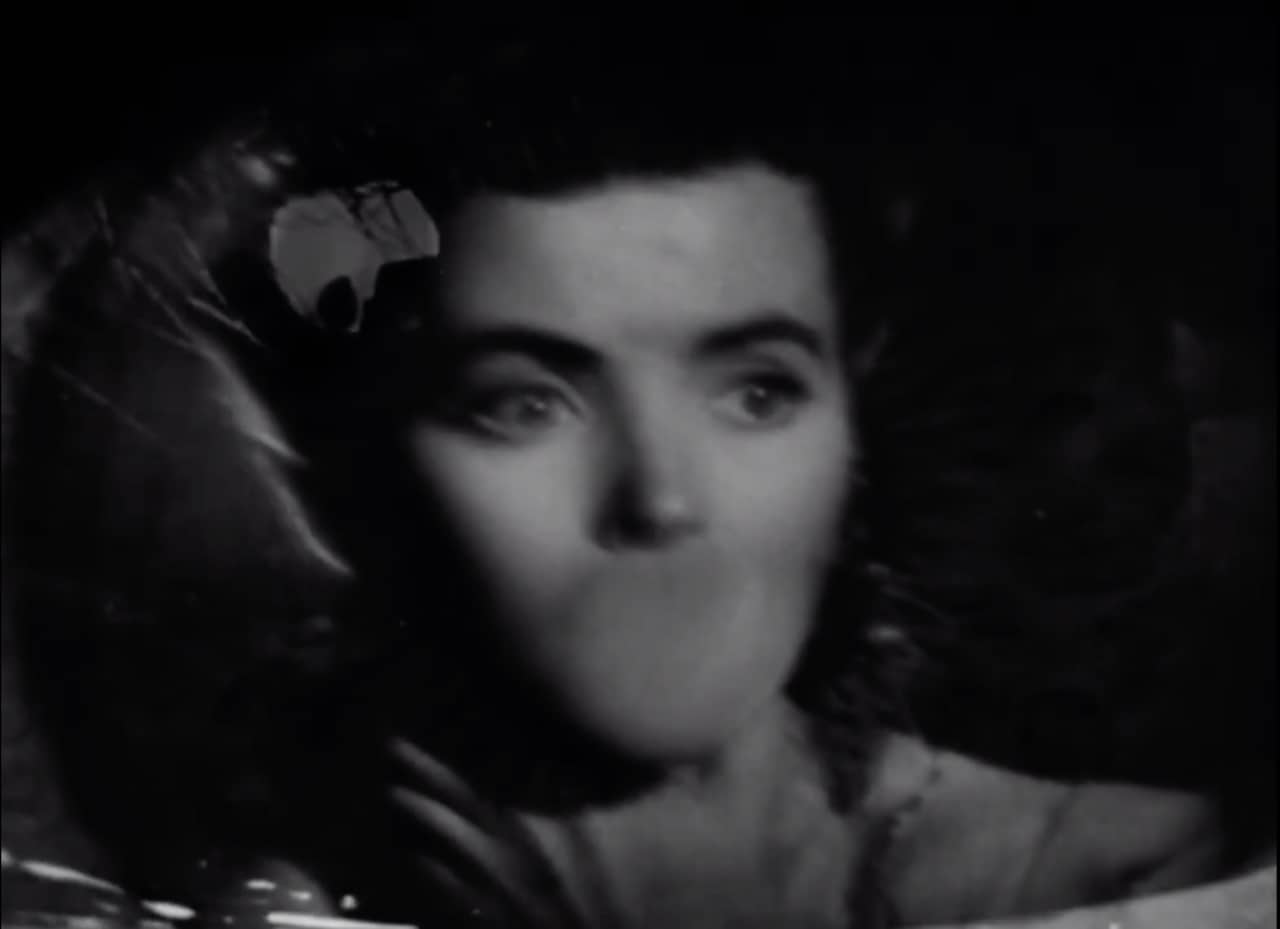
In a disturbing facial close-up of Helen (Dorothy McGuire) from the Robert Siodmak’s 1946 classical Hollywood film The Spiral Staircase the film’s viewer sees a serial killer’s mental projection of an erased area—a void—onto Helen’s face. In this this shot, taken from the serial killer’s point of view, the film viewer is aligned with the serial killer’s misogynist and violent view of women.
To establish and conceptualise the nature of the horror of the void that violently marks Helen’s face in Siodmak’s film this class considers a number of theories of the void and erasure, including that of the vanishing point in Renaissance art and also Gilles Deleuze’s arguments about facial effacement in his cinema books.
To identify what is happening in this close-up from a 1940s gothic woman’s film, this class also spends some time examining how close-ups operate in three other film examples: D.W. Griffith’s 1911 melodrama Enoch Arden, Ingmar Bergman’s 1966 modernist art film Persona, and Rouben Mamoulian’s 1931 horror film Dr. Jekyll and Mr. Hyde.
Based on this discussion, we, in this class, explore how the void—as representative of patriarchal violence—is a structuring principle of what is, and what is not, visible in The Spiral Staircase. We also learn how to identify acts of resistance to visible and invisible forms of patriarchal violence that are a source of horror for Helen and the other female characters in this film.
Hello Miskatoans,
Due to unforeseen circumstances, we have to postpone this lecture (originally scheduled for October 4th), THE HORROR OF THE VOID IN THE SPIRAL STAIRCASE, to Tuesday, October 18th, 7:30pm Eastern time.
Your zoom registration will still be effective.
If you have purchased an online pass or ticket for this event and are unable to attend the live lecture on the 18th, we can offer a complimentary viewing of the VOD once it is available on our Vimeo channel. Please email us at miskatonicihs@gmail.com after the 18th, and we will send you the information for your complimentary viewing.
We sincerely apologize for any inconvenience,
The Miskatonic Institute of Horror Studies
Luke Robinson
18 October 2022
Read more
18 October 2022
An Exploration of the Evolution of the Monstrous-Feminine (London)
Bruna Foletto Lucas
13 September 2022
An Exploration of the Evolution of the Monstrous-Feminine (London)
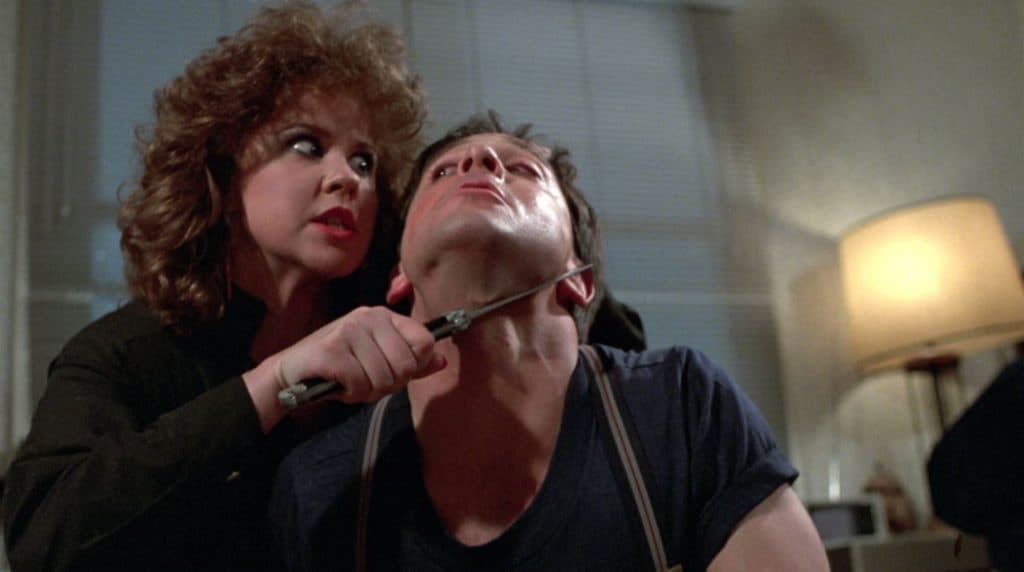
From the amoral primeval mother in Aliens (1986), the vampire in Dracula’s Daughter (1936), the witch in Carrie (1976), and the animal in Cat People (1942), to the deadly femme castratrice in I Spit on Your Grave (1978), the aged psychopath in What Ever Happened to Baby Jane? (1962) and castrating mother in Psycho (1960) – the monstrous-feminine has been a staple in Western horror cinema since its beginning.
In horror scholarship, the monstrous-feminine has been explored in a myriad of arguments, most of which stem from Freudian theories. Psychoanalytical theories argue that the female monster is born from sexual difference and is used as a way for male filmmakers to negotiate and eventually soothe their fears regarding the female body. A comprehensive (but not exhaustive) investigation of the monstrous-feminine confirms most of these theories, but leaves one question unanswered: what happens with the monstrous-feminine when directed by a woman?
It is precisely this questions that this talk aims to examine. Through an exploration of the monstrous-feminine from the 1930s onwards, the first part of this talk will establish the stereotypes, archetypes and tropes that have filled Western horror cinema and link them to horror scholarship theories. These will pose as counterpoints to which compare the role of the monstrous-feminine when written and directed by women in films from the 2000s onward.
The second part of this talk will focus on the subversive reclamation of the female monster as seen in films such as Jennifer’s Body (2009), A Girl Walks Home Alone at Night (2014), Raw (2016) and Revenge (2017) while looking at recent horror theories that challenge the ahistorical psychoanalytical theories mentioned in the first part of the talk.
Bruna Foletto Lucas
13 September 2022
Read more
13 September 2022