MIS
KA
TON
IC
Institute of
Horror Studies
Archive
Archive
CANCELLED: Hell, Purgatory, and Otherworlds In Horror Films (Online)
D. W. Pasulka
5 December 2023
CANCELLED: Hell, Purgatory, and Otherworlds In Horror Films (Online)
This class has been cancelled and replaced with Vampirism Gone Viral: Medical Misinformation and Vaccine Hesitancy. Ticket buyers and passholders have been contacted via email.
Horror always reflects the perils and anxieties of its own time, and yet in spite of decades of innovation in popular media, the genre has never strayed far from that ur-scape of terror and torment: A place called Hell. Dr. D. W. Pasulka will take on the role of Virgil, leading you through a tour of the variegated hells, purgatories, and otherworlds in select horror films and recent media. We will journey through the sadomasochistic dungeons of Clive Barker’s HELLRAISER (1987); the existential techno nightmare of EVENT HORIZON (1997); the Basque fantasy world of ERREMENTARI (2017); and the fact-based (however fantastical) B- movie franchise THE CONJURING, among other media. Along the way we will learn about the historical precedents for these images. The Catholic view of a punishing afterworld has shifted in meaning and consequence over time; there is the latter day conceit that Purgatory is a spiritual “condition of existence”, and there is the older idea of its absolutely material reality. This course will explore why the specific aesthetic derived from medieval Catholicism survives today and forms a template that informs much of the horror genre.
D. W. Pasulka
5 December 2023
Read more
5 December 2023
Vampirism Gone Viral: Medical Misinformation and Vaccine Hesitancy (Online)
Leah Richards
5 December 2023
Vampirism Gone Viral: Medical Misinformation and Vaccine Hesitancy (Online)
Vampires are carriers for the contemporary anxieties of the cultures that created them. The modern vampire originates in the 1980s, a decade defined in no small part by HIV/AIDS, when society was preoccupied with blood as the medium of monstrosity, and misunderstanding spread like a virus. One cannot demand medical accuracy from narratives predicated on blood-drinking undead aristocrats, but one might expect more from actual humans; however, when threatened, the many people abandon scientific evidence in favor of panicked fear-mongering even in relation to, for example, vaccines for preventable childhood illness.
This lecture will consider how post-AIDS crisis vampires in film and television, from the time of BLADE (1998) to the cusp of COVID-19, have reflected our fears of infection, contagion, and containment. Examples will include the television series American Horror Story: Hotel and The Strain, the 2006 TV movie version of DRACULA, and the films BLADE, THIRST, and I AM LEGEND. These narratives utilize a layperson’s scientific awareness to identify vampirism as a disease—a natural condition that doctors, pathologists, geneticists, and the occasional hematologist mutter about in their laboratories as the virus (or gene, or bacteria, or some combination thereof) behaves in ways that no virus ever has. These fantastic contagions are analogous to the real-world monsters of weaponized misinformation, scientific denialism, and vaccine hesitancy.
Leah Richards
5 December 2023
Read more
5 December 2023
Ferocious Fatherhood: Representations of Fatherhood and Masculinity in American horror cinema, 1970-1979 (London)
Lakkaya Palmer
21 November 2023
Ferocious Fatherhood: Representations of Fatherhood and Masculinity in American horror cinema, 1970-1979 (London)
In early American horror cinema, the primary antagonist was always positioned as an external or non-human threat in films like The Curse of The Cat People (1944), Creature From The Black Lagoon (1954), The Werewolf (1956), Dracula (1958), and The Mummy (1959). However, in the 1960s, with the release of Alfred Hitchcock’s Psycho (1960), the threat was now recognised not as external but as coming from within. The monster’s identity was now human, and more terrifyingly, the monster was now part of the family. In American horror films of the 1970s, in particular, came a rise in the representation of bad fathers. These fathers range from the “father as a cannibal” (The Texas Chainsaw Massacre, 1974; The Hills Have Eyes, 1977);, the father as Satan (The Omen, 1976), the father as possessed (The Amityville Horror, 1979) to the father displaying monstrosity when he is absent (The Exorcist, 1973; Carrie, 1976). These fathers are positioned as figures of contempt rather than figures to be praised and revered.
These nihilistic representations of fatherhood seemed to reflect the societal changes of the time, as the “traditional nuclear family” and traditional family model were seen as prone to collapse. The structures had grown weaker due to a range of societal factors, including the emergence of second-wave feminism challenging patriarchal authority and nihilism over the state of the economy as Vietnam ended and gas prices soared. In turn, traditional patriarchal institutions such as the church, the government, and even the family were seen as collapsing. The Ferocious Father was born out of the power of the patriarch, which started to wane.
This talk aims to showcase how the complexity of the portrayals of fatherhood in 1970s American horror cinema showcases the cultural anxieties and social changes of the era and the multifaceted nature of fatherhood itself.
Lakkaya Palmer
21 November 2023
Read more
21 November 2023
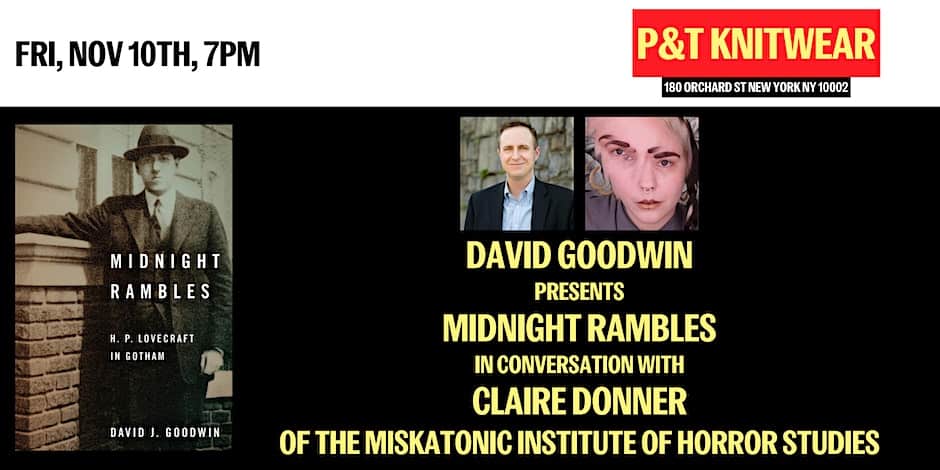
Midnight Rambles: H.P. Lovecraft In Gotham - a live conversation with author David J. Goodwin (NYC)
David J. Goodwin
10 November 2023
Midnight Rambles: H.P. Lovecraft In Gotham - a live conversation with author David J. Goodwin (NYC)
New York City event space P&T Knitwear welcomes David Goodwin for a live, in-person discussion of his new book Midnight Rambles—a micro-biography of H.P. Lovecraft and his love–hate relationship with New York City—along with an audience Q&A and book signing.
Midnight Rambles presents a chronological micro-biography of Lovecraft’s New York years, emphasizing Lovecraft’s exploration of the city environment, the greater metropolitan region, and other locales and how they molded him as a writer and as an individual. Drawing from primary sources (letters, memoirs, and published personal reflections) and secondary sources (biographies and scholarship), Midnight Rambles develops a portrait of a talented and troubled author and offers insights into his unsettling beliefs on race, ethnicity, and immigration.
David will be joined in conversation by Claire Donner, the Online Branch Director of the Miskatonic Institute of Horror Studies. After the talk, David will sign copies of his book.
David J. Goodwin
10 November 2023
Read more
10 November 2023
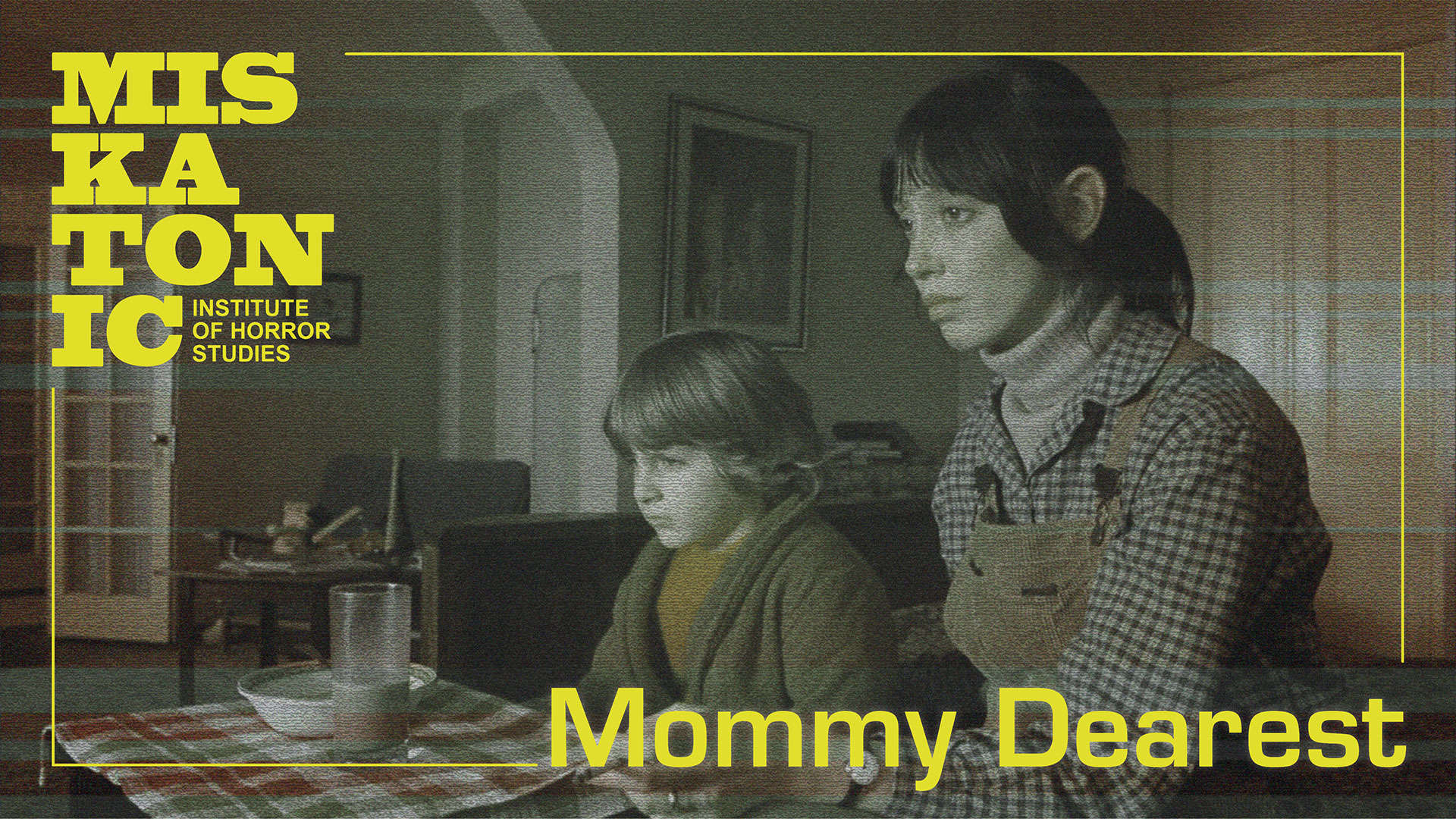
MOMMY DEAREST: Dressing Women of a Certain Age In Horror Films (Online)
Jolene Marie Richardson
7 November 2023
MOMMY DEAREST: Dressing Women of a Certain Age In Horror Films (Online)
With the dissolution of the Hayes Code in 1968, genre cinema enjoyed a newfound freedom to explore the unique horrors of motherhood. As women underwent bodily changes, there was continuous societal pressure to maintain feminine ideals: A woman must be sexually attractive—and attractive often means youthful. A mother, however, is definitionally mature, and maturity lies outside the bounds of conventional female beauty standards. This catch-22 plays out in films such as ROSEMARY’S BABY(1968), THE EXORCIST (1973), THE SHINING (1980), and even MOMMIE DEAREST (1981), in which the real-life horrors of child abuse, addiction, and ageism take the place of supernatural horrors. In these films, the costume designer becomes a kind of hybrid psychologist-detective, working from a character’s inner life, as well as her cultural context. How does clothing inform us about the protagonist’s state of mind, her stage of life, and the role society wants her to play? And how does the horror genre especially reflect on the challenges of aging, motherhood, and shifting sexual values? Please join costume designer and fashion historian Jolene Marie Richardson for this discussion of fashion as a form of hypertext that conveys essential information about the sociological content of a film.
Jolene Marie Richardson
7 November 2023
Read more
7 November 2023
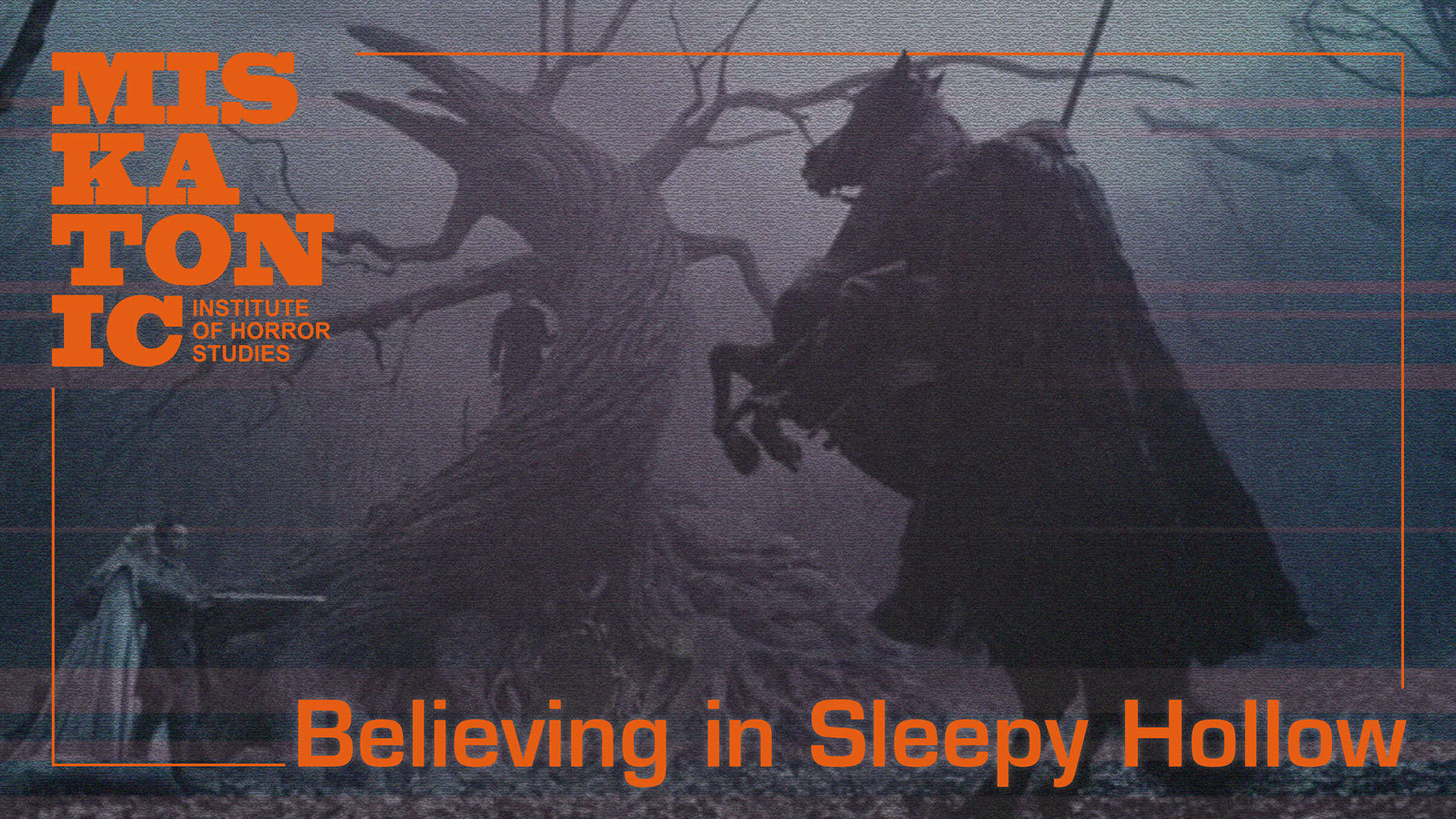
Believing In Sleepy Hollow (Online)
Steve A. Wiggins
17 October 2023
Believing In Sleepy Hollow (Online)
Washington Irving’s short story “The Legend of Sleepy Hollow” is a classic of American horror literature. Since its publication in 1820, the tale of Ichabod Crane and the Headless Horseman has been adapted multiple times for both the big and small screens, variously highlighting the author’s original themes of greed, chivalry, and folk belief. In 1999, Tim Burton took a different tack, building upon Irving’s foundation an allegory for the spiritual debate that still pervades American culture. The director’s first full-blooded horror film re-frames Crane as a skeptical police investigator sent to a Sleepy Hollow gripped by superstitious fears and religious paranoia. As the twin dogmas of rationalism and Christianity pitch their battle, the chaotic power of witchcraft undermines them both. Thus Burton’s adaptation offers a thoughtful and frightening reflection on the ideological character of America itself—a country that still struggles with an inner conflict between spiritual faith and scientific enlightenment. From this perspective, the folkloric tale of Sleepy Hollow may be as relevant now as it was at its birth, almost 200 years hence.
Steve A. Wiggins
17 October 2023
Read more
17 October 2023
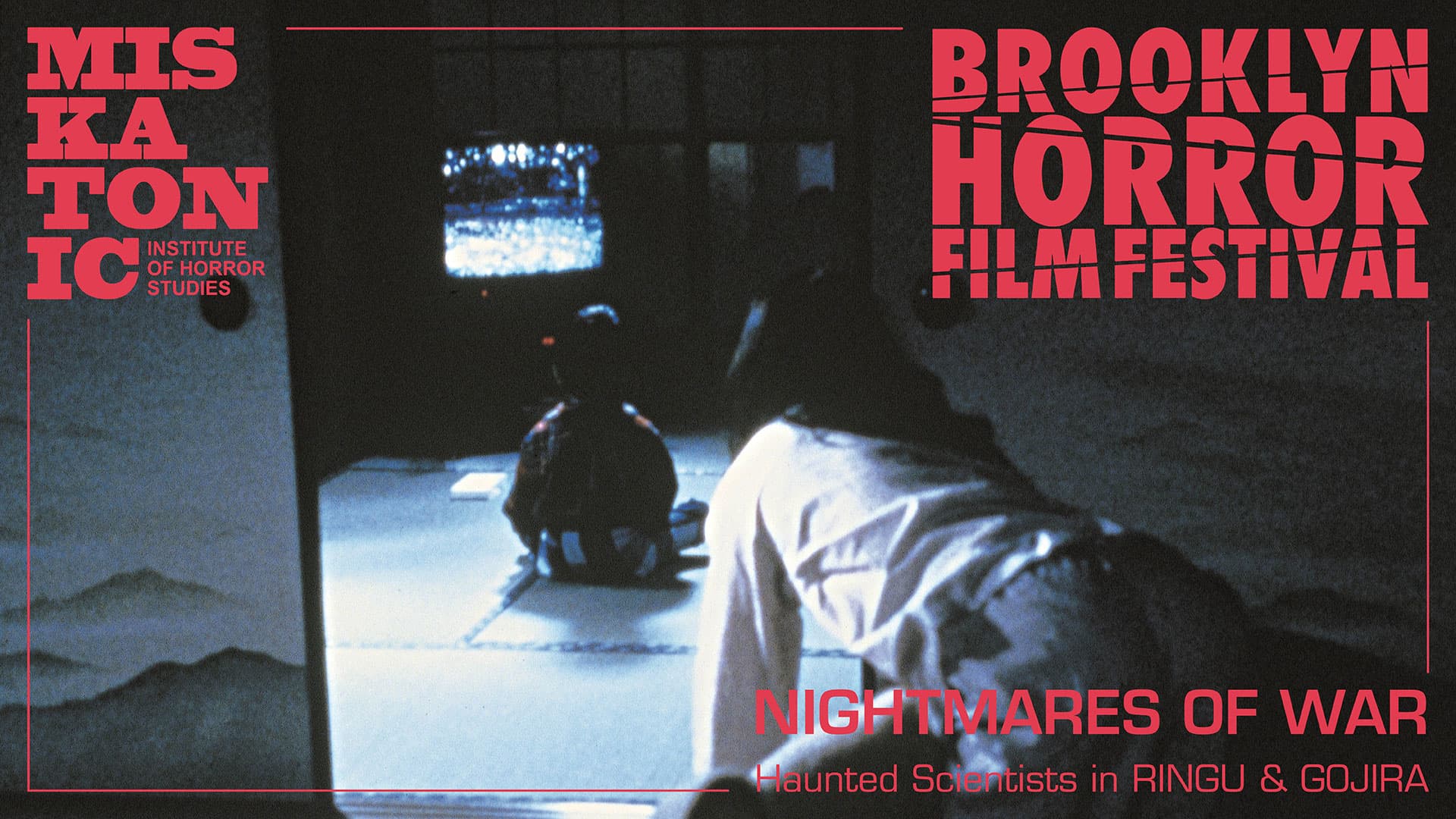
Nightmares of War: Haunted Scientists in RINGU and GOJIRA (NYC)
Sigmund Shen
16 October 2023
Nightmares of War: Haunted Scientists in RINGU and GOJIRA (NYC)
NOTE: This live, in-person lecture will take place at the Nitehawk Cinema in Williamsburg, Brooklyn.
Miskatonic is pleased to present the latest offering from our ongoing collaboration with the Brooklyn Horror Film Festival with this lecture on horror’s ability to interrogate national traumas and haunted histories, spotlighting two classics of Japanese cinema. Despite recent Hollywood portrayals of the Manhattan Project (OPPENHEIMER) and Operation Paperclip (INDIANA JONES AND THE DIAL OF DESTINY), one controversial World War II-era endeavor remains largely taboo and obscure: the medical experiments conducted on human test subjects by Unit 731 of the Imperial Japanese Army.
The fight to bring this subverted history to light may be reflected in certain fantastical post-war fictions—see especially the contagious curse in Hideo Nakata’s RINGU (1999), and the nuclear monstrosity of Ishiro Honda’s GOJIRA (1954), threats that rise up from dark depths to assail innocent, ignorant, or irresponsible victims. In this talk, Professor Sigmund Shen identifies these films as allegories for the struggles of Japanese historians, journalists, and scientists to reckon with memories of this troubled past.
Shen’s comparative analysis of these classic genre films will be supported by an in-depth examination of their historical underpinnings, and a psychoanalytic inspection of their symbolic and emotional content, ultimately highlighting the psychological and political functions of horror cinema.
30% of ticket proceeds will be donated to The Sunrise Movement because the fossil fuel industry is the real giant monster.
Sigmund Shen
16 October 2023
Read more
16 October 2023
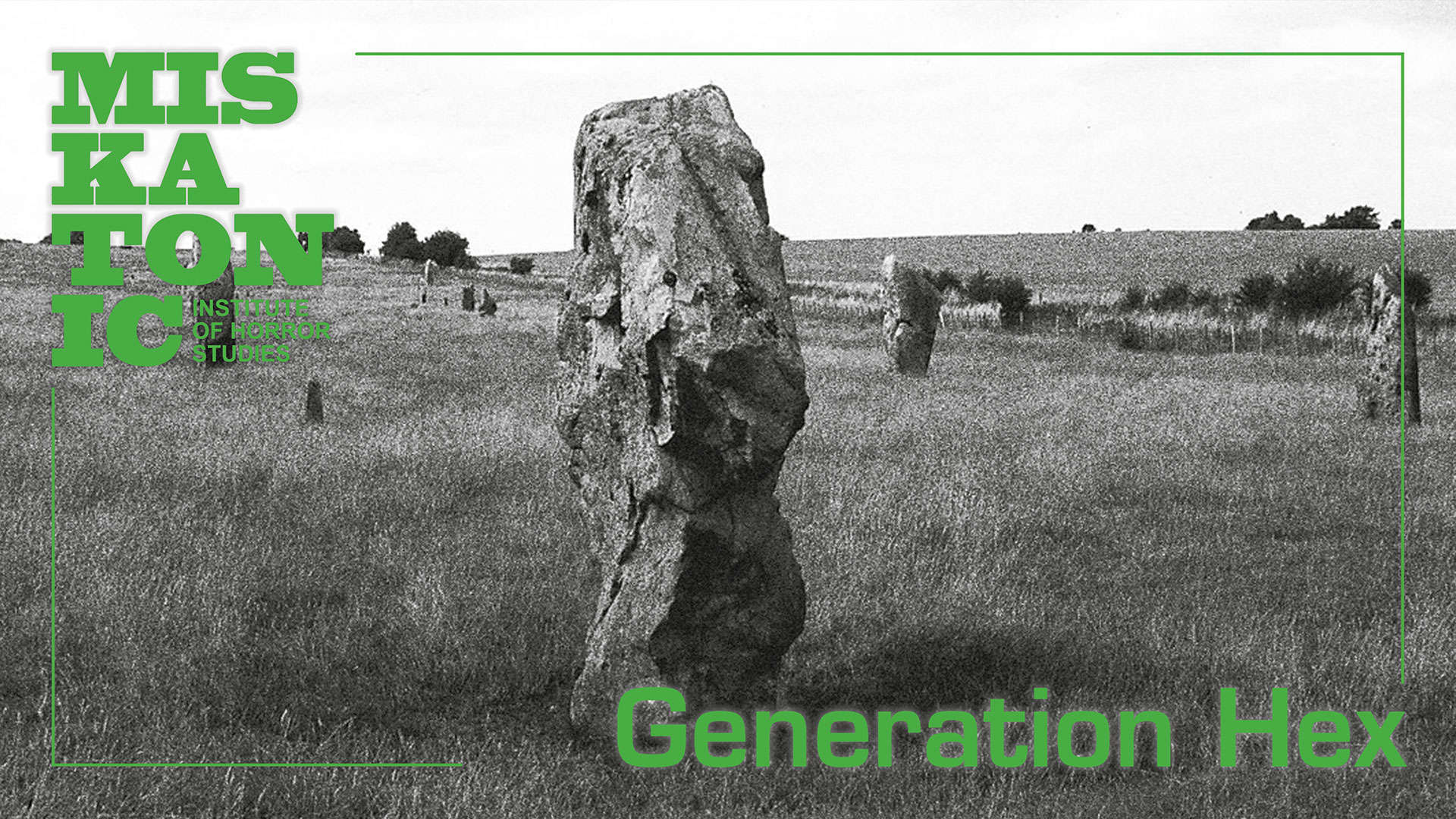
Folklore, folk horror and generation hexed (London)
Dr. Diane A. Rodgers
10 October 2023
Folklore, folk horror and generation hexed (London)
Folklore brings us tales of witches, ghosts and ghouls, myths and legends: stories like these are how we make sense of the world around us and shape our common perceptions. How these are communicated, whether in film or TV or online, can influence us in terms of our beliefs, actions and understanding of the world, but it doesn’t mean they are literally true. Folklore is a core element of folk horror that is often overlooked: the roots of horror are often firmly based in folk tales, myth and legend. Horror is indeed the stuff of folklore which includes unofficially recorded histories, campfire tales and urban legend. But, whilst the schlock and gore antics of villains like Freddy Krueger and Jason Vorhees may have folkloric origins in satanic panics and urban legends, the films in which such characters appear are not necessarily regarded as folk horror. Although the use of folklore is absolutely integral to folk horror narratives, conversely, not all horror is folk horror. Folk horror is not even always horrific or merely restricted to the medium of film: its eerie dissonance can be observed extending beyond boundaries of genre and medium. Part one of this class explores the conventions of what we now think of as film and television folk horror, and discusses folk horror as part of a broader cultural context arising from 1970s popular culture and its continued impact on filmmakers today.
Part two of this class more specifically explores British 1970s television, which itself was bursting at the seams with weirdness, eeriness, supernatural folklore and contemporary legend. The effect of ‘wyrd’ programming on those who grew up with it should not be underestimated in terms of its influence on Generation X, (which Bob Fischer aptly terms the ‘haunted’ generation) referred to here as Generation Hexed. The importance and value of children’s television has been an area traditionally overlooked, which modern scholars aim to redress not only in relation to screen studies but also with reference to folklore studies and wider social and cultural implications. This paper considers why supernatural folklore was so prevalent in 1970s media, why it emerged then, and how it has been represented on screen. Using Children of the Stones as a case study example of “the scariest programme ever made for children”, I look at how television has horrified children and the ways in which such programming impacts upon generations of audiences far beyond the reach of television itself.
Dr. Diane A. Rodgers
10 October 2023
Read more
10 October 2023
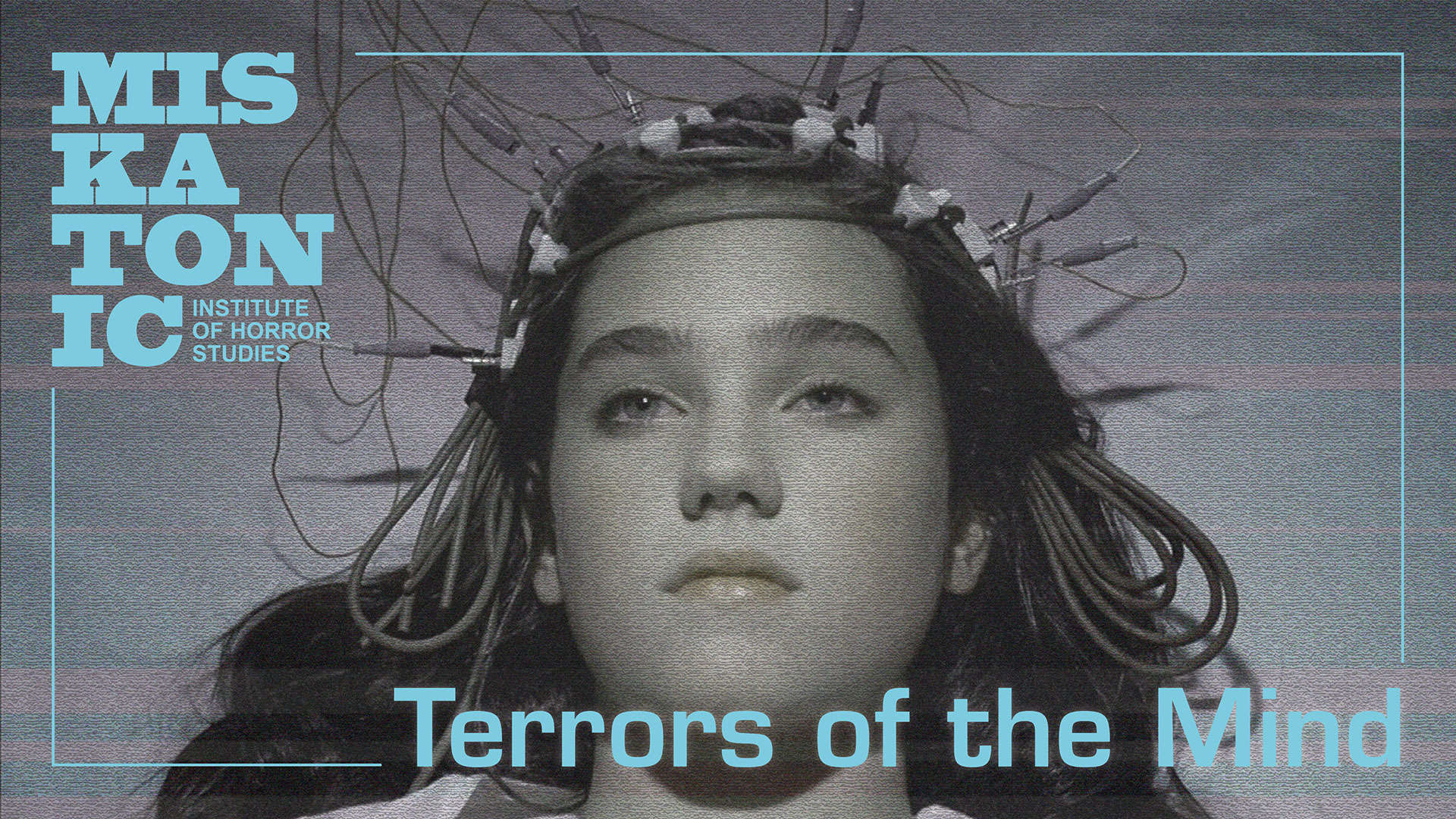
Terrors of the Mind: Edge Science, Cold War Fears and Weaponized Psychic Savants in Horror Films of the 1970's and 80's (Online)
In the 1970s and ‘80s, excitement about the study of the paranormal spread across the globe. Curiosity about supernormal phenomena permeated popular culture in the form of the New Age movement, but neither academia nor world governments were immune to the craze for extrasensory perception and psychokinetic power. Fueled by escalating Cold War tensions, a quiet arms race began on both sides of the Iron Curtain, and eventually this ostensibly “Top Secret” research bled out into civilian life. The figure of the weaponized psychic savant has since became a common archetype in the science fiction and horror genres. This class will examine the historical facts that inspired films such as THE FURY (1978), THE MEDUSA TOUCH (1978), SCANNERS (1981), and PHENOMENA (1985), in which scientific experimentation exposes, and often encourages, the deadly potential of psychic abilities. We will also develop a framework for exploring the symbiosis between the pop cultural trends these films represent, and various corporate, government, and NGO-funded programs. This approach will illuminate the ways in which declassification of official documents can shed new light on familiar cultural tropes.
David Metcalfe
19 September 2023
Read more
19 September 2023
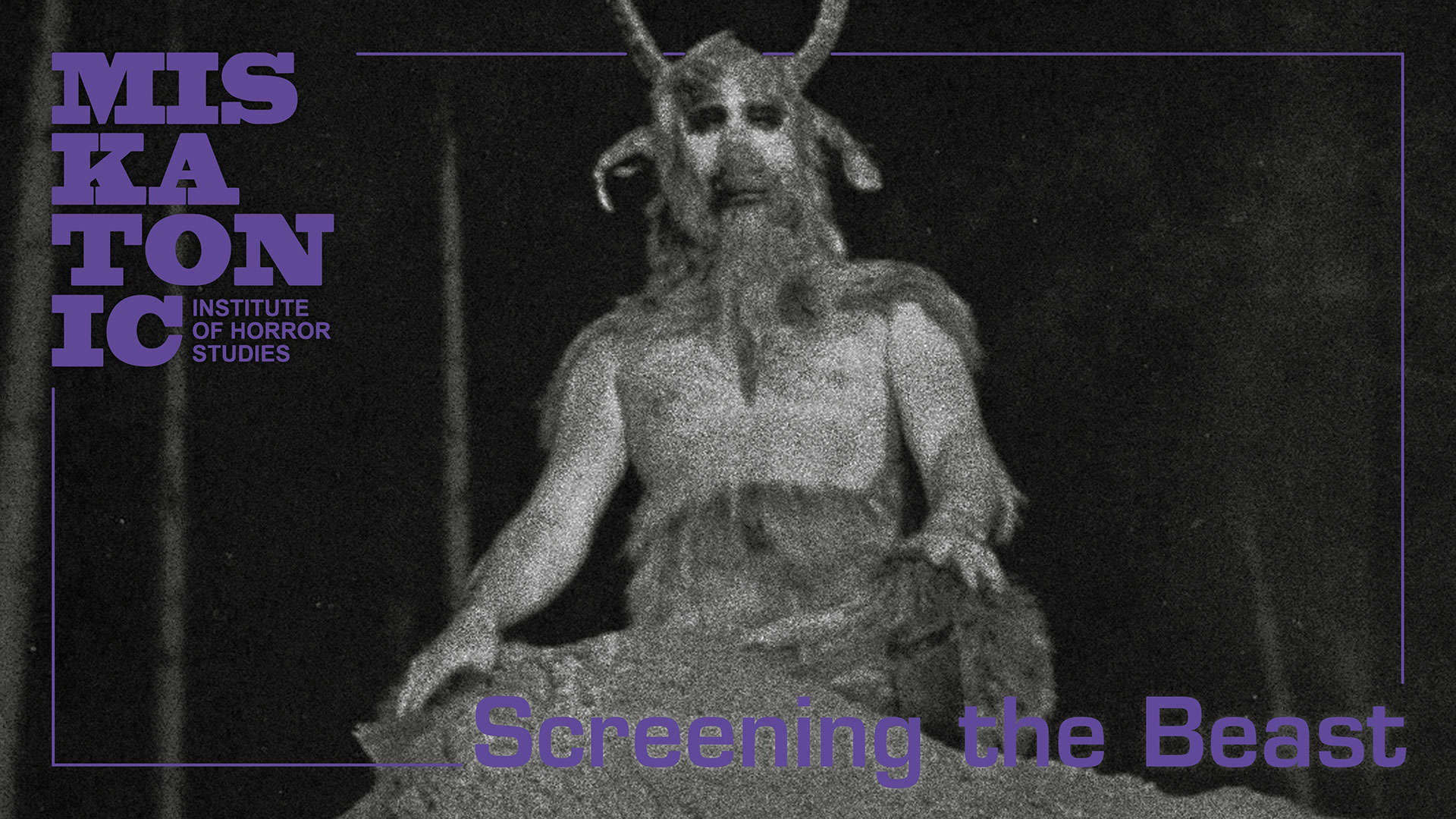
Screening the Beast: Aleister Crowley, Dennis Wheatley and the Glamour of Evil (London)
Phil Baker
12 September 2023
Screening the Beast: Aleister Crowley, Dennis Wheatley and the Glamour of Evil (London)
Aleister Crowley, prophet of sex magick and self-styled “Beast 666”, had a starring role in the occult revival of the late 1960s and early 1970s, appearing on the cover of the Beatles’ Sergeant Pepper and inspiring the urbanely evil character of Mocata in Hammer’s 1968 film The Devil Rides Out.
This talk will consider the real life of Crowley, a late decadent rooted in the Victorian deviance of the 1890s, and his transformation in the work of Dennis Wheatley, the massively bestselling popular novelist whose black magic novels created a strangely seductive and luxurious image of Satanism.
In reality Wheatley was more interested in politics than magic, and his original Devil Rides Out had a 1934 propaganda subtext of friendship with Nazi Germany, deftly elided from Richard Matheson’s screenplay, while Crowley’s Nietzschean creed of “Thelema” was – to borrow the title of Leni Riefenstahl’s 1935 film – his own “Triumph of the Will”. Considering Crowley’s public persona and Hammer’s much-loved film, this talk will suggest that in both cases the real horror lurks offstage.
Phil Baker
12 September 2023
Read more
12 September 2023