MIS
KA
TON
IC
Institute of
Horror Studies
Speakers
Speakers
Johnny Walker

Johnny Walker is Associate Professor of Media and Film, and a founding member of the Horror Studies Research Group, at Northumbria University, UK. He has published widely on the social and industrial contexts of horror media including, most recently, essays on ‘Activist Horror Film’, shot-on-video horror, the horror films of Roberta Findlay, and the fiction of Shaun Hutson. He is editor of the second edition of Peter Hutchings’ Hammer and Beyond: The British Horror Film (Manchester University Press, 2021) and author of both Rewind, Replay: Britain and the Video Boom, 1978-92 (Edinburgh University Press, 2022) and Contemporary British Horror Cinema: Industry, Genre and Society (Edinburgh University Press, 2016). From 2021-23 he was the Principal Investigator on the AHRC-funded Fellowship, ‘Raising Hell: British Horror Film of the 1980s and 1990s’.
Biographic Note
Johnny Walker is Associate Professor of Media and Film, and a founding member of the Horror Studies Research Group, at Northumbria University, UK. He has published widely on the social and industrial contexts of horror media including, most recently, essays on ‘Activist Horror Film’, shot-on-video horror, the horror films of Roberta Findlay, and the fiction of Shaun Hutson. He is editor of the second edition of Peter Hutchings’ Hammer and Beyond: The British Horror Film (Manchester University Press, 2021) and author of both Rewind, Replay: Britain and the Video Boom, 1978-92 (Edinburgh University Press, 2022) and Contemporary British Horror Cinema: Industry, Genre and Society (Edinburgh University Press, 2016). From 2021-23 he was the Principal Investigator on the AHRC-funded Fellowship, ‘Raising Hell: British Horror Film of the 1980s and 1990s’.

Pete Walker
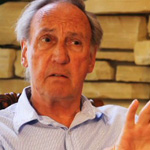
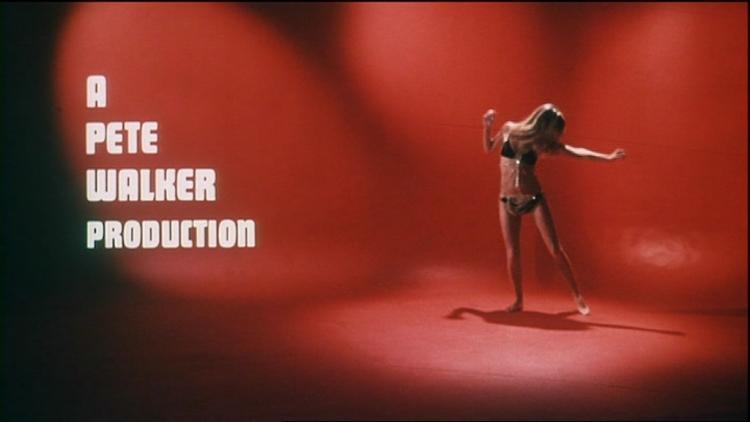
The son of musical comedy performer Syd Walker, Pete himself started as a stand-up in a Soho strip club. After acting in low-budget British programme-fillers, he set up his own company in the early 1960s, producing 8mm glamour films. Using the money from this highly lucrative enterprise, he graduated to 35mm feature production, making films like Strip Poker (1968) and Cool it Carol! (1970), which marked Robin Askwith's soft porn debut. Under his own 'Peter Walker (Heritage)' brand, he even experimented with 3-D technology, in The Four Dimensions of Greta and The Flesh and Blood Show (both 1972).
Finding the 'adult film' genre repetitive, he moved to horror, although he preferred the term 'terror films' as he didn't feel any particular affinity for the genre, despite being aware of its potential. Exploring the themes of abuse of authority and the widening generation gap that he perceived in society, Walker's best films were scathing indictments of British institutions: in House of Whipcord (1973), a couple running a corrective prison torture the inmates, Frightmare (1974) saw a couple released from a mental institution luring people to their farm and murdering them, while The House of Mortal Sin (1975) depicted a Catholic priest terrorising a young girl). While most critics savaged the films, the Monthly Film Bulletin found more in them than just exploitation, comparing House of Whipcord to Michael Powell's psychological thriller Peeping Tom (1960). His only non-independent film was also his last: the Golan-Globus production House of the Long Shadows (1982), an adaptation of the classic Seven Keys to Baldpate, was a fitting final production, a nostalgia piece starring horror veterans Peter Cushing, Christopher Lee and Vincent Price. After abandoning film-making, Walker went into property development.
Biographic Note
The son of musical comedy performer Syd Walker, Pete himself started as a stand-up in a Soho strip club. After acting in low-budget British programme-fillers, he set up his own company in the early 1960s, producing 8mm glamour films. Using the money from this highly lucrative enterprise, he graduated to 35mm feature production, making films like Strip Poker (1968) and Cool it Carol! (1970), which marked Robin Askwith's soft porn debut. Under his own 'Peter Walker (Heritage)' brand, he even experimented with 3-D technology, in The Four Dimensions of Greta and The Flesh and Blood Show (both 1972).
Finding the 'adult film' genre repetitive, he moved to horror, although he preferred the term 'terror films' as he didn't feel any particular affinity for the genre, despite being aware of its potential. Exploring the themes of abuse of authority and the widening generation gap that he perceived in society, Walker's best films were scathing indictments of British institutions: in House of Whipcord (1973), a couple running a corrective prison torture the inmates, Frightmare (1974) saw a couple released from a mental institution luring people to their farm and murdering them, while The House of Mortal Sin (1975) depicted a Catholic priest terrorising a young girl). While most critics savaged the films, the Monthly Film Bulletin found more in them than just exploitation, comparing House of Whipcord to Michael Powell's psychological thriller Peeping Tom (1960). His only non-independent film was also his last: the Golan-Globus production House of the Long Shadows (1982), an adaptation of the classic Seven Keys to Baldpate, was a fitting final production, a nostalgia piece starring horror veterans Peter Cushing, Christopher Lee and Vincent Price. After abandoning film-making, Walker went into property development.
Jennifer Wallis

Dr Jennifer Wallis is a historian of psychiatry and medicine at Imperial College London. Her publications include Investigating the Body in the Victorian Asylum: Doctors, Patients, and Practices (2017) and the co-authored Anxious Times: Medicine & Modernity in Nineteenth-Century Britain (2019). She also writes on film and music, with publications on rape-revenge plots in made-for-TV movies, British cult film, and industrial music. She is the Press Officer for indie publisher Headpress.
Biographic Note
Dr Jennifer Wallis is a historian of psychiatry and medicine at Imperial College London. Her publications include Investigating the Body in the Victorian Asylum: Doctors, Patients, and Practices (2017) and the co-authored Anxious Times: Medicine & Modernity in Nineteenth-Century Britain (2019). She also writes on film and music, with publications on rape-revenge plots in made-for-TV movies, British cult film, and industrial music. She is the Press Officer for indie publisher Headpress.
Alexandra West
Alex’s work has appeared in The Toronto Star, Rue Morgue, Famous Monsters of Filmland, and Art of the Title. Her writing has also been published in The Supernatural Cinema of Guillermo del Toro: Critical Essays, Scared Sacred: Idolatry, Religion and Worship in the Horror Film and Offscreen Film Journal. Her books Films of New French Extremity: Visceral Horror and National Identity (2016), and The 1990s Teen Horror Cycle: Final Girls and New Hollywood Formula (2018) are available via McFarland. Alex has co-hosted the Faculty of Horror podcast with Andrea Subissati since its inception in 2012.
Biographic Note
Alex’s work has appeared in The Toronto Star, Rue Morgue, Famous Monsters of Filmland, and Art of the Title. Her writing has also been published in The Supernatural Cinema of Guillermo del Toro: Critical Essays, Scared Sacred: Idolatry, Religion and Worship in the Horror Film and Offscreen Film Journal. Her books Films of New French Extremity: Visceral Horror and National Identity (2016), and The 1990s Teen Horror Cycle: Final Girls and New Hollywood Formula (2018) are available via McFarland. Alex has co-hosted the Faculty of Horror podcast with Andrea Subissati since its inception in 2012.
Laura Westengard

Laura Westengard (she or they) is an Associate Professor of English at the City University of New York. Her book, Gothic Queer Culture: Marginalized Communities and the Ghosts of Insidious Trauma, shows how queer culture adopts gothicism to challenge heteronormative and racialized systems and practices and to acknowledge the effects of microaggression and insidious trauma on queer communities. She is also co-editor of The 25 Sitcoms that Changed Television: Turning Points in American Culture, a collection that explores American culture after 1945 through the analysis of television sitcoms and their cultural resonances. She writes about popular culture, performance art, and contemporary U.S. literature and recently published an illustrated essay on Cold War-era lesbian pulp fiction for Morbid Anatomy. She is currently researching medical archives for an upcoming book on lesser known 19th and early 20th century medical devices that have shaped contemporary understandings of gender and sexuality.
Biographic Note
Laura Westengard (she or they) is an Associate Professor of English at the City University of New York. Her book, Gothic Queer Culture: Marginalized Communities and the Ghosts of Insidious Trauma, shows how queer culture adopts gothicism to challenge heteronormative and racialized systems and practices and to acknowledge the effects of microaggression and insidious trauma on queer communities. She is also co-editor of The 25 Sitcoms that Changed Television: Turning Points in American Culture, a collection that explores American culture after 1945 through the analysis of television sitcoms and their cultural resonances. She writes about popular culture, performance art, and contemporary U.S. literature and recently published an illustrated essay on Cold War-era lesbian pulp fiction for Morbid Anatomy. She is currently researching medical archives for an upcoming book on lesser known 19th and early 20th century medical devices that have shaped contemporary understandings of gender and sexuality.
Maisha Wester

Maisha Wester is an Associate Professor in American Studies at Indiana University, Bloomington, USA. She is currently a BA Global Professor visiting at University of Sheffield. She is author of African American Gothic: Screams from Shadowed Places (Palgrave, 2013) and Voodoo Queens and Zombie Lords (UWP, 2022) and co-author of Twenty-First Century Gothic (with Xavier Aldana Reyes, 2019). She is also the US Book Review Editor for the international journal Gothic Studies (EUP).
Biographic Note
Maisha Wester is an Associate Professor in American Studies at Indiana University, Bloomington, USA. She is currently a BA Global Professor visiting at University of Sheffield. She is author of African American Gothic: Screams from Shadowed Places (Palgrave, 2013) and Voodoo Queens and Zombie Lords (UWP, 2022) and co-author of Twenty-First Century Gothic (with Xavier Aldana Reyes, 2019). She is also the US Book Review Editor for the international journal Gothic Studies (EUP).
Chris Whittaker
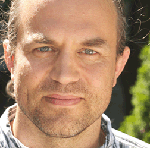
Chris Whittaker is a physics teacher and Coordinator of the Science Program at Dawson College. He has a Masters Degree in Engineering Physics from Queen’s University where he specialized in aeronautics and nuclear engineering. At Dawson, he created a course for non-science students that explores a variety of topics in physics through movies and TV shows. Before his teaching career, Chris also completed a Masters Degree in Social Work and worked for several years in emergency mental health, with at-risk-youth and as an intake worker at a CLSC. Along the way he also managed to do two radio documentaries for the CBC Radio One program Ideas, including one on how size matters in engineering, biology and the movies.
Biographic Note
Chris Whittaker is a physics teacher and Coordinator of the Science Program at Dawson College. He has a Masters Degree in Engineering Physics from Queen’s University where he specialized in aeronautics and nuclear engineering. At Dawson, he created a course for non-science students that explores a variety of topics in physics through movies and TV shows. Before his teaching career, Chris also completed a Masters Degree in Social Work and worked for several years in emergency mental health, with at-risk-youth and as an intake worker at a CLSC. Along the way he also managed to do two radio documentaries for the CBC Radio One program Ideas, including one on how size matters in engineering, biology and the movies.
Steve A. Wiggins
Steve A. Wiggins holds a doctorate in ancient mythology from Edinburgh University and spent several years as a professor before becoming an editor. He is the author of Holy Horror: The Bible and Fear in Movies (2018), Nightmares with the Bible: The Good Book and Cinematic Demons (2020), and The Wicker Man, Devil’s Advocates series (2023).
Biographic Note
Steve A. Wiggins holds a doctorate in ancient mythology from Edinburgh University and spent several years as a professor before becoming an editor. He is the author of Holy Horror: The Bible and Fear in Movies (2018), Nightmares with the Bible: The Good Book and Cinematic Demons (2020), and The Wicker Man, Devil’s Advocates series (2023).
Mary Wild

Mary Wild is the creator of the Projections lecture series at Freud Museum London, applying psychoanalysis to film interpretation. She co-hosts Projections Podcast, contributes to the Evolution of Horror Podcast, and posts exclusive content on patreon.com/marywild. She is @psycstar on Twitter and Instagram
Biographic Note
Mary Wild is the creator of the Projections lecture series at Freud Museum London, applying psychoanalysis to film interpretation. She co-hosts Projections Podcast, contributes to the Evolution of Horror Podcast, and posts exclusive content on patreon.com/marywild. She is @psycstar on Twitter and Instagram
Annaëlle Winand
Annaëlle is a PhD student at l'Université de Montréal and film programmer at the Montreal Underground Film Festival. She grew up in Belgium where she studied history and archival science all while developing a passion for horror, surrealist and experimental cinema. She has written about horror for different Belgian and French websites and magazines (KWEB, SINOK, DESPERATEZOMBIE). Her research now focuses on the use of archives in experimental found footage films.
Biographic Note
Annaëlle is a PhD student at l'Université de Montréal and film programmer at the Montreal Underground Film Festival. She grew up in Belgium where she studied history and archival science all while developing a passion for horror, surrealist and experimental cinema. She has written about horror for different Belgian and French websites and magazines (KWEB, SINOK, DESPERATEZOMBIE). Her research now focuses on the use of archives in experimental found footage films.
Douglas E. Winter
Douglas E. Winter is an award-winning author, editor, horror historian and the biographer of both Clive Barker and Stephen King. He is a member of the National Book Critics Circle, and has a parallel career as a lawyer specializing in aerospace, aviation and entertainment law.
Biographic Note
Douglas E. Winter is an award-winning author, editor, horror historian and the biographer of both Clive Barker and Stephen King. He is a member of the National Book Critics Circle, and has a parallel career as a lawyer specializing in aerospace, aviation and entertainment law.
Michael Wood
A graduate of the McGill Institute of Islamic Studies (2004), where he focused on the history and politics of Indonesia, Dr. Michael Wood is a full time faculty member in the Department of Humanities, Dawson College. His current research interests include the use and misuse of historical themes and symbols for purposes of nation building, regime legitimization and national branding in Indonesia and the Balkans. Additionally, he has a background in archaeology, having been involved in the excavations of a Roman bathhouse at Tel Dor, Israel, a Mayan palace at Cahel Pech, Belize and the Iron Age fortifications of Tell Jawa, Jordan. He has been interested in pseudo-archaeology, popular misconceptions of the past involving lost civilizations and ancient aliens, since the original broadcasts of the show In Search of in the late 1970’s. He has also held a long interest in the fantasy and horror works of Robert E, Howard, the creator of Conan and has presented on both of these subjects at the Miskatonic Institute. His publications include Official History in Modern Indonesia: New Order Perceptions and Counterviews (2005) and “Indonesian Nationalism” In Nations and Nationalism in Global Perspective: An Encyclopedia of Origins, Development and Contemporary Transitions (2008) and “Archaeology, National Histories and National Borders in Southeast Asia.” In The Borderlands of Southeast Asia: Geopolitics, Terrorism and Globalization (2011).
Biographic Note
A graduate of the McGill Institute of Islamic Studies (2004), where he focused on the history and politics of Indonesia, Dr. Michael Wood is a full time faculty member in the Department of Humanities, Dawson College. His current research interests include the use and misuse of historical themes and symbols for purposes of nation building, regime legitimization and national branding in Indonesia and the Balkans. Additionally, he has a background in archaeology, having been involved in the excavations of a Roman bathhouse at Tel Dor, Israel, a Mayan palace at Cahel Pech, Belize and the Iron Age fortifications of Tell Jawa, Jordan. He has been interested in pseudo-archaeology, popular misconceptions of the past involving lost civilizations and ancient aliens, since the original broadcasts of the show In Search of in the late 1970’s. He has also held a long interest in the fantasy and horror works of Robert E, Howard, the creator of Conan and has presented on both of these subjects at the Miskatonic Institute. His publications include Official History in Modern Indonesia: New Order Perceptions and Counterviews (2005) and “Indonesian Nationalism” In Nations and Nationalism in Global Perspective: An Encyclopedia of Origins, Development and Contemporary Transitions (2008) and “Archaeology, National Histories and National Borders in Southeast Asia.” In The Borderlands of Southeast Asia: Geopolitics, Terrorism and Globalization (2011).

Sarah Woodstock
Sarah Woodstock is a PhD candidate in Screen Cultures and Curatorial Studies at Queen's University. Her research focuses on true crime media, with an emphasis on the figure of the serial killer. Her work has appeared in Flow, Crime Fiction Studies, and Rue Morgue.
Biographic Note
Sarah Woodstock is a PhD candidate in Screen Cultures and Curatorial Studies at Queen's University. Her research focuses on true crime media, with an emphasis on the figure of the serial killer. Her work has appeared in Flow, Crime Fiction Studies, and Rue Morgue.
Kristopher Woofter
Kristopher Woofter teaches courses on the American Gothic, the Weird tradition, and literary and cinematic horror in the English Department of Dawson College, Montréal. He earned his PhD from Concordia University. He is co-editor of the upcoming collection, Joss Whedon vs. Horror: Fangs, Fans and Genre in Buffy and Beyond (I.B. Tauris). Kristopher is also a programmer for the Montréal Underground Film Festival and served for ten years as a co-chair for the Horror Area of the PCA/ACA annual national conference.
Biographic Note
Kristopher Woofter teaches courses on the American Gothic, the Weird tradition, and literary and cinematic horror in the English Department of Dawson College, Montréal. He earned his PhD from Concordia University. He is co-editor of the upcoming collection, Joss Whedon vs. Horror: Fangs, Fans and Genre in Buffy and Beyond (I.B. Tauris). Kristopher is also a programmer for the Montréal Underground Film Festival and served for ten years as a co-chair for the Horror Area of the PCA/ACA annual national conference.