MIS
KA
TON
IC
Institute of
Horror Studies
Archive
Archive
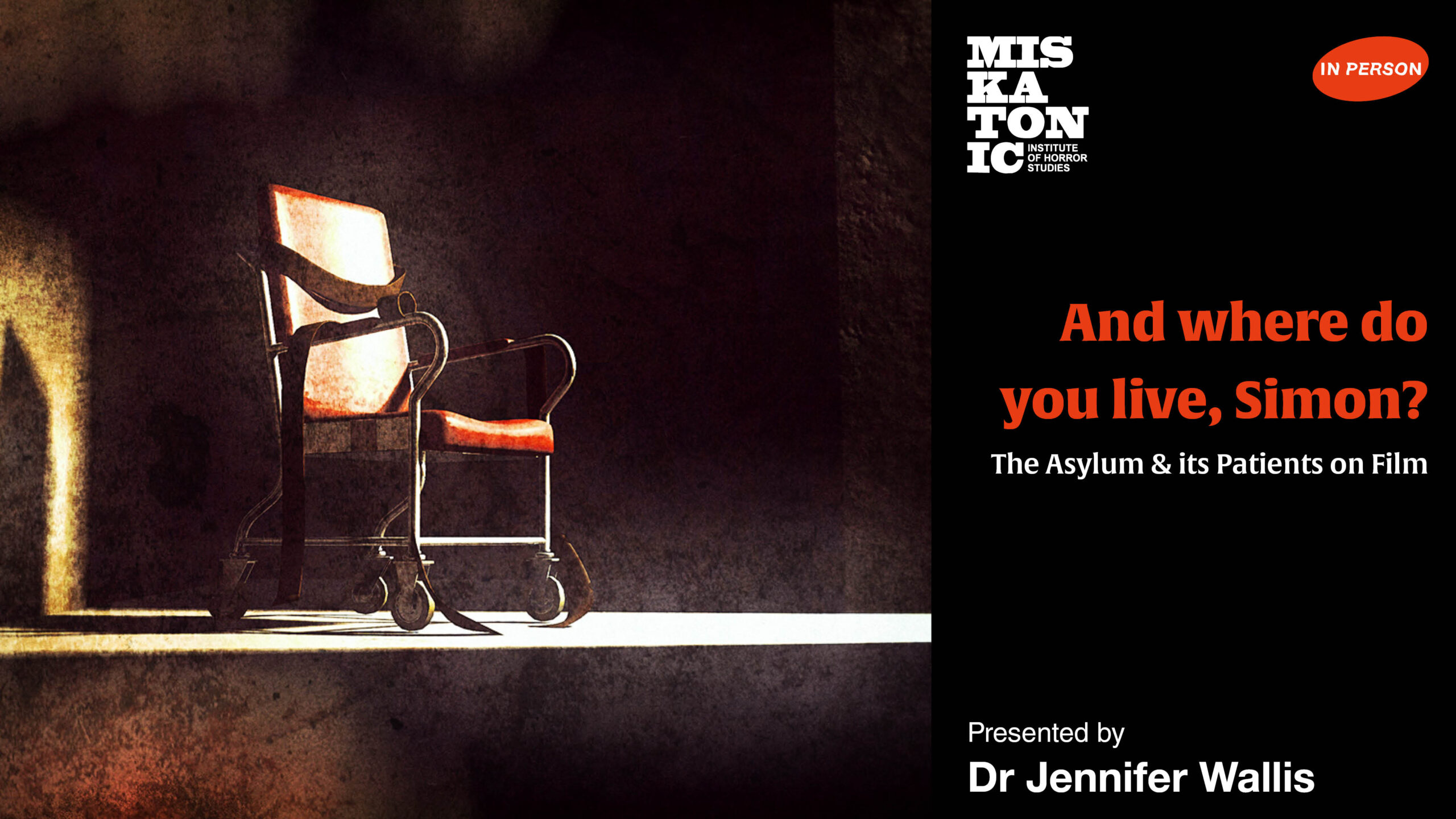
"And where do you live, Simon"? The Asylum and its Patients on Film
Jennifer Wallis
9 December 2025
"And where do you live, Simon"? The Asylum and its Patients on Film
The asylum and madness are enduring themes in the history of cinema, from the silent The Cabinet of Dr Caligari (1920) to found footage horrors such as Grave Encounters (2011) and Gonjiam: Haunted Asylum (2018). This talk explores how cinematic representations of the asylum and its patients have reflected real-life developments in psychiatry, including the demolition of Victorian institutions and moves toward community-based care in the late 20th century. We will also see how film itself played a role in these developments, with documentary exposés of asylum life like Frederick Wiseman’s Titicut Follies (1967) revealing the real-life horrors of the institution.
Jennifer Wallis
9 December 2025
Read more
9 December 2025
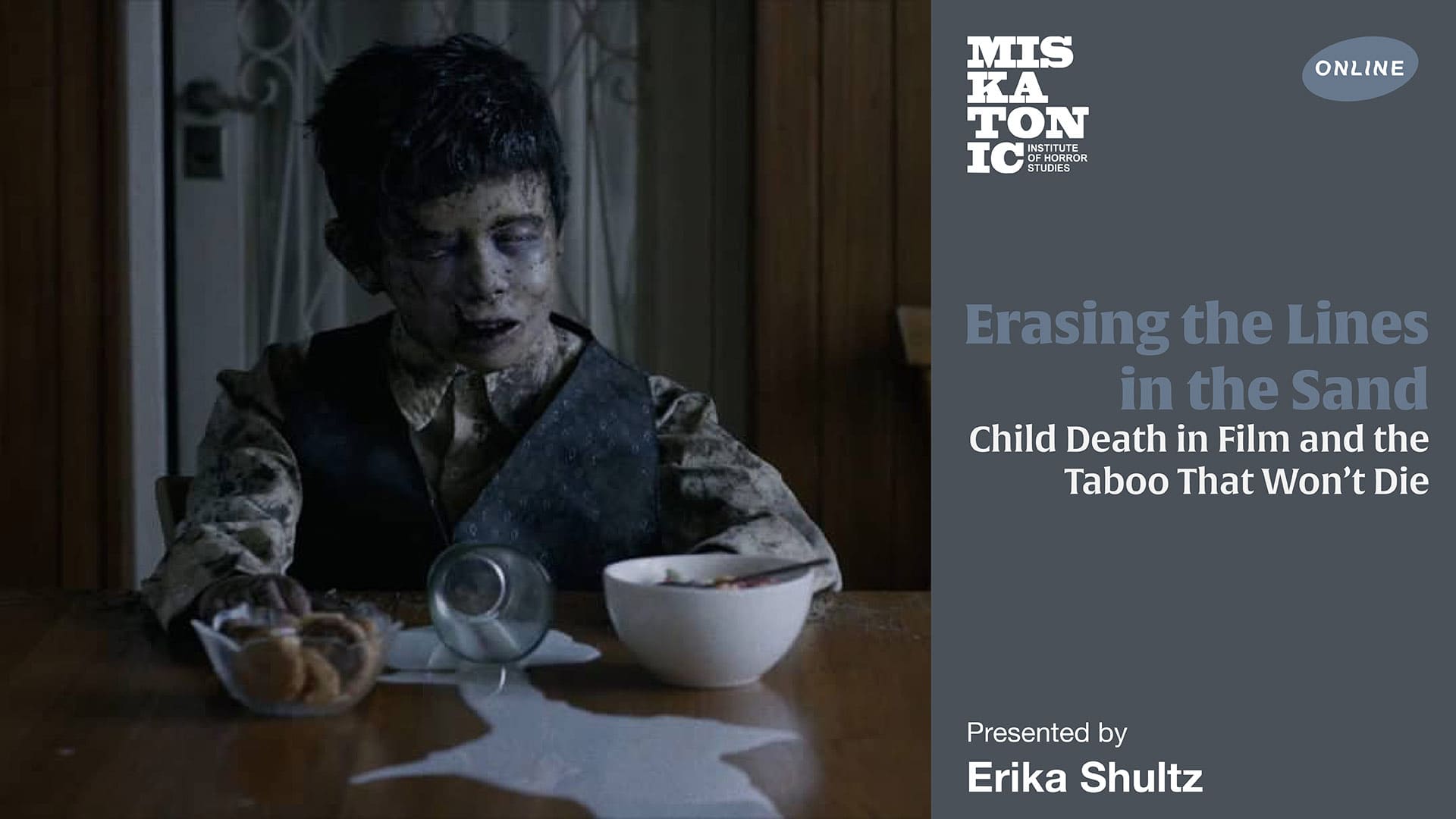
Erasing the Lines in the Sand: Child Death in Film and the Taboo That Won’t Die (Online)
Erica Shultz
18 November 2025
Erasing the Lines in the Sand: Child Death in Film and the Taboo That Won’t Die (Online)
Few things in cinema make audiences squirm quite like the death of a child. Across genres from horror to prestige dramas, filmmakers have long wrestled with how to depict this ultimate taboo — when it’s permissible, when it’s too much, and when it’s just plain funny (yes, really). Despite an era of increasing moral outrage over media content, child mortality in film remains one of the last great battlegrounds of taste, censorship, and audience tolerance.
Drawing from her book The Sweetest Taboo: An Unapologetic Guide to Child Kills in Film, Erica Shultz takes a sharp-witted, irreverent approach to a subject that has made critics and censors clutch their pearls for decades. Through film clips, historical context, and a healthy dose of gallows humor, this talk will dissect the genre biases, cultural contexts, and hypocrisies that dictate what is considered too far. Different cultures and historical moments have shaped how filmmakers portray child mortality, from the transgressive violence of Italy’s “Years of Lead”-era cinema to the reactionary moral panics of 1980s America. In Hong Kong cinema, shifting political landscapes before and after the Handover influenced the framing of youthful innocence—and its destruction.
Meanwhile, Hollywood’s unwritten rules dictate when a child’s death serves as tragedy, retribution, or exploitation. Mainstream, critically acclaimed films have long used child mortality as an emotional weapon, while horror films are branded exploitative for doing the same. Violent child deaths in action movies may remain PG-13, while horror films with similar content are punished with an R or NC-17. This conversation will also explore the difference between “Killer Kids” and “Killing Kids,” examining why a murderous child’s death in PET SEMATARY, MIKEY, or WHO CAN KILL A CHILD? is more palatable than the death of an innocent.
Beyond genre and censorship, the internet’s ever-growing influence has reshaped audience reactions, amplifying social media outrage and recontextualizing past films through contemporary lenses. Expect a lively discussion, controversial examples, and an unapologetic look at one of cinema’s most enduring taboos. If you’ve ever laughed, gasped, or cringed at an onscreen child kill, this is the class for you.
Erica Shultz
18 November 2025
Read more
18 November 2025
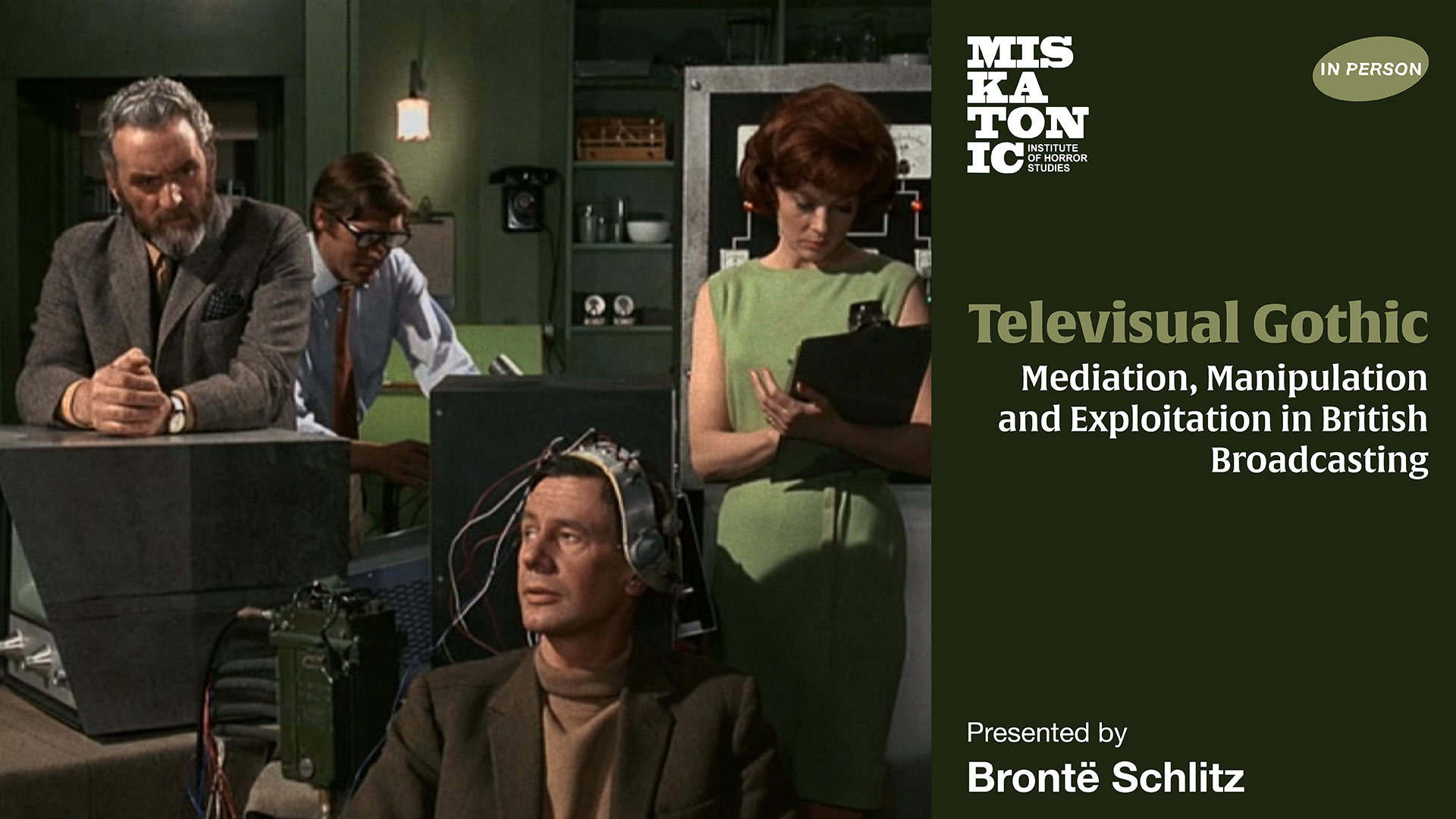
Televisual Gothic: Mediation, Manipulation and Exploitation in British Broadcasting (London)
Brontë Schlitz
11 November 2025
Televisual Gothic: Mediation, Manipulation and Exploitation in British Broadcasting (London)
Between the 1950s and 1970s, Nigel Kneale, one of the BBC’s first two staff writers, foresaw a horrifying future for British television. Through a series of Gothic dramas, he envisioned a substitution of televisual mediation for reality; the invention of reality television to both drive ratings, and, following privatisation, income, and to serve the ideological interests of capitalism by reinforcing social stratification, with fatal consequences; and the prioritisation of technological innovation over art and human life.
Kneale’s predictions have now come to fruition. There have been forty recorded suicides linked to participation in reality shows. Figures like Jimmy Savile continue to haunt our perceptions of broadcasting years after their deaths. Working-class people, despite watching more television than any other socioeconomic demographic, are also most likely to distrust and feel misrepresented by public service broadcasters. During COVID-19 lockdowns, television viewership increased to unprecedented levels, genuinely offering a substitute for reality while social contact was prohibited.
But since Kneale’s conjectures began to materialise, British public service broadcasters have also aired numerous dramas that instead position the Gothic as a radical force through which to challenge the potential horrors of British television.
This lecture surveys seventy years of such self-reflexive texts, which I classify under the term Televisual Gothic, and explores their reinstatement of the Gothic’s subversive potential to expose and criticise modes of television production that serve capitalist ends to the detriment of creatives and audiences alike. It begins with discussion of four programmes by Kneale – The Quatermass Experiment (1953), Quatermass and the Pit (1958-9), The Year of the Sex Olympics (1968) and The Stone Tape (1972) – before moving on to the Televisual Gothic’s neoliberal revival via Doctor Who episodes ‘Vengeance on Varos’ (1985) and ‘The Long Game’/‘Bad Wolf’ (2005), as well as the infamous Ghostwatch (1992). Finally, it considers the Televisual Gothic’s transformations in the age of reality television and social media via Red Rose (2022) and Inside No. 9 episodes ‘Séance Time’ (2015), ‘Dead Line’ (2018) and ‘Boo to a Goose’ (2024).
We will examine how the Televisual Gothic facilitates predictions and articulations of, and critical responses to, broadcasters’ work to distort perceptions of reality, atomise audiences, exploit participants, and manufacture shock to drive ratings in the interests of generating profit and fortifying capitalist constructions of class. By heeding their warnings, these screenwriters suggest, we might finally combat the capacity for genuine horror inherent in our most domestic medium.
Brontë Schlitz
11 November 2025
Read more
11 November 2025
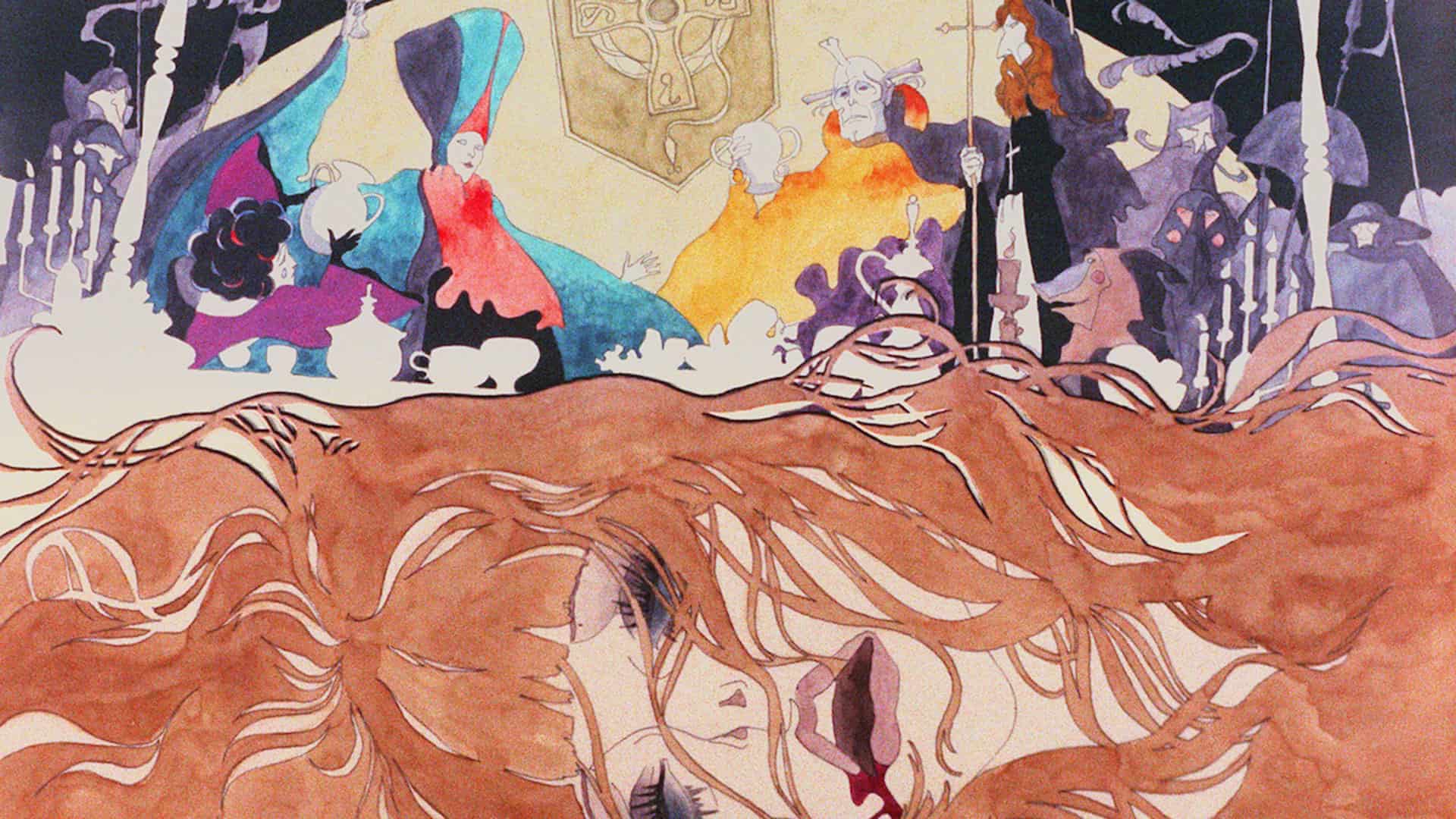
Brooklyn Horror Film Festival Event: On Becoming a Horrifying Woman: Psychedelic Horror, Women's Empowerment, and BELLADONNA OF SADNESS (NYC)
Payton McCarty-Simas
19 October 2025
Brooklyn Horror Film Festival Event: On Becoming a Horrifying Woman: Psychedelic Horror, Women's Empowerment, and BELLADONNA OF SADNESS (NYC)
PLEASE NOTE that this class is a live, in-person only event at the Brooklyn Horror Film Festival. It will not be streamable. Tickets must be purchased through the festival, and this event is not covered by the Miskatonic season pass.
Historically, psychedelic horror cinema has centered men in crisis, from THE TRIP to BRAIN DAMAGE to MANDY. Such films may form a reactionary rejection of counterculturalism –– but there is more to this subgenre than meets the eye, according to Payton McCarty-Simas, author of That Very Witch: Fear, Feminism, and the American Witch Film. This lecture offers a deep dive into the complex themes and surprising gender dynamics of these mind-expanding movies.
Extending from psychedelic cinema’s inception to modern entries like BEYOND THE BLACK RAINBOW and INFINITY POOL, McCarty-Simas grounds their dissection of acid-tinged horrors in a rich historical context. After analyzing masculinist movies like ALTERED STATES, they investigate counterexamples like Eiichi Yamamoto’s seminal feminist freakout, BELLADONNA OF SADNESS (screening at at the Brooklyn Horror Film Festival this year). Ultimately, McCarty-Simas argues for the liberatory potential of the psychedelic horror film, in which women may “become horrifying women” –– a fate far better than life under heteropatriarchy.
Miskatonic is proud to partner with the Brooklyn Horror Film Festival to present this unique look at psychedelic horror history through a feminist lens. Don’t miss Payton McCarty-Simas’ exploration of one of horror’s most outrageous subgenres; it might just blow your mind.
Payton McCarty-Simas
19 October 2025
Read more
19 October 2025
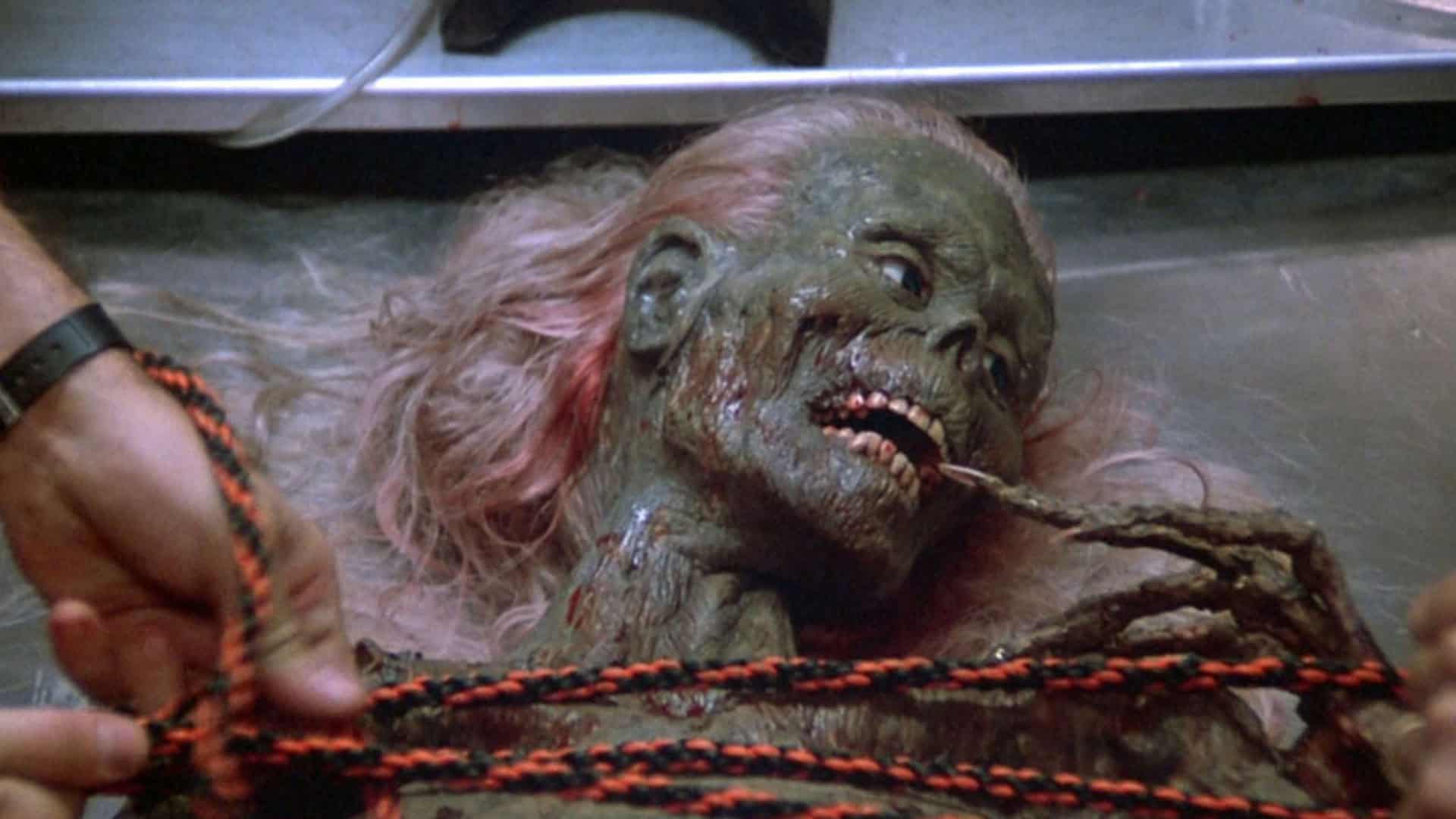
Brooklyn Horror Film Festival Event: Excessive Life: The Uncanny Vitality of the Zombie (NYC)
David Bering-Porter
18 October 2025
Brooklyn Horror Film Festival Event: Excessive Life: The Uncanny Vitality of the Zombie (NYC)
PLEASE NOTE that this class is a live, in-person only event at the Brooklyn Horror Film Festival. It will not be streamable. Tickets must be purchased through the festival, and this event is not covered by the Miskatonic season pass.
What if zombies, ghosts, and revenants aren’t frightening because they’re dead? What if they are horrifying because of excessive, uncanny vitality?
Moving from ur-texts like WHITE ZOMBIE and NIGHT OF THE LIVING DEAD, to modern classics like RETURN OF THE LIVING DEAD and RE-ANIMATOR, Professor David Bering-Porter reveals how the undead embody our deepest anxieties about forms of life that refuse to die, far exceeding the limits of their natural lifespan. This excessive vitality extends beyond zombie cinema, manifesting in science-fiction nightmares of “grey goo” scenarios as seen in THE BLOB. Even apocalyptic revelations like 28 DAYS LATER reflect cultural fears rooted in biological reality: cancerous cells that refuse to stop dividing, viral infections overwhelming their hosts, and ecosystems pushed beyond their breaking point.
In the latest collaboration with the Brooklyn Horror Film Festival, Miskatonic is proud to present David Bering-Porter’s canny analysis of the undead-as-reflection of society’s relentless consumption, expansion, and reproduction. Zombie cinema reveals an uncomfortable truth: in a world facing ecological collapse due to unchecked growth, the horror of excessive life might be a fate worse than death.
David Bering-Porter
18 October 2025
Read more
18 October 2025
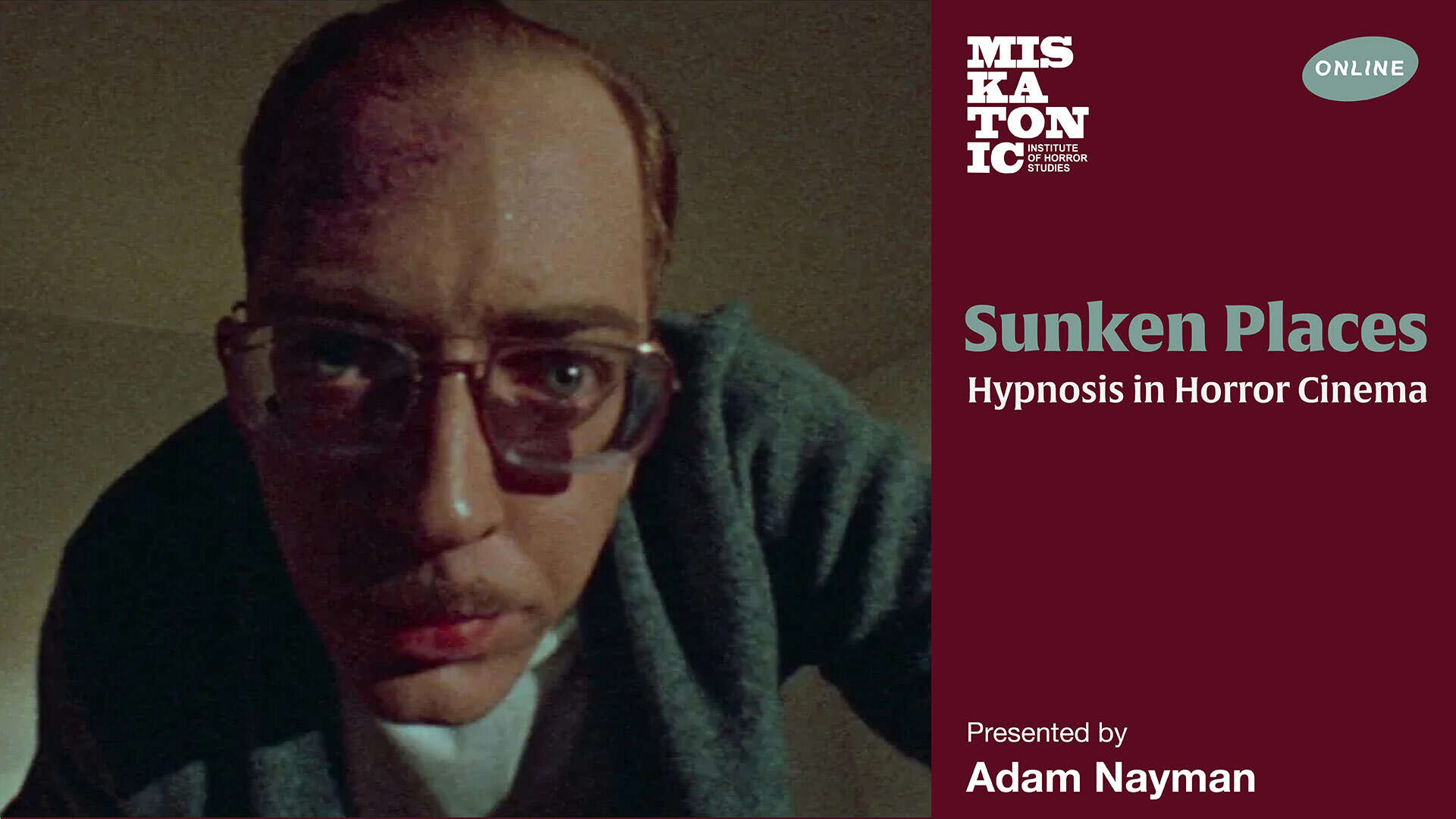
Sunken Places: Hypnosis in Horror Cinema (Online)
Adam Nayman
14 October 2025
Sunken Places: Hypnosis in Horror Cinema (Online)
Since cinema’s earliest days, a disturbing archetype has stalked the silver screen. From the 1920 debut of THE CABINET OF DR. CALIGARI to the 2017 arrival of Jordan Peele’s groundbreaking GET OUT, horror cinema has harbored hordes of sinister, mind-controlling mesmerists. These Svengali-like manipulators are undeniably compelling villains, but they also illuminate something essential – and unsettling – about the very nature of film spectatorship itself.
Devious hypnotists appear in disturbing films as diverse as Fritz Lang’s 1933 masterpiece THE TESTAMENT OF DR. MABUSE, to Bigas Luna’s 1987 nightmare vision ANGUISH, demonstrating the medium’s enduring fascination with malicious mentalists. But more than a source of cheap thrills, their preternatural powers reflect the control the filmmakers themselves wield over the inner experiences of vulnerable viewers. At times the function of mesmerism has been more than allegorical, with directors Bernard Rose (CANDYMAN) and Werner Herzog (HEART OF GLASS) employing real hypnotic techniques on the sets of their films.
In this lecture, film critic and author Adam Nayman will examine a variety of films to historicize hypnosis in horror movies. His survey will illuminate the role of hypnosis as both a provocative plot point, and a metatextual symbol of filmmakers’ power over their audiences. In addition to the aforementioned works, Nayman will address Brian De Palma’s SISTERS, Kiyoshi Kurosawa’s CURE, Tilman Singer’s LUZ, and Lars von Trier’s EUROPA.
Adam Nayman
14 October 2025
Read more
14 October 2025
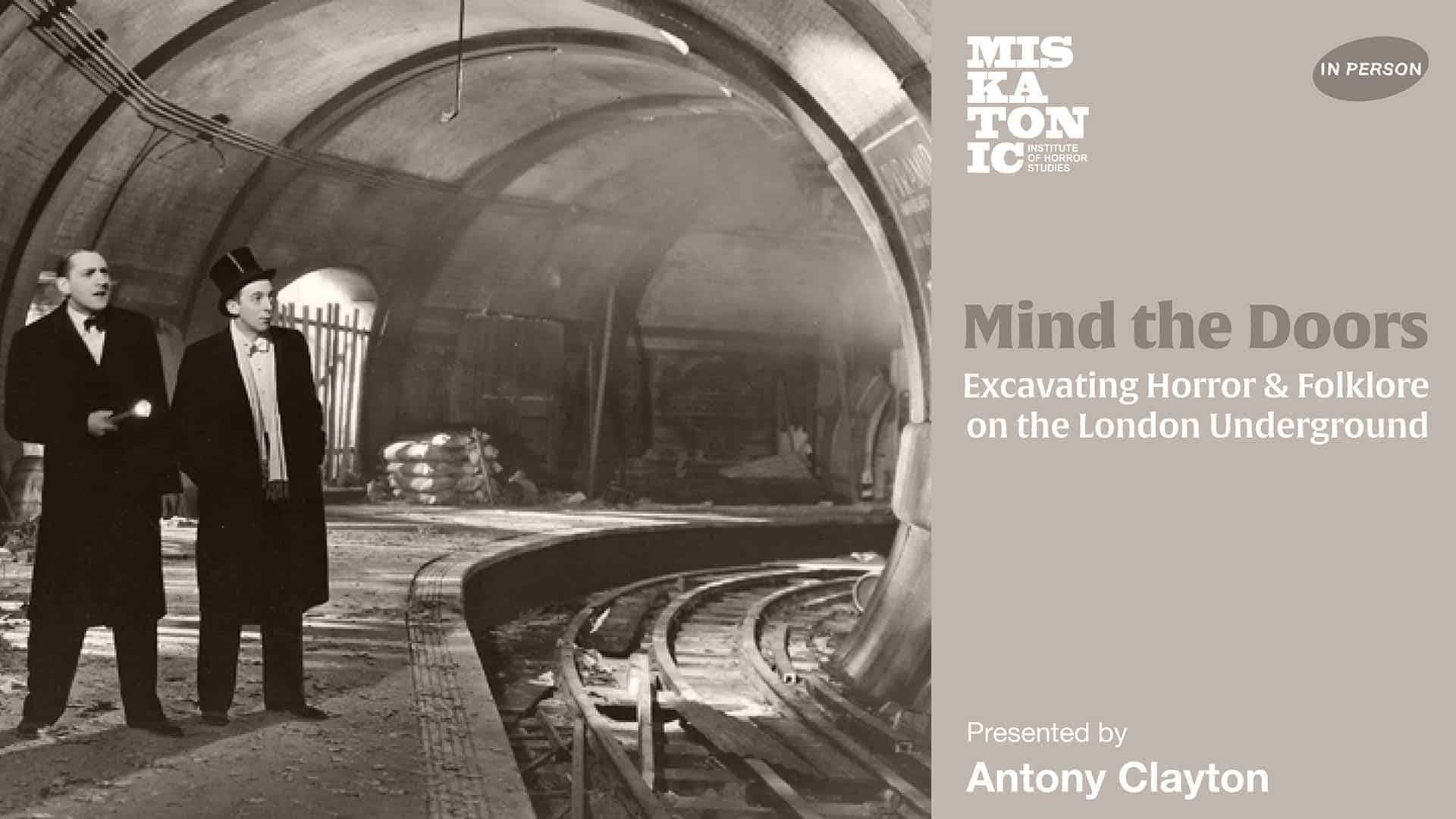
Mind The Doors: Excavating Horror and Folklore on the London Underground (London)
Antony Clayton
14 October 2025
Mind The Doors: Excavating Horror and Folklore on the London Underground (London)
According to urban myth, New York’s sewers and underground tunnels were home to alligators and other unlikely creatures, giving rise to such science fiction horror films as Guillermo del Toro’s Mimic (1997). Over the last one hundred years, subterranean folklore and horror films have depicted a London Underground network infested with mummies, yeti, alien insects, cannibals, werewolves and hideously deformed serial killers. This talk will examine the fact and folklore that has informed such films as Quatermass and the Pit (1967), Death Line (1972), An American Werewolf in London (1981) and Creep (2004), as well as the comedy thriller Bulldog Jack (1935) which may have contributed to the folklore of an Egyptian mummy haunting the abandoned British Museum station.
Antony Clayton
14 October 2025
Read more
14 October 2025
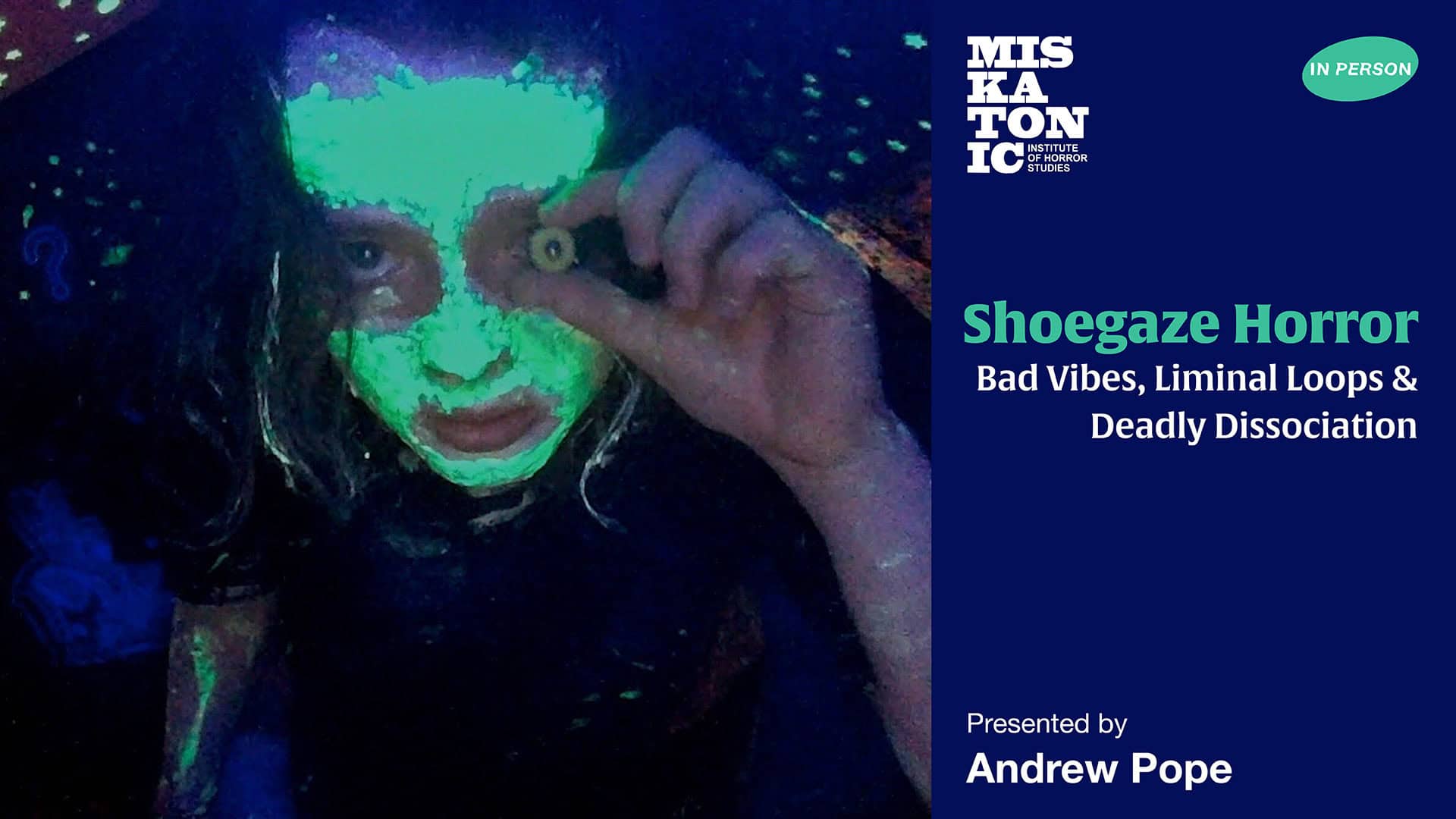
Shoegaze Horror: Bad Vibes, Liminal Loops and Deadly Dissociation (London)
Andrew Pope
30 September 2025
Shoegaze Horror: Bad Vibes, Liminal Loops and Deadly Dissociation (London)
In this lecture, we’ll immerse ourselves in the dreamlike, destabilising atmosphere of Shoegaze Horror—a form of horror cinema that seemingly swaps story for sensation, jump-scares for stillness, and clear answers for ambiguous dread.
Named after the 1990s music genre known for layered distortion, emotional opacity, and immersive soundscapes, Shoegaze Horror is cinema at the edge of coherence. It evokes fear not through jump scares or gore, but through repetition, oblique imagery, liminal spaces, and a slow emotional drift into disconnection. Over 90 minutes, this lecture will chart the emergence, form, and themes of Shoegaze Horror through a core set of films and wider cinematic genealogy.
We’ll trace a genre defined by absence, distortion, and the ghostly echo of dead futures, and:
Introduce the notion of Shoegaze Horror through its core cinematic strategies
Explore the genre’s central themes: grief, memory, alienation, and emotional paralysis.
Examine how Shoegaze Horror reflects contemporary cultural and psychological conditions—particularly post-financial crisis social drift and pandemic-induced dissociation and disconnection.
Analyse key case studies and identify recurring formal elements across a diverse spectrum of films.
We’ll focus on three films in particular:
Using Beyond the Black Rainbow (2010) as a formal gateway, we’ll explore how Shoegaze Horror builds dread through sensory overload, ambient sound, and retro-futuristic melancholy.
In We’re All Going to the World’s Fair (2021), the genre meets the internet age: alienation, identity erosion, and disembodied transformation through low-res intimacy and ambient dread.
Skinamarink (2022) becomes our guide to childhood fear, abstract space, and temporal stasis—illustrating how Shoegaze Horror turns the home into a liminal, haunted, formless void.
Through these films and others, we’ll map out this genre movement and its five key aspects: ambiguity; stillness; repetition; liminality; and auditory dread.
We’ll also be asking: why now – what does this trend in horror cinema tell us about our culture and concerns? What are the psychological aspects of Shoegaze Horror? How does it differ from Folk Horror and Cosmic Horror? And where does it come from – what are the roots and precursors of this approach to horror, from Maya Deren and Jean Rollin to David Lynch and Kiyoshi Kurosawa?
Andrew Pope
30 September 2025
Read more
30 September 2025
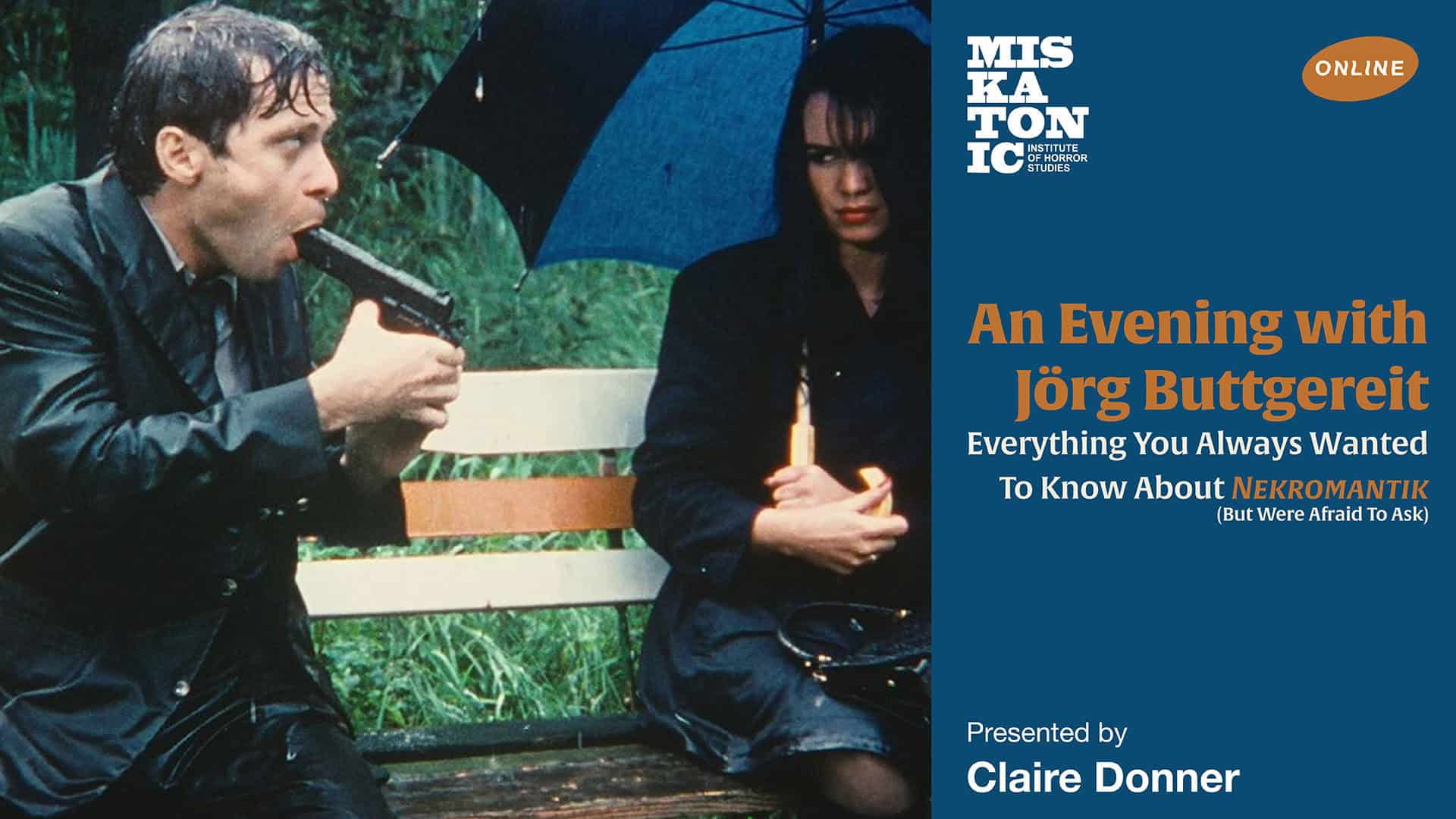
Miskatonic Presents an Evening With Jörg Buttgereit: Everything You Always Wanted to Know About NEKROMANTIK (But Were Afraid to Ask) (Online)
The perversely erotic and profoundly shocking films of punk provocateur Jörg Buttgereit offer some of the most extreme experiences in all of cinema. Best known for 1987’s notorious NEKROMANTIK, about a femme fatale’s craving for cold flesh, his movies have rarely been topped in their taboo-smashing excesses – but while their reputation stands strong decades on, they are still poorly understood. The Miskatonic Institute of Horror Studies is proud to present this candid conversation with the enfant terrible behind some of our beloved genre’s most stomach-churning, yet surprisingly complex films.
Raised in the shadow of the Berlin Wall, Jörg Buttgereit launched diabolical DIY productions best remembered for their grisly FX, Mondo-style verite, and savage antisociality. Even hardened horror fans have shrunk from the brutality of films like DER TODESKING, Buttgereit’s nightmarish meditation on suicide, and SCHRAMM, a riff on TAXI DRIVER that satirizes society’s obsession with serial killers. However, gutsy viewers will find that these graphic spectacles have a cleverness, and even a political conscience, that cuts through the apathy and irony exhibited by Buttgereit’s cast of desensitized degenerates.
Join Miskatonic’s Online Branch Director Claire Donner for this provocative conversation with the iconic Jörg Buttgereit, about his work, his influences, and his reflections on horror’s past, present, and future. Anchored by clips from his groundbreaking films, this discussion will be followed by a Q&A in which viewers can finally ask all of their burning questions about Buttgereit’s uniquely challenging body of work. At a time when horror discourse is fraught with ethical quandaries, and fascism is on the rise globally, this uncompromising filmmaker and his unflinching filmography have much to offer modern genre fans.
Jörg Buttgereit
23 September 2025
Read more
23 September 2025
If Looks Could Kill: The spectacle of murder in contemporary crime media (London)
Stella Marie Gaynor
10 June 2025
If Looks Could Kill: The spectacle of murder in contemporary crime media (London)
Bundy left them on a hillside. Gacy buried them in the crawlspace. Dahmer kept them, and then ate them. Gein wore them. The many breathing bodies which became victim to these murderers were subjected to the most heinous acts, and their last purpose told the story of what happened to them and why. In the contemporary cycle of true crime media, these torn bodies are re-created and re-presented in a never-ending parade of the spectacle of murder. This lecture will explore murder scenes across documentary, comics, dramatizations, and podcasts, as media sites of bodily destruction that appeal to our need to explore and understand humanity’s dark side. These bodies and crime scenes are used to tell us a story that we often already know all too well.
This lecture will unpack Joe Berlinger’s Conversations With A Killer series, connecting the Gacy basement footage to Texas Chainsaw Massacre, and the uncanniness of the boxes, the sealed drum and the kettles, that were brought, one by one, out of Dahmer’s apartment. Later in the Monster: Dahmer series, the contents of those boxes and that apartment were re-created in horrific detail, folding Dahmer into Murphy’s screen horror universe. Our morbid fascination with death is explored in comics, examined here in Bendis and Andreyko’s Torso, a detective story on the hunt for the Headhunter killer, which re-presents crime photographs in a palimpsest with the frames and gutters of the graphic novel. And lastly, the lecture will turn to the true crime podcast, and the crime scene as it forms in the mind of the listener, with an exploration of ‘Gold Star’ material in The Last Podcast on the Left.
Murder might be most foul, but we can’t help but look.
Stella Marie Gaynor
10 June 2025
Read more
10 June 2025